Adhyaya 348
Vyākaraṇa—Pratyāhāra System, Upadeśa Conventions, and Manuscript-Critical Notice (Agni Purana, Chapter 348)
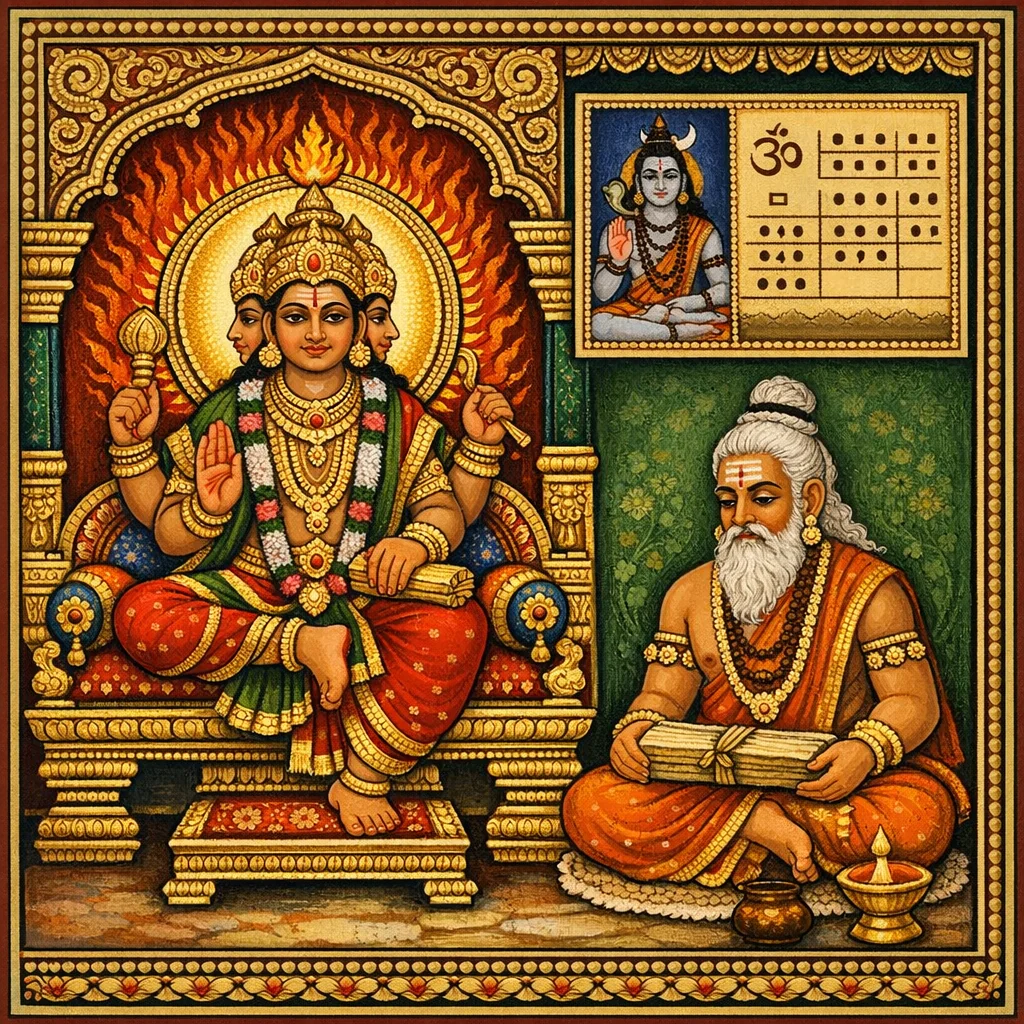
यह अध्याय पहले पाण्डुलिपि-समालोचना करता है—पूर्व का विकृत अंश प्रतिलिपि-दोष मानकर अस्वीकार किया जाता है, जिससे शास्त्र में शुद्ध परम्परा की अनिवार्यता स्पष्ट होती है। फिर स्कन्द व्याकरण का संक्षिप्त निरूपण करते हैं—‘शब्दों का सिद्ध स्वरूप’—कात्यायन-परम्परा के अनुरूप और आरम्भिक विद्यार्थियों के लिए। व्याकरण-प्रक्रिया में प्रयुक्त संज्ञाएँ बताकर शिवसूत्र-क्रम (‘अ इ उ ण् …’ से ‘ह ल्’ तक) द्वारा प्रत्याहार-पद्धति को प्रमुखता से समझाया गया है। उपदेश-परम्पराएँ भी दी गई हैं—ध्वनियों का इट्-चिह्नों सहित निर्देश और नियम-प्रवृत्ति में अनुनासिकता का त्याग। अंत में प्रत्याहार-ग्रहण का नियम बताया है—प्रारम्भिक ध्वनि और अंतिम सूचक (इत्) मिलकर बीच की ध्वनियों के समूह का बोध कराते हैं, प्रत्येक अपने-अपने क्षेत्र में ग्रहणीय है। अग्निपुराण की विश्वकोशीय दृष्टि में व्याकरण वेद-पाठ की शुद्धि, कर्मकाण्ड की शुद्धता और अर्थ-निर्णय की विश्वसनीयता हेतु पवित्र साधन है, जो धर्म और मोक्ष-लक्ष्य से जुड़ता है।
Shlokas
No shlokas available for this adhyaya yet.
Frequently Asked Questions
The chapter emphasizes the pratyāhāra mechanism based on the Śiva-sūtras, including the role of the final indicator (it-marker) and the upadeśa convention that sounds are treated as having it-markers and as non-nasalized for grammatical operations.
It identifies an exemplar/manuscript defect (ādarśa-doṣa) and rejects the corrupted passage, underscoring that śāstric knowledge depends on accurate textual transmission and disciplined philological scrutiny.
By treating linguistic precision as dharmic discipline: correct phonology and rule-application safeguard mantra and scripture, supporting accurate ritual performance and reliable interpretation—practical rigor that ultimately serves both social order (bhukti) and spiritual clarity (mukti).