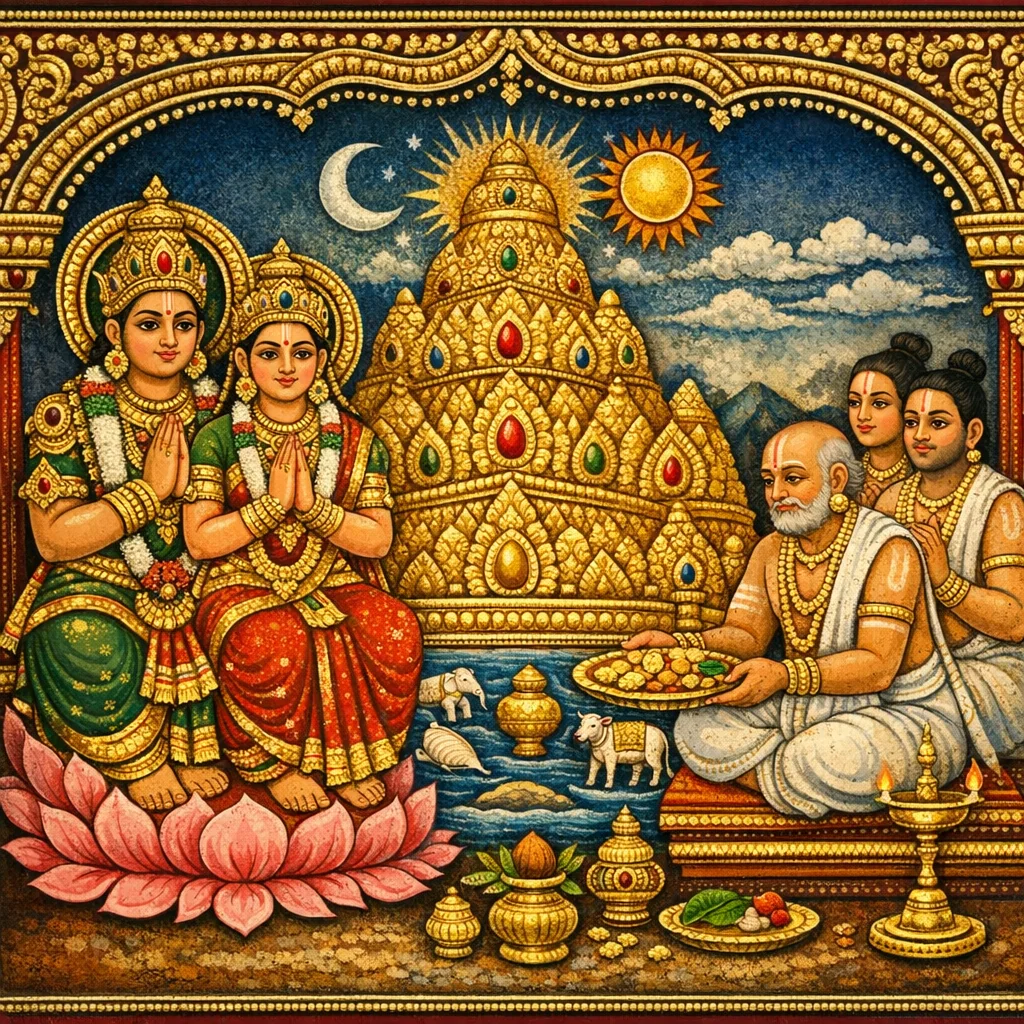
Adhyaya 212
Meru-dānāni (Meru-Donations) — Kāmya-dāna, Month-wise Offerings, and the Twelvefold Meru Rite
अग्निदेव पूर्व अध्याय के दान-वर्णन के बाद काम्य-दान का क्रमबद्ध विधान बताते हैं—मास-मास की निरन्तर पूजा, विशेष दान (कुछ पिष्टक-प्रतिमाओं के रूप में) और उनके फल, तथा वर्षान्त में महाव्रत। फिर कार्त्तिक में द्वादशविध ‘मेरु-दान’ का मुख्य व्रत आता है, जो भोग और मोक्ष दोनों देता है। मेरु को निश्चित मापों और सुवर्णादि पदार्थों से बनाकर पद्म-यन्त्र में स्थापित किया जाता है; मध्य में ब्रह्मा–विष्णु–ईश और चारों दिशाओं में नामित पर्वत-क्रम। दान के नियम—मन्त्र, गोत्रोच्चारण, कपट-धन का त्याग; शुभ काल—संक्रान्ति, अयन, ग्रहण आदि; तथा स्वर्ण, रजत, अश्व, गौ, वस्त्र, घृत, धान्य, तिल, खण्ड-मेरु आदि अनेक प्रकार बताए गए हैं। अंत में मेरु को विष्णु-स्वरूप मानकर स्तुति व निवेदन—शुद्धि, कुल-उन्नति, स्वर्ग-लाभ और अंततः हरि-समीप-प्राप्ति हेतु।
Shlokas
No shlokas available for this adhyaya yet.
Frequently Asked Questions
Regular monthly worship → year-end grand worship → Kārttika Meru-vrata with bathing/fasting → worship of Viṣṇu (or Śiva) → mantra-guided gifting of a constructed Meru to a brāhmaṇa (often gotra-addressed) → dedication (nivedana) for bhukti and mukti.
Ratna-meru (jeweled), Hema/Svarṇa-meru (gold), Rāupya-meru (silver), Hasti-meru (elephant-form), Aśva-meru (horses), Go-meru (cows), Vastra-meru (cloth), Ājya-parvata (ghee mountain), Dhānya-meru (grain), Tila-meru (sesame), and Khaṇḍa-meru (symbolic/segmented Meru).
It frames giving as a mokṣa-supporting discipline: purity through non-deceit, devotion-centered worship, cosmological visualization (Meru as Viṣṇu-form), lineage uplift, and final orientation toward Hari/Viṣṇuloka—thus integrating merit, devotion, and liberation.
Graded measurement logic (highest/middle/lower), prescribed weights (palas, khāras, prastha), construction rules (three peaks with Brahmā–Viṣṇu–Maheśvara), directional mountain placement, and calendrical triggers (Kārttika, saṅkrānti, ayana, grahaṇa).