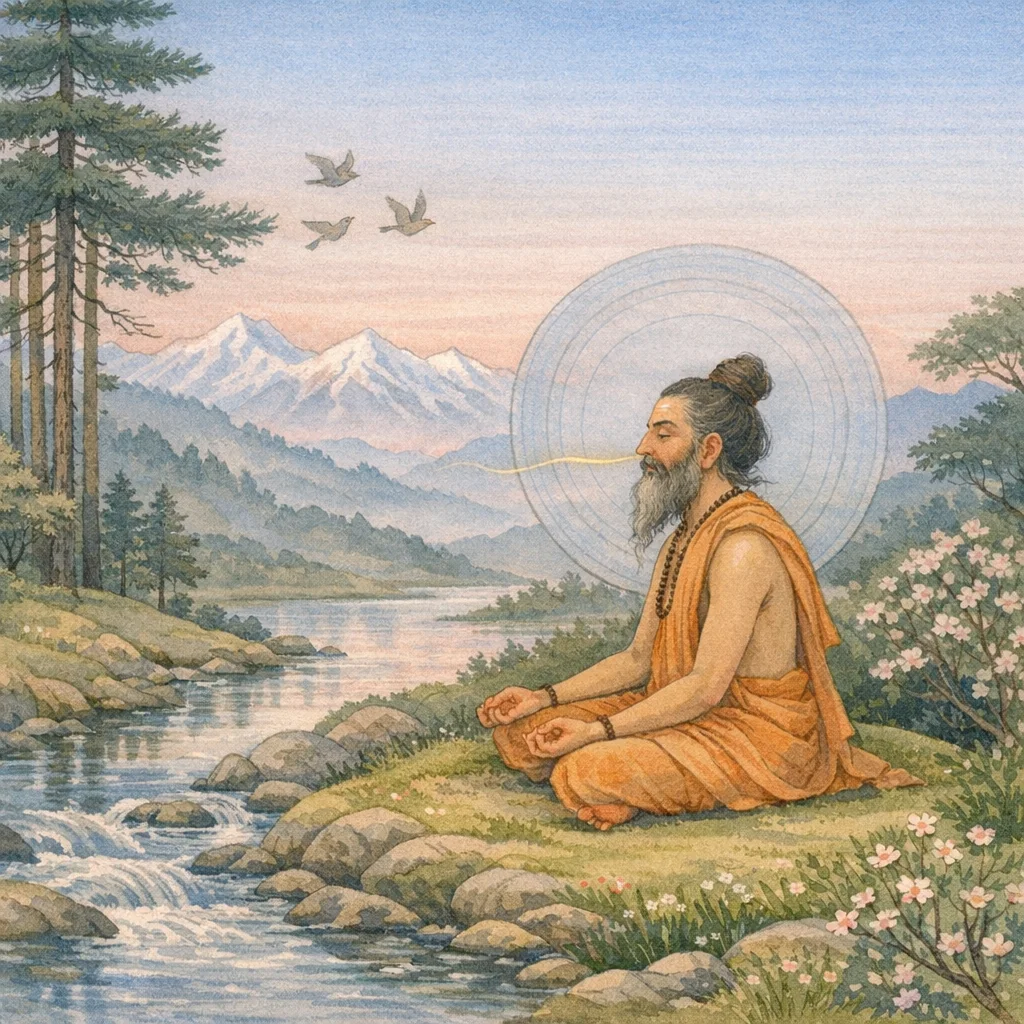
Mandalabrahmana
મંડલબ્રાહ્મણ ઉપનિષદ (અથર્વવેદ પરંપરામાં) યોગોપનિષદોમાં ગણાય છે અને ધ્યાન-સાધના દ્વારા વેદાંતની બ્રહ્મવિદ્યાને સ્પષ્ટ કરે છે. ‘મંડલ’ અહીં બાહ્ય ઇન્દ્રિય-વિષયોની પરિધિમાંથી આંતરિક કેન્દ્ર તરફ ચેતનાનું સંકેન્દ્રીકરણ દર્શાવે છે. ઉપનિષદ મન અને તેની વૃત્તિઓને બંધનનું મૂળ માને છે. પ્રત્યાહાર, વૈરાગ્ય, સંયમ અને સાક્ષી-ચૈતન્યમાં સ્થિત થવાથી વૃત્તિ-શમન થાય છે અને આત્મા સ્વપ્રકાશ છે તથા તે જ બ્રહ્મ છે—આ અદ્વૈત બોધ જાગ્રત-સ્વપ્ન-સુષુપ્તિથી પર અનુભવે પ્રાપ્ત થાય છે.
Key Teachings
- Yoga as a means to brahmavidyā: disciplined meditation culminating in realization of brahman
- Interiorization (pratyāhāra) and centering: withdrawing from sensory “periphery” to the inner “maṇḍala” of awareness
- Mind as the site of bondage: vṛttis
saṅkalpa (constructive thought)
and identification as causes of saṃsāra
- Witness-consciousness (sākṣin): the self-luminous knower distinct from objects and mental states
- Non-dual insight: ātman–brahman non-difference as the final purport of practice
- Transcending the three states: waking
dream
and deep sleep are appearances in consciousness
- Dispassion and ethical restraint: vairāgya and self-control as prerequisites for stable contemplation
- Liberation as recognition (not production): mokṣa as uncovering what is always already present
Verses of the Mandalabrahmana
Explore the verses of this Upanishad.
No verses available for this Upanishad yet.