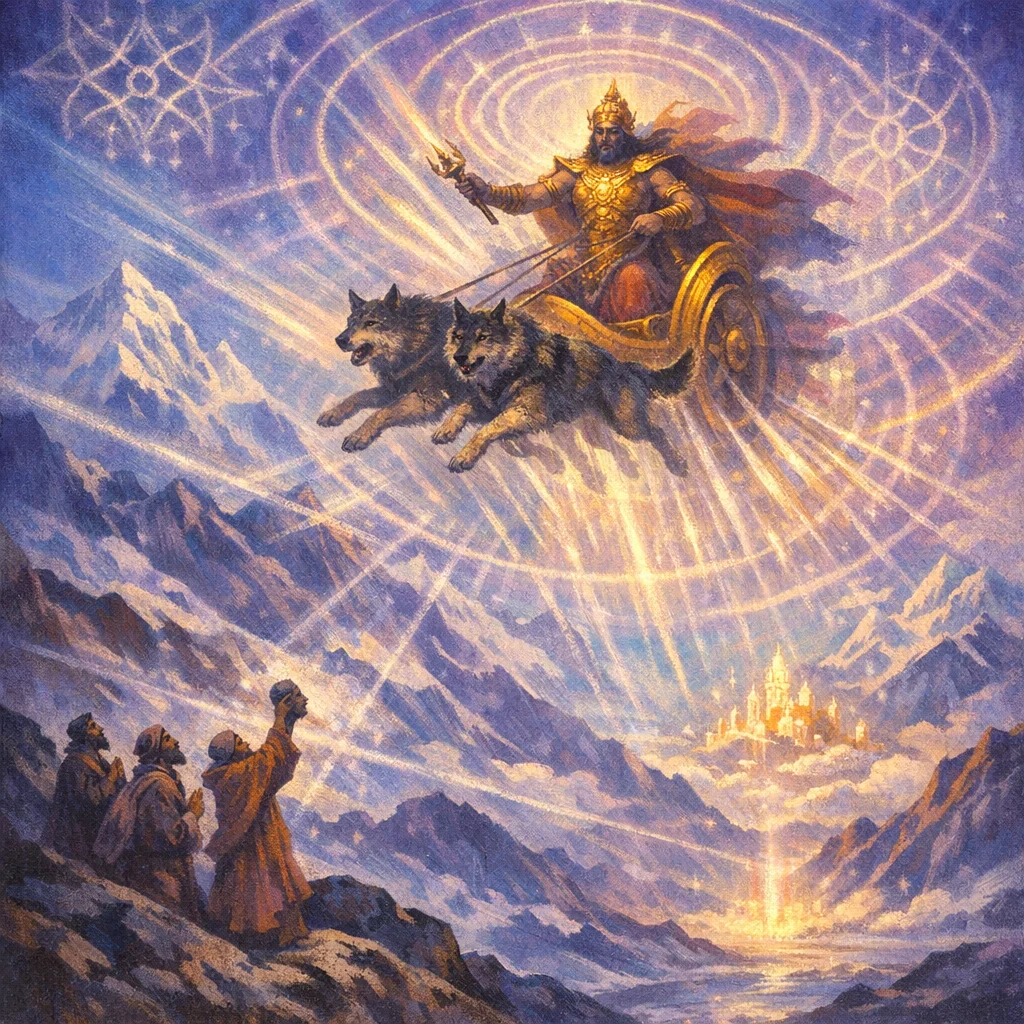
Dashati 16
Āvāhana and rapid approach of Indra to the Kaṇva-stotra, culminating in the boon of svarga (heaven) for the duly directing worshipper
Indra
Summoning and energizing (āhvāna) with martial swiftness and forward drive
Kaṇva
ઇન્દ્રને ત્વરિત આવાહન કરીને કણ્વ-સ્તુતિ અને સોમપેષણસ્થળે બોલાવવો—હરી અશ્વો અને રથગતિની યુદ્ધમય ઝડપ સાથે તે આવી હવિષ સ્વીકારે અને યજ્ઞને શક્તિ આપે. ગ્રાવા (પેષણપથ્થર)નો ઘોષ અને પેષણ-ગાનનો નાદ પોતે જ આવાહન બની ઇન્દ્રને નજીક ખેંચે છે. શાસ્ત્રાનુસાર (શાસતઃ) નિયમપૂર્વક યજ્ઞ કરનાર યજમાન/ઋત્વિજ પર ઇન્દ્ર પ્રસન્ન થઈ યજ્ઞફળ રૂપે ‘દિવમ્’—સ્વર્ગલોકની પ્રાપ્તિ અર્પે છે—આ દશતિનો સાર.
Mantras
Mantra 1
एन्द्र याहि हरिभिरुप कण्वस्य सुष्टुतिम् दिवो अमुष्य शासतो दिवं यय दिवावसो
હે ઇન્દ્ર, હરિભિઃ—તારા કપિલ (બય) અશ્વો સાથે—કણ્વના સુષ્ટુતિ (ઉત્તમ સ્તુતિ) પાસે આવ. જે ઉપાસક નિયમપૂર્વક યજ્ઞ કરે છે, તેના માટે, હે દિવાવસુ (દિવ્ય કલ્યાણના દાતા), તું સ્વર્ગ તરફ ગમન કર.
Mantra 2
अत्रा वि नेमिरेषामुरां न धूनुते वृकः दिवो अमुष्य शासतो दिवं यय दिवावसो
અહીં તારા રથનો કિનારો (નેમિ) પ્રગટ થાય છે; વરુ (વૃક) સમાન તે વિશાળ પ્રદેશને ધ્રુજાવે છે. જે ઉપાસક વિધિપૂર્વક યજ્ઞ કરે છે, તેના માટે તું સ્વર્ગ તરફ જા—દિવ્ય કલ્યાણના દાતા (દિવાવસુ)!
Mantra 3
आ त्वा ग्रावा वदनीह सोमी घोषेण वक्षतु दिवो अमुष्य शासतो दिवं यय दिवावसो
અહીં ગુંજતા સોમ-પેષણના પથ્થર (ગ્રાવા), પોતાના નાદથી, તને અહીં લાવે. જે ઉપાસક વિધિપૂર્વક યજ્ઞ કરે છે, તેના માટે તું સ્વર્ગ તરફ જા—દિવ્ય કલ્યાણના દાતા (દિવાવસુ)!
Frequently Asked Questions
It repeatedly summons Indra to the Kaṇva praise and Soma-pressing, asking him to validate the rite by granting ‘divam’ (heaven) to the properly conducting worshipper.
Its sounding during Soma-pressing is treated as a ritual summons: the audible act of pressing, together with chant, ‘brings’ Indra to the sacrifice.
It links correct, rule-directed performance (śāsataḥ) with the sacrificial fruit: Indra, ‘giver of celestial good’ (divāvasu), is asked to lead/grant the performer to heaven (divam).