Dashati 6
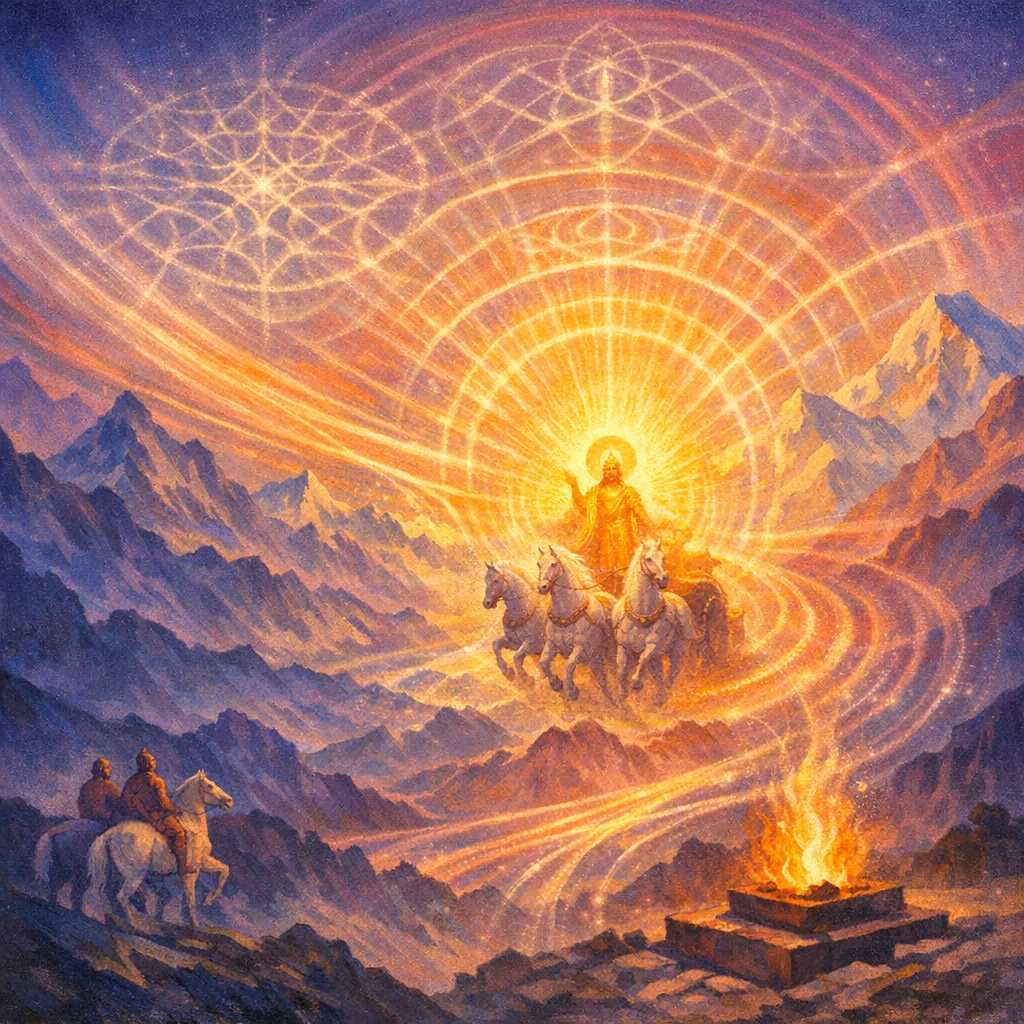
Saura (solar) ordering of time and rite: the Sun’s course, Dawn’s lawful arrival, and the hymn’s power to set the gods in motion and seat them in sacrifice
Sūrya (Vivasvat)
Luminous forward-driving and ritually ‘awakening’—moving from nocturnal preparation into dawn’s radiance and soma-exhilaration
R̥ṣi attribution is not supplied in the input and would require RV-source/anukramaṇī mapping for each mantra; the dashati appears to compile solar/dawn material with an Indra-soma verse typical of mixed sāman selections.
આ દશતિ સૌર્ય (સૂર્ય) ભાવને કેન્દ્રમાં રાખીને સમય, પ્રકાશ અને યજ્ઞક્રમ ઋત અનુસાર સુવ્યવસ્થિત રીતે ચાલે તે વાતને દૃઢ કરે છે. રાત્રિની તૈયારીમાંથી પ્રભાતના તેજમાં પ્રવેશ—આ યજ્ઞનો મહત્વનો સંકેત બને છે; સૂર્ય (વિવસ્વાન) પોતાના હરિ/અશ્વોની નિયમિત ગતિથી આગળ વધીને દિવસનો ક્રમ સ્થાપે છે. ઉષા અને અશ્વિનોને શુભ પ્રભાત-આગમન અને જીવનશક્તિ માટે આવાહન કરવામાં આવે છે. પિચડેલા સોમરસથી પ્રેરિત સ્તોત્ર અંતે ઇન્દ્રને વધુ પ્રબળ રીતે સંબોધે છે અને વાજ (બળ/વિજય-પુરસ્કાર) તથા વસુ (ધન) આપવાની પ્રાર્થના કરે છે. યોગ્ય સમયે સોમયાગ સાથે ગોઠવાયેલું યોગ્ય બ્રહ્મન્ (સ્તુતિ) દેવોને યજ્ઞાસને પ્રેરિત કરીને સમૃદ્ધિ આપતી કાર્યકારી શક્તિ બને છે—એવો આ દશતિનો ઉપદેશ છે.
Mantras
Mantra 1
मो षु त्वा वाघतश्च नारे अस्मन्नि रीरमन् आरात्ताद्व सधमादं न आ गहीह वा सन्नुप श्रुधि
હે વીર, અમારાથી દૂર ન જા; વાઘત (સ્તુતિકાર) પણ તારા થી વિચ્છિન્ન ન થાઓ. અમારા સધમાદ (સામૂહિક સોમ-ભોજન)થી દૂર ન જા; અહીં આવ, અમારી સાથે નિવાસ કર, અને કૃપાપૂર્વક સાંભળ.
Mantra 2
इमे हि ते ब्रह्मकृतः सुते सचा मधौ न मक्ष आसते इन्द्रे कामं जरितारो वसूयवो रथे न पादमा दधुः
કારણ કે આ, તારા બ્રહ્મકૃત સ્તોત્રો, સુત સોમ સાથે, મધુ સમ ઉલ્લાસમાં નિવાસ કરે છે; અને ધન ઇચ્છનાર સ્તુતિકારો, હે ઇન્દ્ર, પોતાની ઇચ્છા મુજબ, રથ પર પગ મૂક્યા સમ, તને આધાર આપ્યો છે.
Mantra 3
उत सखास्यश्विनोरुत माता गवामसि उतोषो वस्व ईशिषे
અને તું અશ્વિનોનો પણ સખા છે; અને તું ગવાંના કિરણોની માતા છે; અને હે ઉષા, તું વસુ (ધન-સંપત્તિ) પર અધિપત્ય ધરાવે છે.
Frequently Asked Questions
Because its central imagery and theological center is solar: Vivasvat (the Sun) and the lawful emergence of light (Uṣas), presenting cosmic order as the model for ritual order.
Night-to-dawn marks the correct timing of chant and sacrifice. The verses present dawn and the sun’s course as ṛta—regular, dependable order—so the rite should be performed with the same precision.
In sāman collections, solar/dawn themes often lead into soma-invitation. Indra is the foremost soma-drinker; the verse states that well-made hymns abide with the pressed soma and ‘set’ Indra firmly in the sacrifice to grant wealth and strength.