Dashati 6
Indra’s swift invitation to the Soma-rite through potent stotra and unhindered approach
Indra
Bright forceful and triumphant—an urgent ‘come hither’ atmosphere with victorious uplift
R̥ṣi cannot be fixed from the provided excerpt alone; the verses belong to the Aindra praise-stream used for Sāman performance rather than a single clearly identified family in the input.
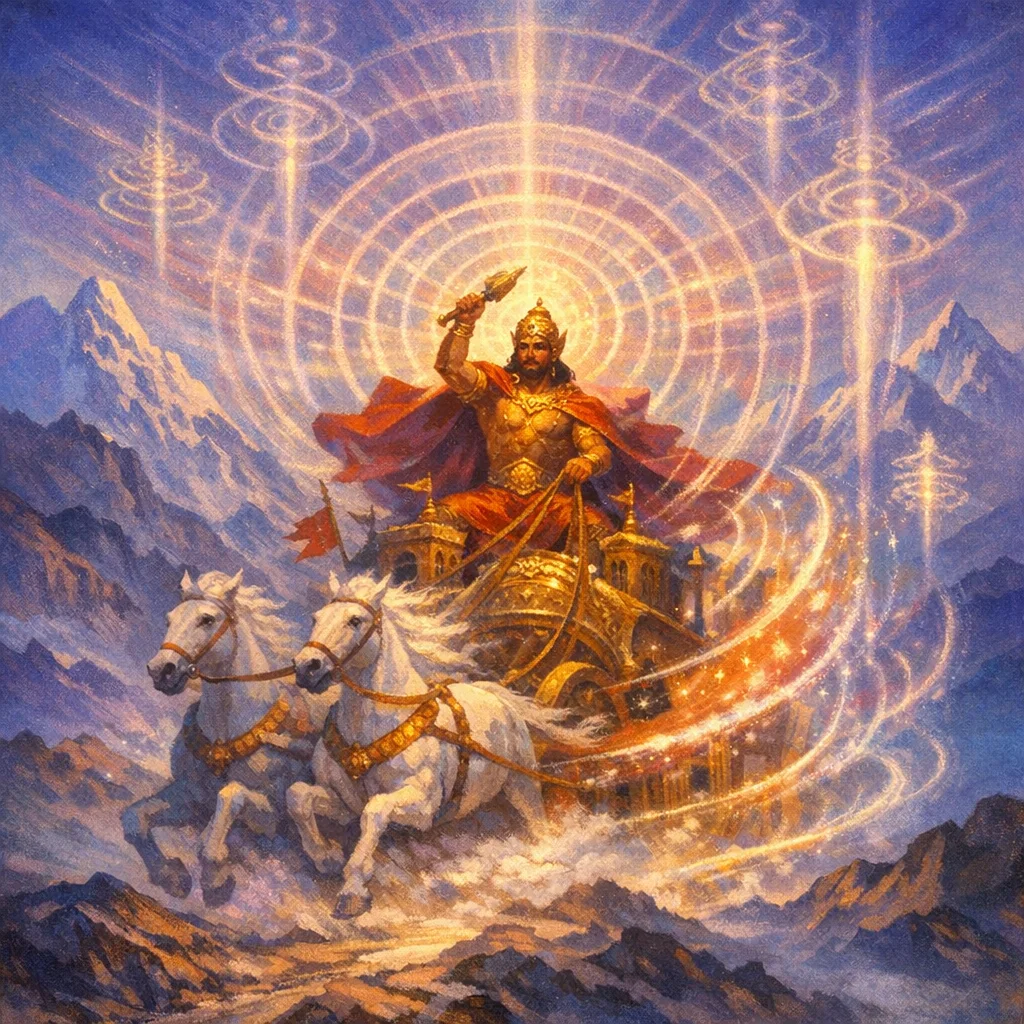
આ દશતિનો ભાવ: સોમપાન માટે ઇન્દ્રને યજ્ઞમાં તાત્કાલિક આહ્વાન કરવું. હરી (તામ્રવર્ણ અશ્વો) અને સુવર્ણ રથની છબી દ્વારા તેમનું નિર્વિઘ્ન આગમન થાય; સ્તોત્ર/સ્તોમ (ગિર્) માત્ર પ્રશંસા નહીં, પરંતુ પવિત્ર શક્તિ બની વિજય, વાજ (વિજય-ધન/ઇનામ) અને સંપત્તિને ગતિ આપી પ્રાપ્ત કરાવે. યજ્ઞને અટકાવતાં બંધન, પાશ અને પ્રતિબંધક બળો તૂટી જાય; અને યજમાનને અક્ષય, અવિરત સહાય (અક્ષિતોતી) સ્થિર રીતે મળે—આ જ આ તેજસ્વી, પ્રબળ, વિજયમય ‘અહીં આવો’ આહ્વાનગીતનો હેતુ છે.
Mantras
Mantra 1
न किष्टं कर्मणा नशद्यश्चकार सदावृधम् इन्द्रं न यज्ञैर्विश्वगूर्तमृभ्वसमधृष्टं धृष्णुमोजसा
ન કિષ્ટં કર્મણા નશદ્—કોઈ કર્મથી તેને પામતો નથી; યઃ ચકારા સદાવૃધં ઇન્દ્રં—સદા વધતો ઇન્દ્ર. યજ્ઞૈઃ ન (તુલ્યં) વિશ્વગૂર્તં—સર્વત્ર ગવાતો; ઋભ્વસમ્—કુશળ; અધૃષ્ટં—અપરાજિત; ધૃષ્ણું ઓજસા—બળથી ધીર-સાહસી.
Mantra 2
य ऋते चिदभिश्रिषः पुरा जत्रुभ्य आतृदः सन्धाता सन्धिं मघवा पुरूवसुर्निष्कर्ता विह्रुतं पुनः
જે (ઇન્દ્ર) તો બાહ્ય સહાય વિના પણ, પ્રાચીન કાળે સાંધાઓમાંથી કસતા બંધનોને ફાડી દૂર કરનાર; દાનશીલ, બહુધનવાન પુરૂવસુ; સાંધાને ફરી જોડનાર સંધાતા; મુક્તિ આપનાર નિષ્કર્તા—ખસેલું (સાંધું) ફરીથી યથાસ્થાને સ્થાપે છે.
Mantra 3
आ त्वा सहस्रमा शतं युक्ता रथे हिरण्यये ब्रह्मयुजो हरय इन्द्र केशिनो वहन्तु सोमपीतये
હે ઇન્દ્ર, સોમપાન માટે—બ્રહ્મયુજ (મંત્રથી જોડાયેલા) કેશવાળા, તામ્રવર્ણ હરિઓ, સુવર્ણ રથમાં જોડાયેલા, હજાર અને સો (અર્થાત્ અતિશય બહુ) થઈને તને અહીં વહન કરે.
Mantra 4
आ मन्द्रैरिन्द्र हरिभिर्याहि मयूररोमभिः मा त्वा के चिन्नि येमुरिन्न पाशिनो ऽति धन्वेव तां इहि
હે ઇન્દ્ર, આનંદદાયક સ્તુતિઓ સાથે, તારા હરિ (તામ્રવર્ણ) અશ્વો સાથે આવો; મયૂર-રોમ સમ શોભિત અલંકારોથી યુક્ત થઈ આવો. કોઈ બંધનકર્તા તને રોકી ન શકે; ધનુષ્ય ઉપરથી બાણ જેમ પાર જઈ, આ યજ્ઞમાં અહીં આવો.
Mantra 5
त्वमङ्ग प्र शंसिषो देवः शविष्ठ मर्त्यम् न त्वदन्यो मघवन्नस्ति मर्डितेन्द्र ब्रवीमि ते वचः
હે મઘવન્ ઇન્દ્ર! તું જ ખરેખર સ્તુતિને યોગ્ય છે—દેવ, અતિશય પરાક્રમી—મર્ત્યના હિતાર્થે. તારા સિવાય બીજો કોઈ આનંદ-દાતા નથી. હે ઇન્દ્ર, હું તને નિયત (વિધિપ્રસિદ્ધ) વચન ઉચ્ચારું છું.
Mantra 6
त्वमिन्द्र यशा अस्यृजीषी शवसस्पतिः त्वं वृत्राणि हंस्यप्रतीन्येक इत्पुर्वनुत्तश्चर्षणीधृतिः
હે ઇન્દ્ર! તું યશસ્વી છે, સીધી ગતિ ધરાવનાર, બળનો અધિપતિ. તું અપ્રતિહત રીતે વૃત્રોને સંહાર કરે છે. એકલો જ—પ્રાચીન પ્રેરક—માનવોનો ધારક (ચર્ષણીધૃતિ) છે.
Mantra 7
इन्द्रमिद्देवतातय इन्द्रं प्रयत्यध्वरे इन्द्रं समीके वनिनो हवामह इन्द्रं धनस्य सातये
દેવતા-પ્રાપ્તિ માટે ઇન્દ્રને જ (અમે આવાહન કરીએ છીએ); આગળ વધતા અધ્વર યજ્ઞમાં ઇન્દ્રને; સમીકે—મુકાબલામાં—ઇન્દ્રને. અમે લાભના ઇચ્છુક, ધન-પ્રાપ્તિ માટે ઇન્દ્રને આવાહન કરીએ છીએ.
Mantra 8
इमा उ त्वा पुरूवसो गिरो वर्धन्तु या मम पावकवर्णाः शुचयो विपश्चितो ऽभि स्तोमैरनूषत
હે પુરૂવસુ (ઇન્દ્ર), મારી પણ આ ગિરો—પાવક-વર્ણ, શુચિ, વિપશ્ચિતો દ્વારા ઉચ્ચારિત—સ્તોમોથી તને અભિ-સ્તુતિ કરીને, તારી મહિમાને વધારતી રહે.
Mantra 9
उदु त्ये मधुमत्तमा गिर स्तोमास ईरते सत्राजितो धनसा अक्षितोतयो वाजयन्तो रथा इव
ઉદિત થાય તે અતિ મધુમય ગિરો; સ્તોમો પ્રેરિત થાય—સદા વિજયી, ધનવાન, અક્ષિત-ઉતયઃ—વાજને વહન કરતા, રથોની જેમ.
Mantra 10
यथा गौरो अपा कृतं तृष्यन्नेत्यवेरिणम् आपित्वे नः प्रपित्वे तूयमा गहि कण्वेषु सु सचा पिब
જેમ તરસેલો ગૌરવૃષભ તૈયાર કરેલા જળ તરફ, મિત્ર સ્થાન તરફ જાય, તેમ તું ઝડપથી અમારી આપિત્વમાં, અમારી પ્રપિત્વમાં આવ; કણ્વોમાં સુ-સચા રહી, સોમ પિ.
Frequently Asked Questions
It is a forceful invitation for Indra to come swiftly to the Soma-rite on his tawny steeds, unhindered by obstacles, so he may drink Soma and grant victory and prosperity.
They present the chant itself as an effective sacred power: the stomas ‘rise’ and ‘move’ like chariots, overcoming impediments and carrying the sacrificer toward the prize (vāja).
As an Indra-focused Sāman in the Soma service, sung by the Sāmavedic singers to draw Indra near, stabilize the rite against obstructions, and secure his sustaining help.