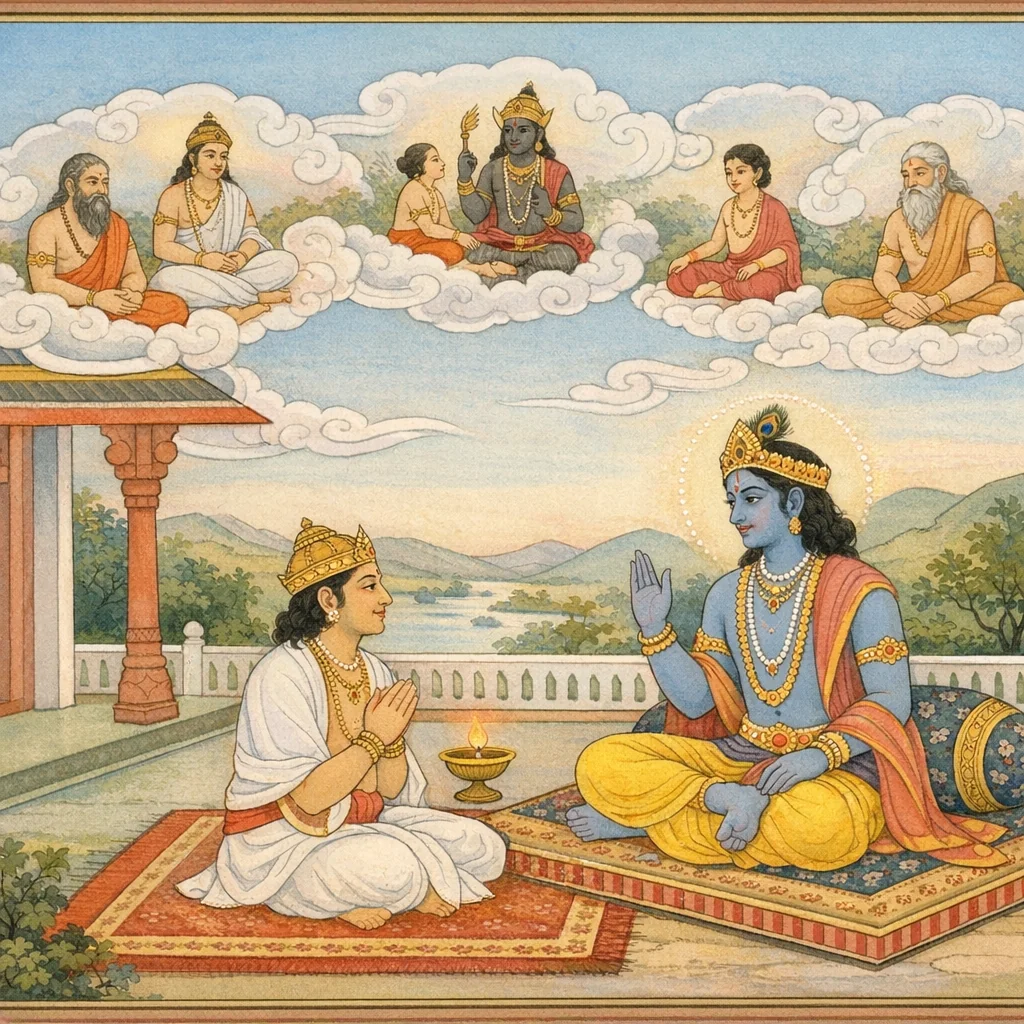
Adhyaya 19
सहधर्म-प्रश्नः तथा अष्टावक्रोपाख्यान-प्रस्तावः (Inquiry on Sahadharma and the Opening of the Aṣṭāvakra Narrative)
Upa-parva: Strī-dharma and Sahadharma Inquiry (Pāṇigrahaṇa Context)
Yudhiṣṭhira interrogates the technical meaning of “sahadharma” as recited at marriage, asking how ‘shared dharma’ is to be understood when (a) spouses may accrue distinct karmic results, (b) death may occur at different times, and (c) some textual strands contain critical characterizations of women’s truthfulness. He frames the issue as a potential contradiction between worldly association and post-mortem destinies (svarga/naraka trajectories). Bhīṣma responds methodologically by citing an ancient illustrative account: Aṣṭāvakra, seeking to establish household life, requests a virtuous woman (Suprabhā) in marriage. The bride’s father (Vadānya) imposes a condition: Aṣṭāvakra must first travel north, pass landmarks associated with Kubera and Himavat, observe Rudra’s sacred abode with attendant beings, and then meet and honor an elderly ascetic woman performing dīkṣā. Only after this encounter should he return to take the bride’s hand. The chapter thus functions as a hinge: it records the doubt, identifies the interpretive stakes, and initiates a precedent narrative intended to define sahadharma through concrete conditions and ritual-ethical procedure.
Chapter Arc: दानधर्मपर्व के भीतर महादेव-सहस्रनाम-स्तोत्र की परंपरा का द्वार खुलता है—यह स्तोत्र किसने, किससे, और किस विधि से पाया; यही प्रश्न कथा को आगे बढ़ाता है। → स्तुति की शक्ति को केवल भावुक प्रशंसा नहीं, बल्कि नियम, शुचिता, ब्रह्मचर्य और जितेन्द्रियता से सिद्ध होने वाला धर्म-उपाय बताया जाता है; साथ ही इसकी ‘अल्प-प्रसिद्धि’ का संकेत इसे दुर्लभ और गुप्त-धन बना देता है। → परंपरा-श्रृंखला का निर्णायक उद्घोष: वैवस्वत मनु से नारायण नामक साध्यदेव, फिर यम (वैवस्वत) से नाचिकेता, नाचिकेता से मार्कण्डेय, और मार्कण्डेय से जनार्दन/कृष्ण तक स्तोत्र का नियमपूर्वक संचार—और अब कृष्ण का उसे आगे देने का संकल्प। → कृष्ण युधिष्ठिर को साधना-नियम सहित फलश्रुति बताते हैं: जो शुचि, ब्रह्मचारी, जितेन्द्रिय और अखण्ड-योगयुक्त होकर इसका पाठ करे, वह अश्वमेध-यज्ञ के तुल्य फल प्राप्त करता है। → स्तोत्र का प्रत्यक्ष प्रयोग—पाठ-विधि, नाम-समूह, और उससे प्राप्त होने वाले विशिष्ट फल—अगले प्रसंग में विस्तार पाने को ठहरते हैं।
Shlokas
Verse 17
इति श्रीमहाभारते अनुशासनपर्वणि दानधर्मपर्वणि महादेवसहस्रनामस्तोत्रे सप्तदशोड्ध्याय:
આ રીતે શ્રીમહાભારતના અનુશાસનપર્વના દાનધર્મપર્વમાં મહાદેવ-સહસ્રનામ-સ્તોત્રનો સત્તરમો અધ્યાય સમાપ્ત થયો।
Verse 178
वैवस्वत मनुने समाधिनिष्ठ और ज्ञानी नारायण नामक किसी साध्यदेवताको यह स्तोत्र प्रदान किया। धर्मसे कभी च्युत न होनेवाले उन पूजनीय नारायण नामक साध्यदेवने यमको इसका उपदेश किया
વાયુ બોલ્યા—સમાધિનિષ્ઠ અને જ્ઞાનવાન વૈવસ્વત મનુએ પ્રાચીનકાળે નારાયણ નામના એક સાધ્યદેવને આ સ્તોત્ર આપ્યું. ધર્મથી કદી ન ચ્યૂત થનારા, પૂજનીય તે નારાયણ નામના સાધ્યદેવે પછી યમને તેનો ઉપદેશ આપ્યો।
Verse 179
नाचिकेताय भगवानाह वैवस्वतो यम: । मार्कण्डेयाय वार्ष्णेय नाचिकेतो5भ्यभाषत,वृष्णिनन्दन! ऐश्वर्यशाली वैवस्वत यमने नाचिकेताको और नाचिकेतने मार्कण्डेय मुनिको यह स्तोत्र प्रदान किया
વાયુ બોલ્યા—વૈવસ્વત યમ ભગવાને આ સ્તોત્ર નચિકેતાને કહ્યું. અને હે વાર્ષ્ણેય, હે વૃષ્ણિનંદન! નચિકેતાએ પછી તેને માર્કંડેય મુનિને સંભળાવ્યું. આ રીતે ઐશ્વર્યશાળી વૈવસ્વત યમથી નચિકેતાને અને નચિકેતાથી માર્કંડેયને આ સ્તોત્ર પ્રાપ્ત થયું।
Verse 180
मार्कण्डेयान्मया प्राप्तो नियमेन जनार्दन । तवाप्यहममित्रघ्न स्तवं दद्यां हविश्रुतम्
વાયુ બોલ્યા— હે જનાર્દન! નિયમપૂર્વક મેં આ સ્તવ માર્કંડેય પાસેથી પ્રાપ્ત કર્યો. હે શત્રુઘ્ન! યજ્ઞમાં અર્પિત હવિ સમાન પ્રસિદ્ધ અને શ્રુતિપ્રસિદ્ધ આ સ્તવ હું તને પણ અર્પું છું.
Verse 181
शत्रुसूदन जनार्दन! मार्कण्डेयजीसे मैंने नियमपूर्वक यह स्तोत्र ग्रहण किया था। अभी इस स्तोत्रकी अधिक प्रसिद्धि नहीं हुई है, अतः मैं तुम्हें इसका उपदेश देता हूँ ।। स्वर्ग्यमारोग्यमायुष्यं धन्यं वेदेन सम्मितम् । नास्य विष्नं विकुर्वन्ति दानवा यक्षराक्षसा: । पिशाचा यातुधाना वा गुह्रुाका भुजगा अपि,यह वेदतुल्य स्तोत्र स्वर्ग, आरोग्य, आयु तथा धन-धान्य प्रदान करनेवाला है। यक्ष, राक्षस, दानव, पिशाच, यातुधान, गुह्यक और नाग भी इसमें विघ्न नहीं डाल पाते हैं
વાયુ બોલ્યા— હે શત્રુસૂદન, હે જનાર્દન! મેં આ સ્તવ ઋષિ માર્કંડેય પાસેથી નિયમપૂર્વક ગ્રહણ કર્યો હતો. હજી તેની વિશેષ પ્રસિદ્ધિ થઈ નથી; તેથી હું તને તેનો ઉપદેશ આપું છું. આ વેદસમાન સ્તવ સ્વર્ગ, આરોગ્ય, દીર્ઘાયુ અને ધન-ધાન્ય આપે છે. દાનવ, યક્ષ અને રાક્ષસો તેમાં વિઘ્ન કરી શકતા નથી; પિશાચ, યાતુધાન, ગુહ્યક અને નાગો પણ તેની અસર અટકાવી શકતા નથી.
Verse 182
य: पठेत शुचि: पार्थ ब्रह्मचारी जितेन्द्रिय: । अभग्नयोगो वर्ष तु सो5श्वमेधफलं लभेत्,(श्रीकृष्ण कहते हैं--) कुन्तीनन्दन युधिष्ठिर! जो मनुष्य पवित्रभावसे ब्रह्मचर्यके पालनपूर्वक इन्द्रियोंको संयममें रखकर एक वर्षतक योगयुक्त रहते हुए इस स्तोत्रका पाठ करता है, उसे अश्वमेध यज्ञका फल मिलता है
વાયુ બોલ્યા— હે પાર્થ! જે મનુષ્ય શુદ્ધ આચરણવાળો, બ્રહ્મચારી અને જીતેન્દ્રિય બની, એક વર્ષ સુધી અખંડ યોગનિષ્ઠામાં રહી આ સ્તવનું પાઠ કરે છે, તે અશ્વમેધ યજ્ઞ સમાન ફળ પ્રાપ્ત કરે છે.
Frequently Asked Questions
Whether “sahadharma” in marriage denotes a truly shared moral destiny, despite individualized karma-phala, differing times of death, and divergent post-mortem outcomes—raising an interpretive tension between relational duty and personal causality.
Dharma terms operate at defined levels (rite, role, and context). Shared duty can be real as coordinated obligation in life without implying identical karmic results; clarification requires precedent narratives and careful alignment with śruti-smṛti reasoning.
No explicit phalaśruti appears here; instead, the meta-structure is pedagogical: Bhīṣma signals that resolution will come through the ensuing itihāsa (Aṣṭāvakra’s instructed journey and encounter), positioning narrative as the interpretive instrument.