
Bhagavad Gita — Moksha Sannyasa Yoga, Shloka 67
Moksha Sannyasa Yoga
इदं ते नातपस्काय नाभक्ताय कदाचन । न चाशुश्रूषवे वाच्यं न च मां योऽभ्यसूयति ॥ १८.६७ ॥
idaṁ te nātapaskāya nābhaktāya kadācana | na cāśuśrūṣave vācyaṁ na ca māṁ yo 'bhyasūyati || 18.67 ||

આ ઉપદેશ કદી પણ તપ વિના રહેનારને, અભક્તને ન કહવો; તેમજ જે સાંભળવા ઇચ્છતો નથી તેને, અને જે મારી નિંદા કરે છે તેને પણ ન કહવો.
यह (उपदेश) न तो बिना तप वाले को, न बिना भक्त वाले को कभी कहना चाहिए; न जो सुनना न चाहता हो उसे कहना चाहिए और न उस व्यक्ति को जो मेरी निन्दा करता हो।
This is not to be spoken to one without disciplined practice, nor to one without devotion, nor to one who is unwilling to listen, nor to one who disparages me.
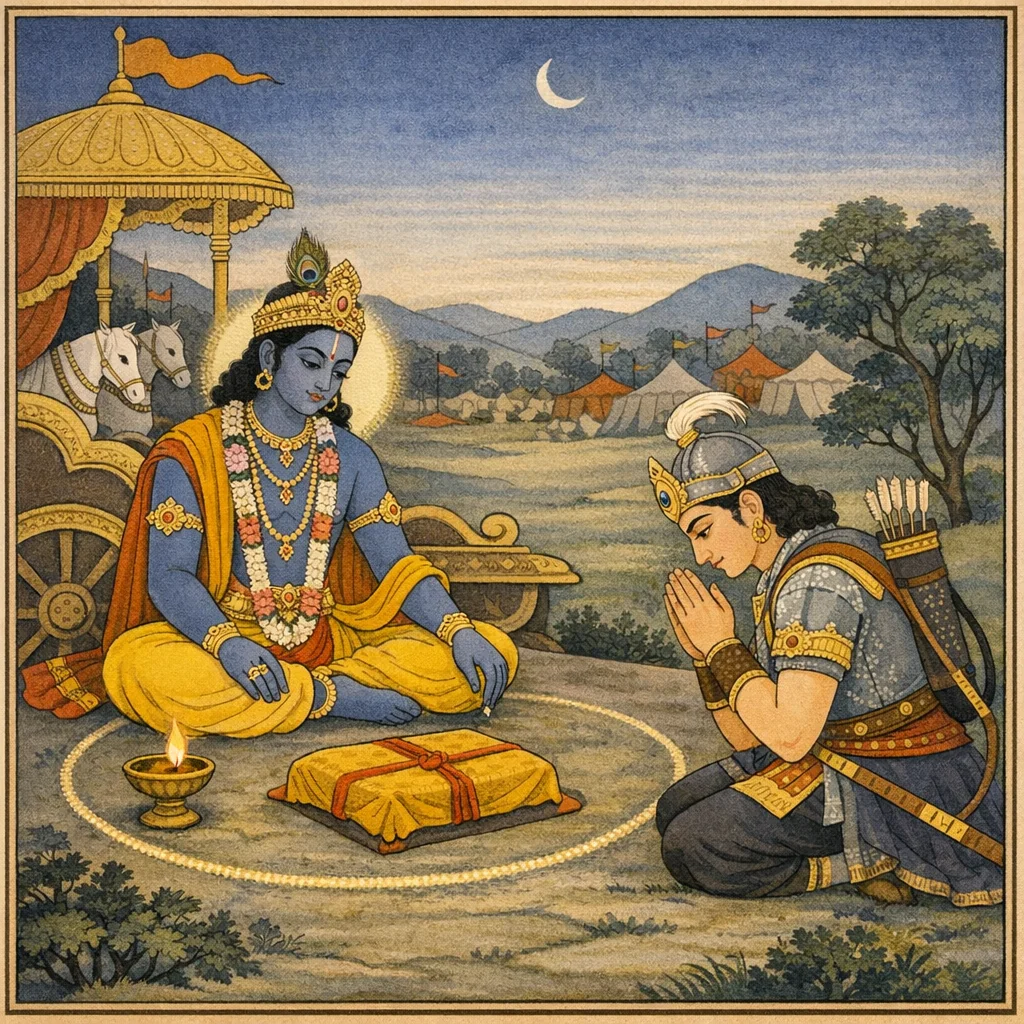
The verse establishes a norm of restricted transmission of esoteric instruction, common in Indian pedagogical traditions. ‘तपस्’ here can mean austerity, disciplined effort, or ethical self-regulation; ‘अभ्यसूयति’ implies hostile fault-finding rather than mere questioning.
FAQs
It recognizes that transformative teachings require readiness: without discipline, goodwill, and willingness to listen, instruction may be misunderstood or provoke defensive reactions.
The verse implies that realization-oriented knowledge is not merely informational; it is efficacious only when received within an appropriate moral and devotional disposition.
Immediately after the climactic teaching (18.66), Krishna sets boundaries for dissemination, reflecting traditional concerns about misapplication of powerful doctrines.
It can be read as guidance for responsible communication: share sensitive or advanced practices with those who show sincerity, ethical grounding, and genuine curiosity, and avoid fruitless debate with hostile audiences.
Ask anything about this verse
Curious about the meaning, context, or a word? Ask, and continue the conversation in the Vedapath app.
A free Google sign-in keeps your chat saved across web and the app.
Read Bhagavad Gita in the Vedapath app
Scan the QR code to open this directly in the app, with audio, word-by-word meanings, and more.