
Shloka 34
Karma Yoga — Karma Yoga
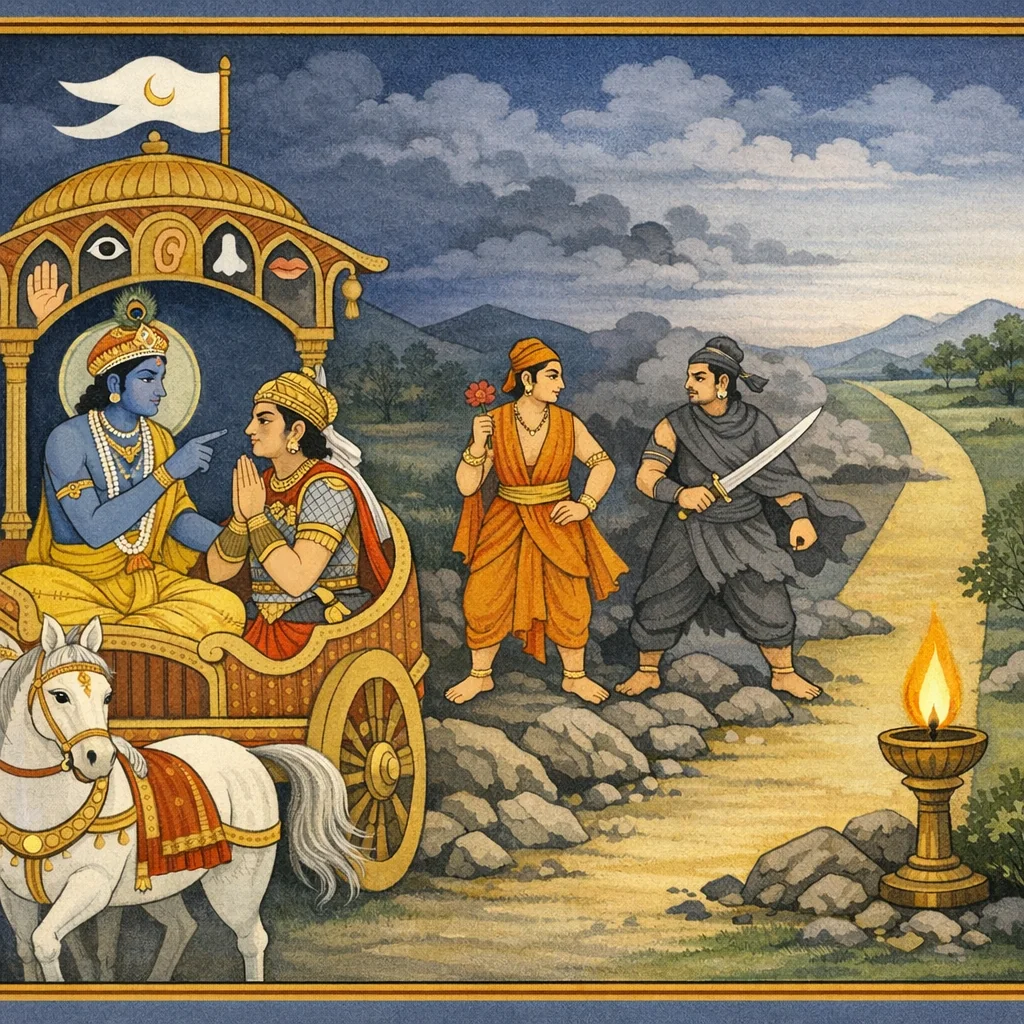
इन्द्रियस्येन्द्रियस्यार्थे रागद्वेषौ व्यवस्थितौ । तयोर्न वशमागच्छेत्तौ ह्यस्य परिपन्थिनौ ॥ ३.३४ ॥
indriyasya indriyasya arthe rāga-dveṣau vyavasthitau | tayor na vaśam āgacchet tau hy asya paripanthinau || 3.34 ||

દરેક ઇન્દ્રિય અને તેના વિષય અંગે રાગ અને દ્વેષ સ્થિર રહેલા છે. તેમના વશમાં ન જવું; કારણ કે એ જ તેના માર્ગના અવરોધક (પરિપંથી) છે.
Attraction and aversion are fixed with respect to each sense and its object; one should not come under their control, for they obstruct one’s path.
For each sense in relation to its object, attachment and repulsion are established; one should not submit to them, since they are hindrances.
Most translations align closely; interpretive differences lie in whether rāga/dveṣa are treated as morally blameworthy or as natural tendencies that become obstacles when they dominate.
FAQs
It frames craving and avoidance as default reactions in perception; psychological freedom is presented as not being governed by these reactions.
Within Sāṃkhya-influenced thought, sensory engagement is structured by guṇas, producing patterned likes/dislikes that cloud discrimination.
It continues the discussion on why disciplined action is needed: unexamined sense-reactions can derail ethical and contemplative aims.
Practice noticing impulses (attraction/aversion) before acting—e.g., pause, label the reaction, and choose responses aligned with values.