
Shloka 15
Karma Yoga — Karma Yoga
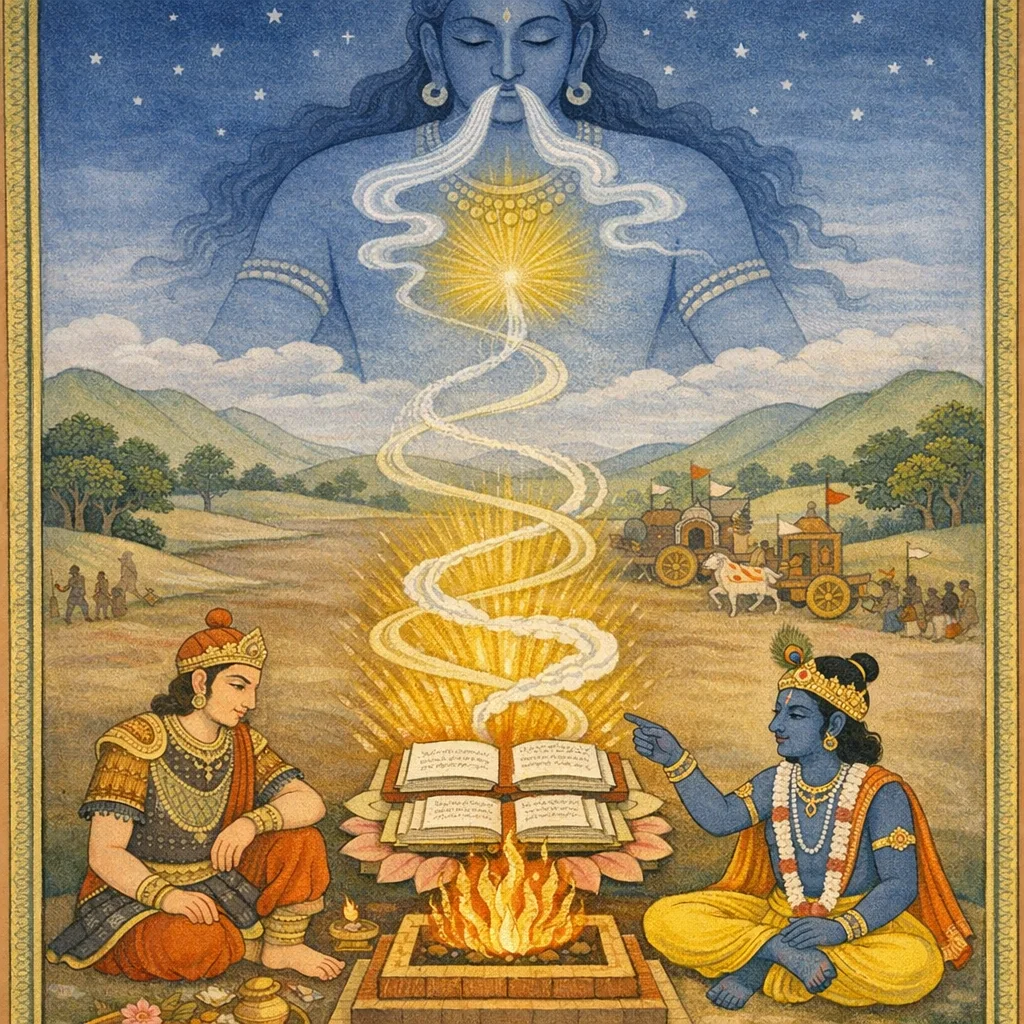
कर्म ब्रह्मोद्भवं विद्धि ब्रह्माक्षरसमुद्भवम् । तस्मात्सर्वगतं ब्रह्म नित्यं यज्ञे प्रतिष्ठितम् ॥ ३.१५ ॥
karma brahmodbhavaṁ viddhi brahmākṣara-samudbhavam | tasmāt sarva-gataṁ brahma nityaṁ yajñe pratiṣṭhitam || 3.15 ||

કર્મ બ્રહ્મમાંથી ઉત્પન્ન થાય છે એમ જાણ; અને બ્રહ્મ અક્ષર (અવિનાશી)માંથી ઉત્પન્ન થાય છે. તેથી સર્વવ્યાપી બ્રહ્મ સદા યજ્ઞમાં પ્રતિષ્ઠિત છે.
Know action to arise from Brahman, and Brahman to arise from the Imperishable; therefore the all-pervading Brahman is ever established in sacrifice.
Understand prescribed action as arising from brahman (here: Vedic norm/teaching); brahman arises from the Imperishable (akṣara). Therefore the all-pervading brahman is always grounded in yajña.
A key interpretive issue is brahman: traditional devotional-Advaitic readings often take it as ‘the Absolute’ (leading to a metaphysical chain). Many philological readings take brahman here as ‘Veda/sacred formulation’ (cf. brahman as sacred word), with akṣara as the ‘imperishable’ ground. The concluding line then links sacred norm and offering-practice as mutually anchored.
FAQs
It supports acting with a sense of larger grounding—whether understood as conscience, tradition, or ultimate reality—reducing anxiety produced by purely personal preference.
The verse connects the realm of action to an imperishable principle (akṣara), suggesting that disciplined practice participates in a deeper, enduring order.
It reinforces the earlier ‘cycle’ (3.14) by locating prescribed action within an authoritative and enduring framework, legitimizing karma-yoga as more than pragmatism.
Read as: sustainable action needs stable guiding norms (ethical principles, constitutional values, or spiritual commitments) rather than shifting self-interest.