
Shloka 10
Karma Yoga — Karma Yoga
सहयज्ञाः प्रजाः सृष्ट्वा पुरोवाच प्रजापतिः । अनेन प्रसविष्यध्वमेष वोऽस्त्विष्टकामधुक् ॥ ३.१० ॥
sahayajñāḥ prajāḥ sṛṣṭvā purovāca prajāpatiḥ | anena prasaviṣyadhvam eṣa vo'stv iṣṭakāmadhuk || 3.10 ||

યજ્ઞ સાથે પ્રજાઓનું સર્જન કરીને પ્રજાપતિએ આરંભમાં કહ્યું: ‘આ દ્વારા તમે સમૃદ્ધ થાઓ; આ જ તમારે માટે ઇચ્છિત કામનાઓ પૂરી કરનાર કામધેનુ બને.’
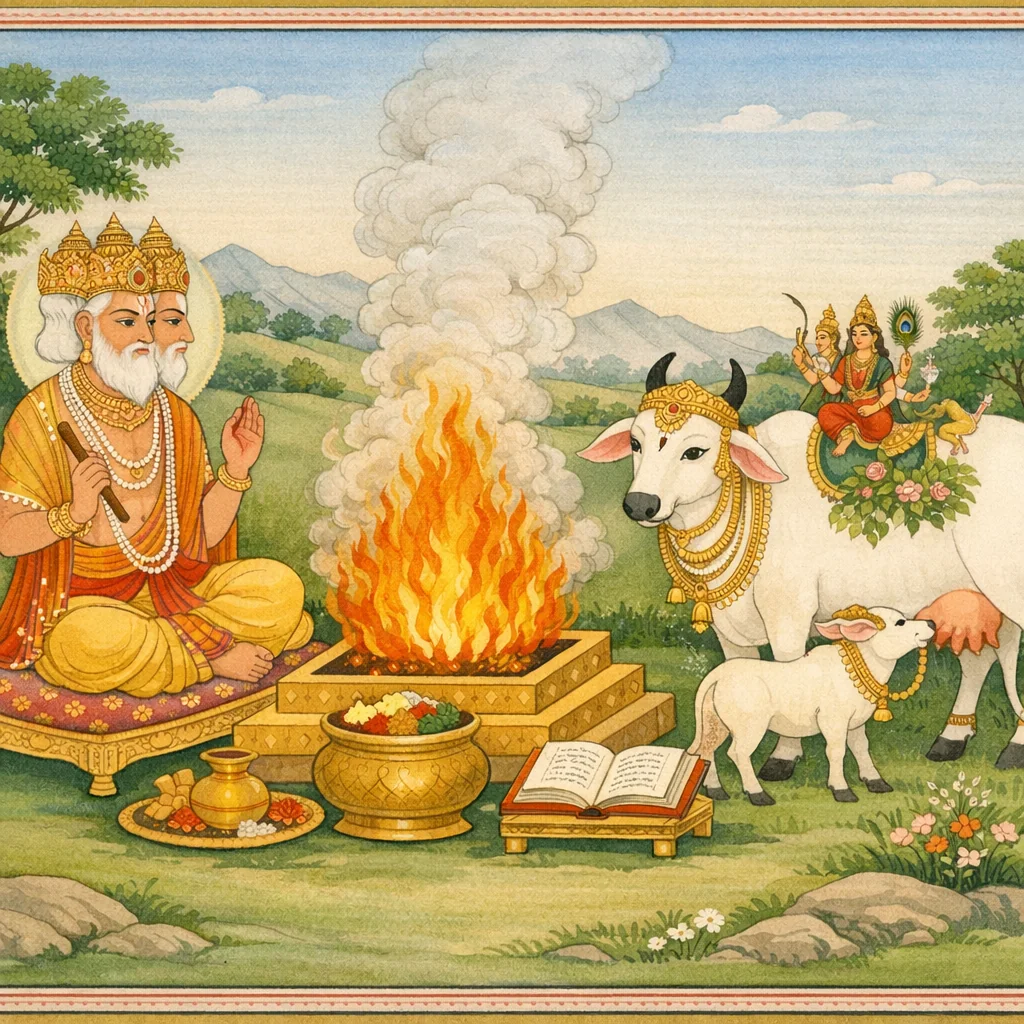
Having created beings together with sacrifice, Prajāpati said in the beginning: ‘By this you shall prosper; let this be your wish-fulfilling cow.’
Creating the creatures together with yajña, Prajāpati said formerly: ‘By this you shall generate/increase; let this be for you the giver of desired enjoyments.’
‘Iṣṭa-kāma-dhuk’ employs a pastoral metaphor (‘wish-milking cow’) indicating abundance through reciprocal ritual-ethical order. Some readings emphasize cosmology (creation with sacrifice); others read it as socio-religious charter for communal prosperity.
FAQs
The verse offers a motivational frame: disciplined giving and shared practices support a sense of meaning and continuity, which can reduce alienation and increase cooperative behavior.
It presents a worldview in which yajña is woven into the structure of life—an ordering principle linking individual action, community welfare, and cosmic balance.
Krishna expands karma-yoga into a broader sacrificial cosmology, preparing the argument that duty and offering sustain both society and the moral-spiritual order.
Read ‘yajña’ as practices of contribution—taxes, volunteering, ethical production, shared institutions—suggesting that collective well-being depends on reciprocal participation.