
Bhagavad Gita — Arjuna Vishada Yoga, Shloka 30
Arjuna Vishada Yoga
गाण्डीवं स्रंसते हस्तात्त्वक्चैव परिदह्यते । न च शक्नोम्यवस्थातुं भ्रमतीव च मे मनः ॥ १.३० ॥
gāṇḍīvaṁ sraṁsate hastāt tvak caiva paridahyate | na ca śaknomy avasthātuṁ bhramatīva ca me manaḥ || 1.30 ||

ગાંડીવ હાથમાંથી સરકી જાય છે; ત્વચા દહે છે. હું ઊભો રહી શકતો નથી; અને મારું મન જાણે ચક્કર ખાતું હોય તેમ લાગે છે.
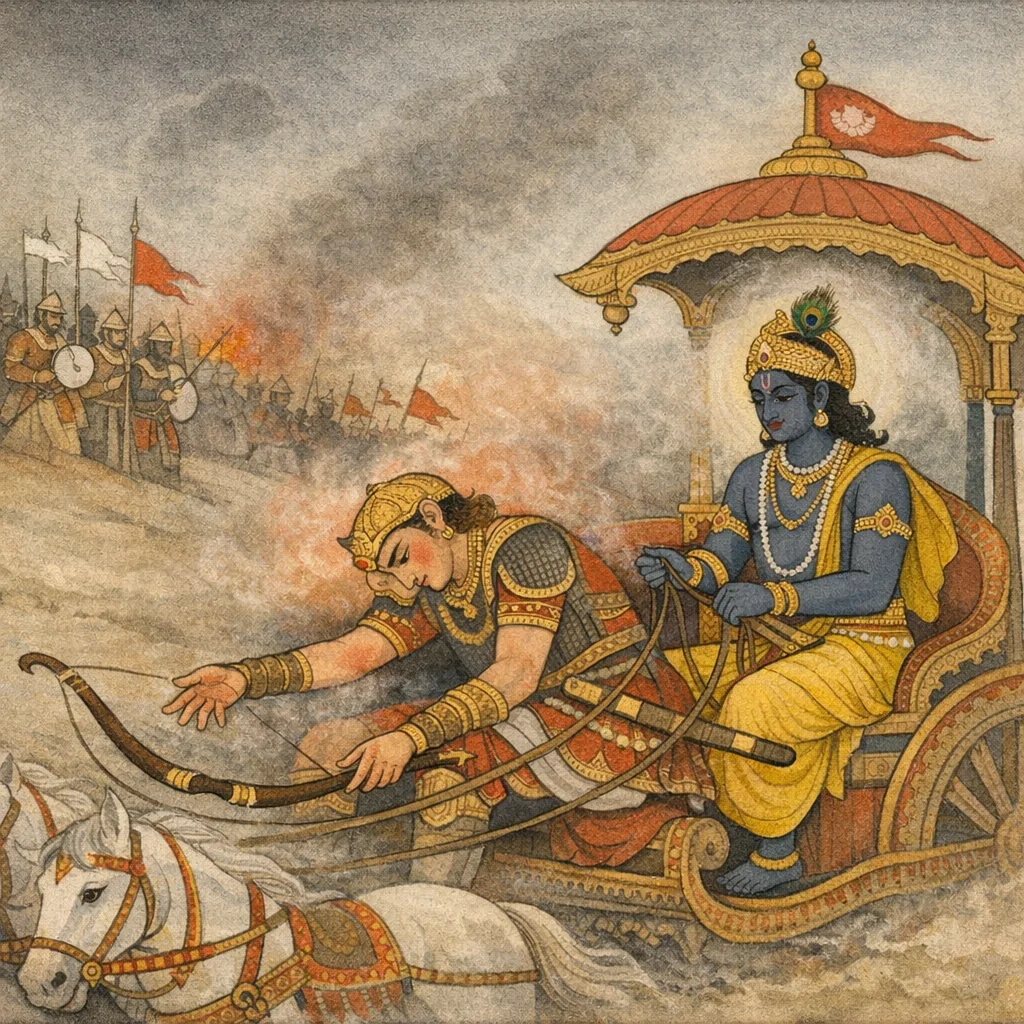
My bow slips from my hand, my skin burns; I am unable to stand, and my mind seems to reel.
The Gāṇḍīva slips from my hand and my skin burns; I cannot remain steady, and my mind seems as if whirling.
Some printed editions repeat part of 1.29 into 1.30; the critical sense here emphasizes instability (avasthātuṁ a-śaknomi) and mental disorientation (bhramatīva manaḥ).
FAQs
Arjuna describes cognitive and postural instability—difficulty standing and a ‘spinning’ mind—consistent with overwhelming anxiety and grief under moral pressure.
The inability to ‘stand steady’ anticipates the Gītā’s ideal of steadiness in wisdom (sthita-prajñā) and the role of yoga in stabilizing mind and action.
This deepening disorientation leads into Arjuna’s explicit arguments against proceeding and sets the stage for Kṛṣṇa’s response.
When the mind feels ‘whirling,’ prioritize stabilization practices (breath, reflection, counsel) before acting; clarity is an ethical resource.