Dashati 19
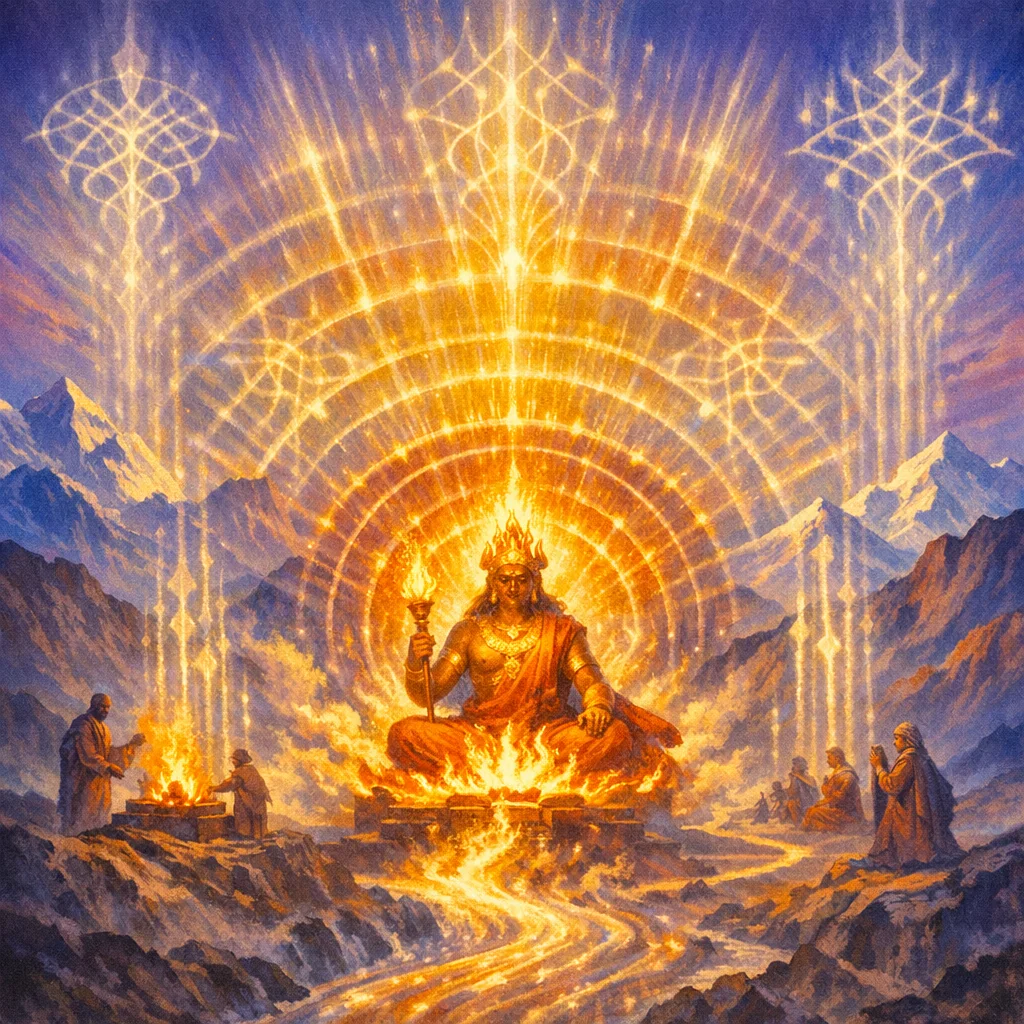
Vaiśvānara-Agni as the embodiment of ṛta who illumines and carries the sacrifice
Agni Vaiśvānara
Majestic and solar-bright (tejas-driven) with a steady authoritative lift
Rṣi not identified from the supplied data; the verses function as Agneya/Vaiśvānara stuti typical of Uttarārcika usage rather than a clearly marked single-family hymn here.
Vaiśvānara-Agni est l’incarnation visible du ṛta : il illumine et porte le sacrifice. Seigneur de la lumière sacrée (jyotiṣas-pati) et chaleur/éclat ininterrompu (gharma, avec résonance du Pravargya), il élève le rite vers le ciel (svaruttira), l’établit dans le temps juste et régit souverainement les ṛtu — saisons et moments rituels institués. Son efficacité embrasse le passé et l’avenir (bhūta–bhavya), et sa radiance solitaire demeure dans les dhāmas aimés.
Mantras
Mantra 1
ऋतावानं वैश्वानरमृतस्य ज्योतिषस्पतिम् अजस्रं घर्ममीमहे
Nous adorons Vaiśvānara, établi dans le ṛta, seigneur de la lumière de l’ordre sacré, chaleur ininterrompue (gharma), resplendissante.
Mantra 2
य इदं प्रतिपप्रथे यज्ञस्य स्वरुत्तिरन् ऋतूनुत्सृजते वशी
Celui qui a déployé ceci (le rite) devant nous, l’élévateur du sacrifice (yajña) vers le ciel, le souverain qui met en mouvement les ṛtūn — les saisons, fixées selon ṛta.
Mantra 3
अग्निः प्रियेषु धामसु कामो भूतस्य भव्यस्य सभ्राडेको वि राजति
Agni, dans ses demeures chéries, le Désiré, dispensateur pour l’être et le devenir, resplendissant — seul il rayonne en majesté.
Frequently Asked Questions
Vaiśvānara is Agni understood as the universal fire—present in the rite and aligned with cosmic order (ṛta), shining as the lord of sacred light.
“Jyotiṣas-pati” means ‘lord of light’—Agni as the master of radiant sacrificial brilliance. “Gharma” is ‘heat/splendour’ and also echoes the Pravargya ‘gharma’ vessel/rite, emphasizing intense ritual tejas.
It presents Agni as the sovereign regulator of appointed times (ṛtus)—both cosmic seasons and ritual calendars—so the sacrifice proceeds in right order and reaches its heavenly goal.