Dashati 17
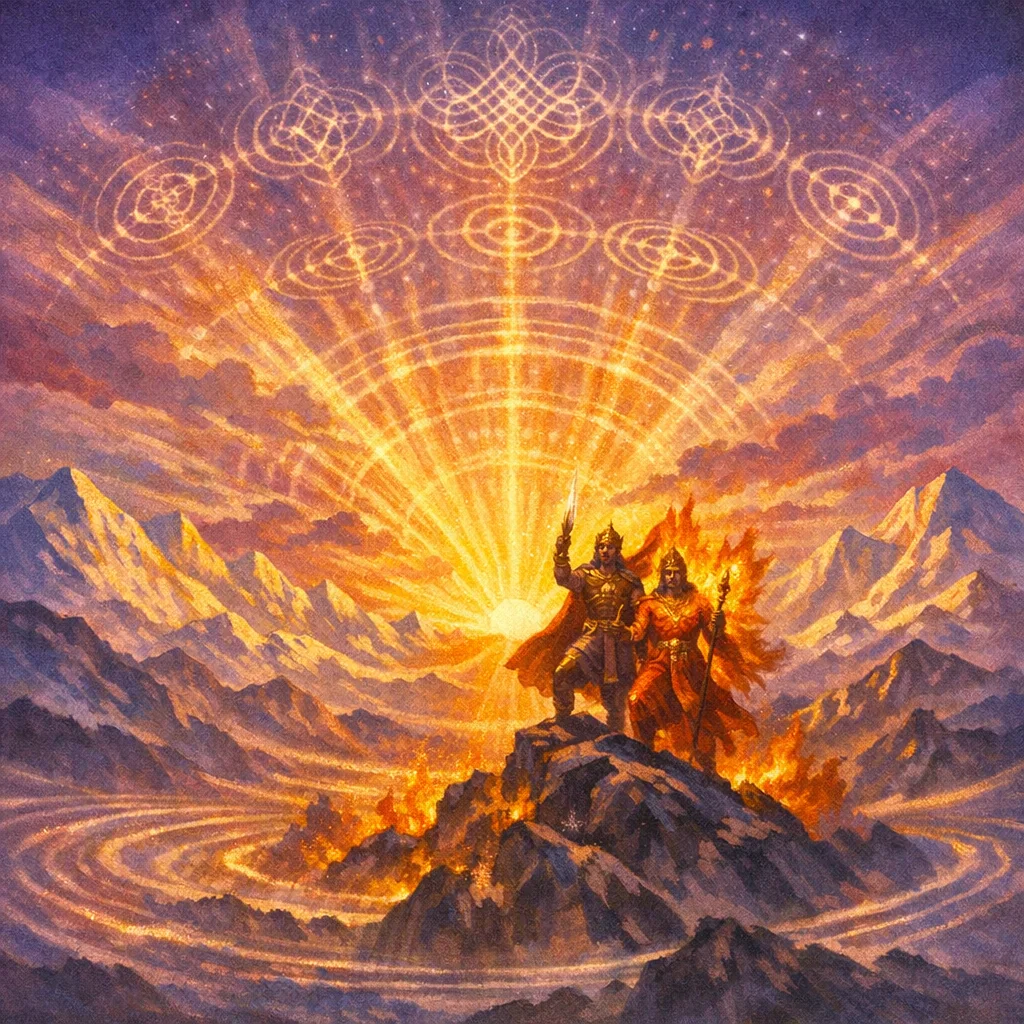
Aindra dawn-invocation: cosmic awakening and the joint victory-power of Indra–Agni
Indra–Agni
Uplifting and martial-energizing: from luminous dawn-rise to triumphant victory-acclamation
The excerpted Indrāgnī triṣṭubh material is RV-derived; without the full anukramaṇī mapping for this Sāmavedic selection a single r̥ṣi-family attribution cannot be asserted here.
Invocation matinale aindrique : éveil cosmique et puissance victorieuse conjointe d’Indra–Agni. Uṣas, Sūrya et Agni servent de repères du temps rituel du matin ; le char des Aśvins assure une arrivée rapide et l’assistance. Indra–Agni, tueurs de Vṛtra et briseurs de forteresses, accordent le vāja — force, nourriture et victoire. L’impulsion (prasava) de Savitṛ met en mouvement toute activité ; la dualité divine agit comme une seule puissance — « par un seul acte » (ekena karmaṇā) — et autorise le yajña dans le r̥ta.
Mantras
Mantra 1
तोशा वृत्रहणा हुवे सजित्वानापराजिता इन्द्राग्नी वाजसातमा
Par une louange reconnaissante, j’invoque Indra et Agni — les pourfendeurs de Vṛtra, toujours victorieux, invaincus, les plus généreux dispensateurs de nourriture et de force (vāja).
Mantra 2
यद्युञ्जाथे वृषणमश्विना रथं घृतेन नो मधुना क्षत्रमुक्षतम् अस्माकं ब्रह्म पृतनासु जिन्वतं वयं धना शूरसाता भजेमहि
Quand vous attellez, ô Aśvins, votre char vigoureux, alors de ghee et de miel aspergez notre puissance; dans les combats fortifiez notre prière sacrée (brahman), afin que nous partagions les richesses — les prix conquis par les héros.
Mantra 3
अर्वाङ्त्रिचक्रो मधुवाहनो रथो जीराश्वो अश्विनोर्यातु सुष्टुतः त्रिवन्धुरो मघवा विश्वसौभगः शं न आ वक्षद्द्विपदे चतुष्पदे .
Que vienne ici le char à trois roues des Aśvins, porteur de miel, aux chevaux rapides, dignement loué; à trois sièges, généreux, de bonheur universel — qu’il nous apporte le bien, aux bipèdes et aux quadrupèdes.
Frequently Asked Questions
It links the morning awakening of the cosmos (Agni, Sun, Dawns) with ritual momentum, then calls Indra–Agni to defeat obstruction and grant strength, food, and victory (vāja).
As a paired power, they act ‘with one deed’—combining victory-force and sacrificial fire—to break forts, destroy Vṛtra-like obstruction, and secure success for the Soma rite and the worshipper.
Savitṛ represents the divine ‘impulse’ that sets all beings and ritual acts in motion, while the Aśvins symbolize swift arrival and timely help—framing Indra–Agni’s heroic work within a dawn-time ritual setting.