Dashati 15
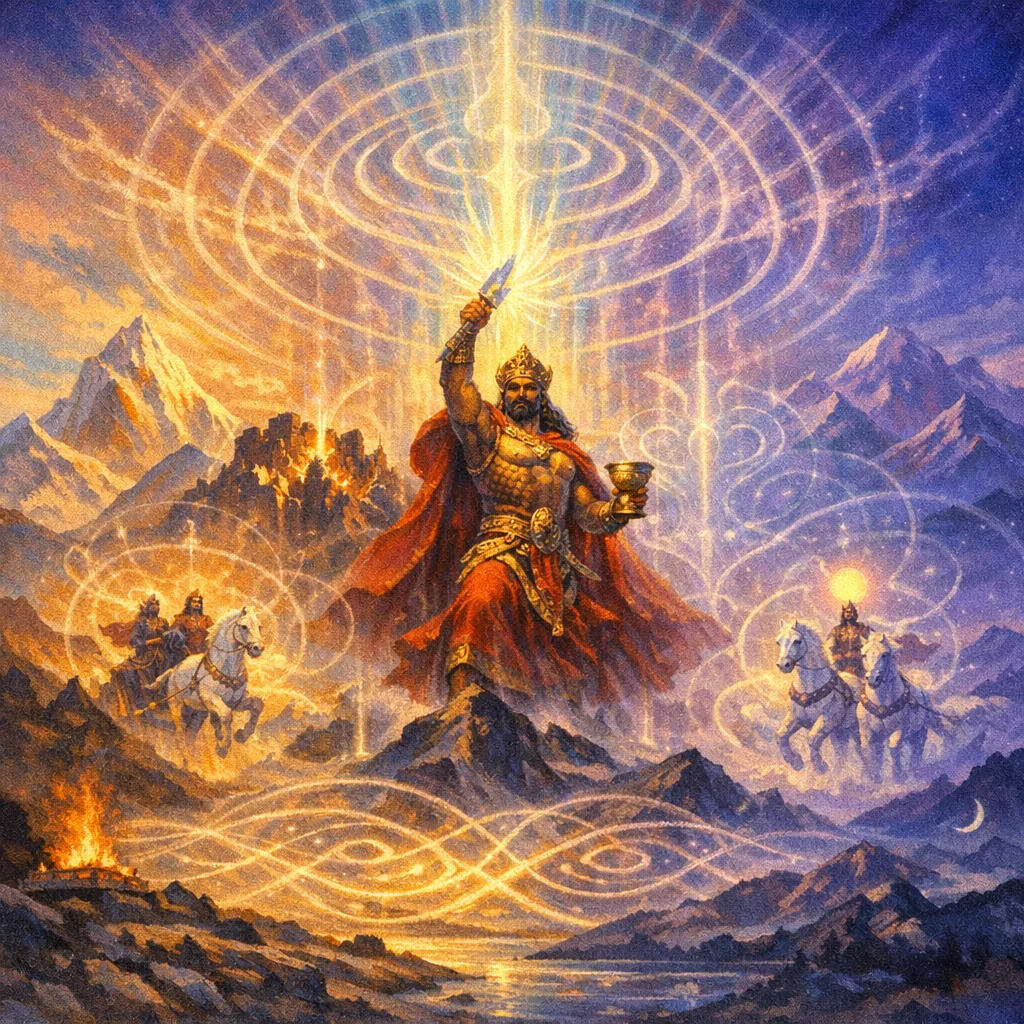
Aindra vīrya-stuti: Indra’s Soma-born exhilaration and fortress-breaking power, with allied invitations to the Aśvins for timely draughts
Indra
Vīra (heroic) with a bright dawn-opening lift transitioning into invitational sweetness
R̥ṣi attributions are not provided in the input; this dashati appears to combine Aindra material with Aśvin-invitation verses traceable to Ṛgvedic sources but precise family assignment requires the RV hymn mapping for each mantra.
Éloge héroïque d’Indra : exalté par le Soma, il déploie une puissance victorieuse et brise les « forteresses » — bastions hostiles et obstacles intérieurs du sacrifiant. En même temps, les Aśvins sont conviés à la boisson préparée (dans le cadre du Gharma/Pravargya) pour apporter rapidement protection et secours tout au long de la journée rituelle ; Agni et Uṣas encadrent l’éveil du rite à la lumière de l’aube. Les invitations suivent l’ordre du temps (matin–midi–jour/nuit), et la parole sacerdotale tournée vers les dieux élève l’hymne comme force opérante, éveillant les énergies divines, dissipant les empêchements et assurant prospérité au yajamāna.
Mantras
Mantra 1
क ईं वेद सुते सचा पिबन्तं कद्वयो दधे अयं यः पुरो विभिनत्त्योजसा मन्दानः शिप्रयन्धसः
Qui donc le connaît vraiment, buvant avec le Soma pressé? Qui a saisi sa puissance double? — Lui, grisé par le suc de Soma, renverse par sa force les forteresses, joyeux, aux lèvres éclatantes, nourri du breuvage.
Mantra 2
दाना मृगो न वारणः पुरुत्रा चरथं दधे न किष्ट्वा नि यमदा सुते गमो महांश्चरस्योजसा
Ô généreux (Indra), tel une bête sauvage, tel un éléphant, tu te meuves en maintes voies; nul ne te retient au pressurage du Soma: tu avances, grand en puissance, par ta force.
Mantra 3
य उग्रः सन्ननिष्टृतः स्थिरो रणाय संस्कृतः यदि स्तोतुर्मघवा शृणवद्धवं नेन्द्रो योषत्या गमत्
Lui qui, farouche, demeure irrépressible, ferme et préparé au combat — si le généreux (Maghavan) entend l’appel du chantre, qu’alors Indra vienne avec une faveur consentante.
Frequently Asked Questions
Because these verses emphasize Indra as the chief Soma-drinker whose exhilaration (manda) becomes victorious power, described as breaking ‘forts’—i.e., defeating enemies and removing obstacles to the sacrificer.
The dashati blends allied invitations: the Aśvins are called to come swiftly on their chariot to drink the prepared offering (pīti), linked by commentators to the Gharma/Pravargya context and to protective help throughout the day.
They align the invitation and protection with the Soma-day schedule—especially the morning and midday services/pressings—while also expressing continuous guardianship, so the offering and its benefits are secured in every time-period.