Dashati 15
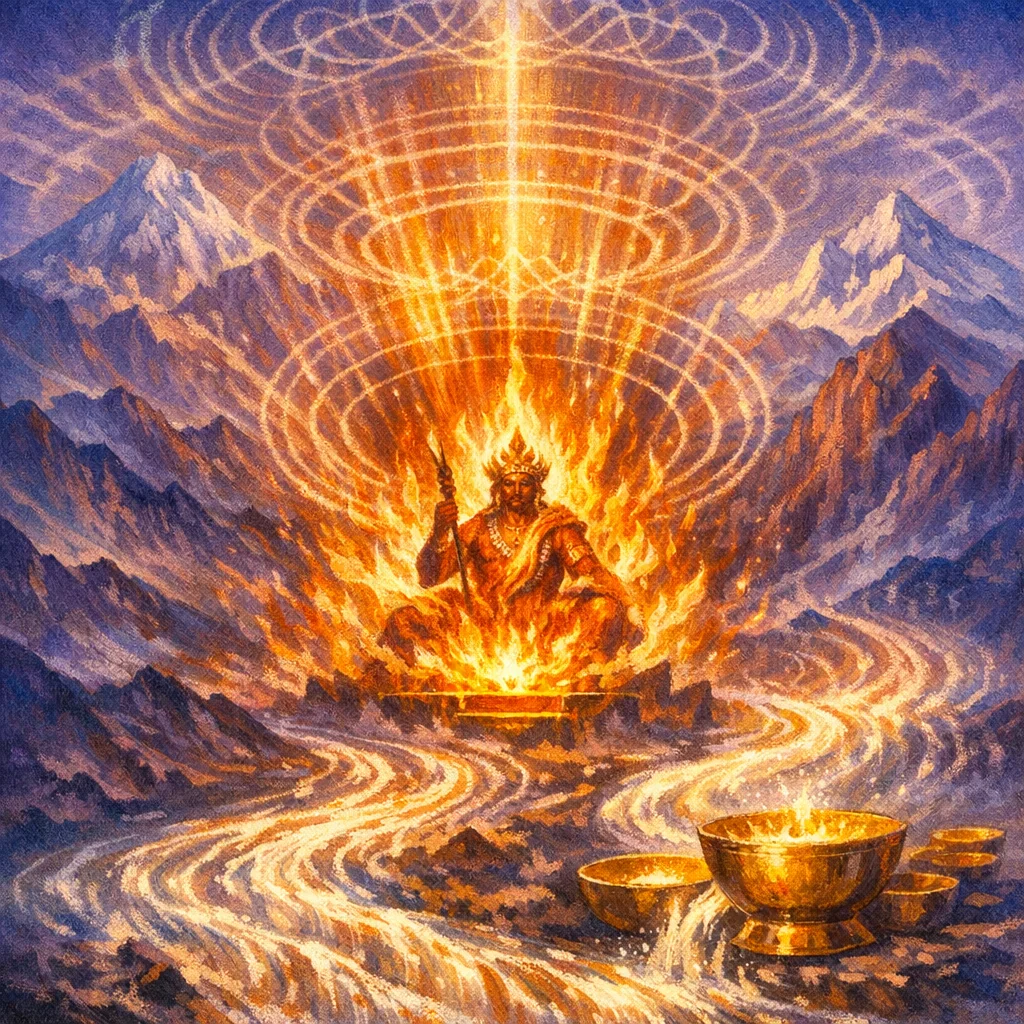
Agni’s precedence as Hotṛ and the energizing flow of Soma as the effective force of yajña
Agni
Brisk forward-driving and consecratory—moving from ignition/leadership (Agni) to cleansing and brightening (Pavamāna).
R̥ṣi attribution is not supplied in the input. The content aligns with common Soma Pavamāna stuti material and an Agni Hotṛ verse used in Sāman adaptation; precise family/maṇḍala lineage cannot be fixed from the given data.
Thème principal : la préséance d’Agni en tant que Hotṛ et le flux vivifiant de Soma comme force efficace du yajña. Sous-thèmes : Agni « allant devant » (purastāt) comme feu sacerdotal invoqué en premier ; māyā comme efficience divine qui fait réussir l’acte rituel ; purification de Soma Pavamāna par « dix sœurs » (courants/doigts/opérations) ; course rapide de Soma vers le droṇa et mélange avec le lait dans la camū ; le rite comme vidatha/yajña-sattra — actions coordonnées, impulsées par la divinité. Accent théologique : le yajña est présenté comme un processus vivant, mû par le divin : Agni initie et met en mouvement la séquence, tandis que Soma purifié devient l’offrande lumineuse et fortifiée qui porte l’intention vers les dieux.
Mantras
Mantra 1
साकमुक्षो मर्जयन्त स्वसारो दश धीरस्य धीतयो धनुत्रीः हरिः पर्यद्रवज्जाः सूर्यस्य द्रोणं ननक्षे अत्यो न वाजी
Ensemble, le vigoureux Soma est purifié ; les dix sœurs — les actes bien dirigés du sage, rapides comme des porteurs d’arc — le purifient. Le jus fauve court tout autour et atteint le vase de Sūrya, tel un coursier prompt, vainqueur du prix.
Mantra 2
सं मातृभिर्न शिशुर्वावशानो वृषा दधन्वे पुरुवारो अद्भिः मर्यो न योषामभि निष्कृतं यन्त्सं गच्छते कलश उस्रियाभिः
Comme un enfant auprès de ses mères, criant à pleine voix, le taureau Soma, bien gardé, se hâte avec les eaux ; comme un jeune époux vers la jeune fille dûment préparée, ainsi la jarre de Soma s’unit aux courants roux.
Mantra 3
उत प्र पिप्य ऊधरघ्न्याया इन्दुर्धाराभिः सचते सुमेधाः मूर्धानं गावः पयसा चमूष्वभि श्रीणन्ति वसुभिर्न निक्तैः
Et encore : la goutte de Soma enfle, jaillissant de l’udhar-aghnīyā, la source qui donne le lait ; le Sage (Soma) s’unit en courants. Les vaches, avec le lait, dans les coupes (camū), mêlent au sommet la boisson, comme avec des richesses, comme avec des ornements incrustés.
Frequently Asked Questions
It emphasizes Agni’s precedence in sacrifice: he is kindled and invoked first, and as Hotṛ he ‘leads’ by making the ritual actions effective.
They are a ritual image for the purifying agencies—often explained as the streams/waters, the ten fingers, or the coordinated operations involved in Soma straining and cleansing.
It describes the clarified Soma running to the receiving vessel (droṇa), shining with solar brilliance, and then being seasoned/mixed with milk in the bowls (camū) to prepare the offering.