Adhyaya 70
कार्त्तवीर्यसंभवः (Kārttavīrya’s Origin / Rise)
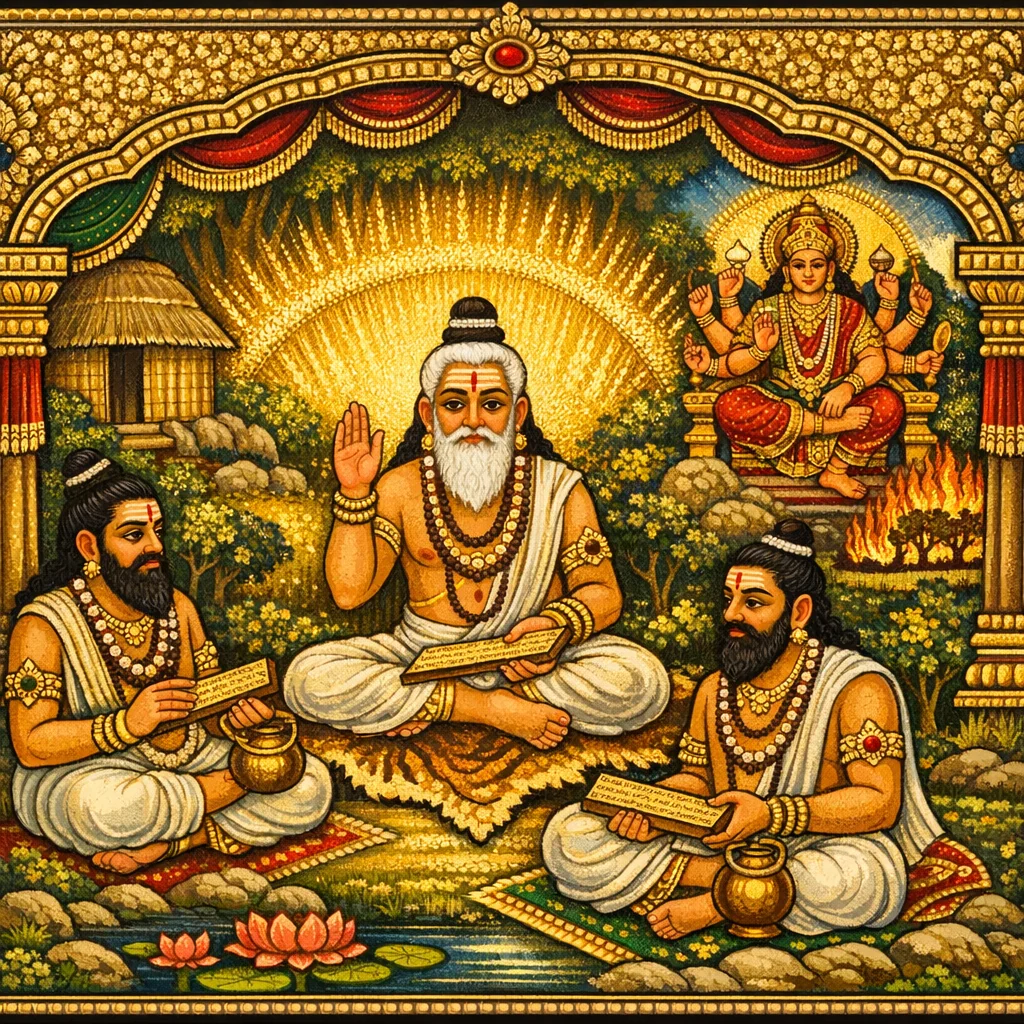
Ce micro-adhyāya sert de question-cadre (praśna) posée par les Ṛṣi. Le colophon situe la scène dans le Madhyama-bhāga, au sein du Tṛtīya Upoddhāta-pāda, dans le cycle du Bhārgava-carita, et intitule le chapitre « Kārttavīrya-saṃbhava ». Les sages demandent une explication : pourquoi le tapo-vana (forêt/bois d’ascèse) lié à Āpava Mahātmā fut-il brûlé après avoir été dominé par la vaillance de Kārttavīrya ? Ils soulignent une contradiction apparente : Kārttavīrya est réputé, en tant que rājarṣi, être le protecteur des sujets (rakṣitā) ; comment un protecteur pourrait-il détruire une forêt d’ascètes ? Le chapitre établit ainsi le problème éthique et généalogique que le récit suivant devra résoudre : réconcilier le dharma royal (protection) avec un acte portant atteinte à un espace sacré, à la fois écologique et rituel, ouvrant la suite de l’histoire de la lignée Bhārgava.
Shlokas
Verse 1
इति श्रीब्रह्माण्डे महोपुराणे वायुप्रोक्ते मध्यमभागे तृतीय उपोद्धातपादे भार्गवचरिते कार्त्तवीर्यसंभवो नाम एकोनसप्ततितमो ऽध्यायः ऋषय ऊचुः किमर्थं तु वनं दग्धमापवस्य महात्मनः / कार्त्तवीर्येण विक्रम्य तन्नः प्रब्रूहि पृच्छताम्
Ainsi, dans le Śrī Brahmāṇḍa Mahāpurāṇa, dans la section médiane proclamée par Vāyu, au troisième upoddhāta-pāda, dans le Bhārgava-carita, le soixante-neuvième chapitre nommé « La naissance de Kārttavīrya ». Les ṛṣi dirent : « Ô Sūta, pour quelle raison la forêt du magnanime Āpava, vaincue par la vaillance de Kārttavīrya, fut-elle brûlée ? Nous te questionnons : dis-le-nous. »
Verse 2
रक्षिता सतु राजर्षिः प्रजानामिति नः श्रुतम् / कथं सरक्षिता भूत्वा नाशयेत तपोवनम्
Nous avons entendu que ce rājarṣi était le protecteur des peuples. Comment, étant protecteur, pourrait-il détruire le tapovana, la forêt d’ascèse ?
Frequently Asked Questions
The chapter is a gateway into the Bhārgava-carita narrative frame and introduces Kārttavīrya as the focal royal figure; the explicit lineage list is not given in these two verses, but the placement signals forthcoming genealogy/history around Kārttavīrya in relation to the Bhṛgu/Bhārgava cycle.
They ask why Kārttavīrya burned/destroyed a tapovana linked with Āpava Mahātmā, despite Kārttavīrya’s reputation as a rājarṣi who protects subjects—highlighting an ethical inconsistency that demands contextual explanation.
No. This adhyāya is purely a framing interrogation within a genealogical-ethical narrative; it contains no bhuvana-kośa (cosmography) measurements, planetary distances, or geographic enumerations.