
Shloka 35
Karma Yoga — Karma Yoga
श्रेयान्स्वधर्मो विगुणः परधर्मात्स्वनुष्ठितात् । स्वधर्मे निधनं श्रेयः परधर्मो भयावहः ॥ ३.३५ ॥
śreyān svadharmo viguṇaḥ paradharmāt svanuṣṭhitāt | svadharme nidhanaṁ śreyaḥ paradharmo bhayāvahaḥ || 3.35 ||

Mieux vaut son propre dharma, même imparfait, que le dharma d’autrui parfaitement accompli. Mieux vaut mourir dans son propre dharma ; le dharma d’autrui est porteur de crainte.
Better is one’s own duty, though imperfect, than another’s duty well performed. Better is one’s end in one’s own duty; another’s duty is fraught with fear/risk.
One’s own dharma, even deficient in qualities, is preferable to another’s dharma well carried out; even failure within one’s own dharma is preferable—another’s dharma is perilous.
Traditional readings often connect svadharma to social role (varṇa/āśrama) and inherited obligations; academic interpretations also allow a broader sense of ‘one’s own’ as disposition-based vocation, consistent with the chapter’s emphasis on prakṛti.
FAQs
The verse cautions against living by borrowed ideals; imitating others can produce anxiety and inner conflict, whereas aligned commitments foster steadiness.
It links ethical action to one’s constitution (prakṛti/guṇa), implying that harmony between inner disposition and outward action supports clarity.
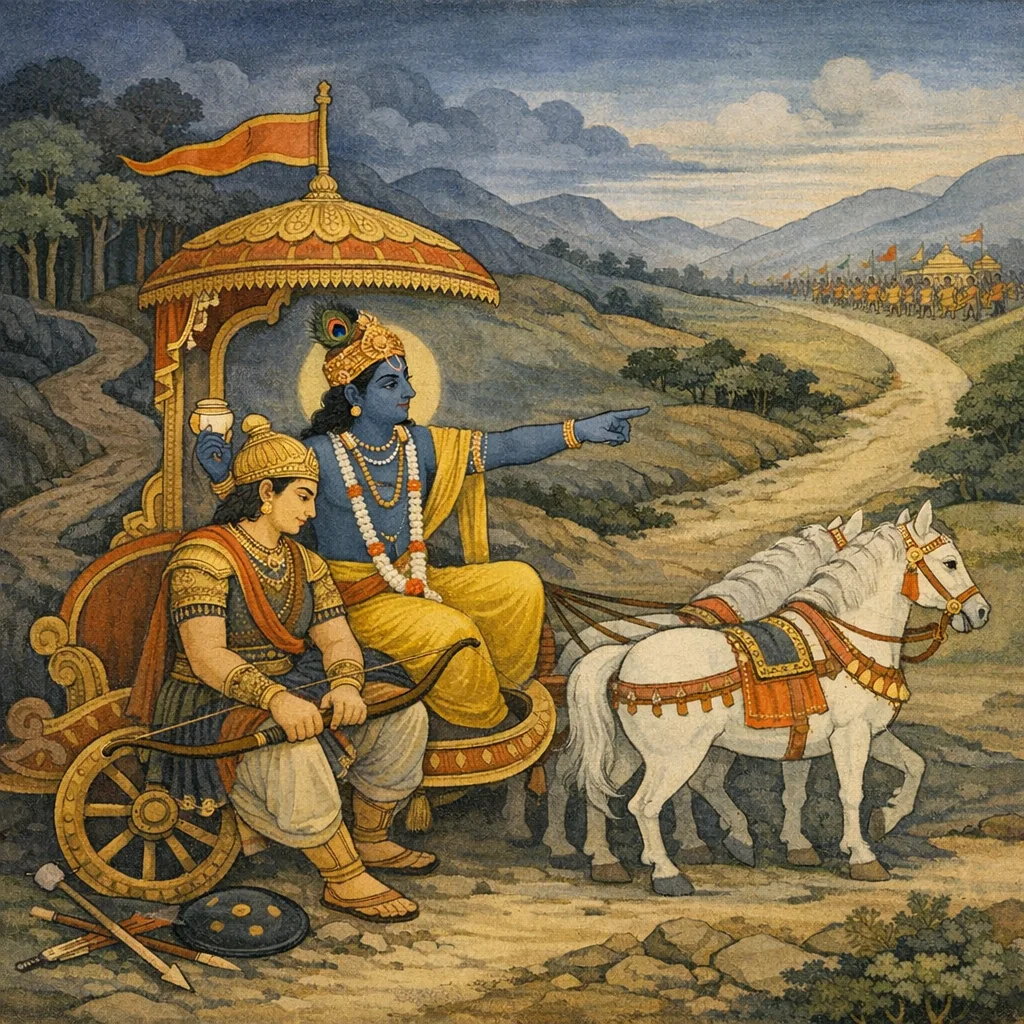
In Arjuna’s dilemma, it discourages abandoning his situated responsibilities in favor of a path unsuited to his current role and temperament.
Select responsibilities that fit your capacities and context; improve within your lane rather than copying someone else’s career or lifestyle script.