
Bhagavad Gita — Karma Sannyasa Yoga, Shloka 15
Karma Sannyasa Yoga
ज्ञानेन तु तदज्ञानं येषां नाशितमात्मनः । तेषामादित्यवज्ज्ञानं प्रकाशयति तत्परम् ॥ ५.१६ ॥
jñānena tu tad ajñānaṃ yeṣāṃ nāśitam ātmanaḥ | teṣām ādityavaj jñānaṃ prakāśayati tat param || 5.16 ||

Mais ceux dont cette ignorance a été détruite par la connaissance du Soi, leur connaissance, telle le soleil, illumine cette Réalité suprême.
परंतु जिनका वह अज्ञान आत्मज्ञान से नष्ट हो गया है, उनका वह ज्ञान सूर्य के समान उस परम तत्त्व को प्रकाशित कर देता है।
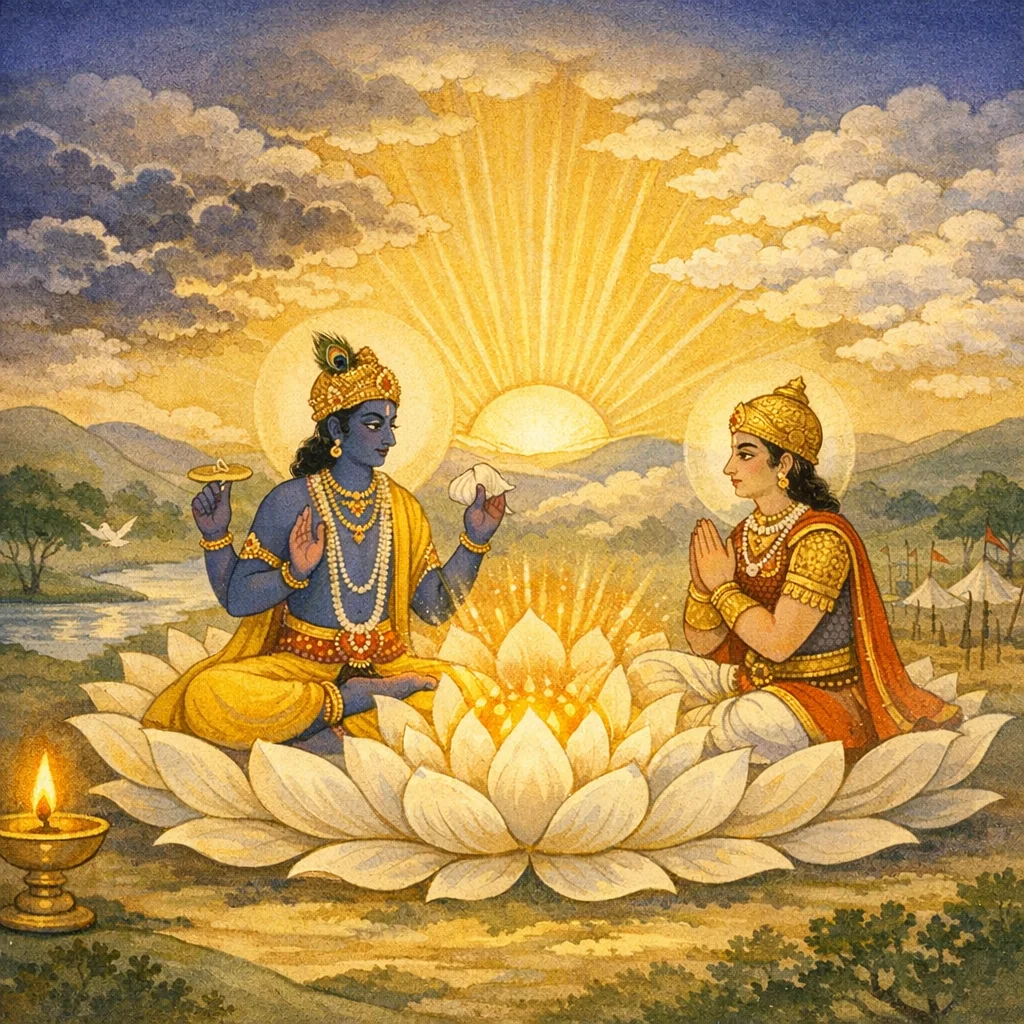
But for those whose ignorance has been destroyed by knowledge, their knowledge—like the sun—reveals that supreme reality.
The verse uses a standard illumination metaphor: knowledge is both the means (destroying ignorance) and the revealing power. Traditions differ on what exactly is revealed—nirguṇa Brahman, the ātman, or the Lord as ultimate—yet the epistemic structure remains consistent.
FAQs
It portrays insight as clarifying and reorganizing experience: once core misconceptions dissolve, perception and valuation become more coherent and less conflicted.
The verse claims that reality is not produced but disclosed: knowledge removes the covering of ignorance, allowing the ‘supreme’ to be evident.
After explaining delusion as ignorance (5.15), the text immediately presents the remedy: knowledge that functions like light, aligning with the chapter’s synthesis of action and insight.
Treat learning and self-inquiry as illumination: identify one persistent misconception (about self-worth, control, or success) and test it against evidence and reflective practice.