
Bhagavad Gita — Gunatraya Vibhaga Yoga, Shloka 25
Gunatraya Vibhaga Yoga
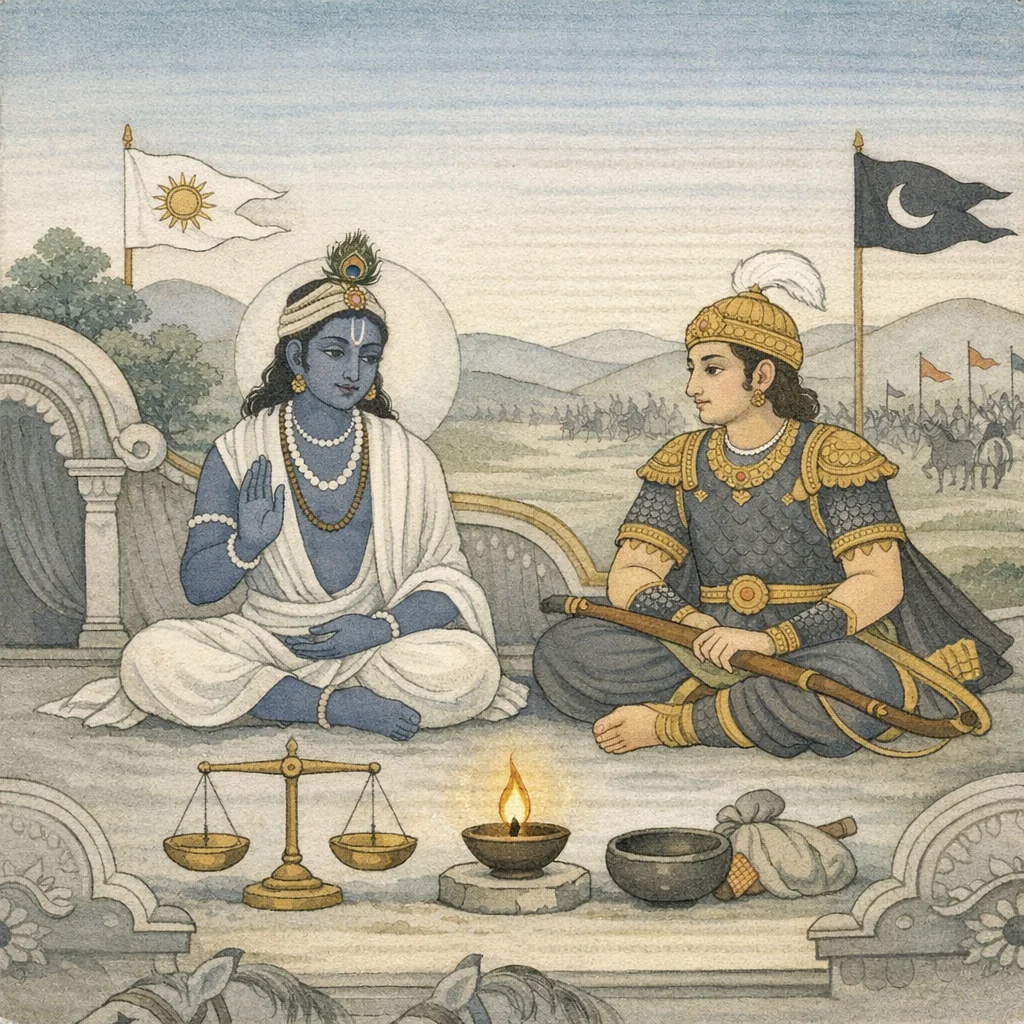
मानापमानयोस्तुल्यस्तुल्यो मित्रारिपक्षयोः । सर्वारम्भपरित्यागी गुणातीतः स उच्यते ॥ १४.२५ ॥
mānāpamānayos tulyas tulyo mitrāri-pakṣayoḥ | sarvārambha-parityāgī guṇātītaḥ sa ucyate || 14.25 ||

Égal dans l’honneur et le déshonneur, égal envers le camp de l’ami comme envers celui de l’adversaire ; renonçant à toutes les entreprises motivées par l’ego, on l’appelle « au-delà des guṇas ».
Equal in honor and dishonor, equal toward the side of friend and the side of opponent; abandoning all self-motivated undertakings—he is said to be beyond the guṇas.
Equal in respect and disrespect, equal toward the party of friend and the party of adversary; one who has renounced all (ego-driven) initiations/enterprises—he is called beyond the guṇas.
“Sarvārambha-parityāgī” is often interpreted as renouncing actions rooted in egoistic desire, not literal inactivity. “Mitrāri-pakṣa” can be contextualized as social alignment rather than physical conflict.
FAQs
It highlights resilience to status threats (honor/dishonor) and reduced in-group/out-group reactivity (friend/adversary), indicating a less defensive identity.
Renouncing “ārambha” suggests the fading of egoic agency-claims and desire-rooted striving. The guṇātīta is not compelled by guṇa-based motivations even while life continues.
It culminates Krishna’s behavioral markers (14.22–25), summarizing the guṇātīta as one who is even-minded and free from self-centered initiation of actions.
It can be applied as non-partisanship in daily interactions: act ethically without being driven by reputation management or factional loyalty, and examine whether new projects arise from compulsion or clarity.