
Shloka 19
Akshara Brahma Yoga — Akshara Brahma Yoga
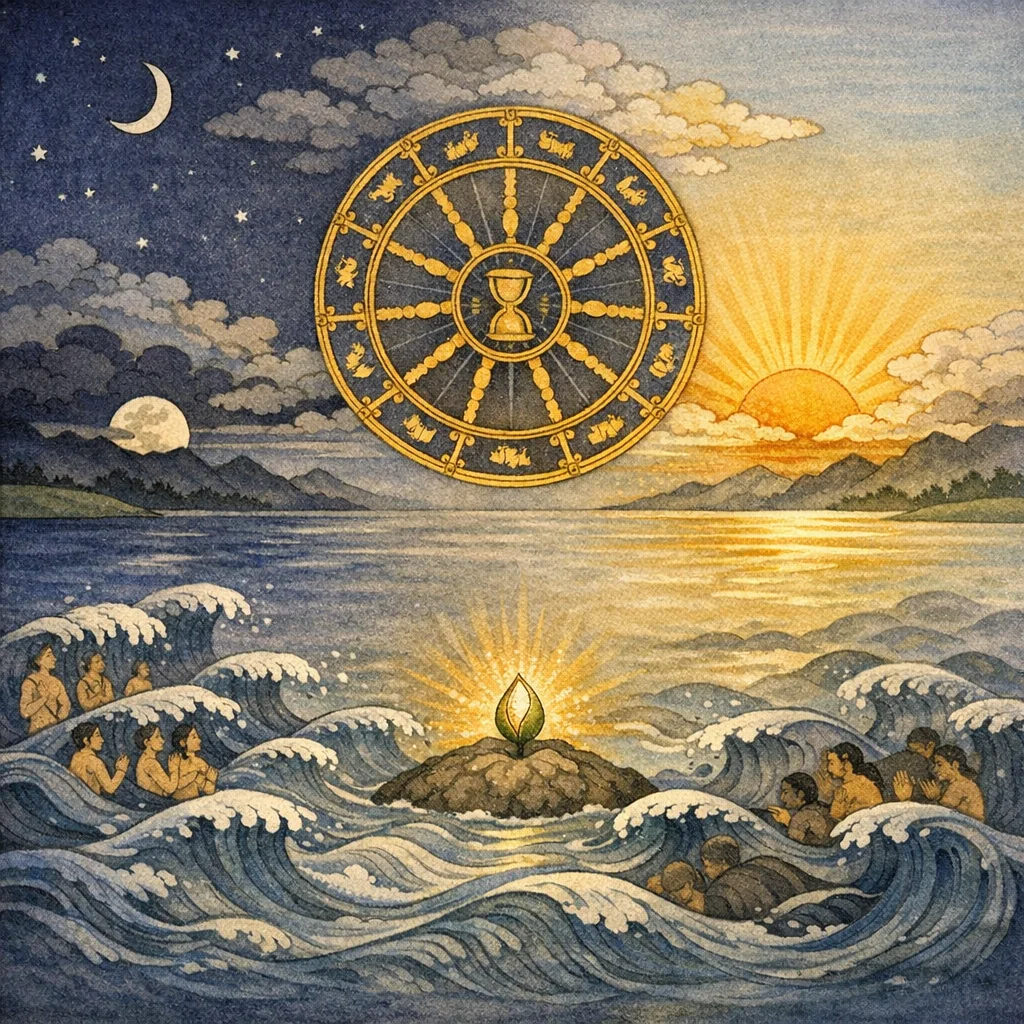
भूतग्रामः स एवायं भूत्वा भूत्वा प्रलीयते । रात्र्यागमेऽवशः पार्थ प्रभवत्यहरागमे ॥ ८.१९ ॥
bhūta-grāmaḥ sa evāyaṁ bhūtvā bhūtvā pralīyate | rātry-āgame ’vaśaḥ pārtha prabhavaty ahar-āgame || 8.19 ||

Ô Pārtha, ce même ensemble d’êtres, naissant encore et encore, se résorbe ; à l’arrivée de la nuit, il se résorbe malgré lui, et au lever du jour, il renaît de nouveau.
हे पार्थ! यह वही प्राणियों का समुदाय बार-बार उत्पन्न होकर (फिर) लीन होता है; रात के आने पर विवश होकर लीन होता है और दिन के आने पर (फिर) उत्पन्न होता है।
This very multitude of beings comes to be again and again and dissolves; at the coming of night it dissolves helplessly, O Pārtha, and at the coming of day it arises.
‘अवशः’ पर भाष्य अक्सर बल देते हैं: जीव-समूह प्रकृति/कर्म-नियम के अधीन चक्र में चलता है। कुछ परंपराएँ इसे वैराग्य-उत्पादक शिक्षण (disenchantment) के रूप में देखती हैं।
FAQs
Highlights repetitive cycles in experience—habits and patterns that recur unless insight and discipline intervene.
Affirms cyclic cosmology and the conditioned status of beings within it.
Reinforces that worldly existence, even on cosmic scales, is repetitive—setting up the contrast with the ‘other’ reality in the next verse.
Invites reflection on recurring life-patterns and the value of practices aimed at lasting freedom.