Adhyaya 45: Indra’s Campaign on Mount Malaya and the Birth of the Maruts (Origin of the Epithet Gotrabhid)
मलयाचल-दैत्यनिग्रहः तथा मरुत्प्रादुर्भावः (Malayācala-Daityanigrahaḥ tathā Marutprādurbhāvaḥ)
Birth of the Maruts
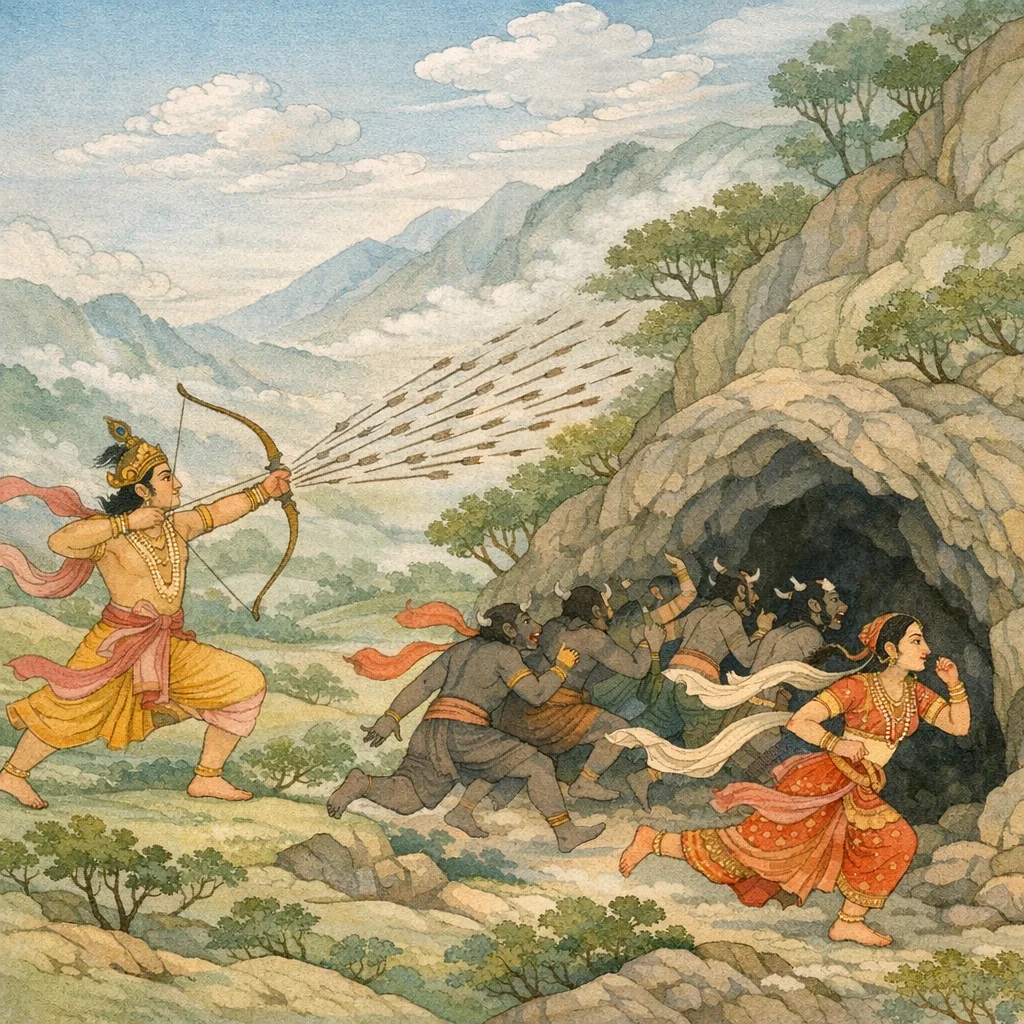
Adhyāya 45 unfolds within the Pulastya–Nārada dialogue-frame, first narrating a localized theogonic conflict on the Malaya mountain and then pivoting to an etymological-theological explanation of Indra’s celebrated epithets. Pulastya describes how Andhāsura’s followers, led by Mayatāra, seek refuge amid Malaya’s sensuous, sanctified landscape—cool sandal groves, siddha-inhabited caves, and fragrant southern winds—only to be confronted by Śakra at Śaṅkara’s behest. The narrative then interprets Indra’s names (Pākaśāsana, Purandara, Gotrabhid) as products of specific martial acts, blending iconographic violence with didactic naming. The second movement deepens syncretic theology: Indra acts under cosmic necessity, yet the episode is morally framed through Diti’s austerity, ritual purity, and the consequences of a minor lapse. The splitting of the embryo into the Maruts becomes a myth of asura-dharma disrupted and reconstituted into deva-service, integrating ethical causality with divine polity rather than sectarian rivalry.
Divine Beings
Sacred Geography
Mortal & Asura Figures
Key Content Points
- Pulastya recounts to Nārada how Andhāsura’s defeated asura-retinue (with Mayatāra) settles on the Malaya mountain, whose topography is poetically sacralized (sandalwoods, siddha-caves, fragrant winds).
- Śaṅkara commissions Indra (Śakra) to remove the asuras; Indra encounters them, summons them to battle, and overwhelms them with arrow-showers, driving the dānava forces to Rasātala.
- Pulastya provides an etymological justification of Indra’s epithets—Pākaśāsana, Purandara, and especially Gotrabhid—by narrating the Diti–Kaśyapa austerity episode and the birth of the Maruts through Indra’s vajra-splitting of the embryo.
Shlokas in Adhyaya 45
Verse the horse was struck down
पुलस्त्य उवाच श्रूयतां यन्महेन्द्रेण मलये पर्वतोत्तमे कृतं लोकहितं ब्रह्मन्नात्मनश्च तथा हितम्
and
Verse 4
ददृशुर्मलयं शैलं सिद्धाध्युषितकन्दरम् लतावितासंछन्नं मत्तसत्त्वसमाकुलम्
They beheld the Malaya mountain, whose caves were inhabited by Siddhas, covered over with creepers and thickets, and crowded with wild creatures in rut (or intoxicated with their own vigor).
Verse ’"
चन्दनैरुरगाक्रान्तैः सुशीतैरभिसेवितम् माधवीकुसुमामोदं ऋष्यर्चितहरं गिरिम्
چلی جا، اے گمراہ! تو نے اس گناہ کا بڑا پھل پا لی�Vamana Purana
Verse Vamana–Bali Narrative (Daitya Genealogy and Rise of Bali)
तेषु तत्रोपविष्टेषु प्राणतृप्तिप्रदो ऽनिलः विवाति शीतः शनकैर्दक्षिणो गन्धसंयुतः
When they had sat down there, a wind that refreshed the vital breaths blew—cool, gently, from the south, and laden with fragrance.
Verse 11
अथाजुहाव बलहा सर्वानेव महासुरान् ते चाप्याययुरव्यग्रा विकिरन्तः शेरोत्करान्
Then Balahā summoned all the great Asuras. And they too arrived without hesitation, scattering heaps of ‘śera’ (interpretable as coins/treasures or valuables) as they came.
Verse 12
तानागतान् बाणजालैः रथस्थो ऽद्भुतदर्शना छादयामास विप्रर्षे गिरीन् वृष्ट्या यथा घनः
O sage, stationed upon his chariot, the wondrous (warrior) covered those who had advanced with a net of arrows—just as a cloud, by its rain, veils the mountains.
Verse 13
ततो बाणैरवच्छाद्य मयादीन् दानवान् हरिः पाकं जघान तीक्ष्णाग्रैर्मार्गणैः कङ्गवाससैः
Then Hari, having covered the Dānavas beginning with Maya by means of arrows, struck down Pāka with sharp-pointed missiles, feathered with kaṅga-plumes.
Verse 14
तत्र नाम विभुर्लोभे शासनत्वात् शरैर्दृढैः पाकशासनतां शक्रः सर्वामरपतिर्विभुः
Not an avatāra episode; martial epithet of Indra (Purandara).
Verse "
करिष्याम्यनुशुश्रूषां भवत्या यदि मन्यसे बाञमित्यब्रवीद् देवी भाविकर्मप्रचोदिता
اے تپودھن! وِنایک آدی پرمَتھوں نے شکر اور دیگر دیوتاؤں کے ساتھ مل کر دھوجاکش کے رتھ کو فوراً توڑ کر چکناچور کر دیا۔
Verse 29
तमन्तरमशौचस्य ज्ञात्वा देवः सहस्रदृक् विवेश मातुरुदरं नासारन्ध्रेण नारद
Knowing that interval of impurity (aśauca)—that vulnerable gap—the god Sahasradṛk (Indra) entered the mother’s womb through the nostril, O Nārada.
Verse 30
प्रविश्य जठरं क्रुद्धो दैत्यमातुः पुरन्दरः ददर्शोर्ध्वमुकं बालं कटिन्यस्तकरं महत्
Purandara (Indra), enraged, entered the womb of the Daitya’s mother. There he saw a great child, facing upward, with his hands placed upon his hips.
Verse 31
तस्यैवास्ये ऽथ ददृशे पेशीं मांसस्य वासवः शुद्धस्फटिकसंकाशां कराभ्यां जगृहे ऽथ ताम्
25
Verse 34
तेनैव गर्भं दितिजं वज्रेण शतपर्वणा चिच्छेद सप्तधा ब्रह्मन् स रुरोद च विस्वरम्
“With that very hundred-jointed thunderbolt, he cut the Diti-born embryo into seven parts, O Brahman; and it cried aloud, wailing.”
Verse 35
ततो ऽपयबुध्यत दितिरजानाच्छक्रचोष्टितम् शुश्राव वाचं पुत्रस्य रुदमानस्य नारद
“Then Diti awoke; she did not know what had been done by Śakra. She heard the voice of her son crying, O Nārada.”
Verse 36
शक्रो ऽपि प्राह मा मूढ रुदस्वेति सुघर्घरम् इत्येवमुक्त्वा चैकैकं भूयश्चिच्छेद सप्तधा
Śakra (Indra) said, “Do not be foolish—cry out!” in a very harsh (terrible) manner. Having spoken thus, he again cut each (fetus/embryonic form) into seven parts.
Verse 38
ते जाता मरुतो नाम देवभृत्याः शतक्रतोः मातुरेवापचारेण चलन्ते ते पुरस्कृताः 45.37 ततः सकुलिशः शक्रो निर्गम्य जठरात् तदा दितिं कृताञ्जलिपुटः प्राह भीतस्तु शापतः
They were born, known as the Maruts—servants of the gods, belonging to Śatakratu (Indra). Because of the mother’s offense, they move about with her set in front (i.e., accompanying/attending her). Then Śakra, the wielder of the thunderbolt, having come out from the womb at that time, addressed Diti with hands joined, frightened of her curse.
Verse 39
ममास्ति नापराधो ऽयं यच्छास्तस्तनयस्तव तवैवापनयाच्छस्तस्तन्मे न क्रोद्धमर्हसि
“This is not an offense of mine, since your son was to be punished; it is you yourself who removed (the protection/merit), and therefore he was punishable. So you should not be angry with me.”
Verse 40
दितिरुवाच न तावत्रापराधो ऽस्ति मन्ये दिष्टमिदं पुरा संपूर्णे त्वपि काले वै या शौचत्वमुपागता
Diti said: “I do not think there is any fault in this matter. This was ordained long ago by destiny. Even though the proper time had fully come, I—who had attained purity—(still met with this outcome).”
Verse 41
पुलस्त्य उवाच इत्येवमुक्त्वा तान् बालान् परिसान्त्व्य दितिः स्वयम् देवाराज्ञा सहैतांस्तु प्रेषयामास भामिनि
Pulastya said: “Having spoken thus, Diti herself consoled those young ones; and together with the king of the gods she sent them forth—she, the radiant lady.”
Frequently Asked Questions
The chapter foregrounds a syncretic polity rather than sectarian competition: Śaṅkara (Tryambaka) authorizes Indra’s action, and Indra’s violence is framed as dharma-protection and cosmic administration. The narrative emphasis is on delegated divine governance and ethical causality (austerity, purity, lapse), not on rivalry between cults.
This Adhyāya is primarily topographical in a descriptive (not tirtha-prescriptive) mode: Malaya is sanctified through iconographic landscape markers—siddha-dwelling caves, cooling sandal forests, flowering creepers, and fragrant southern winds—creating a sacral ecology that explains why beings seek refuge there. No specific Sarasvatī-basin tirtha, pond, or ritual merit is enumerated in this excerpt.
Pulastya links the epithet to Indra’s vajra-act within Diti’s womb: exploiting a momentary impurity during Diti’s long observance, Indra enters and splits the embryo, producing the Maruts who become deva-servitors. The name Gotrabhid is thus justified through a mythic act of ‘splitting’ that reorders hostile potential into divine service.