Dashati 15
Aindra praise framed through allied fire-aid: hymns approach the gods like a swift offering, seeking strength, cattle-wealth, and victorious bounty
Indra
Invocatory and energizing (utsāha) with a confident ‘martial’ uplift in the Agni verses
Rṣi not provided in input; identification depends on the underlying Ṛgvedic source-hymn for each mantra. Aindra material often draws from Indra-centric Ṛgvedic families but this dashati cannot be assigned securely without the source references.
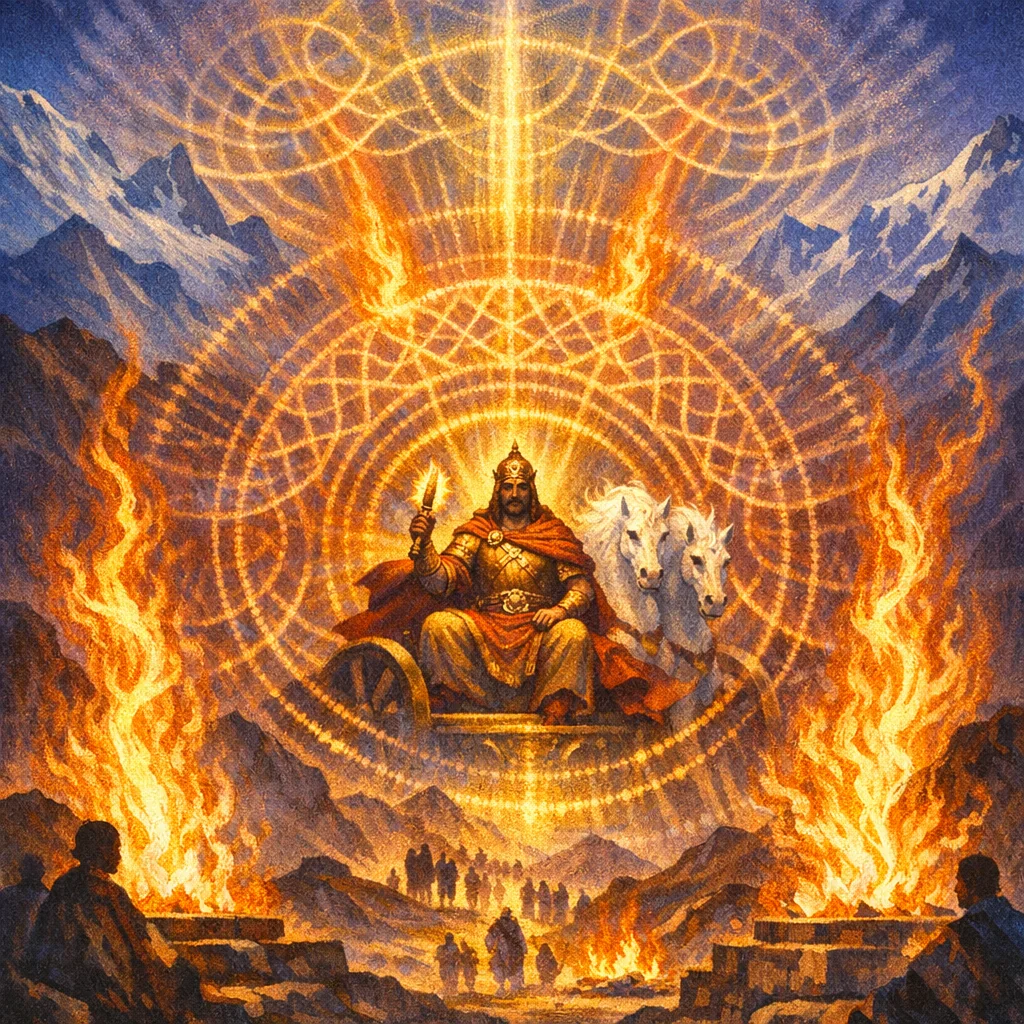
Alabanza aindra enmarcada por la ayuda aliada del fuego: los himnos, como una ofrenda veloz, se acercan a los dioses buscando fuerza, riqueza en ganado y botín victorioso. La voz/canto ofrecido a Indra lo vigoriza y lo obtiene como auxiliador para conquistar despojos; Agni, aliado cercano y visible del rito, sostiene «como un ejército», lleva la alabanza e impulsa el don generoso —especialmente en reses. Él es el ketu, estandarte y señal del pueblo y del sacrificio; se pide vigor (vayaḥ), refrigerio y generosidad (maghattā).
Mantras
Mantra 1
अग्निं हिन्वन्तु नो धियः सप्तिमाशुमिवाजिषु तेन जेष्म धनंधनम्
Que nuestros pensamientos devotos impulsen a Agni, como un carro de corceles veloces en las contiendas; por él, ganemos riqueza tras riqueza.
Mantra 2
यया गा आकरामहै सेनयाग्ने तवोत्या तां नो हिन्व मघत्तये
Con ese auxilio tuyo, oh Agni, como con un ejército, con el que podamos ganar ganado—impúlsalo hacia nosotros, para la generosidad.
Mantra 3
आग्ने स्थूरं रयिं भर पृथुं गोमन्तमश्विनम् अङ्धि खं वर्त्तया पविम्
Oh Agni, trae riqueza sólida, amplia, rica en ganado, rica en caballos; enciende (tu poder), pon en movimiento el filo agudo que hiere a través de la vastedad.
Mantra 4
अग्ने नक्षत्रमजरमा सूर्यं रोहयो दिवि दधज्ज्योतिर्जनेभ्यः
Oh Agni, como luminaria imperecedera alzas el Sol en el cielo; estableces la luz para los hombres.
Mantra 5
अग्ने केतुर्विशामसि प्रेष्ठः श्रेष्ठ उपस्थसत् बोधा स्तोत्रे वयो दधत्
Oh Agni, tú eres la señal (ketu) de los pueblos, el más amado, el más excelso, que mora cerca; atiende al canto de alabanza, otorgando vigor y fuerza vital.
Frequently Asked Questions
It presents the chant as a living offering that naturally and swiftly ‘returns’ to its divine recipient—arriving with its ‘burden’ (garbhadhim) to refresh and strengthen the god and, through that, the worshipper.
In Sāman practice, Indra’s praise is often supported by Agni-invocations: Agni is the near, visible power of the rite who carries and energizes the stotra, making the request for victory and wealth effective.
Practical prosperity backed by divine strength—especially cattle-wealth and generous bounty—along with ‘vayaḥ’ (vigour). The hymns ask the gods to impel these gains toward the sacrificer.