Dashati 7
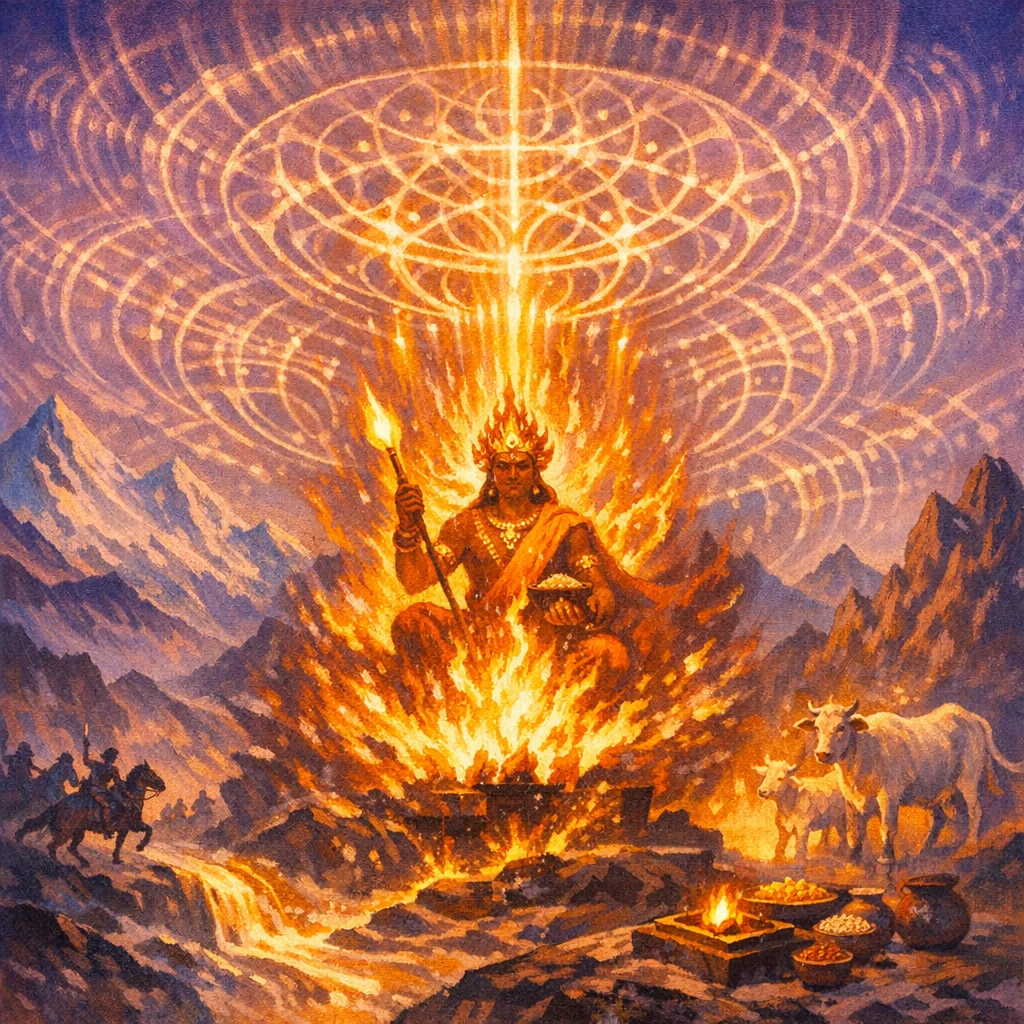
Agni as the victorious, wealth-bestowing sacrificial power who destroys impediments and brings prayer’s fruit (offspring, prosperity) to the yajamāna.
Agni (Jātavedas)
Uplifting and forceful—protective victory-oriented praise with a bright (śukra) sacrificial tone.
Ṛṣi not supplied; identification requires concordance with the underlying Ṛgvedic source hymn(s) and the Sāmavedic anukramaṇī. Many Agni/Indra verses in this region commonly trace to established RV families but this dashati cannot be safely assigned without mapping.
Agni Jātavedas, poder sacrificial victorioso, encendido por el himno y la oblación, aplasta a los obstructores y aparta a Vṛtra/los impedimentos, afianzando el rito y otorgando al yajamāna riqueza y descendencia como fruto de la plegaria. En segundo término se invoca a Indra, Śatakratu, Maghavān: fijar el vajra para someter a los adversarios y proteger el éxito del sacrificio; el brahman (palabra sagrada) eficaz culmina en la petición de prajā y prosperidad sostenida.
Mantras
Mantra 1
अद्याद्या श्वःश्व इन्द्र त्रास्व परे च नः विश्वा च नो जरित्र्^ईन्त्सत्पते अहा दिवा नक्तं च रक्षिषः
Día tras día, y de mañana en mañana, Indra, protégenos de los otros y de todo daño; guarda a nuestros cantores, oh señor de lo bueno, de día y de noche, contra los hostigadores.
Mantra 2
प्रभङ्गी शूरो मघवा तुवीमघः सम्मिश्लो विर्याय कम् उभा ते बाहू वृषणा शतक्रतो नि या वज्रं मिमिक्षतुः
Quebrantando (al enemigo), el héroe, el dadivoso, el muy dadivoso, unido para la proeza — que tus dos brazos vigorosos, taurinos, oh Śatakratu, asienten y afirmen el Vajra, para herir al adversario.
Mantra 3
ब्रह्म प्रजावदा भर जातवेदो विचर्षणे अग्ने यद्दीदयद्दिवि
Tráenos, oh Jātavedas, la plegaria sagrada (brahman), rica en descendencia; oh Agni, el de amplia visión, tú que una vez brillaste en el cielo: sé entre los hombres.
Frequently Asked Questions
It presents Agni as the empowered sacrificial fire who, when kindled by praise and offerings, destroys obstacles and brings practical blessings—wealth and continuity of lineage (progeny).
Indra’s vajra imagery functions as a complementary force: alongside Agni’s ritual power, Indra represents decisive victory over adversaries and impediments that could block the sacrificer’s aims.
It asks Agni to “bring” or make effective the sacred prayer (brahman) that is “rich in progeny,” meaning a hymn whose successful performance yields the desired fruit of offspring and enduring prosperity.