Dashati 19
Indra’s primordial birth as Vṛtra-slayer and world-establisher
Indra
Heroic and elevating (vīra–udātta) moving toward radiant ‘heat’ (tapas) in praise
R̥ṣi attribution is not provided in the input; the verses function as Aindra praise typical of Indra-centered hymn strata where the ritual voice is foregrounded over explicit family colophons.
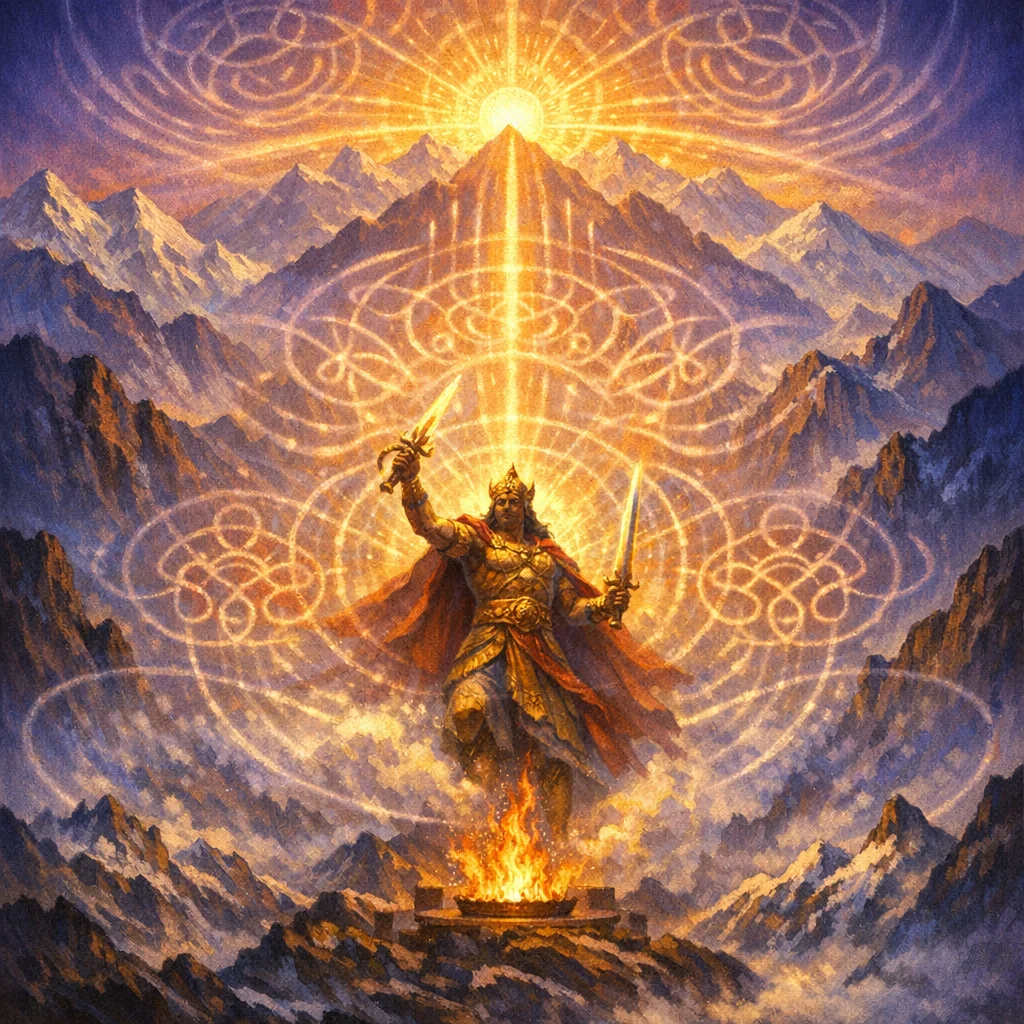
Se aclama a Indra como el nacido en lo primordial, Vṛtrahan, matador de Vṛtra y establecedor del mundo: ensancha la tierra y sostiene el cielo, afianzando el orden cósmico. En relación con su supremacía surgen el sacrificio (yajña) y el himno/canto (arka), que hacen madurar y elevan lo crudo hacia la plenitud. El ascenso del sol señala un cosmos ordenado, y el Sāman, bien entonado, arde con tapas, asegurando victoria y firmeza.
Mantras
Mantra 1
यज्जायथा अपूर्व्य मघवन्वृत्रहत्याय तत्पृथिवीमप्रथयस्तदस्तभ्ना उतो दिवम्
Cuando naciste, oh sin precedentes, oh generoso Maghavan, para matar a Vṛtra, entonces ensanchaste la tierra y también sostuviste el cielo.
Mantra 2
तत्ते यज्ञो अजायत तदर्क उत हस्कृतिः तद्विश्वमभिभूरसि यज्जातं यच्च जन्त्वम्
De allí nació tu sacrificio; de allí el himno, y de allí la aclamación jubilosa. Por eso eres el subyugador de todo: de cuanto ha nacido y de cuanto vive.
Mantra 3
आमासु पक्वमैरय आ सूर्यं रोहयो दिवि घर्मं न सामं तपता सुवृक्तिभिर्जुष्टं गिर्वणसे बृहत्
Entre lo inmaduro alzaste lo maduro; hiciste ascender al Sol en el cielo. Como el ardor (gharma), hiciste resplandecer el Sāman con alabanzas bien dichas — (un canto) grato al alabado por himnos, al Grande (Indra).
Frequently Asked Questions
It celebrates Indra’s ‘unprecedented’ birth for the slaying of Vṛtra and presents him as the force that establishes cosmic order—expanding earth, supporting heaven, and empowering sacrifice and chant.
The verses present the rite and its praises as arising in relation to Indra’s power, so his sovereignty is shown not only in battle but also in making ritual speech and worship effective.
It compares the chant’s energized potency to heat (gharma): well-uttered praises give the Sāman a kind of tapas (ardour) that becomes pleasing and powerful for Indra (girvaṇas).