Dashati 7
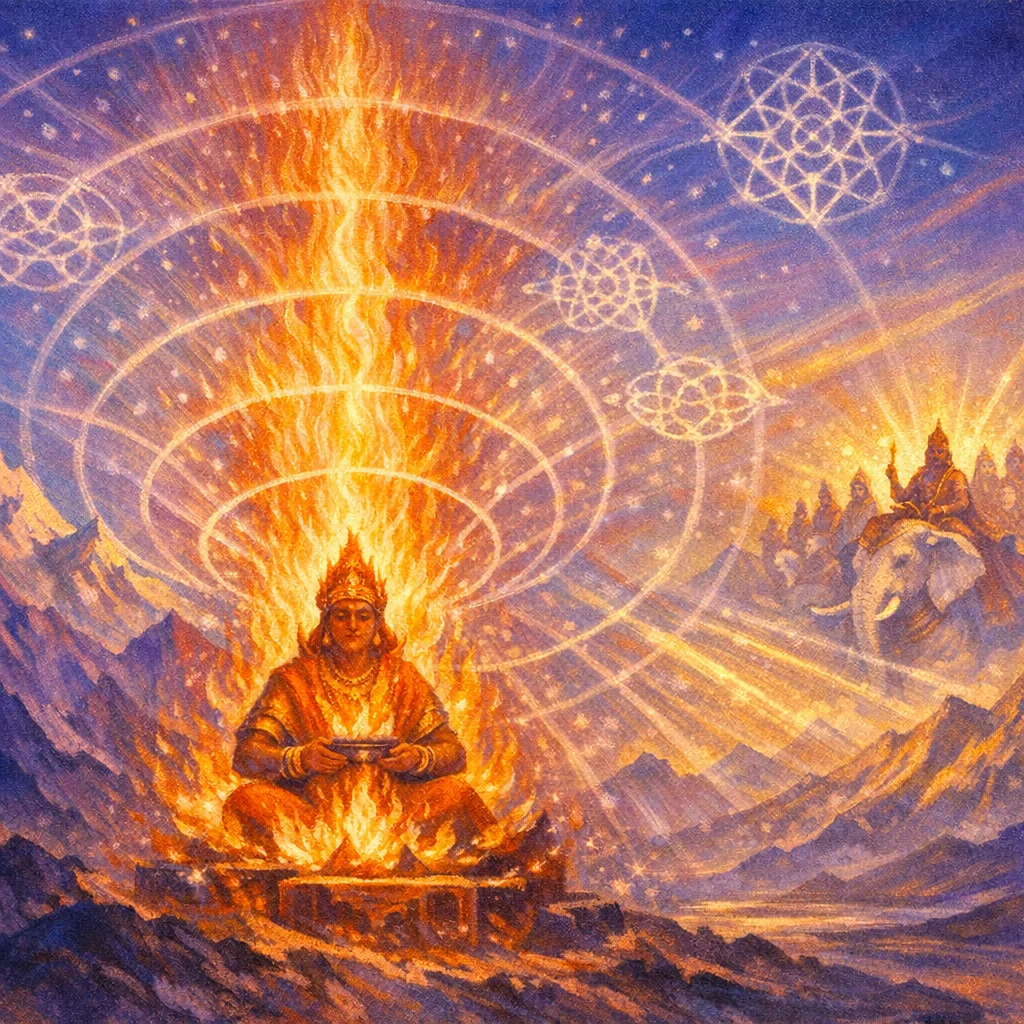
Agni as the manifest, wise carrier of oblations, leading the rite toward Indra’s universal sovereignty
Agni
Bright forward-driving and declarative—moving from kindling/manifestation to royal affirmation
R̥ṣi attribution is not provided in the input; identification requires concordance with the underlying Ṛgvedic sources for these mantras and the Sāmavedic anukramaṇī tradition.
Agni, manifiesto y sabio portador de las oblaciones, alza el rito y conduce con seguridad el havis hacia los dioses; luego se invoca a Indra y a los Todos-los-Dioses como receptores decisivos, que otorgan al sacrificio soberanía, victoria y plenitud. La alabanza y las ofrendas se dirigen a sus destinatarios divinos adecuados; Indra es proclamado rey de todo, y los Viśve Devāḥ son convocados como la asamblea sacrificial.
Mantras
Mantra 1
अचेत्यग्निश्चिकितिर्हव्यवाड्न सुमद्रथः
Agni, el sabio, se ha manifestado; portador de las oblaciones (havyavāḍ) para nosotros, de buen consejo y bien dispuesto para el traslado (de la ofrenda).
Mantra 2
अग्ने त्वं नो अन्तम उत त्राता शिवो भुवो वरूथ्यः
Agni, tú eres para nosotros el más cercano, y también el protector; auspicioso, eres un amparo que resguarda, un refugio en el mundo de los seres.
Mantra 3
भगो न चित्रो अग्निर्महोनां दधाति रत्नम्
Agni, resplandeciente como Bhaga, otorga el tesoro — la riqueza de los grandes — al adorador.
Mantra 4
विश्वस्य प्र स्तोभ पुरो वा सन्यदि वेह नूनम्
Ahora, aquí, que el stobha avance al frente de todo el rito, uniendo (el canto y el acto) como preludio.
Mantra 5
उषा अप स्वसुष्टमः सं वर्त्तयति वर्त्तनिं सुजातता
Uṣas, la más excelente en su forma luminosa, nacida de buen augurio, pone en marcha el camino y lo impulsa hacia delante — ahora, hacia fuera.
Mantra 6
इमा नु कं भुवना सीषधेमेन्द्रश्च विश्वे च देवाः
¿A quién, pues, ahora, en los mundos, debemos ofrecer debidamente estas oblaciones y alabanzas? — A Indra y a todos los dioses.
Mantra 7
वि स्रुतयो यथा पथ इन्द्र त्वद्यन्तु रातयः
Como los caminos se abren en muchos cauces, así, oh Indra, que los dones (hacia nosotros) procedan de ti.
Mantra 8
अया वाजं देवहितं सनेम मदेम शतहिमाः सुवीराः
Por esto (nuestro sāman), que obtengamos el premio de fuerza dispuesto por los dioses; que nos regocijemos, por cien inviernos, abundantes en hijos excelentes.
Mantra 9
ऊर्जा मित्रो वरुणः पिन्वतेडाः पीवरीमिषं कृणुही न इन्द्र
Con vigor sustentador, Mitra y Varuṇa hacen que la Iḍā se hinche; tú, oh Indra, haz para nosotros alimento abundante y sustento nutritivo.
Mantra 10
इन्द्रो विश्वस्य राजति
Indra es soberano de todo; reina y resplandece por doquier.
Frequently Asked Questions
It links the rite’s success to Agni, who becomes manifest and carries the offering, and then confirms Indra (with the All-Gods) as the chief recipient and ruler over all.
The question frames correct ritual orientation—offerings and praise must be ‘placed’ with the proper divine recipients, resolved here as Indra and the Viśve Devāḥ.
It serves as a compact climax: a strong, memorable affirmation that Indra reigns over all, sealing the preceding invocations with a statement of universal lordship.