Dashati 6
Indra praised as Vṛtra-slayer who accepts stotra and Soma, granting prosperity to the observant patron
Indra
Triumphal and invigorating with a public proclamatory tone suited to Indra-stotra
R̥ṣi attribution is not supplied in the input; identification requires Rigvedic concordance for the underlying RV verses used in this Aindra dashati.
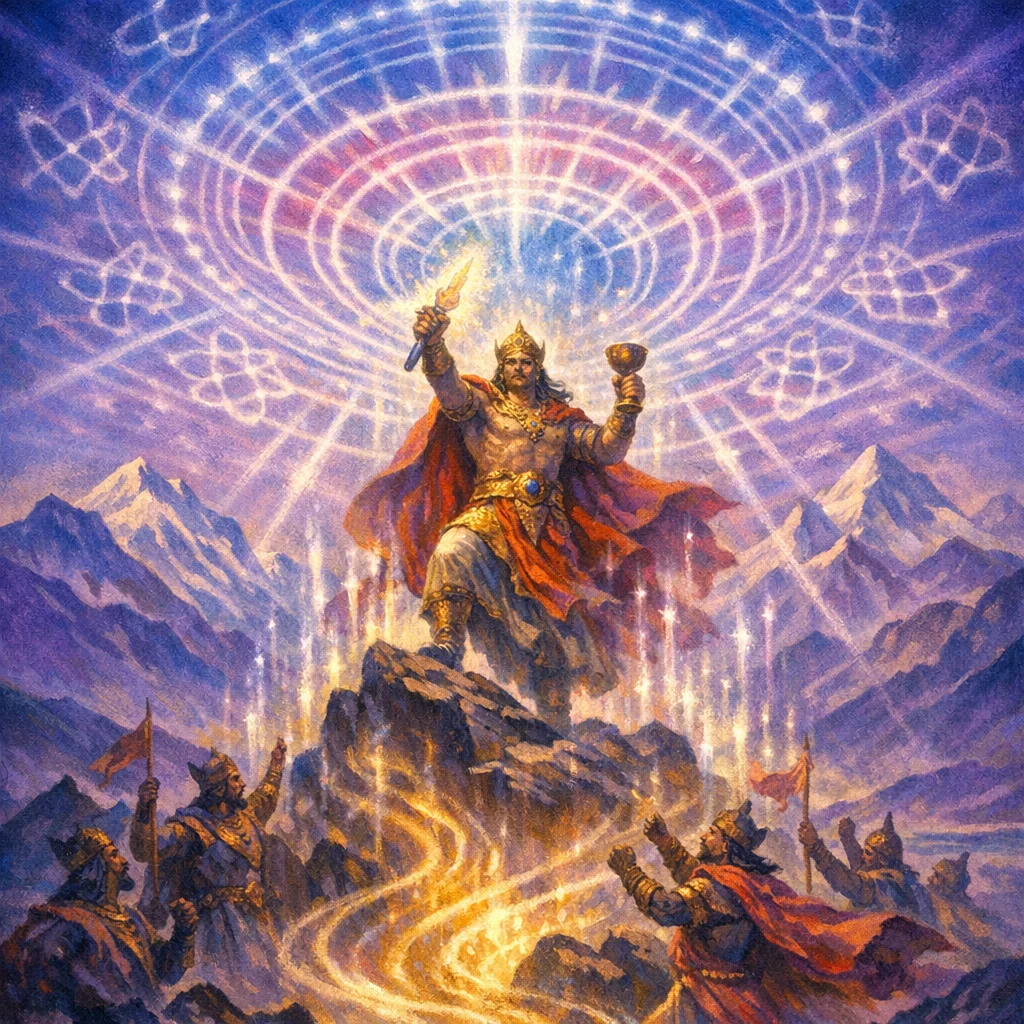
Indra es alabado como Vṛtrahan, matador de Vṛtra, quien acepta la stotra y el soma y concede al patrono que observa los votos (vrata) bienestar (śaṃ), generosidad (magha) y riqueza (rayi). El motivo de la muerte de Vṛtra expresa la remoción del obstáculo y la liberación de fuerza y bienestar. El canto sacerdotal bien compuesto deleita y «complace» a la deidad (jujoṣate), y los Maruts, como compañeros del himno, intensifican la aclamación coral, acrecentando la fama de Indra (śruta) y su vigor juvenil (yuvā). Así se subraya la reciprocidad del yajña: la observancia disciplinada y el canto bien formado atraen la aceptación benévola de Indra, que se manifiesta como protección, victoria y prosperidad.
Mantras
Mantra 1
विश्वतोदावन्विश्वतो न आ भर यं त्वा शविष्ठमीमहे
Tú que das por todas partes, tráenos de todas partes (tus dones) — a ti, el más poderoso, te invocamos.
Mantra 2
एष ब्रह्मा य ऋत्विय इन्द्रो नाम श्रुतो गृणे
Éste es el Brahmán del rito; en verdad es Indra de nombre, renombrado: a él lo canto.
Mantra 3
ब्रह्माण इन्द्रं महयन्तो अर्कैरवर्धयन्नहये हन्तवा उ
Los sacerdotes, engrandeciendo a Indra con himnos, lo fortalecieron — en verdad para nuestro provecho, para que abata (al enemigo que asalta).
Mantra 4
अनवस्ते रथमश्वाय तक्षुस्त्वष्टा वज्रं पुरुहूत द्युमन्तम्
Para ti, oh muy invocado (Indra), Tvaṣṭṛ labró el carro con sus caballos y el Vajra resplandeciente.
Mantra 5
शं पदं मघं रयीषिणो न काममव्रतो हिनोति न स्पृशद्रयिम्
La morada auspiciosa, la dádiva, el deseo del opulento (adorador): el hombre sin observancia (avrata) ni lo ahuyenta ni alcanza esa riqueza (rayi).
Mantra 6
सदा गावः शुचयो विश्वधायसः सदा देवा अरेपसः
Siempre son puras las vacas, sustentadoras de todo; siempre son los dioses sin mancha.
Mantra 7
आ याहि वनसा सह गावः सचन्त वर्त्तनिं यदूधभिः
Ven aquí con vanasā; las vacas, con sus ubres, acompañan el sendero que te está destinado.
Mantra 8
उप प्रक्षे मधुमति क्षियन्तः पुष्येम रयिं धीमहे त इन्द्र
Bajo tu amparo, oh Indra, morando en la bendición melífera, que prosperemos; que obtengamos y conservemos la riqueza — oh Indra.
Mantra 9
अर्चन्त्यर्कं मरुतः स्वर्क्का आ स्तोभति श्रुतो युवा स इन्द्रः
Los Maruts, de buen himno, alaban el canto; renombrado, joven — él, Indra, es celebrado con stobha (stobha).
Mantra 10
प्र व इन्द्राय वृत्रहन्तमाय विप्राय गाथं गायत यं जुजोषते
Cantad, oh sacerdotes, una gāthā de alabanza para Indra, el más poderoso matador de Vṛtra, el sabio; a quien complacen (nuestro himno y la ofrenda), y que los acepta con benevolencia.
Frequently Asked Questions
It proclaims Indra as the Vṛtra-slayer who is pleased by properly sung praise and offerings, and who rewards the disciplined, observing worshipper with welfare and wealth.
The verses stress that prosperity is linked to right ritual conduct: the one who neglects observance (avrata) neither attains the patron’s wealth nor can disrupt the welfare gained through correct worship.
Stobha refers to the characteristic Sāman-style chant-expansions that intensify praise; here it signals heightened musical acclamation of Indra, with the Maruts depicted as participating in the praise.