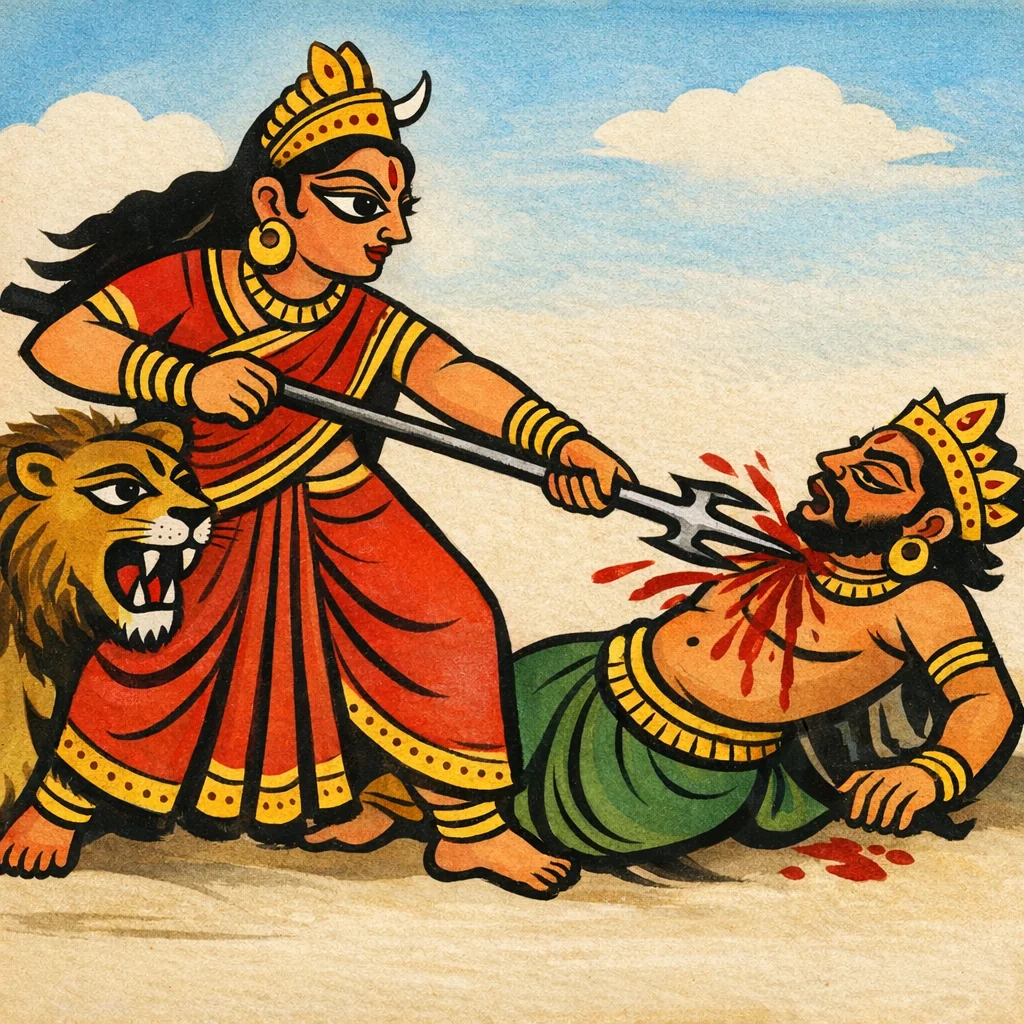
Adhyaya 90: The Slaying of Shumbha and the Reabsorption of the Goddesses into Ambika
शुम्भवधः (Śumbhavadhaḥ)
Dharma Teachings
En este adhyaya, Ambikā, la Diosa Durgā, combate a Śumbha después de la muerte de Niśumbha. La Diosa declara que Kālī, Cāmuṇḍā y las demás śaktis no son sino manifestaciones de su único poder, y las reabsorbe en sí misma. Finalmente, Śumbha es abatido por la Madre Divina, se restablece el dharma y retorna la paz a los mundos.
Divine Beings
Celestial Realms
Key Content Points
Focus Keywords
Shlokas in Adhyaya 90
Verse 1
ऋषिर्उवाच। निशुम्भं निहतं दृष्ट्वा भ्रातरं प्राणसम्मितम्। हन्यमानं बलं चैव शुम्भः क्रुद्धोऽब्रवीद्वचः॥
Dijo el Ṛṣi: Al ver a su hermano Niśumbha, tan querido para él como su propia vida, muerto, y a su ejército siendo destruido, Śumbha, colmado de ira, pronunció estas palabras.
Verse 2
बलावलेपाद्दुष्टे त्वं मा दुर्गे गर्वमावह । अन्यासां बलमाश्रित्य युध्यसे यातिमानिनी ॥
¡Oh malvada! No te envanezcas por tu fuerza, oh Durgā. Peleas apoyándote en la fuerza de otros, ¡oh mujer de soberbia desmedida!
Verse 3
श्रीदेव्युवाच । एकैवाहं जगत्यत्र द्वितीया का ममापरा । पश्यैता दुष्ट मय्येव विशन्त्यो मद्विभूतयः ॥
La Diosa dijo: Yo sola existo aquí en este universo; ¿quién hay fuera de Mí? Mira, oh malvado, cómo estas manifestaciones Mías vuelven a entrar en Mí solamente.
Verse 4
ऋषिरुवाच । ततः समस्तास्ता देव्यो ब्रह्माणीप्रमुखा लयम् । तस्या देव्यास्तनौ जग्मुरेकावासीत्तदाम्बिका ॥
Dijo el Rishi: Entonces todas aquellas Diosas, encabezadas por Brahmani, se absorbieron en el cuerpo de la Devi. Entonces sólo Ambika permaneció.
Verse 5
श्रीदेव्युवाच । अहं विभूत्या बहुभिरिह रूपैर्यदास्थिता । तत्संहृतं मयैकैव तिष्ठाम्याजौ स्थिरो भव ॥
La Diosa dijo: «Cuando fui establecida aquí con muchas formas por mi poder divino (Vibhuti), ahora todo eso ha sido retirado por mí. En verdad permanezco sola. ¡Manteneos firmes en la batalla!»
Verse 6
ऋषिह्रुवाच । ततः प्रववृते युद्धं देव्याः शुम्भस्य चोभयोः । पश्यतां सर्वदेवानां असुराणां च दारुणम् ॥
Dijo el Rishi: Entonces comenzó una batalla terrible entre la Diosa y Shumbha, presenciada por todos los dioses y los demonios.
Verse 7
शरवर्षैः शितैः शस्त्रैस्तथा चास्त्रैः सुदारुणैः । तयोर्युद्धमभूद् भूयः सर्वलोकभयङ्करम् ॥
Con lluvias de flechas agudas, armas y proyectiles sumamente terribles, se trabó de nuevo la batalla entre ambos [la Diosa y Shumbha], sembrando el terror en todos los mundos.
Verse 8
दिव्यान्यस्त्राणि शतशो मुमुचे यान्यथाम्बिका । बभञ्ज तानि दैत्येन्द्रस्तत्प्रतीघातकर्तृभिः ॥
Y cualesquiera que fueran los proyectiles divinos que Ambika lanzaba por centenares, el señor de los Daityas los hacía añicos con sus propias armas, capaces de contrarrestarlos.
Verse 9
मुक्तानि तेन चास्त्राणि दिव्यानि परमेś्वरि । बभञ्ज लीलयैवोग्रहुंकारोच्चारणादिभिः ॥
¡Oh Señora Suprema! Los proyectiles divinos que él lanzó, ella los hizo añicos sin esfuerzo mediante feroces exclamaciones, como el terrible grito de batalla (huṃkāra) y otros semejantes.
Verse 10
ततः शरशतैर्देवीमाच्छादयत सोऽसुरः । सा च तत्कुपिता देवी धनुश्चिच्छेद चेṣुभिः ॥
Entonces aquel asura cubrió a la Diosa con cientos de flechas. Encolerizada por ello, la Diosa hizo pedazos su arco con sus propios dardos.
Verse 11
छिन्ने धनुषि दैत्येन्द्रस्तथा शक्तिमथाददे । चिच्छेद देवी चक्रेण तामप्यस्य करे स्थिताम् ॥
Cuando su arco fue cortado, el señor de los daityas tomó entonces una lanza (śakti). La Diosa también la cortó con su disco, aun cuando estaba en su mano.
Verse 12
ततः खड्गमुपादाय शतचन्द्रं च भानुमत् । अभ्यधावत्तदा देवीṃ दैत्यानामधिपेś्वरः ॥
Luego, tomando una espada y un escudo resplandeciente marcado con cien lunas, el soberano señor de los daityas se abalanzó contra la Diosa.
Verse 13
तस्यापतत एवाशु खड्गं चिच्छेद चण्डिका । धनुर्मुक्तैः शितैर्बाणैश्चर्म चार्ककरामलम् ॥
Al cargar él, Caṇḍikā cortó velozmente su espada; y con agudas flechas disparadas desde su arco atravesó también su escudo, brillante como los rayos del sol.
Verse 14
अश्वांश्च पातयामास रथं सारथिना सह । हताश्वः स तदा दैत्यश्छिन्नधान्वा विसारथिः । जग्राह मुद्गरं घोरमम्बिकानिधनodyataḥ ॥
Ella abatió sus caballos y su carro, junto con el auriga. Entonces el daitya, con los caballos muertos, el arco quebrado y sin conductor, empuñó una maza terrible, resuelto a dar muerte a Ambikā.
Verse 15
चिच्छेदापततस्तस्य मुद्गरं निशितैः शरैः । तथापि सोऽभ्यधावत्तां मुṣ्टिमुद्यम्य वेगवान् ॥
Cuando avanzó, ella cortó su maza con flechas agudas. Aun así, veloz por la ira, él se abalanzó sobre ella, alzando el puño.
Verse 16
स मुṣ्टिं पातयामास हृदये दैत्यपुṅ्गवः । देव्यास्तं चापि सा देवी तलेनोरस्यताडयत् ॥
Aquel toro entre los daityas la golpeó en el pecho con el puño; y la Diosa también lo hirió en el pecho con la palma de su mano.
Verse 17
तलप्रहाराभिहतो निपपात महीतले । स दैत्यराजः सहसा पुनरेव तथोत्थितः ॥
Herido por el golpe de su palma, el rey de los demonios cayó al suelo; pero de pronto se levantó de nuevo.
Verse 18
उत्पत्य च प्रगृह्योच्चैर्देवीं गगनमास्थितः । तत्रापि सा निराधारा युयुधे तेन चण्डिका ॥
Saltando, y apoderándose de la Diosa, se elevó muy alto en el cielo. Aun allí, sin apoyo alguno, Caṇḍikā combatió con él.
Verse 19
नियुद्धं खे तदा दैत्यश्चण्डिका च परस्परम् । चक्रतुः प्रथमं सिद्धमुनिविस्मयकारकम् ॥
Entonces el Daitya y Caṇḍikā trabaron combate cuerpo a cuerpo en el cielo—al principio—un encuentro que llenó de asombro a los sabios consumados.
Verse 20
ततो नियुद्धं सुचिरं कृत्वा तेनाम्बिका सह । उत्पाट्य भ्रामयामास चिक्षेप धरणीतले ॥
Luego, tras combatir largo tiempo en lucha cercana con Ambikā, la sujetó, la hizo girar y la arrojó al suelo.
Verse 21
स क्षिप्तो धरणीं प्राप्य मुष्टिमुद्यम्य वेगितः । अभ्यधावत दुष्टात्मा चण्डिकानिधनेच्छया ॥
Derribado, alcanzó la tierra; alzando el puño y arremetiendo con furia, el de alma perversa avanzó, deseoso de matar a Caṇḍikā.
Verse 22
तमायान्तं ततो देवी सर्वदैत्यजनेश्वरम् । जगत्यां पातयामास भित्त्वा शूलेन वक्षसि ॥
Entonces la Diosa abatió en la tierra a aquel que se acercaba, señor de todas las huestes daitya, atravesándole el pecho con su lanza.
Verse 23
स गतासुः पपातोर्व्यां देवीशूलाग्रविक्षतः । चालयन् सकलां पृथ्वीं साब्धिद्वीपां स पर्वताम् ॥
Herido por la punta de la lanza de la Diosa, cayó sin vida sobre la tierra, sacudiendo el mundo entero—sus océanos, islas y montañas.
Verse 24
ततः प्रसन्नमखिलं हते तस्मिन् दुरात्मनि । जगत्स्वास्थ्यमतीवाप निर्मलं चाभवन्नभः ॥
Entonces, cuando aquel malvado fue abatido, todo quedó en calma; el mundo alcanzó gran bienestar y el cielo se despejó.
Verse 25
उत्पातमेघाः सोल्का ये प्रागासंस्ते शमं ययुः । सरितो मार्गवाहिन्यस्तथासंस्तत्र पातिते ॥
Las nubes portadoras de presagios, con meteoros que antes se habían mostrado, se aquietaron; y los ríos que corrían por cauces anómalos volvieron a sus sendas propias cuando él cayó allí abatido.
Verse 26
ततो देवगणाः सर्वे हर्षनिर्भमानसाः । बभूवुर्निहते तस्मिन् गन्धर्वा ललितं जगुः ॥
Entonces, al ser él muerto, todas las huestes de los dioses se colmaron de gozo, y los Gandharvas cantaron dulcemente.
Verse 27
अवादयंस् तथैवान्ये ननृतुश्चाप्सरोगणाः । ववुः पुण्यास्तथा वाताः सुप्रभोऽभूद्दिवाकरः ॥
Otros, asimismo, tañeron instrumentos; las huestes de Apsaras danzaron. Soplaron vientos auspiciosos, y el sol resplandeció con espléndido fulgor.
Frequently Asked Questions
The chapter addresses the theological challenge of apparent plurality in divine power: Śumbha claims the Goddess depends on others, and she replies with a non-dual assertion that all devīs are her own vibhūtis, collapsing multiplicity into a single sovereign śakti.
Placed within the Sāvarṇika Manvantara setting of the Devīmāhātmya, this Adhyaya functions as a Manvantara-era exemplum: a crisis of asuric rule is resolved by the Goddess, reaffirming cosmic governance and dharmic stability characteristic of Manvantara historiography.
It delivers the Devīmāhātmya’s climactic doctrinal and narrative closure: the devī host is reabsorbed into Ambikā to demonstrate ekatva (oneness) of śakti, and Śumbha’s death by the śūla confirms the Goddess as the supreme, self-sufficient divine agency restoring universal auspiciousness.