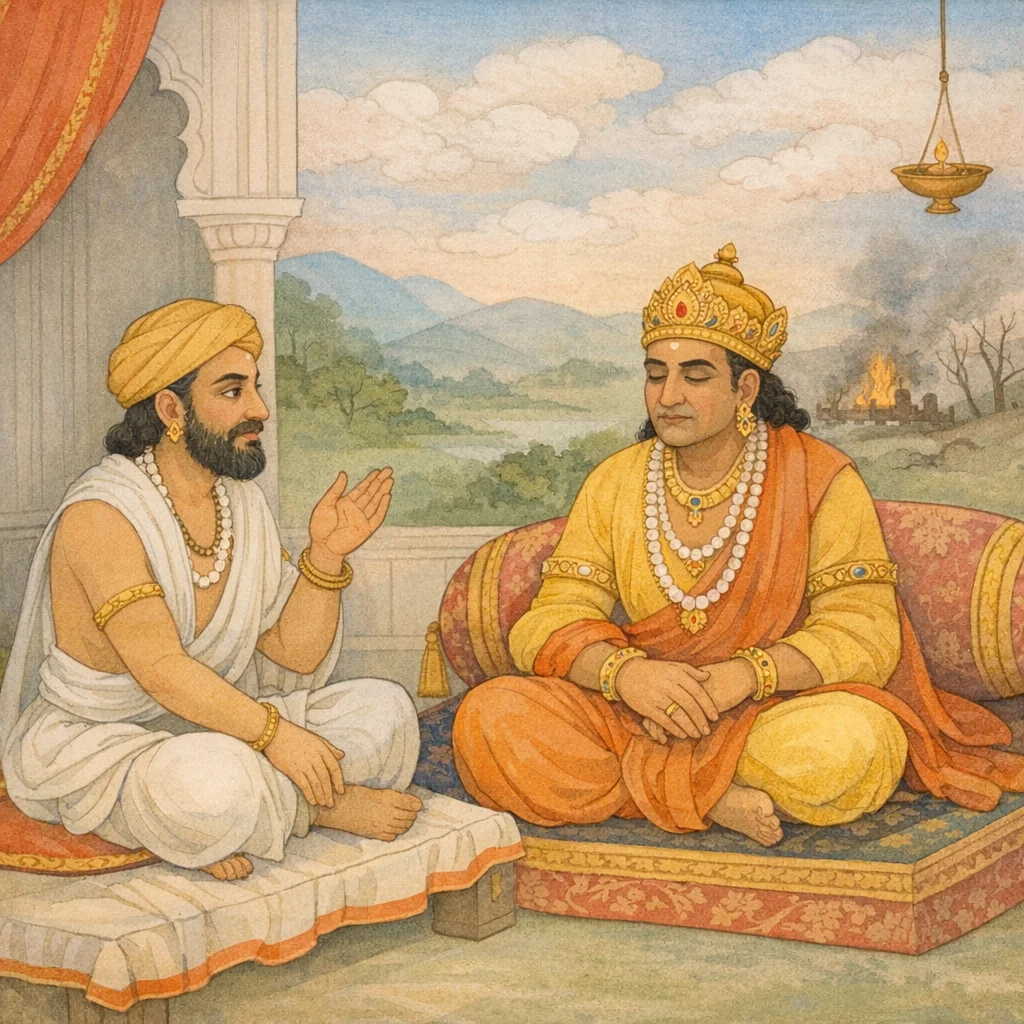
Adhyaya 4
Saṃsāra-gahana-jñāna: Vidura’s Account of Embodiment, Bondage, and Dharmic Release (संसारगहन-ज्ञानम्)
Upa-parva: Saṃsāra–Dharma Upadeśa (Vidura’s Instruction to Dhṛtarāṣṭra)
Dhṛtarāṣṭra asks how the ‘dense thicket’ of saṃsāra is to be understood. Vidura answers with a structured anthropology of human existence: (1) embryological formation and the constrained condition of the fetus (kalala to developed limbs), (2) the distress of birth and the role of prior karma in suffering, (3) the onset of worldly threats—grahas, illness, and misfortunes—metaphorically approaching like predators, (4) bondage through indriya-pāśas (sense-ropes) and repeated dissatisfaction despite continual engagement, (5) unawareness of mortality until the approach of Yama’s domain, (6) moral delusion driven by greed, anger, and intoxication, manifesting as social contempt and self-unexamined judgment of others, and (7) a concluding prescription: in an impermanent world, sustained dharma from early life and alignment with tattva opens the path to pramokṣa (release). The chapter thus integrates physiological imagery, karmic causality, ethical critique, and a liberation-oriented directive.
Chapter Arc: शोकसंतप्त धृतराष्ट्र विदुर से पूछते हैं—यह ‘संसार-गहन’ क्या है, इसे कैसे जाना जाए, और इससे छूटने का उपाय क्या है? → विदुर गर्भाधान से ही देह-निर्माण का कठोर, अपवित्र और असहाय चित्र खींचते हैं—गर्भ में जीव का मांस-शोणित में लिपटा रहना, उल्टा-सीधा पड़ा होना, वायु-वेगों से पीड़ित होना; जन्म से ही कर्म-चक्र का आरम्भ और देह की नश्वरता का अनिवार्य विधान। → विदुर श्मशान-समता का बोध कराते हैं—ज्ञानी/मूर्ख, धनी/निर्धन, कुलीन/अकुलीन, मानवान/मानहीन—सब अंततः एक ही जगह ‘सोते’ हैं; त्वचा गलती है, देह नष्ट होती है; अहंकार और भेद मिट्टी में मिल जाते हैं। → प्रत्यक्ष और परोक्ष (अनुभव और श्रुति) से इस अध्रुव लोक को समझकर जो धर्म का पालन करता है और जन्म से ही तत्त्व-मार्ग पर चलता है, वही परम गति पाता है; तत्त्वानुसरण ही प्रमोक्ष का पथ है। → धृतराष्ट्र के शोक-निवारण हेतु यह वैराग्य-बोध आगे किस आचरण-परिवर्तन में परिणत होगा—और क्या वे अपने पुत्रों के विनाश का सत्य स्वीकार कर पाएँगे?
Shlokas
Verse 1
अपना बछ। अर: चतुथों5 ध्याय: दुःखमय संसारके गहन स्वरूपका वर्णन और उससे छूटनेका उपाय धृतराष्ट उवाच कथं संसारगहन विज्ञेयं वदतां वर | एतदिच्छाम्यहं श्रोतुं तत््वमाख्याहि पृच्छत:
Dhṛtarāṣṭra dijo: «Oh, el mejor de los oradores, ¿cómo puede uno comprender de verdad esta espesura densa y desconcertante de la existencia mundana? Deseo oírlo. Según mi pregunta, explícame con claridad su realidad.»
Verse 2
विदुर उवाच जन्मप्रभृति भूतानां क्रिया सर्वोपलक्ष्यते । पूर्वमेवेह कलिले वसते किंचिदन्तरम्
Vidura dijo: «Maharajá: desde el mismo comienzo del nacimiento, todo el proceso de los seres encarnados puede discernirse en sus etapas sucesivas. Al principio, aquí en el vientre, el ser viviente permanece un tiempo en el estado de “kalila” (la masa inicial e indiferenciada), y sólo después avanza hacia una manifestación ulterior.»
Verse 3
इस प्रकार श्रीमह्या भारत स्त्रीपर्वके अन्तर्गत जलप्रदानिकपर्वमें धृतराष्ट्रके शीकका निवारणविषयक तीसरा अध्याय पूरा हुआ
Vidura dijo: «Oh rey: cuando la semilla masculina y el fluido generativo femenino se unen en el vientre, todo el proceso de crecimiento embrionario avanza según el orden enseñado en los śāstras. Al principio, el ser viviente existe como “kalila”, una diminuta masa indiferenciada formada por esa unión. Cuando ha transcurrido el quinto mes, la conciencia se manifiesta y el ser toma morada en el bulto corporal; después, el embrión se completa en todos sus miembros.»
Verse 4
अमेध्यमध्ये वसति मांसशोणितलेपने । ततस्तु वायुवेगेन ऊर्ध्वपादो हध:शिरा:,इति श्रीमहाभारते स्त्रीपर्वणि जलप्रदानिकपर्वणि धृतराष्ट्रविशोककरणे चतुर्थोउध्याय:
Vidura dice: «El ser encarnado mora en medio de la impureza, embadurnado de carne y sangre. Luego, impulsado por la fuerza del viento (cuando la vida se retira), es arrojado fuera: con los pies hacia arriba y la cabeza hacia abajo.»
Verse 5
इस समय उसे मांस और रुधिरसे लिपे हुए अत्यन्त अपवित्र गर्भाशयमें रहना पड़ता है। फिर वायुके वेगसे उसके पैर ऊपरकी ओर हो जाते हैं और सिर नीचेकी ओर ।।
Approaching the doorway of the womb, the embodied being undergoes many afflictions. Pressed and constricted within the womb, it suffers in accordance with its former deeds—bound to the consequences of past actions even before birth.
Verse 6
तस्मान्मुक्तः स संसारादन्यान् पश्यत्युपद्रवान् | ग्रहास्तमनुगच्छन्ति सारमेया इवामिषम्
Therefore, once he is freed from the bondage of worldly existence, he looks on and recognizes the calamities that still beset others. Yet hostile forces continue to pursue him—like dogs running after a piece of meat—showing how danger and malice may still follow even one who has inwardly renounced attachment.
Verse 7
इस स्थितिमें योनिद्वारके समीप आ जानेसे उसे बड़े दुःख सहने पड़ते हैं। फिर पूर्व कर्मोसे संयुक्त हुआ वह जीव योनिमार्गसे पीड़ित हो उससे छुटकारा पाकर बाहर आ जाता है और संसारमें आकर अन्यान्य प्रकारके उपद्रवोंका सामना करता है। जैसे कुत्ते मांसकी ओर झपटतते हैं
Then, as time advances, new afflictions and wasting diseases repeatedly draw near to that living being, who remains bound and driven onward by the fetters of his own past actions. Thus, even while alive, he is pursued by suffering that arises from karma, and he must endure successive troubles in the world.
Verse 8
त॑ बद्धमिन्द्रियै: पाशै: संगस्वादुभिरावृतम् । व्यसनान्यपि वर्तन्ते विविधानि नराधिप
O king, when a person is bound by the nooses of the senses and covered over by the sweet tastes of attachment, many kinds of calamities and vices inevitably arise and take hold. Vidura warns that indulgence, though pleasant at first, becomes a bondage that invites misfortune and moral decline.
Verse 9
नरेश्वर! फिर आसक्तिके कारण जिनमें रसकी प्रतीति होती है, उन विषयोंसे घिरे और इन्द्रियरूपी पाशोंसे बँधे हुए उस संसारी जीवको नाना प्रकारके संकट घेर लेते हैं ।।
Vidura said: “O king, when a worldly being is surrounded by sense-objects that kindle attachment through the taste of pleasure, and is bound by the nooses of the senses, many kinds of calamities close in upon him. Bound again and again by those very objects, he never attains satisfaction. In that condition, even while performing deeds—good or bad—he fails to understand what he is doing and why, being deluded by those objects.”
Verse 10
तथैव परिरक्षन्ति ये ध्यानपरिनिषिता: । अयं न बुध्यते तावद् यमलोकमथागतम्
Así también, quienes están firmemente establecidos en la meditación se resguardan viviendo conforme a los śāstras. Pero el hombre común no reconoce ni siquiera el propio reino de Yama cuando ya ha llegado ante él: tan cegado está ante la cercanía de la muerte y la consecuencia moral.
Verse 11
यमदूतैर्विंकृष्यंश्व मृत्युं कालेन गच्छति । वाग्घीनस्य च यन्मात्रमिष्टानिष्टं कृतं मुखे । भूय एवात्मना55त्मानं बध्यमानमुपेक्षते
Dijo Vidura: «Arrastrado fuera por los mensajeros de Yama, el hombre, impulsado por el Tiempo, va hacia la muerte. En ese instante queda sin voz; todo bien o mal que haya hecho se revela ante él. Y, sin embargo, aun viendo cómo, conforme a esos actos, vuelve a quedar atado por sí mismo a la servidumbre del cuerpo, permanece indiferente: no se esfuerza por su propia liberación».
Verse 12
अहो विनिकृतो लोको लोभेन च वशीकृत: । लोभक्रोधभयोन्मत्तो नात्मानमवबुध्यते,अहो! लोभके वशीभूत होकर यह सारा संसार ठगा जा रहा है। लोभ, क्रोध और भयसे यह इतना पागल हो गया है कि अपने-आपको भी नहीं जानता
Vidura se lamenta: «¡Ay! El mundo está siendo engañado y arruinado bajo el dominio de la codicia. Enloquecidos por la codicia, la ira y el miedo, los hombres pierden el conocimiento de sí mismos y no reconocen su verdadero bien ni el rumbo moral que deben seguir».
Verse 13
कुलीनत्वे च रमते दुष्कुलीनान् विकुत्सयन् | धनदर्पेण दृप्तश्न दरिद्रान् परिकुत्सयन्
El de linaje noble se complace en su nobleza mientras desprecia a los de baja cuna; y el rico, embriagado por la soberbia de su fortuna, desdeña y humilla a los pobres.
Verse 14
मूर्खानिति परानाह नात्मानं समवेक्षते | दोषान् क्षिपति चान्येषां नात्मानं शास्तुमिच्छति
Llama “necios” a los demás, pero no se mira a sí mismo. Arroja culpas sobre las faltas ajenas, mas no quiere gobernar su propia mente para corregirse y apartarse de esas mismas faltas.
Verse 15
यदा प्राज्ञाश्न मूर्खाश्न धनवन्तश्न निर्धना: । कुलीनाश्चाकुलीनाश्न मानिनो5थाप्यमानिन:
Dijo Vidura: «Cuando el sabio y el necio por igual, el rico y el pobre por igual, el bien nacido y el mal nacido por igual, y el honrado así como el deshonrado—cuando todos quedan en el mismo plano (ante la calamidad y la muerte), se revela vacía la soberbia por el rango y la posesión.»
Verse 16
सर्वे पितृवनं प्राप्ता: स्वपन्ति विगतत्वच: । निमसैरस्थिभूयिष्ैगत्रि: स्नायुनिबन्धनै:
Vidura dice: «Todos han llegado al bosque de los antepasados y yacen como dormidos—despojados de piel, con el cuerpo reducido en su mayor parte a huesos, sostenidos sólo por los tendones.»
Verse 17
विशेषं न प्रपश्यन्ति तत्र तेषां परे जना: । येन प्रत्यवगच्छेयु: कुलरूपविशेषणम्
Allí, los extraños no perciben entre ellos señal distintiva alguna por la cual reconocer el linaje de una familia o la forma singular de una persona. El verso subraya que, tras la calamidad, los signos sociales y las diferencias heredadas se oscurecen; advierte contra la soberbia del rango y exhorta a discernir por la conducta, no por la apariencia ni el nacimiento.
Verse 18
जब ज्ञानी और मूर्ख, धनवान् और निर्धन, कुलीन और अकुलीन तथा मानी और मानरहित सभी मरघटमें जाकर सो जाते हैं, उनकी चमड़ी भी नष्ट हो जाती है और नाड़ियोंसे बँधे हुए मांसरहित हड्डियोंके ढेररूप उनके नग्न शरीर सामने आते हैं, तब वहाँ खड़े हुए दूसरे लोग उनमें कोई ऐसा अन्तर नहीं देख पाते हैं, जिससे एककी अपेक्षा दूसरेके कुल और रूपकी विशेषताको जान सकें ।। यदा सर्वे सम॑ न्यस्ता: स्वपन्ति धरणीतले । कस्मादन्योन्यमिच्छन्ति प्रलब्धुमिह दुर्बुधा:,जब मरनेके बाद श्मशानमें डाल दिये जानेपर सभी लोग समानरूपसे पृथ्वीकी गोदमें सोते हैं, तब वे मूर्ख मानव इस संसारमें क्यों एक-दूसरेको ठगनेकी इच्छा करते हैं?
Vidura dice: «Cuando, tras la muerte, todos son depositados por igual y duermen sobre la tierra, ¿por qué los necios de este mundo aún desean engañarse unos a otros? En el crematorio se desvanecen las diferencias entre saber y necedad, riqueza y pobreza, noble y vil nacimiento, honor y deshonor; sólo se ven restos desnudos, y ningún observador puede discernir de veras la “superioridad” del linaje o de la belleza. Recordando este fin común, debe abandonarse el fraude y la soberbia, y vivirse con rectitud.»
Verse 19
प्रत्यक्ष च परोक्षं च यो निशम्य श्रुति त्विमाम् । अध्रुवे जीवलोकेडस्मिन् यो धर्ममनुपालयन् । जन्मप्रभृति वर्तेत प्राप्तुयात् परमां गतिम्
Quien, habiendo comprendido esta enseñanza védica—ya sea por realización directa o por haberla oído de otros—vive en este mundo inestable de los seres con observancia firme del dharma desde el comienzo mismo de la vida, alcanza el estado supremo.
Verse 20
एवं सर्व विदित्वा वै यस्तत्त्वमनुवर्तते । स प्रमोक्षाय लभते पन्थानं मनुजेश्वर,नरेश्वर! जो इस प्रकार सब कुछ जानकर तत्त्वका अनुसरण करता है, वह मोक्षतक पहुँचनेके लिये मार्ग प्राप्त कर लेता है
Oh señor de los hombres: quien conoce de veras todo esto y luego vive conforme al tattva, el principio real, obtiene el sendero que conduce hacia la liberación (mokṣa).
Frequently Asked Questions
The implied crisis is self-ignorance: despite suffering and mortality, a person remains bound by sense-attachment and social pride, repeatedly choosing short-term gratification over dharmic discipline and self-examination.
Understanding embodiment and its karmic constraints should produce dispassion and restraint; sustained dharma, grounded in tattva-jñāna, is presented as the practical route toward pramokṣa.
Yes in functional form: the closing verses state that one who ‘knows all this’ and follows tattva obtains the path to liberation, positioning comprehension and practice as spiritually consequential within the epic’s mokṣa-oriented arc.
Read Mahabharata in the Vedapath app
Scan the QR code to open this directly in the app, with audio, word-by-word meanings, and more.