
Bhagavad Gita — Raja Vidya Raja Guhya Yoga, Shloka 23
Raja Vidya Raja Guhya Yoga
येऽप्यन्यदेवताभक्ता यजन्ते श्रद्धयान्विताः । तेऽपि मामेव कौन्तेय यजन्त्यविधिपूर्वकम् ॥ ९.२३ ॥
ye 'py anya-devatā-bhaktā yajante śraddhayānvitāḥ | te 'pi mām eva kaunteya yajanty avidhi-pūrvakam || 9.23 ||

Incluso quienes, dotados de fe, adoran a otras deidades, oh hijo de Kuntī, también ellos me adoran sólo a Mí, aunque no conforme al rito prescrito.
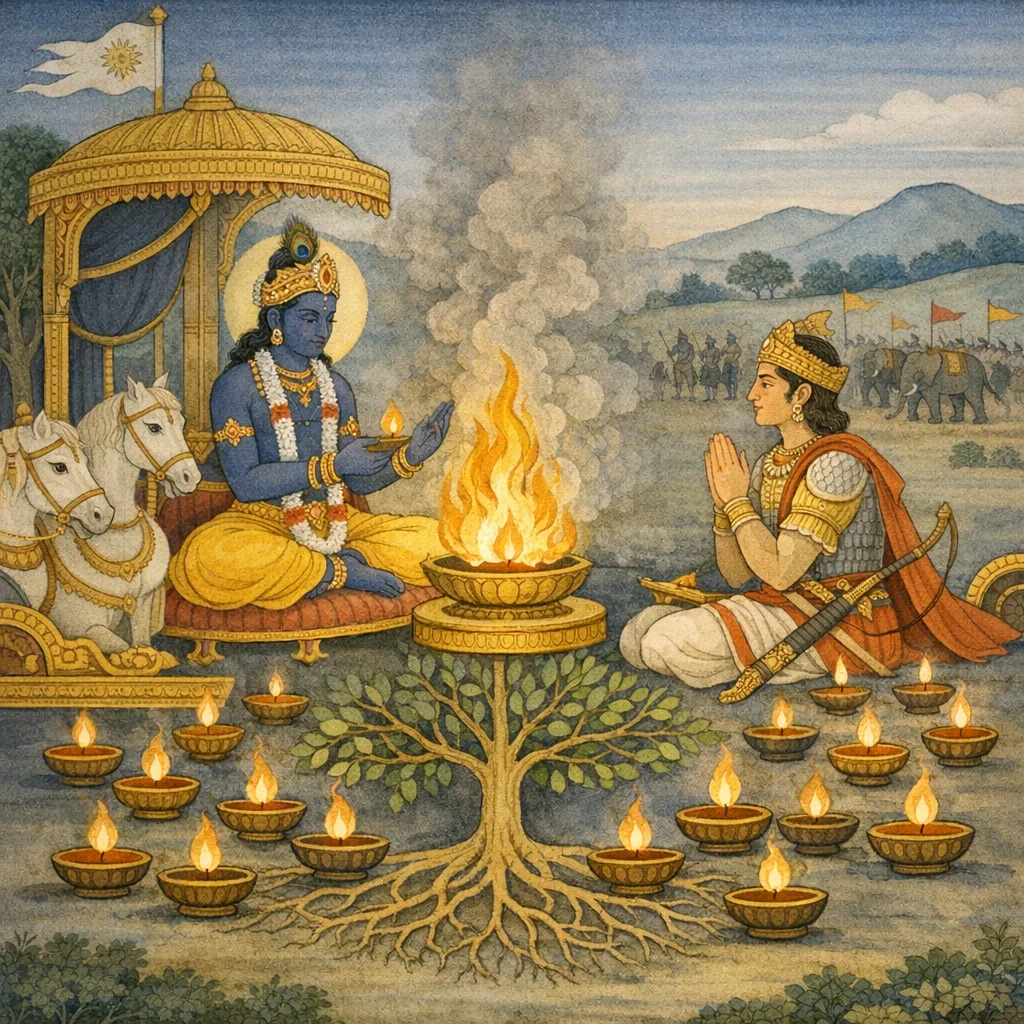
Even those devotees who, endowed with faith, worship other deities, O son of Kuntī, they too worship Me alone, though not in the prescribed manner.
Even those who are devoted to other deities and worship (them) with faith—those also, O Kaunteya, worship Me indeed, but in a manner not according to due rule.
Most recensions read essentially the same sense: worship of other deities is interpreted as indirectly reaching the supreme, yet described as ‘avidhi’ (not aligned with the intended or correct procedure/understanding). Differences among translators often concern whether ‘avidhi’ implies ritual impropriety, doctrinal misunderstanding, or both.
FAQs
The verse frames devotion as a powerful human capacity: even when directed to varied ideals, it can express a deeper search for the ultimate. It also highlights the role of ‘right understanding’ in shaping religious intention.
It implies a theological unity in which the supreme reality is the underlying recipient/support of worship, while distinguishing between direct realization and indirect or conceptually mediated devotion.
In Chapter 9, Krishna emphasizes exclusive devotion and the accessibility of the supreme. This verse addresses plural devotional practices within the broader religious landscape of early Indian traditions.
It can be read as encouraging sincerity in devotion while also inviting critical reflection on one’s framework of meaning, practice, and understanding.