
Shloka 38
Dhyana Yoga — Atma Samyama Yoga
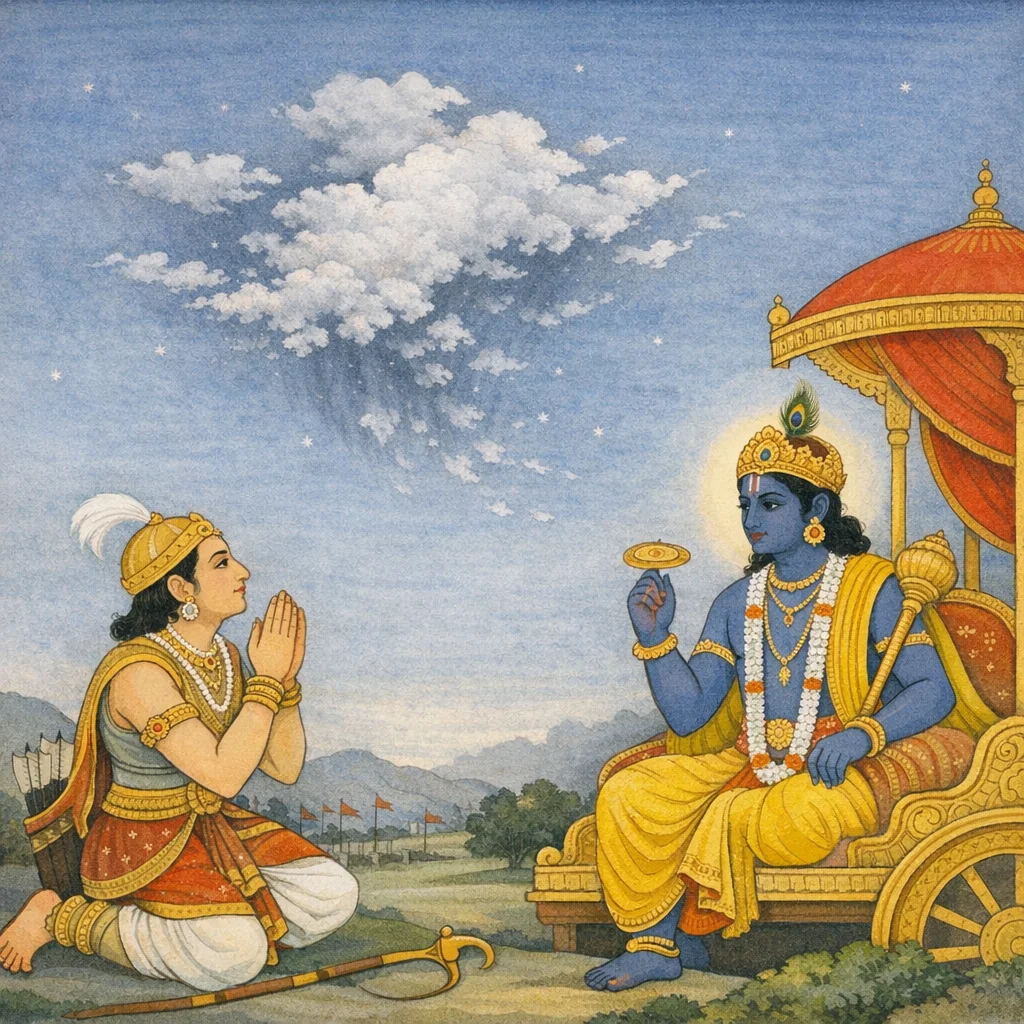
कच्चिन्नोभयविभ्रष्टश्छिन्नाभ्रमिव नश्यति । अप्रतिष्ठो महाबाहो विमूढो ब्रह्मणः पथि ॥ ६.३८ ॥
kaccin nobhayavibhraṣṭaś chinnābhram iva naśyati | apratiṣṭho mahābāho vimūḍho brahmaṇaḥ pathi || 6.38 ||

Oh de brazos poderosos, ¿acaso quien ha caído de ambos, sin apoyo, extraviado en el sendero hacia Brahman, no perece como una nube desgarrada que se desvanece?
“O mighty-armed (Kṛṣṇa), does one who has fallen away from both (worldly success and yogic attainment), deluded on the path to Brahman and without support, perish like a cloud torn apart?”
“Does one who has deviated from both (paths), without firm standing, confused on the way to brahman, perish like a fragmented cloud?”
Most traditional renderings read “fallen from both” as failing in both worldly aims and yogic realization; academic readings often keep it formally ambiguous as “both alternatives/paths” under discussion (discipline vs. lapse). The simile “torn cloud” is generally stable across recensions.
FAQs
The verse articulates performance anxiety and existential insecurity: fear that incomplete practice leads to loss of meaning and direction (“without support”), a common obstacle in long-term disciplines.
It raises a soteriological question: whether partial progress toward brahman-realization can be nullified, or whether spiritual effort has enduring efficacy.
Arjuna continues his inquiry about the fate of the practitioner who begins yoga but does not reach completion, following the prior discussion of the difficulty of mental steadiness.
It can be read as concern about “wasted effort” in meditation or ethical self-cultivation; the text sets up a reply that emphasizes continuity of growth rather than all-or-nothing outcomes.