
Bhagavad Gita — Dhyana Yoga, Shloka 20
Atma Samyama Yoga
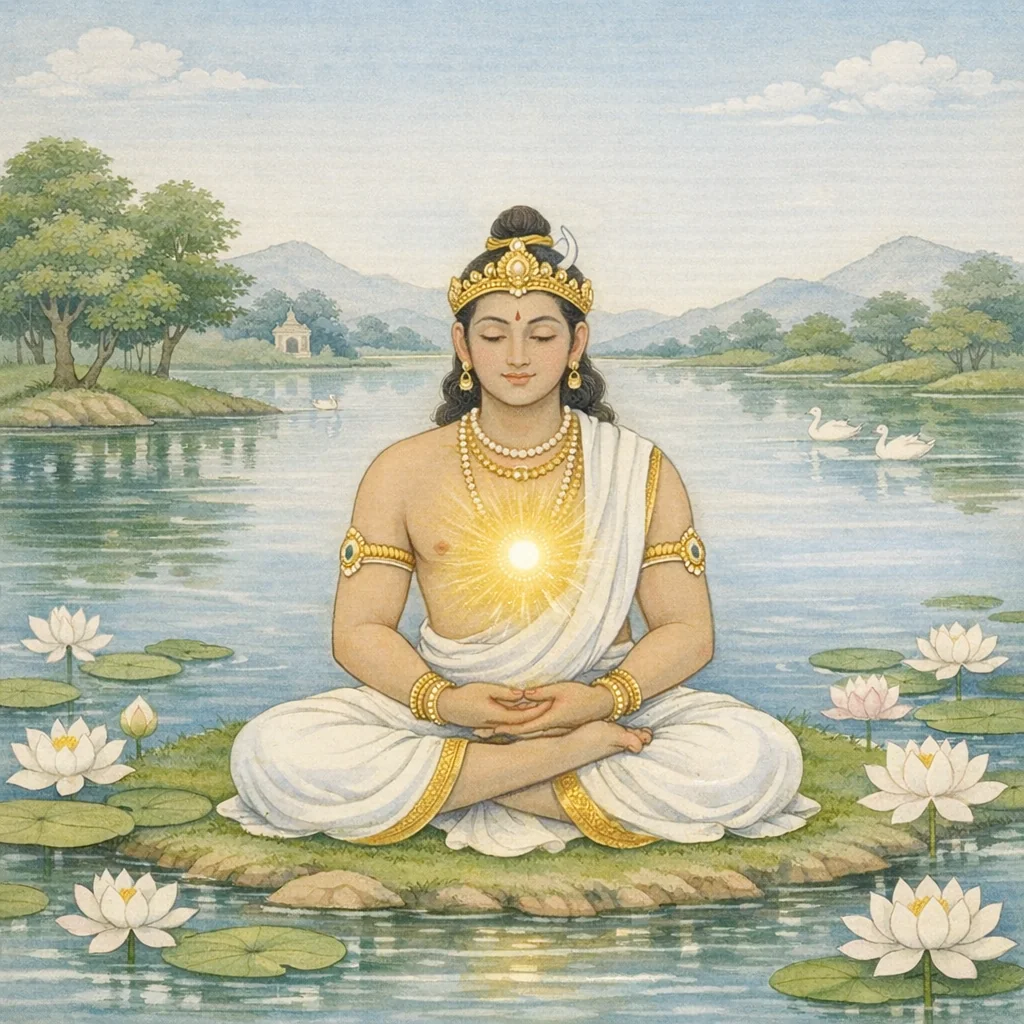
यत्रोपरमते चित्तं निरुद्धं योगसेवया । यत्र चैवात्मनात्मानं पश्यन्नात्मनि तुष्यति ॥ ६.२० ॥
yatroparamate cittaṁ niruddhaṁ yogasevayā | yatra caivātmanātmānaṁ paśyann ātmani tuṣyati || 6.20 ||

Allí donde la mente, refrenada por la práctica del yoga, se aquieta por completo, y donde, viendo al Ser por el Ser, se complace en el Ser mismo.
जिस अवस्था में योगाभ्यास से निरुद्ध चित्त उपराम हो जाता है और जिसमें (साधक) अपने-आप से अपने-आप को आत्मा में ही देखता हुआ आत्मा में ही संतुष्ट हो जाता है।
Where the mind, restrained through the practice of yoga, comes to rest; and where, seeing the Self by the self (i.e., through one’s own inner awareness), one is content in the Self alone.
Interpretation hinges on ‘आत्मना आत्मानं’—often read epistemically (the self/inner faculty apprehends the Self) rather than as two metaphysical selves. The verse aligns with Upaniṣadic idiom of self-knowledge as immediate and inward.
FAQs
It describes a shift from externally conditioned satisfaction to intrinsic contentment: the mind quiets through sustained practice, and satisfaction arises from inward clarity.
The verse points to a mode of knowing in which the Self is ‘seen’ directly (not as an object among objects), suggesting a foundational consciousness underlying mental activity.
This continues the meditative phenomenology of Chapter 6: after steadiness (6.18–19), the text describes the experiential ‘where’ (yatra) of absorption and self-contentment.
In contemplative terms: emphasize regular practice and observe the difference between gratification (from stimuli) and contentment (from settled awareness).