Adhyaya 206
Agastyārghyadāna-kathana (On the Giving of the Agastya Honor-Offering)
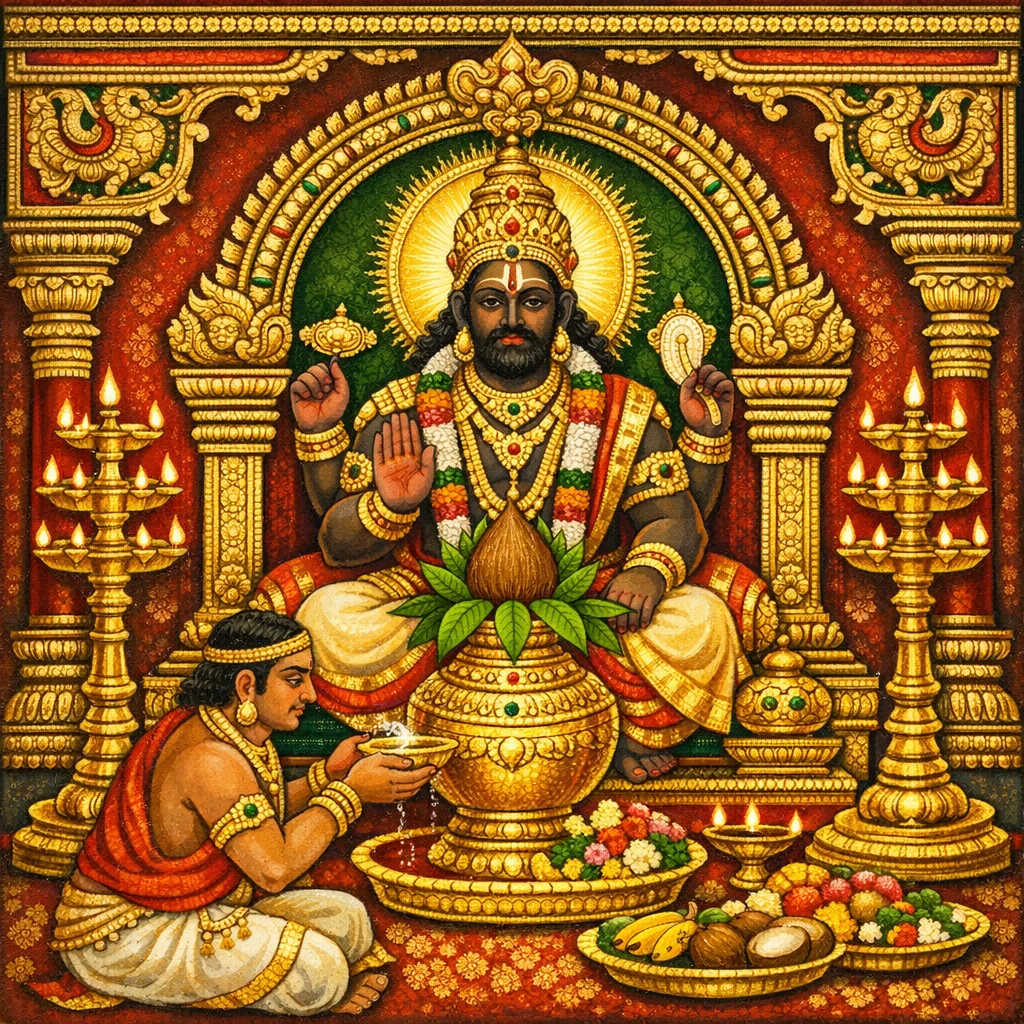
El Señor Agni prescribe un culto de tipo vrata centrado en Agastya, identificado explícitamente con Viṣṇu, vinculando así la veneración del sabio con la soteriología vaiṣṇava (alcanzar a Hari). El rito es temporal y metódico: durante tres días, antes del amanecer, el practicante ayuna, adora y ofrece arghya a Agastya. En pradoṣa se instala una imagen hecha de flores de kāśa en una vasija de agua (ghaṭa/kumbha) y se realiza vigilia nocturna (prajāgara). Por la mañana se ofrece arghya junto a un depósito de agua, con himnos que recuerdan las hazañas míticas de Agastya (secar el océano; destruir a Ātāpi–Vātāpi) y súplicas de dones y buen destino tras la muerte. El capítulo detalla sustancias rituales y estructura de donación: sándalo, guirnaldas, incienso, telas, arroz/granos, frutas, oro y el don de una vasija a un brāhmaṇa, además de alimentación y dakṣiṇā (vaca, vestiduras, oro). Menciona variantes de recitación de mantras y una regla de accesibilidad: para mujeres y Śūdras, el rito se realiza sin mantras védicos. La observancia prolongada (siete años de arghya) promete prosperidad total: hijos para quien no los tiene y un esposo regio para una doncella.
Shlokas
No shlokas available for this adhyaya yet.
Frequently Asked Questions
Fasting and worship precede the arghya; at pradoṣa a kāśa-flower image is placed in a ghaṭa/kumbha, followed by night vigil; in the morning the arghya is offered near water, then tyāga (grain, fruit, libation) and charitable gifts/feeding of brāhmaṇas conclude the rite.
Sandalwood, garlands, incense, cloth, rice/grains, fruits, gold (and in an expanded description: five gems, gold and silver, seven grains, curd, sandalwood), plus a pot-gift to a brāhmaṇa and dakṣiṇā including cow, garments, and gold.
The rite explicitly aims at attaining Hari through Agastya-worship (mukti-oriented devotion) while also promising dharma-anchored prosperity—health, fortune, desired boons, lineage, and marital success—thus integrating dharma, artha, kāma, and mokṣa.
It states that for women and Śūdras the rite is ‘non-Vedic,’ i.e., performed without Vedic mantras, indicating an inclusive procedural adaptation while preserving the devotional and charitable structure.
By giving the arghya for seven years, ‘all obtain everything’: a childless woman gains sons and good fortune, and a maiden gains a husband of royal birth; the arghya is also described in some readings as imperishable and mind-fulfilling.