Adhyaya 216
Gāyatrī-nirvāṇa (The Liberative/Concluding Doctrine of Gāyatrī)
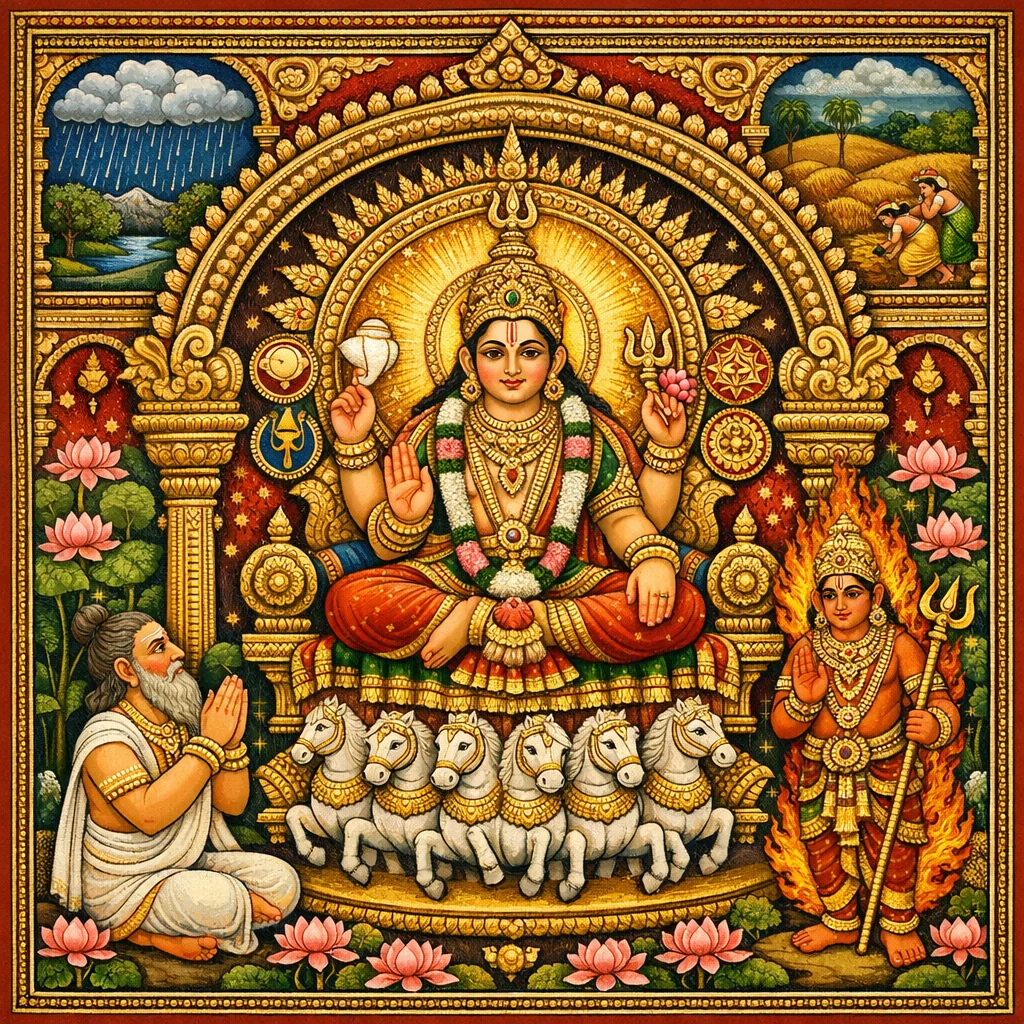
Tras concluir el Sandhyā-vidhi, Agni instruye que el practicante complete el rito con Gāyatrī-japa y smaraṇa, subrayando el mantra como protección (rakṣā) y disciplina interior. El capítulo despliega una exégesis filológico-teológica: Gāyatrī es Sāvitrī porque ilumina, y Sarasvatī porque es la forma de la palabra (vāc) de Savitṛ. El término bharga se explica desde raíces que significan brillar y purificar como “quemar/cocer”, vinculando la radiancia con una refinación transformadora. Vareṇyam se establece como el estado supremo, digno de ser elegido, anhelado por quienes buscan cielo y liberación; dhīmahi se glosa como retención mental sostenida y contemplación. El texto armoniza lecturas sectarias presentando la luz del mantra como una sola realidad, recitada como Viṣṇu, Śiva, Śakti, Sūrya o Agni, y afirma un Brahman unitario al inicio del Veda. Sigue una cosmología ritual: la oblación a Agni sostiene al Sol y produce lluvia, alimento y seres, mostrando cómo mantra y rito sustentan el mundo. El clímax es advaita: la luz suprema en el orbe solar es la realidad turīya y el Viṣṇu-parama-pada; mediante la meditación se destruyen nacimiento y muerte y el triple sufrimiento, culminando en la identidad: “Yo soy Brahman… yo soy ese Puruṣa solar, el Infinito (Oṃ)”.
Shlokas
No shlokas available for this adhyaya yet.
Frequently Asked Questions
Completion through Gāyatrī-japa and mental recollection (smaraṇa), framed as both spiritual discipline and protective power for disciples, spouse, and vital breaths (prāṇa).
Bharga is interpreted as tejas (radiance) and purifying brilliance, supported by etymological links to roots meaning ‘to shine’ and ‘to burn/cook’ (purificatory transformation).
It acknowledges multiple recitations (Śiva, Śakti, Sūrya, Agni) while asserting their unity in the one supreme light/Brahman, explicitly identifying that light with Viṣṇu as the world-cause.
It presents a causal chain: oblation to Agni supports Āditya; from the Sun comes rain; from rain food; from food living beings—linking ritual action to world-order.
By meditating on the supreme light as turīya within the solar orb, one destroys birth-death and threefold suffering, culminating in the non-dual recognition ‘I am Brahman’ and identity with the Āditya-Puruṣa.