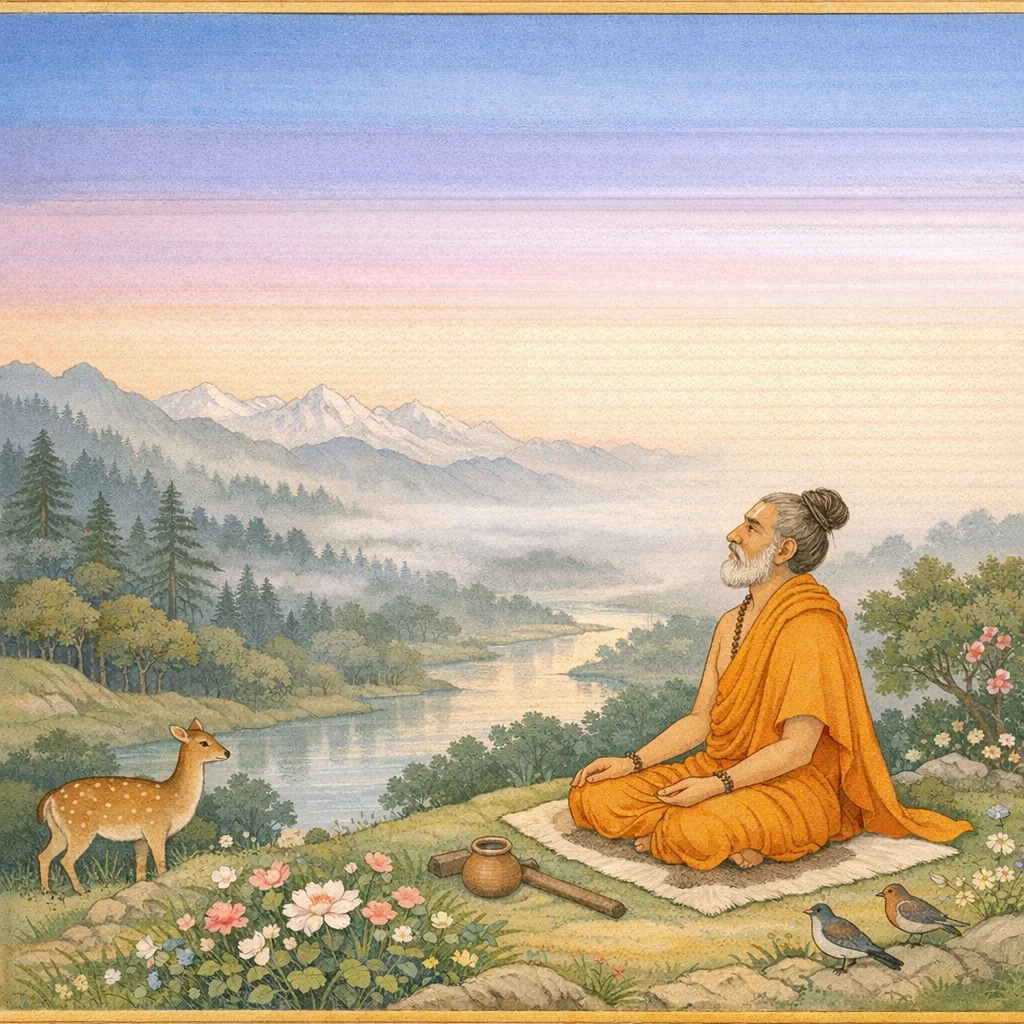
Turiyateeta
The Turīyātīta Upaniṣad is a late Sannyāsa Upaniṣad associated with the Atharvaveda. Though transmitted in an extremely condensed, one-verse form, it is philosophically pointed: it extends the Mandūkya Upaniṣad’s teaching of turīya by indicating turīyātīta—“beyond even turīya.” The intent is to prevent the Absolute from being reified as a special “fourth state” alongside waking, dream, and deep sleep. In this text, Brahman/Ātman is the ever-present witness (sākṣin): self-luminous consciousness that cannot be made into an object of experience. The three states arise and subside in it, but it is not one more state among them. This apophatic move aligns with Advaita Vedānta’s neti neti method, dissolving even subtle conceptual attachments. As a Sannyāsa Upaniṣad, its metaphysics is inseparable from a renunciant ethos: freedom is the cessation of doer- and enjoyer-identification, transcendence of dualities, and the ideal of jīvanmukti—liberation here and now through direct non-dual knowledge. Saṃnyāsa is thus presented primarily as inner non-attachment (asaṅga), with external renunciation as a secondary expression of realized insight.
Start ReadingKey Teachings
- Turīyātīta: the Absolute is “beyond even turīya
” i.e.
beyond any conceptualized ‘fourth state’
- Ātman/Brahman as sākṣin: the ever-present witness of waking
dream
and deep sleep
- Non-objectifiability (aviṣayatva): reality cannot be grasped as an experience or mental content
- Neti neti and apophatic pedagogy: negation as a method to dissolve subtle reification
- Asaṅga (non-attachment): freedom as disidentification from body–mind and social roles
- Jīvanmukti ideal: liberation as present knowledge
not a post-mortem attainment
- Transcendence of dualities: beyond doer/enjoyer
merit/demerit
praise/blame
pleasure/pain
- Saṃnyāsa as inner renunciation: external abandonment is secondary to abidance in non-dual awareness
Verses of the Turiyateeta
1 verses with Sanskrit text, transliteration, and translation.