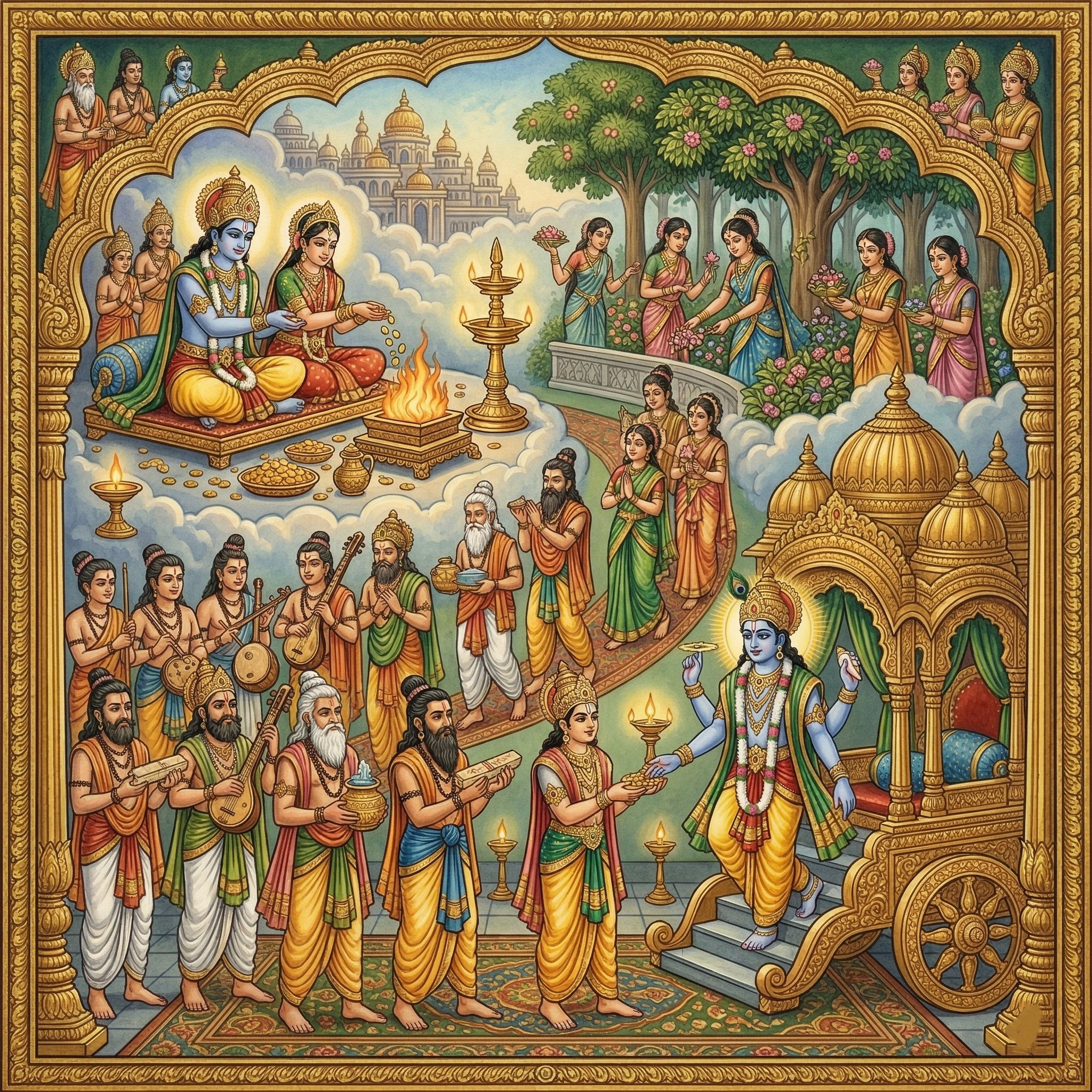
Margashirsha Masa Mahatmya
Margashirsha Masa Mahatmya
This section is primarily calendrical and ritual-theological rather than tied to a single pilgrimage site. Its sacred geography is constructed through portable tīrtha logic: the practitioner ritually invokes Gaṅgā and enumerates her sanctifying names, thereby transforming the bathing space (home, riverbank, or local water source) into a temporary tīrtha-field. References to Gaṅgā as Tripathagā and to the multiplicity of tīrthas across heaven, earth, and mid-space (divi–bhuvi–antarikṣe) frame a pan-Indic sacred map that can be accessed through mantra and correct procedure during Mārgaśīrṣa.
Adhyayas in Margashirsha Masa Mahatmya
17 chapters to explore.
Adhyaya 1
मार्गशीर्षमासमाहात्म्यप्रश्नोत्तरम् | Dialogue on the Greatness of the Mārgaśīrṣa Month
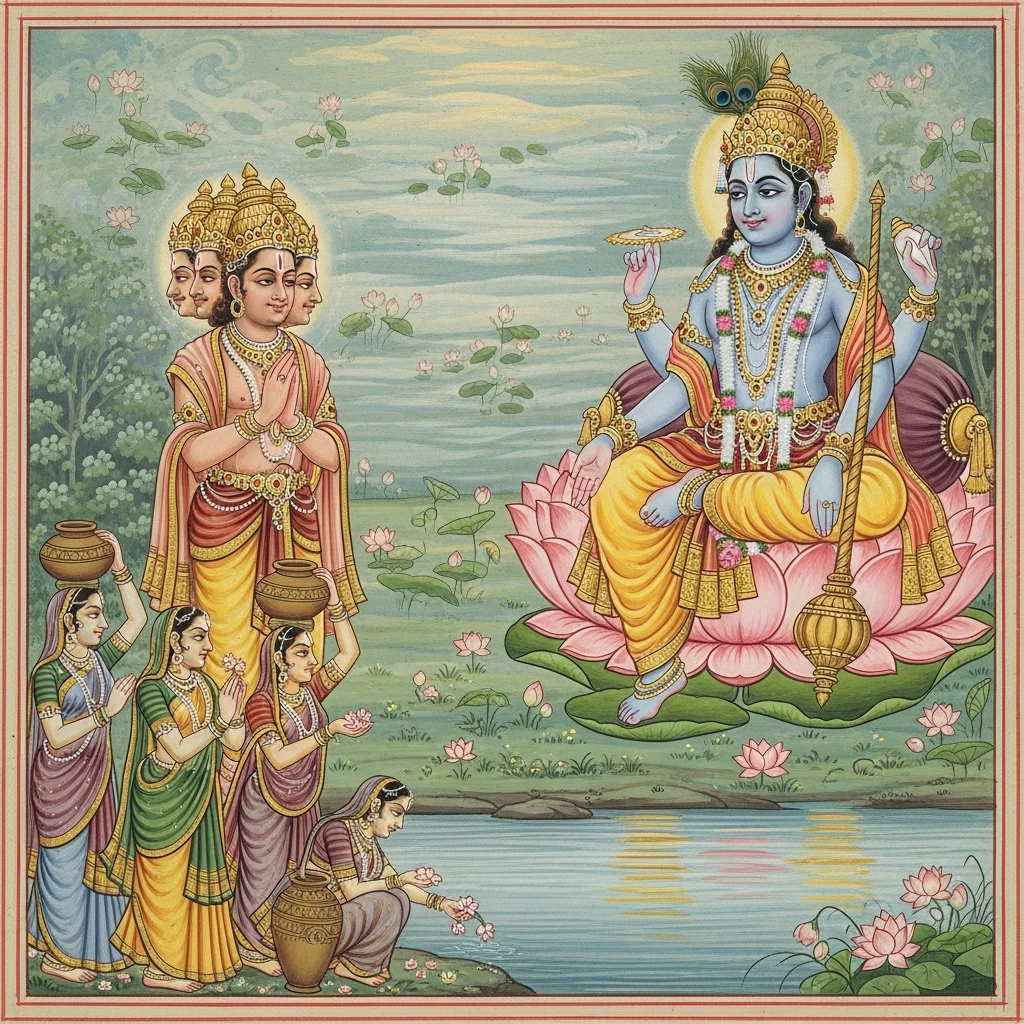
The chapter begins with Sūta’s reverent invocation, praising Kṛṣṇa/Mādhava as the giver of both worldly enjoyment and liberation. In Śvetadvīpa, Brahmā approaches the Supreme Lord and asks for a precise account of the Mārgaśīrṣa month—its presiding deity, proper gifts (dāna), bathing rules (snāna-vidhi), required conduct, dietary discipline, and the correct methods of mantra, meditation, and worship. Bhagavān affirms that such inquiry benefits all beings and declares that observances in Mārgaśīrṣa yield the combined fruits of sacrifices and pilgrimages to sacred tīrthas; even hearing the month’s greatness is said to equal the merit of major gifts such as tulāpuruṣa-dāna. The discourse contrasts the limited power of austerities and yogic paths to “control” the divine with the special ease by which devotional acts (bhakti) please the Lord in this month. The merits of the months are then ranked, culminating in Mārgaśīrṣa as especially beloved. Early-morning bathing before sunrise is prescribed as a central practice, and an illustrative tale is given: in Nandagopa’s Gokula, the Gopikās undertook Mārgaśīrṣa dawn-bathing, worship, and a havis-based food discipline, thereby satisfying the deity and receiving a boon. The chapter concludes by enjoining humans to observe Mārgaśīrṣa properly.
Adhyaya 2
Mārgaśīrṣa-vihitaḥ prātaḥkāla-śauca-snānādi-vidhiḥ (Morning Purification, Gaṅgā Invocation, and Ūrdhva-puṇḍra Procedure)
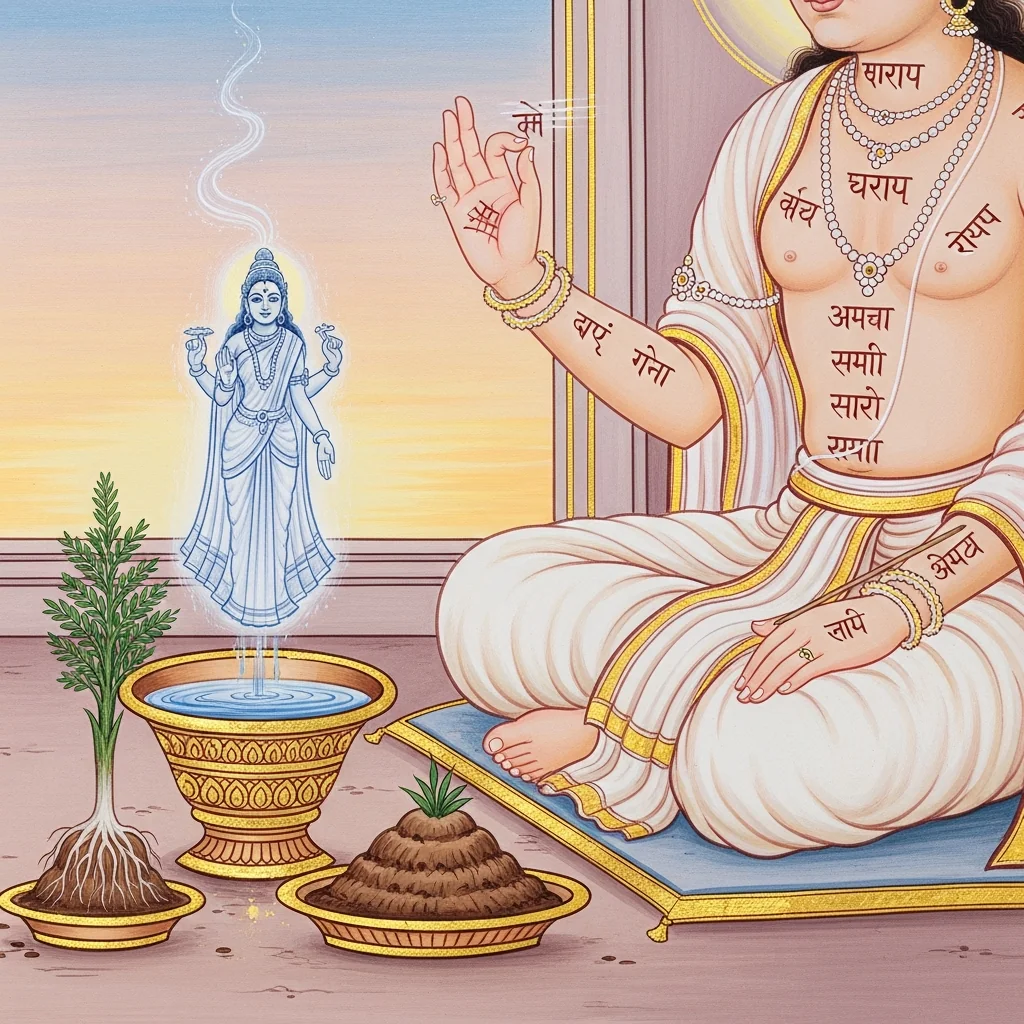
This adhyāya is a prescriptive dialogue: Brahmā asks for the proper procedure (vidhi) of the Mārgaśīrṣa observance, and Śrī Bhagavān replies with a step-by-step morning regimen. It begins with rising at the end of night, performing cleansing acts, honoring one’s teacher, and sustaining unbroken remembrance; then comes nāma-kīrtana (the sahasranāma) with restraint of speech and bodily purity. It next details regulated evacuation and śauca, followed by ācamanam, dental cleaning, and bathing. Earth from the tulasī root with a leaf is to be empowered by the mūla-mantra or Gāyatrī; one bathes with water (drawn or undrawn) with the intent of aghamarṣaṇa, the washing away of sin. A ritual tīrtha is then formed and Gaṅgā invoked by mantra, praised as Viṣṇu-related, with her many auspicious names recited at bath-time. Mud-bath mantras honor the Earth as remover of wrongdoing and recall Varāha’s uplifting of the world. After bathing, one dons clean white garments and offers propitiation to devas, pitṛs, and ṛṣis. The chapter concludes with the Vaiṣṇava ūrdhva-puṇḍra procedure—counts differing by varṇa, the twelve names of Viṣṇu assigned to bodily locations—along with notes on the correct tilaka form (leaving a central space) and warnings against improper application, aiming at Hari’s proximity (sālokya).
Adhyaya 3
ऊर्ध्वपुण्ड्र-गोपीचन्दन-माहात्म्य तथा आयुध-लाञ्छन-धारण (Urdhva-puṇḍra, Gopīcandana, and Emblematic Marking)
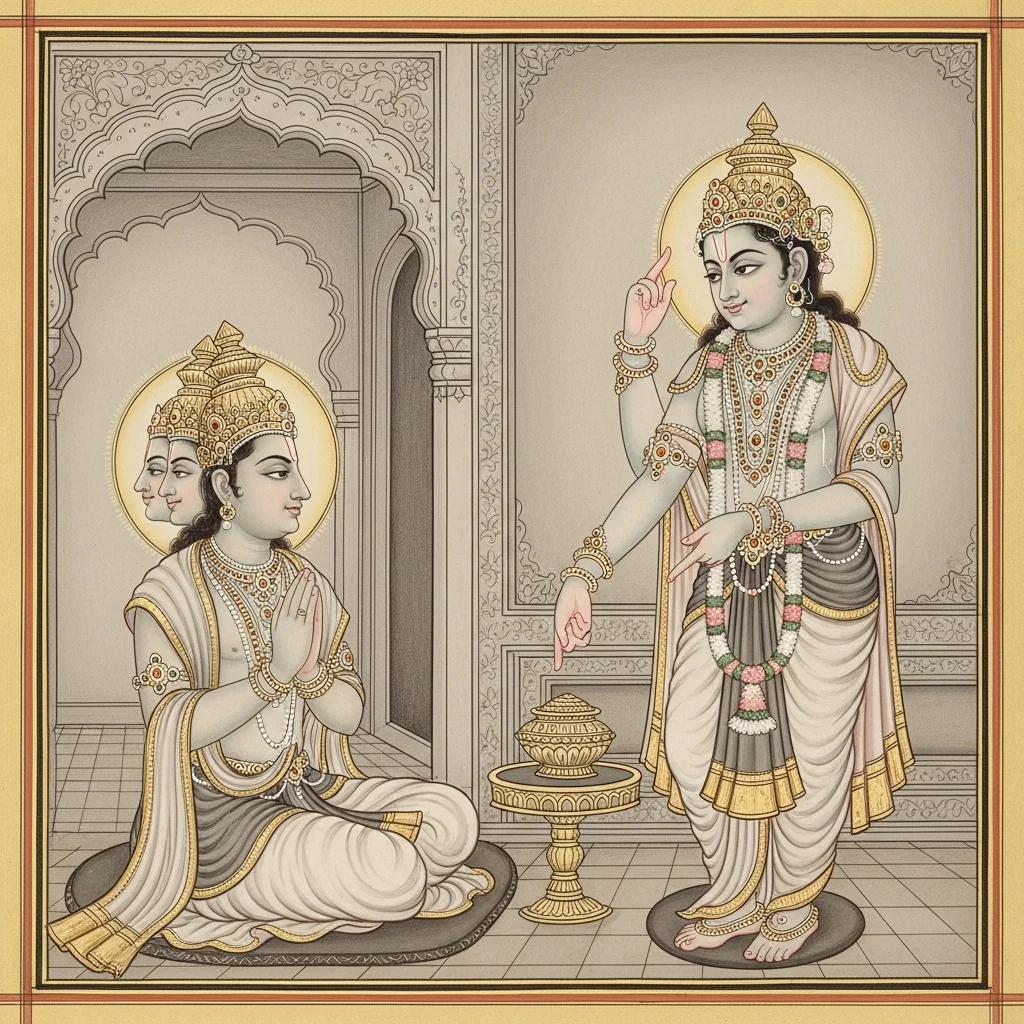
This chapter is framed as an instructive dialogue between Brahmā and Keśava on Vaiṣṇava sacralization of the body. It begins with Brahmā’s question about the kinds of puṇḍra (tilaka) and sets out a threefold classification tied to materials such as tulasī-earth and gopīcandana/haricandana. It then offers an extended māhātmya of gopīcandana—especially the earth connected with Dvāravatī—praising it as a portable means of purification, protection, and the multiplication of merit, effective even when ritual lacks mantra, proper timing, or full procedural completeness. Moving beyond the forehead mark, the chapter teaches emblematic inscription of the body: bearing Nārāyaṇa’s āyudha-signs (śaṅkha, cakra, gadā, padma, and avatāra marks like matsya and kūrma) is presented as an identity-forming practice that burns sin, wards hostile forces, and grants ritual authority. Practical micro-instructions (such as finger associations for application) and social-ethical points are included, affirming purity and honor for those who wear ūrdhva-puṇḍra and cakra-lāñchana. The conclusion warns against disparaging marked devotees and prescribes a corrective response grounded in reverent devotion.
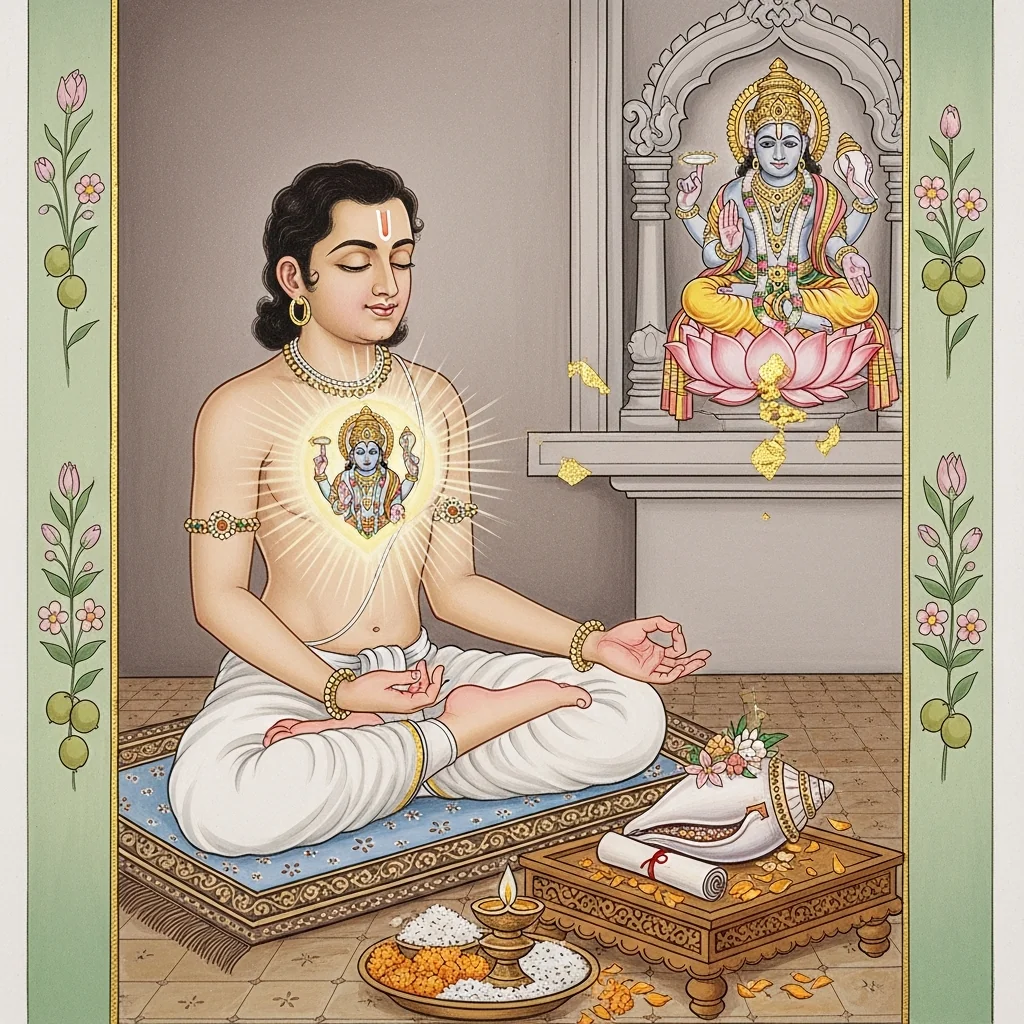
Adhyaya 4
तुलसीमालाधारण-पूजाविधि-प्रशंसा (Praise of Wearing Tulasī Mālā and the Pūjā Procedure)
Chapter 4 begins with Brahmā asking Keśava about the ritual and spiritual fruit of devotion marked by initiation—especially the wearing of a tulasī garland and a padmākṣa (lotus-seed) rosary. The Lord replies with an extended phalaśruti, praising the tulasī-wood mālā as a visible sign of bhakti that grants protection, purification, and auspiciousness; even those in states of impurity are said to reach the divine goal when they bear it with faith. The chapter then turns from devotional emblems to correct procedure: one should adopt Vaiṣṇava marks (ūrdhvapuṇḍra and śaṅkha-related identifiers), perform sandhyā and venerate the guru, enter the worship space with a focused mind, and undertake inner purification, prāṇāyāma, and dhyāna on a four-armed form of Viṣṇu. A detailed pūjā arrangement follows—placing the śaṅkha, vessels, lamps, and offerings (arghya, pādya, ācamanīya, madhuparka), allowing substitution through bhāvanā when materials are lacking—along with nyāsa and the formal, mantric worship of the Pāñcajanya conch. The sequence culminates in bathing, adorning, offering naivedya, incense, lamps, stotra, and concluding acts of reverence, presenting devotion as both contemplative and liturgically exact.
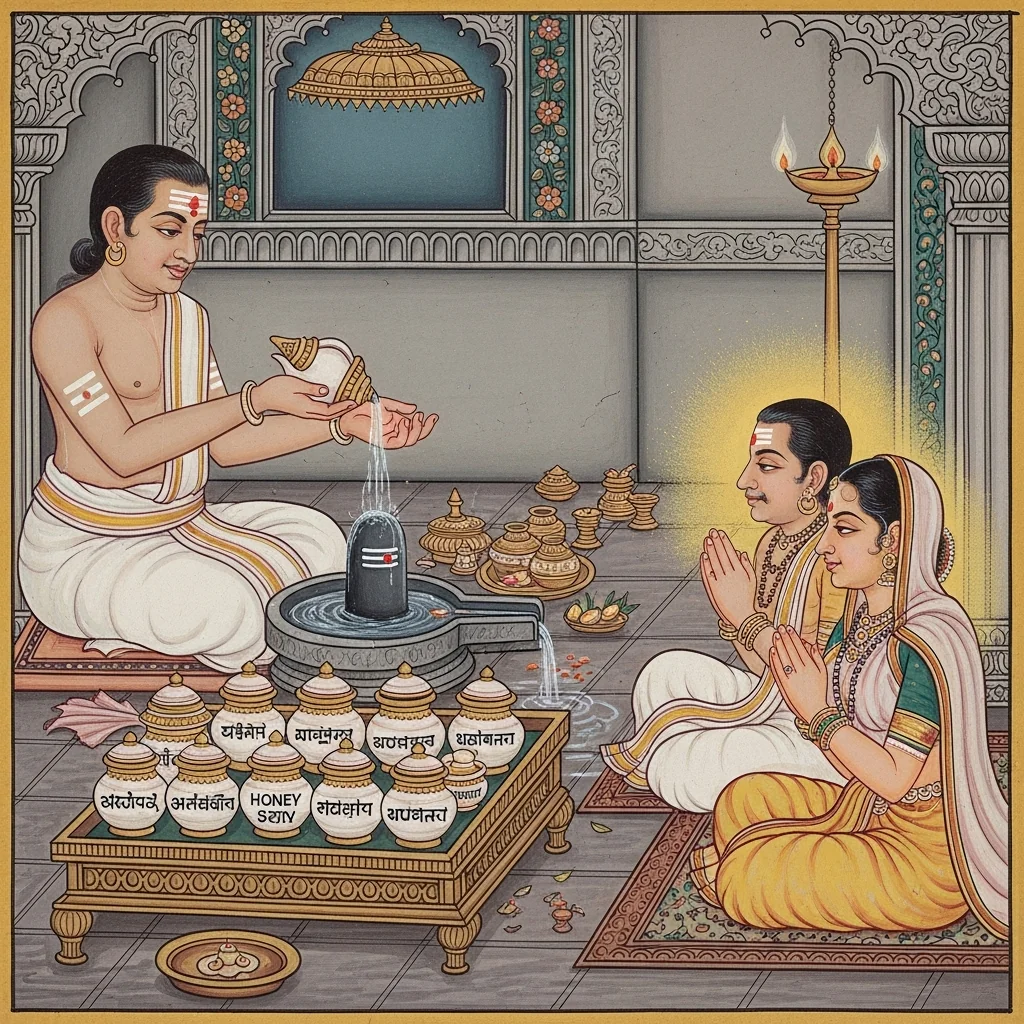
Adhyaya 5
Śaṅkhodaka–Pañcāmṛta–Kṣīrasnāna Māhātmya (Glory of Conch-Water and Five-Nectar Ablution in Mārgaśīrṣa)
This chapter unfolds as a theological question-and-answer: Brahmā asks Bhagavān about the fruits of bathing (abhiṣeka) Hari with pañcāmṛta, and especially with śaṅkha-udaka—water held in a sacred conch. Bhagavān replies with a graded hierarchy of offerings—milk, curd, ghee, honey, sugar, and fragrant flower-water—declaring increasing merit and distinct results such as auspiciousness, nourishment, removal of misfortune, and access to divine realms. The teaching then specifies sacred timing in the month of Mārgaśīrṣa, with mention of Dvādaśī and Pañcadaśī. The conch is presented as a ritual instrument: prescribed counts of conch-ablutions (8, 16, 24, 108, 1008, and more) are linked to promised outcomes ranging from worldly sovereignty and royal fortune to long residence in heavenly worlds, and even liberation (mokṣa) for a devoted company. Conch-water is further sanctified as Gaṅgā-like, for all tīrthas are said to dwell within the conch by divine command. The chapter describes the conch’s iconography and indwelling deities—Moon, Varuṇa, Prajāpati, Gaṅgā, and Sarasvatī—prescribes offering arghya and circumambulating with the conch, and extols its protective power against afflictions and hostile beings. It concludes that devotional bathing accompanied by auspicious music leads to the state of “liberated while living,” presenting ritual bhakti as both purification and the path to salvation.
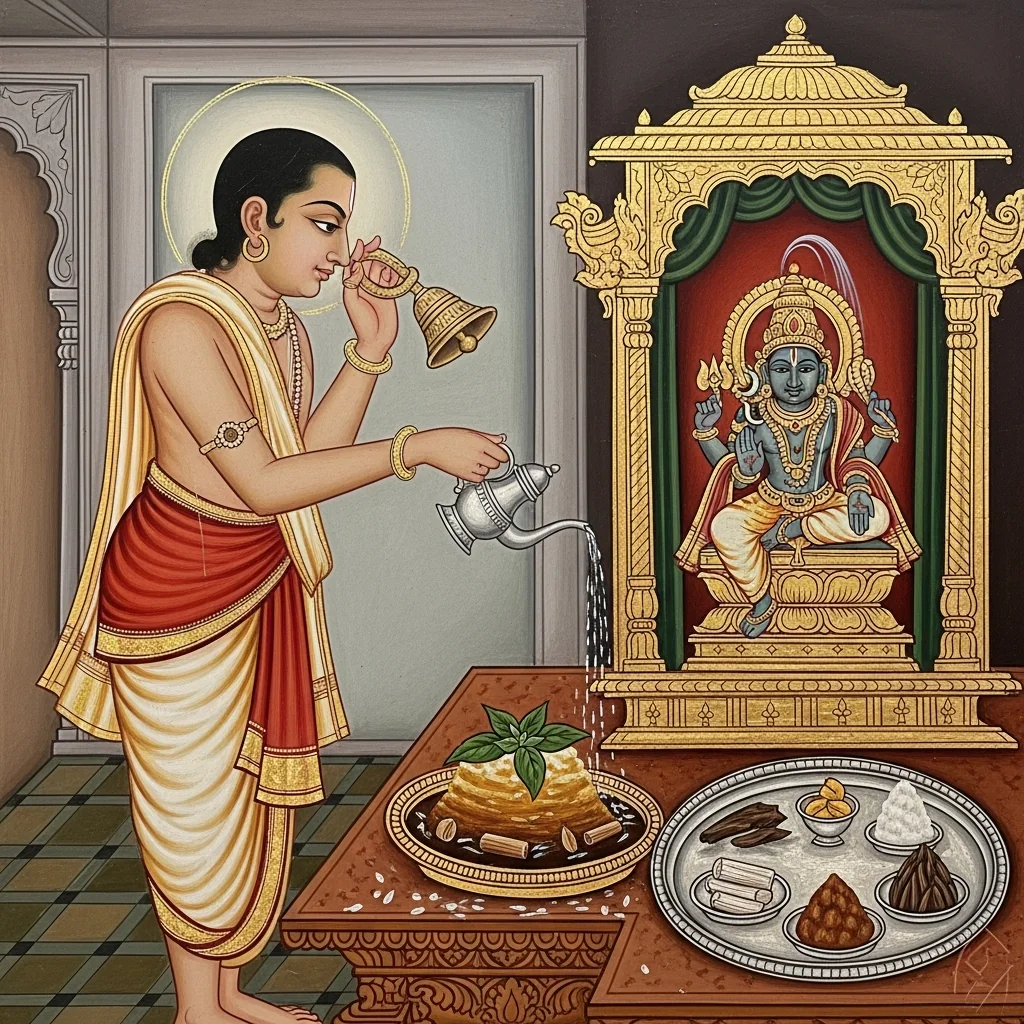
Adhyaya 6
घण्टानाद-माहात्म्य तथा चन्दन-माहात्म्य (Glory of Bell-Sound and Sandal Offerings)
This chapter is framed as a formal theological dialogue. Brahmā asks Śrī Bhagavān to state precisely the fruits (phala) of ghaṇṭānāda (bell-sound) and candana (sandal/unguents) in worship. The Lord defines bell-sound as an all-encompassing liturgical medium—“all instruments” and “all deities”—and prescribes its use especially at the time of ritual bathing and pūjā. A broad phalaśruti is attached to ringing the bell before the Deity: prolonged residence in the divine realm, destruction of accumulated demerit, and protective benefits for the household. Proper legitimacy is marked by emblems such as Garuḍa (Vainateya) and Sudarśana on the bell and even on its handle, though functional substitutes are permitted when such marks are absent. The chapter also extends the bell’s efficacy to the end of life, presenting the hearing of a Sudarśana-associated bell-sound as a ritualized auditory path to liberation. It then turns to candana-māhātmya, privileging sandal paste derived from tulasī-wood and blended fragrances (camphor, aguru, musk, and the like) as a month-specific offering, especially in Mārgaśīrṣa, with strong claims of merit, purification, and devotional authenticity. Worship of Nārāyaṇa upon Garuḍa—bearing śaṅkha, padma, gadā, cakra, and Śrī—is declared sufficient, relativizing other ritual systems (tīrtha visits, yajñas, vratas, dāna, and fasting) within this economy of bhakti.
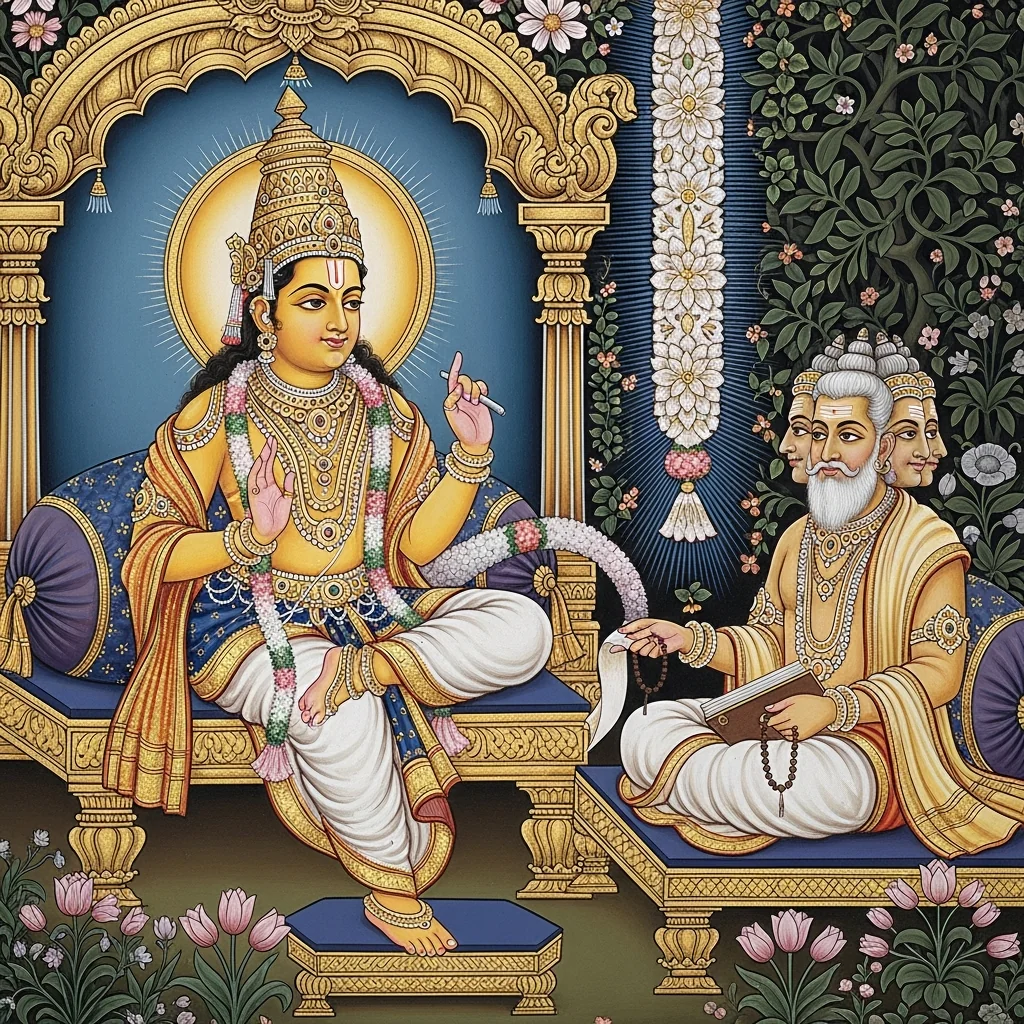
Adhyaya 7
Puṣpajāti-māhātmya (Theological Discourse on the Merit of Flower-Offerings)
The chapter unfolds as a didactic dialogue: Brahmā asks Bhagavān for a systematic account of the spiritual results of offering different kinds of flowers, and Bhagavān replies with an ordered classification. He lists flowers approved for worship and singles out especially pleasing offerings, including tulasī and certain aquatic lotuses. He then lays down qualitative standards—color, fragrance, freshness, freedom from insects, and ritual purity—while noting that even non-fragrant flowers may be acceptable, though specific exclusions and avoidances are indicated. The same offering principle is extended to leaves (such as bilva, śamī, bhṛṅgarāja, tamāla, āmalakī) and, where fitting, to fruits as substitutes. Finally, Bhagavān presents a comparative hierarchy of merit across flower types through escalating “thousand-fold” valuations, culminating in jāti (jasmine) as the highest among those named. The phalaśruti teaches that offerings made in this month yield deity-bestowed devotion and may also correspond to desired worldly outcomes—wealth, family welfare, and the like—expressed in the Purāṇic idiom of merit and recompense.
Adhyaya 8
श्रीमत्तुलसी-धूप-दीपमाहात्म्य (Glorification of Tulasī, Incense, and Lamps)
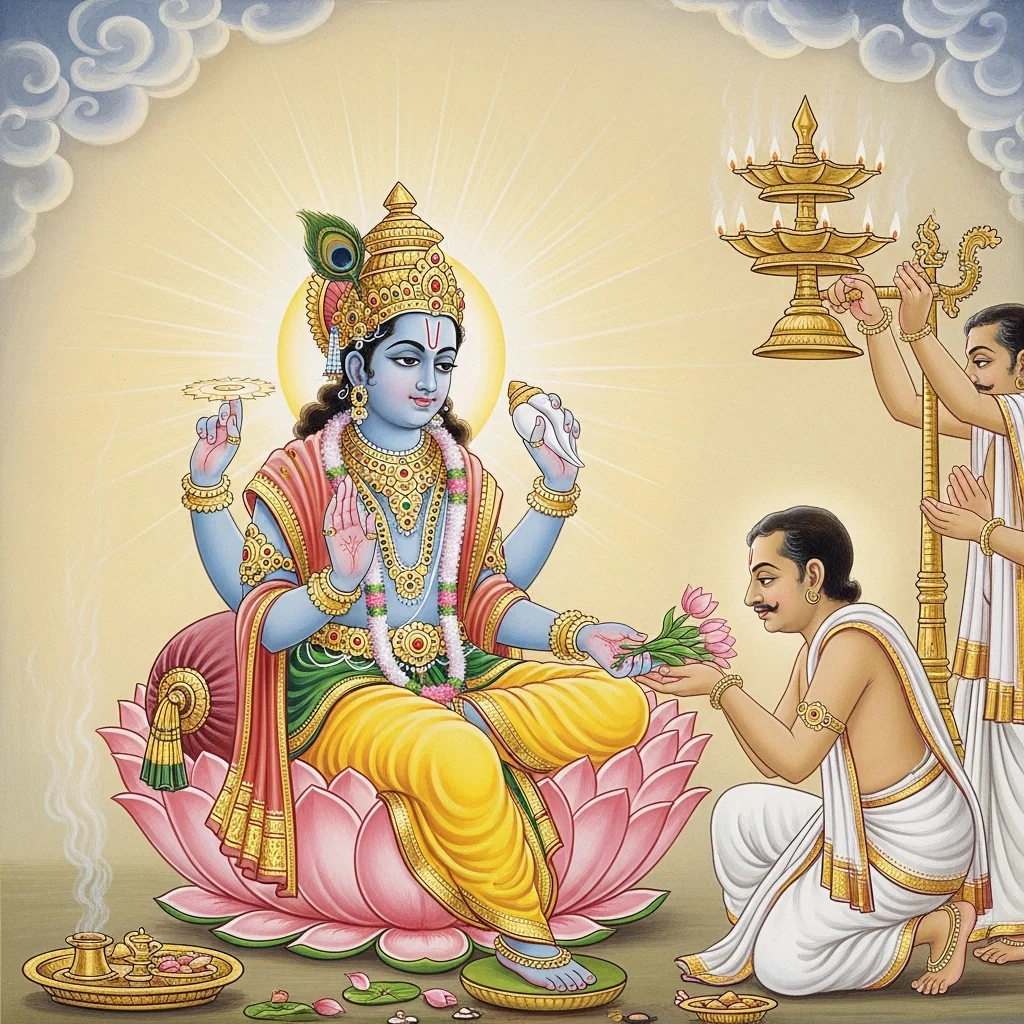
This chapter is cast as a dialogic guide to ritual practice and ethical conduct. Brahmā asks for an ordered account of Tulasī’s greatness; Bhagavān replies that offerings of Tulasī surpass gifts of precious substances, and that worship with Tulasī-mañjarīs grants a liberation-oriented status and nearness to Viṣṇu’s abode, including Śvetadvīpa. It then lays down practical purity rules: stale flowers and old water are to be avoided, yet Tulasī leaves and Gaṅgā water are treated as non-excludable sacred offerings. Other leaf-offerings (bilva, śamī, and the like) are distinguished, while Tulasī is affirmed as especially dear to Viṣṇu, with mention of her forms (kṛṣṇā/sitā) and the particular fruits of devotion gained through worship with ‘kṛṣṇa-tulasī’. The discourse turns to dhūpa-dāna and dīpa-dāna: incense offerings (aguru, karpūra, guggulu, and the compounded ‘daśāṅga dhūpa’) are praised as purifying, protective, and wish-fulfilling, while lamp rites (ārātrika, nīrājana) are said to complete even imperfect worship and lead to heavenly or Vaikuṇṭha attainments. Ethical cautions conclude the chapter, warning against harming or stealing offered lamps, with adverse karmic results stated in phalaśruti style.
Adhyaya 9
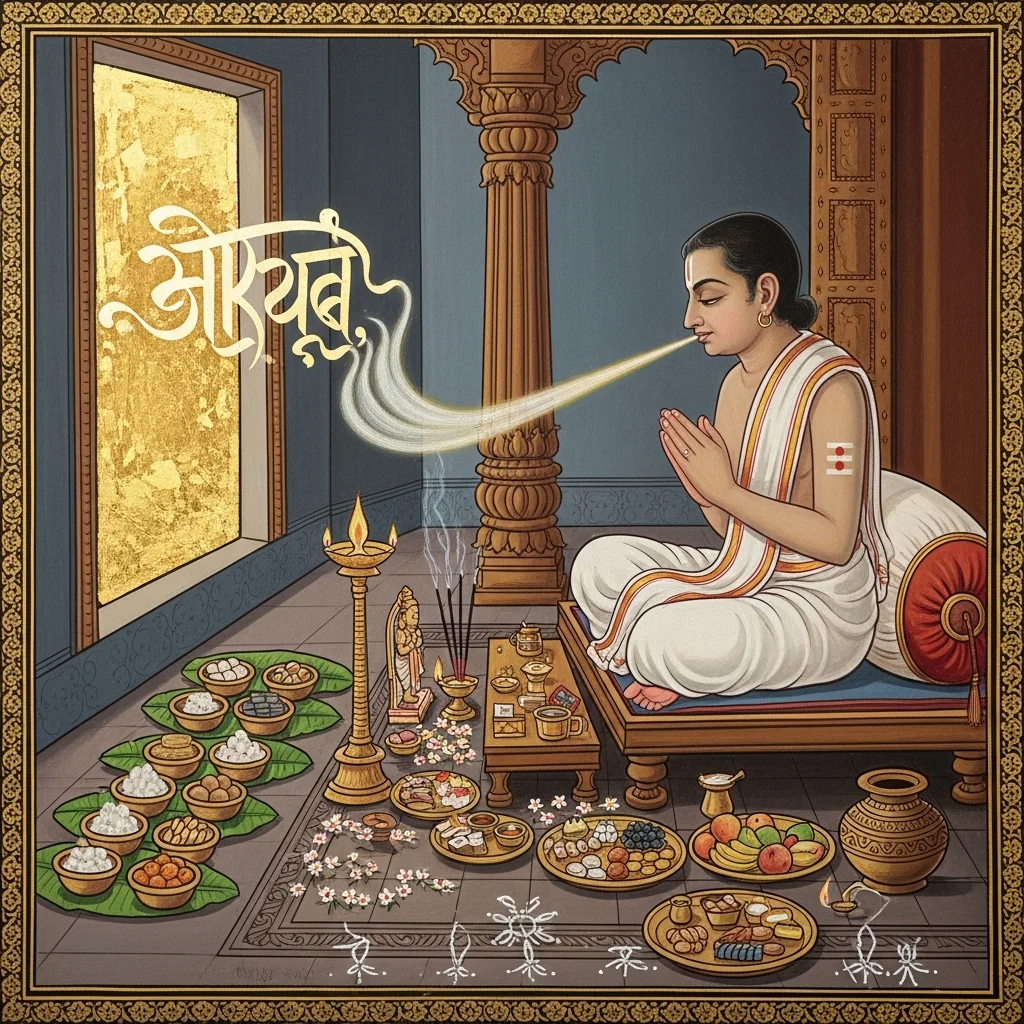
नैवेद्यविधिवर्णनम् | Description of the Naivedya Procedure (Offerings in Mārgaśīrṣa)
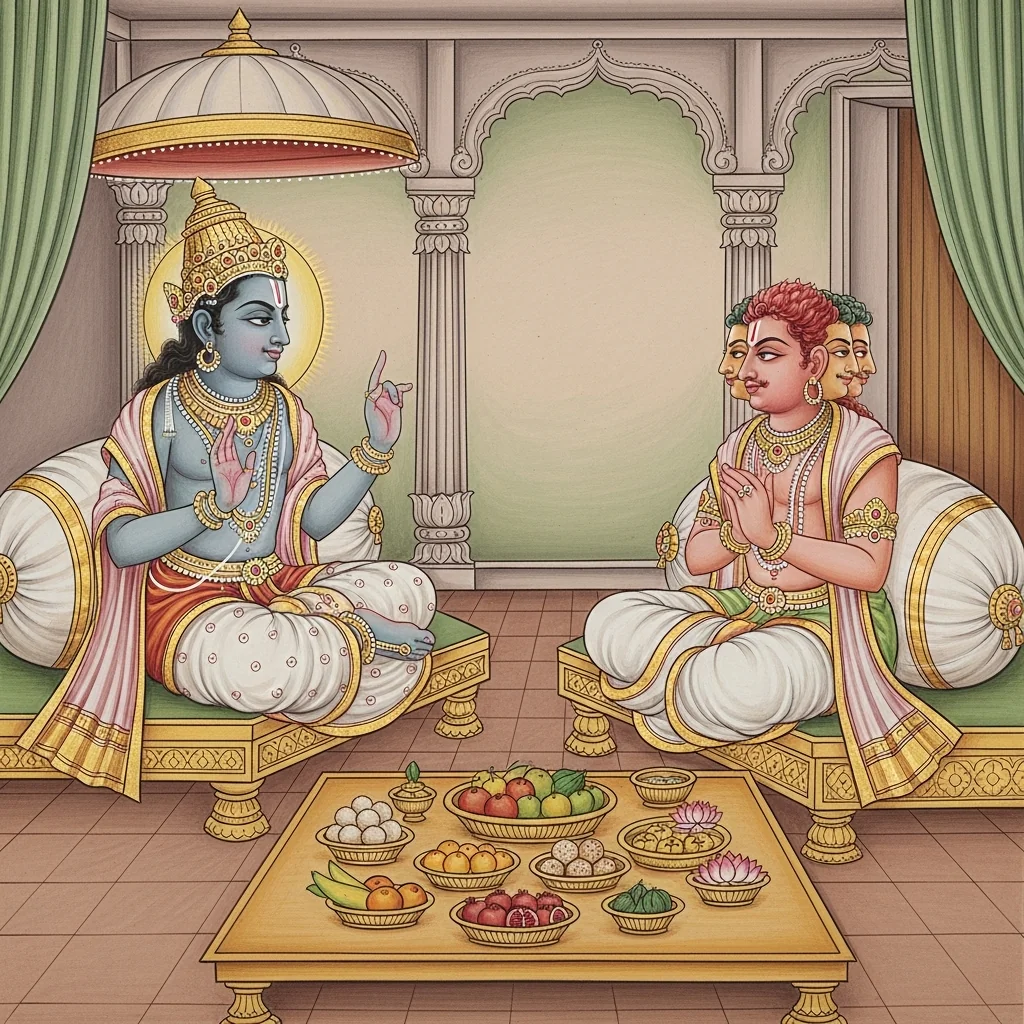
Chapter 9 is a technical-theological teaching on naivedya, the offering of food, to be performed in the month of Mārgaśīrṣa. Brahmā asks Śrī Bhagavān for an exact account of the procedure and of the kinds of staple foods (anna) and accompaniments (vyañjana) to be offered. Śrī Bhagavān replies with a graded protocol: one should use proper vessels—ideally gold, then silver, or leafware of palāśa—arrange many small bowls, and present a carefully chosen spread. It includes sweets such as pāyasa, grains and pulses, fruit-based mixtures, spiced decoctions, confections like modaka and related sweets, fried or baked items, and fragrant or ghee-enriched preparations. The chapter also grants a practical concession: if one cannot manage the full abundance, a condensed set of offerings is acceptable, and a phalaśruti declares the act to be spiritually protective. The closing verses specify quantities and purity of preparation in a recipe-like manner, stressing that ritual efficacy depends on exact measure, cleanliness, and orderly presentation.
Adhyaya 10
Dāmodara-nāma-japa, Pradakṣiṇā-vidhi, and Śālagrāma-pādodaka: Mārgaśīrṣa Observances
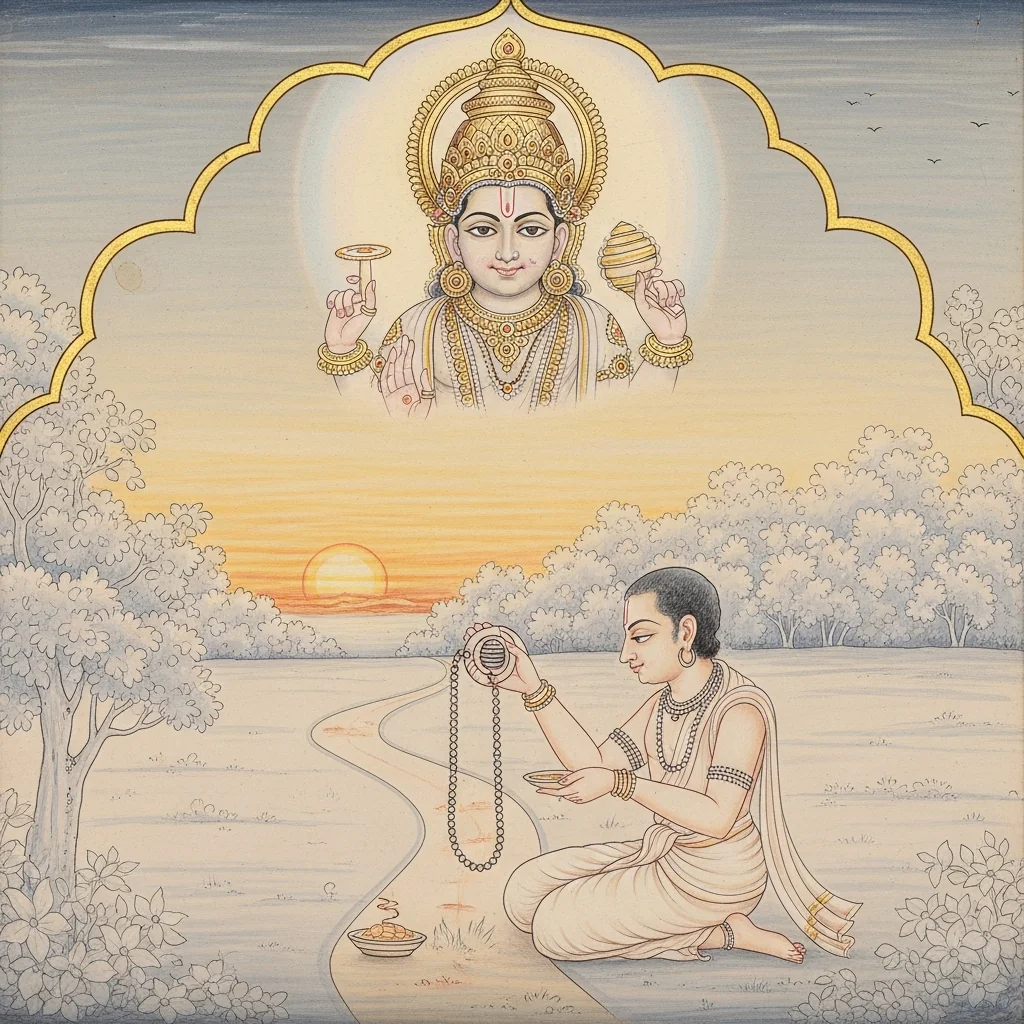
The chapter unfolds as a dialogue: after the naivedya offering in the Mārgaśīrṣa observance, the inquirer asks what should be done next, and Bhagavān lays out the proper post-offering sequence. He prescribes courteous completion of worship with scented water for ācamana, followed by tāmbūla, sandal, flowers, a mirror, and nīrājana. Bhakti is then intensified through japa and stotra, with guidance on suitable mālā materials and strict japa discipline—steady, undistracted posture, silence, and restraint. The merit of japa is graded by setting, from home to tīrtha and highest in the Lord’s immediate presence. A detailed phala teaching follows on pradakṣiṇā counts, their equivalences to daṇḍa-prapāta (full prostration), and the swift removal of accumulated moral impurity. The name “Dāmodara” is explained theologically through the episode of Yaśodā binding the Lord, and a daily regimen of repeating “namo dāmodarāya” in large numbers is given, to be concluded with tarpana, homa, and feeding brāhmaṇas. The closing praises devotional arts—song, instruments, dance, and sacred reading—as pleasing offerings, and exalts Śālagrāma pādodaka as supremely purifying and salvific, fit for use even amid liminal impurity and at life’s end.
Adhyaya 11
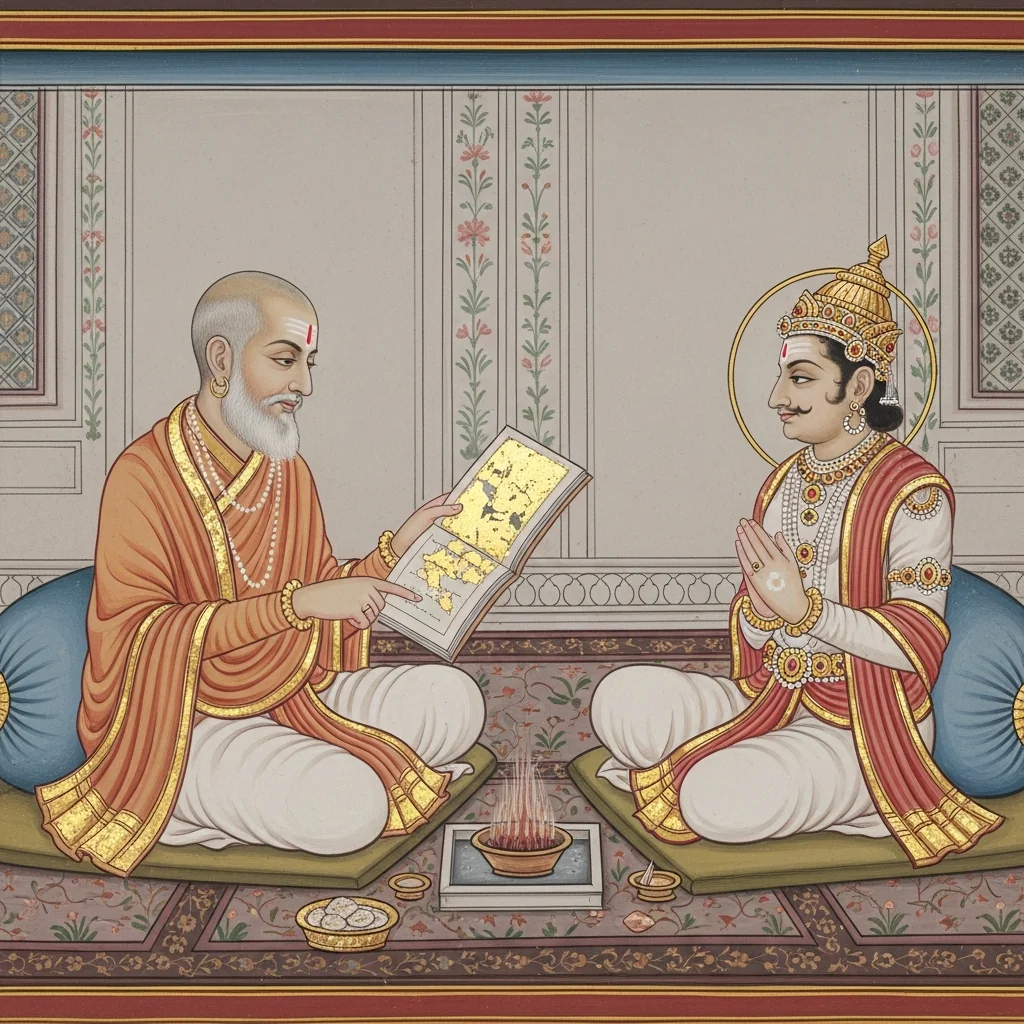
Kāmpilya’s Vaiṣṇava King and the Ethics of Dvādaśī: Hospitality, Devotion, and Karmic Retrospection (कांपिल्यनृप-वैष्णवधर्मः)
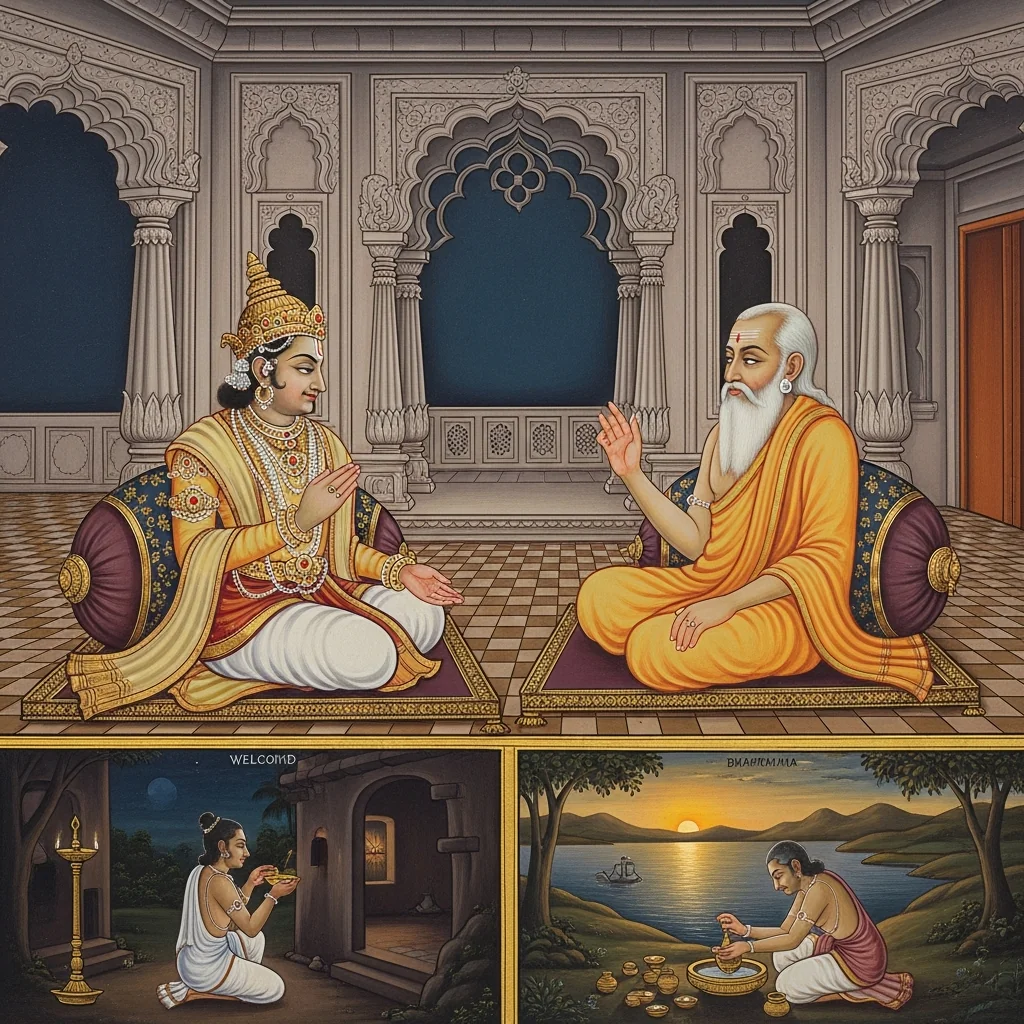
Chapter 11 begins with Brahmā asking to hear the greatness of Ekādaśī and the proper procedure for sacred observances, including prescriptions connected with mūrti worship. Śrī Bhagavān replies by introducing a sin-destroying account set in Kāmpilya. There, King Vīrabāhu is portrayed as truthful, self-controlled, learned in brahman-knowledge, and devoted to Janārdana; Queen Kāntimatī is likewise steadfast in devotion. When the sage Bhāradvāja arrives, the king receives him with dharmic hospitality—arghya, a seat, and reverent greeting—and explains the doctrine of honoring Vaiṣṇavas: even a small gift to a Vaiṣṇava yields greatly multiplied merit, and a day without a Vaiṣṇava’s presence is deemed fruitless. The text then draws sharp moral contrasts, censuring those without devotion to Hṛṣīkeśa and exalting Hari’s day above many other vows. The discourse turns to the superiority of Dvādaśī over other tithis, using analogies to show that a realm without a Vaiṣṇava king is deficient, like a body without eyes—thus linking ritual devotion with civic well-being. Bhāradvāja blesses the royal couple, praising steady bhakti and marital fidelity. Asked the cause of their prosperity, he reveals a former birth in which the king was a violent, unethical śūdra, while the wife remained faithful and free of malice. Their karmic turning point was compassion and hospitality to a lost, thirst-stricken brāhmaṇa, Devaśarmā, in a dangerous forest—offering water, fruit, rest, and help in worship. The chapter ends as Devaśarmā prepares to speak further, setting the stage for teaching on grace and transformation.
Adhyaya 12
अखण्डैकादशीव्रतविधिः (Akhaṇḍa-Ekādaśī Vrata: Procedure and Udyāpana)
Adhyāya 12 moves in two parts. First, Devasharmā recounts a karmic backstory: in a former life, Viṣṇu’s Dvādaśī was spoiled by Daśamī association (Daśamī-miśra/Daśamī-vedha), causing loss of accumulated merit and long suffering—social degradation and hellish torments. The remedy is then shown through another person’s properly observed Ekādaśī and the sharing/participation in that merit (paradatta-puṇya), joined with hospitality (atithya) and devotion, bringing purification and uplift. Next, the king asks for formal guidance, and the ṛṣi teaches the vidhi of Akhaṇḍa-Ekādaśī. On Daśamī night one takes the night-meal (naktam) with specified avoidances; on Ekādaśī one fasts and keeps ten restraints (such as repeated water-drinking, violence, untruth, betel, tooth-stick, daytime sleep, sexual activity, gambling, play, night-sleep, and speaking with the fallen). On Dvādaśī one eats once and performs pāraṇa while continuing the avoidances. The chapter culminates in the annual completion (udyāpana) in the bright fortnight of Mārgaśīrṣa: inviting worthy brāhmaṇas and an ācārya with spouse, preparing a maṇḍala and kalaśa arrangement, installing Lakṣmī-Nārāyaṇa (a golden image as means allow), performing pūjā, japa, and homa (with offerings based on the Puruṣasūkta), and concluding with dāna (cows, vessels, gifts) and the “full-vessel” (pūrṇapātra) completion principle—emphasizing sincerity and avoiding financial deceit.
Adhyaya 13
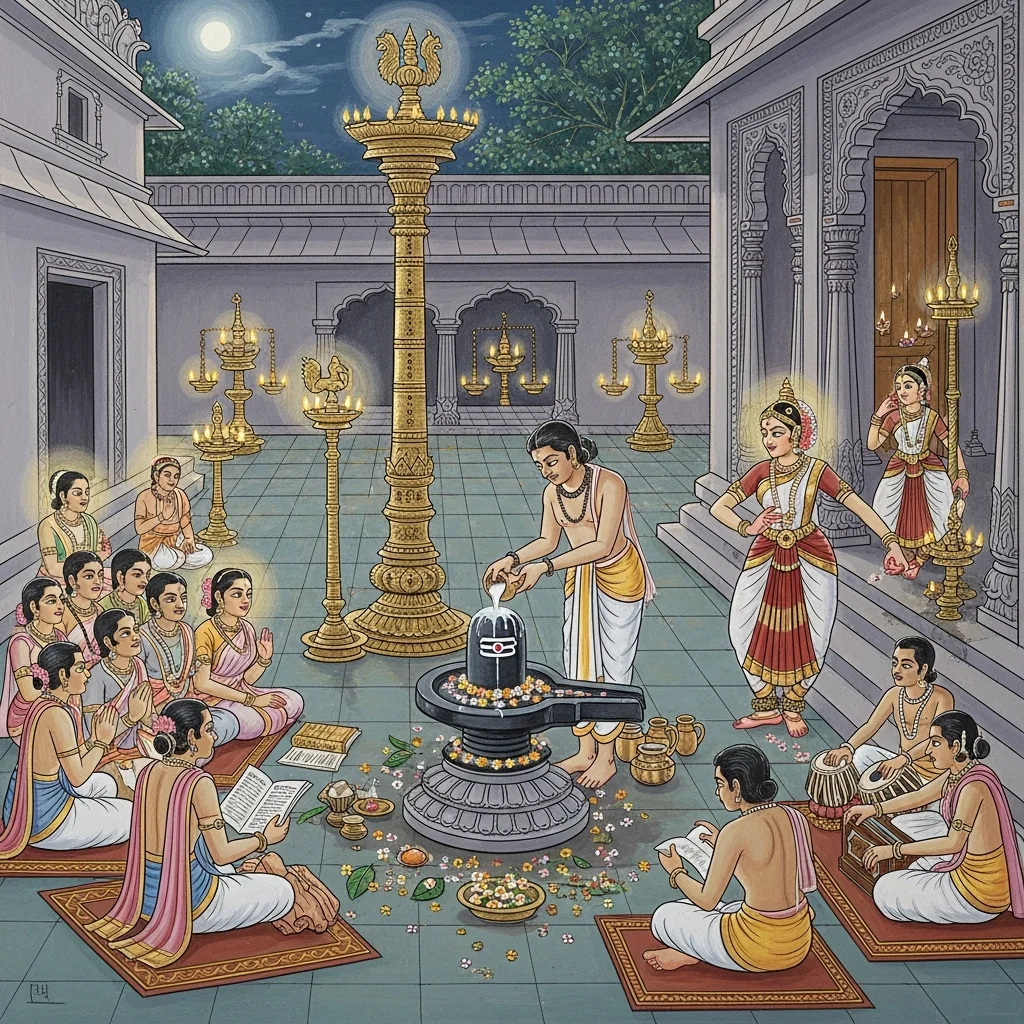
जागर-लक्षणम् (Lakṣaṇa of Jāgaraṇa) — Ekādaśī/Dvādaśī Night Vigil and Its Phalāśruti
This chapter sets forth jāgaraṇa—an all-night devotional vigil—as a discipline especially suited to the Kali age, defining the marks of a proper vigil. Bhagavān teaches that worship should be supported by recitation and Purāṇa-reading, with singing, instruments, dance, incense, lamps, offerings, flowers and fragrances, and circumambulation (pradakṣiṇā) with salutations; it must be done with zeal and joy, grounded in ethical restraint—truthfulness, sense-control, freedom from laziness and negligence, and no deceit regarding resources used for worship. Contrasting those who remain “spiritually asleep” under Kali’s influence with those who keep vigil, the chapter—by phalāśruti—proclaims this observance superior to the merit of great sacrifices. It lists dāna-acts during the vigil: lighting lamps (especially ghee lamps), food offerings, betel with camphor, perfumes, flower pavilions, bathing the Deity with milk/curd/ghee/water, gifts of garments and ornaments, and cow-gifts, each tied to distinct fruits such as purification, prosperity, heavenly residence, and closeness to the Deity. Social ethics are included through warnings against obstructing devotional song and dance, and by praising those who encourage others to keep vigil as gaining high worldly status. The chapter culminates by exalting Dvādaśī-jāgaraṇa as widely renowned, promising liberation, removal of sins (grave and inadvertent), stability of lineage, and protection from adverse post-mortem states, urging maximum effort to observe it in Kali-yuga.
Adhyaya 14
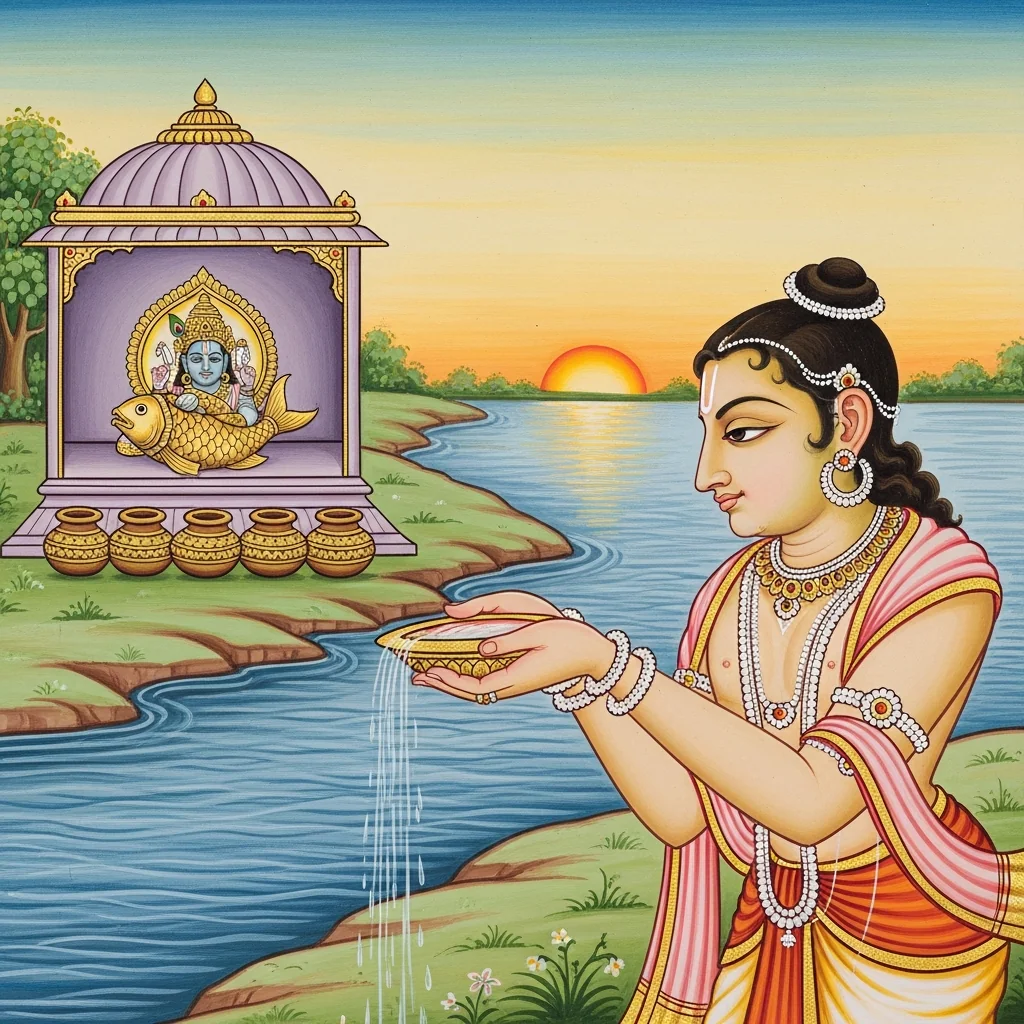
मात्स्योत्सवविधानम् (Matsyotsava-vidhāna: Procedure for the Fish-Festival on Śukla Dvādaśī)
This chapter lays down a tithi-bound observance for Mārgaśīrṣa (Śukla pakṣa), centered on the Matsyotsava (Fish-Festival) on Dvādaśī. It begins on Daśamī with preparatory worship and a fire-rite (homa), followed by purity disciplines, regulated diet, and bodily cleansing. The devotee visualizes Viṣṇu as Gadādhara—bearing śaṅkha, cakra, and gadā, crowned and clad in yellow—and offers arghya with a vow: fasting on Ekādaśī and eating the next day in surrender to Puṇḍarīkākṣa/Acyuta; at night, Nārāyaṇa-japa is performed near the deity’s image. At dawn, bathing is prescribed in a river or pond (or at home if necessary) using consecrated mṛttikā and mantra-sanctified water that honors earth and water as cosmic supports. A nyāsa-like reverent touching/salutation of the body follows through divine names such as Keśava, Dāmodara, Nṛsiṃha, Śrīpati, and others. Four kalaśas, identified with the four oceans, are then installed and adorned; at the center a vessel (gold/silver/copper/wood, with palāśa as fallback) holds a golden Matsya-form of Janārdana. Worship proceeds with offerings and explicit remembrance of the rescue of the Vedas, culminating in a vigil (jāgara). The rite concludes with morning gifts of the four pots to four brāhmaṇas by direction and Vedic affiliation, the golden fish to the ācārya, warnings against violating the guru’s instructions, feeding brāhmaṇas, and a phalaśruti promising release from sins for performers, listeners, or reciters, leading toward liberation.
Adhyaya 15
Saho-māsa Observances: Brāhmaṇa-Sevā, Dāna-Trika, and Śrī Kṛṣṇa Nāma-Māhātmya (Mārgaśīrṣa)
This chapter records Bhagavān’s step-by-step reply, prescribing Mārgaśīrṣa (called saho-māsa here) as a specially focused season for devotional discipline. It first exalts worship of Keśava and the proper honoring of a brāhmaṇa couple (the brāhmaṇa and his wife), declaring that their due veneration itself brings divine satisfaction. It then sets out a graded teaching on dāna: go-dāna, bhū-dāna, suvarṇa-dāna, and gifts of clothing, bedding, ornaments, and housing, culminating in the praised “dāna-trika” of land, cow, and vidyā-dāna (the gift of knowledge). Feeding brāhmaṇas with attentive hospitality is strongly urged, with refined offerings such as pāyasa and other preparations, and the Lord’s pleasure is said to mirror their contentment. Doctrinally, brāhmaṇas are described as the privileged “mouth” for offerings, so that gifts and oblations gain multiplied efficacy when directed through them. Ethical instruction extends to food consecration: one should eat only what has first been offered (arpaṇa) to the Deity, revere the purifying power of prasāda (sanctified remnants), and avoid consuming what is unoffered. The chapter concludes with an extended nāma-māhātmya, proclaiming the repeated utterance “Kṛṣṇa, Kṛṣṇa” as a Kali-yuga remedy that burns demerit, protects at death, surpasses many other practices, and yields explicit phala for recitation and study of this praise of the Name.
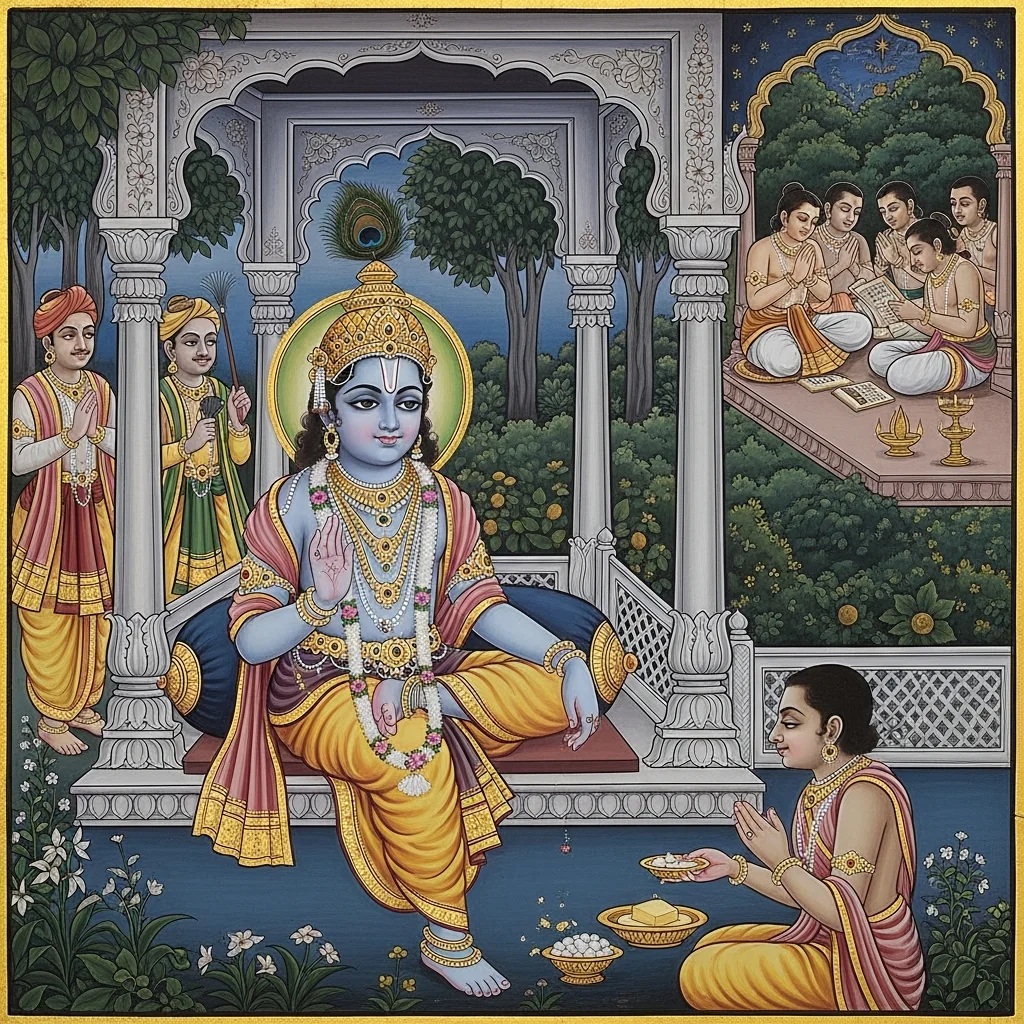
Adhyaya 16
ध्यानविधिः, मन्त्रगोपनम्, गुरु-शिष्यलक्षणम्, श्रीमद्भागवत-माहात्म्यम् (Meditation Rite, Mantra Confidentiality, Qualifications of Guru and Disciple, and the Glory of the Śrīmad Bhāgavata)
Chapter 16 presents a prescriptive theological teaching. It opens with a detailed dhyāna-visualization of Śrī Kṛṣṇa in child-form, seated in a radiant pavilion within an auspicious garden, describing His ornaments, facial features, posture, attendants, and the mood of bhakti as a template for morning worship. It then enjoins early-day pūjā with offerings such as pāyasa and fresh, pure butter, joining sensory ritual to sacred recollection (anusmaraṇa), and declares the fruit: faithful daily worship brings prosperity (Lakṣmī) and finally leads to the pure, supreme abode. The discourse then turns to mantra-discipline: the mantra called “Śrīmad Dāmodara” is to be guarded and not given to the unfit. A long list of disqualifying traits—moral impurity, deceit, anger, greed, harmful speech, exploitation, and the like—is contrasted with the marks of an eligible disciple: self-control, service-mindedness, truthfulness, purity, steadfast vows, and a bent toward liberation. In parallel, the guru’s qualifications are defined: equanimity, compassion, learning, freedom from laziness, ability to resolve doubts, Vaiṣṇava commitment, and beneficence. The latter half is an extended māhātmya of the Śrīmad Bhāgavata Purāṇa: hearing or reading even a small portion of its verses is credited with vast merit; keeping the book in one’s home is portrayed as protective and purifying; and honoring it by rising, greeting, and approaching is praised. The Bhāgavata’s presence is said to draw divine presence along with the merits of tīrthas and sacrifices, and devotional listening with offerings of flowers, incense, lamps, and garments is presented as a disciplined reverence that “binds” divine favor.
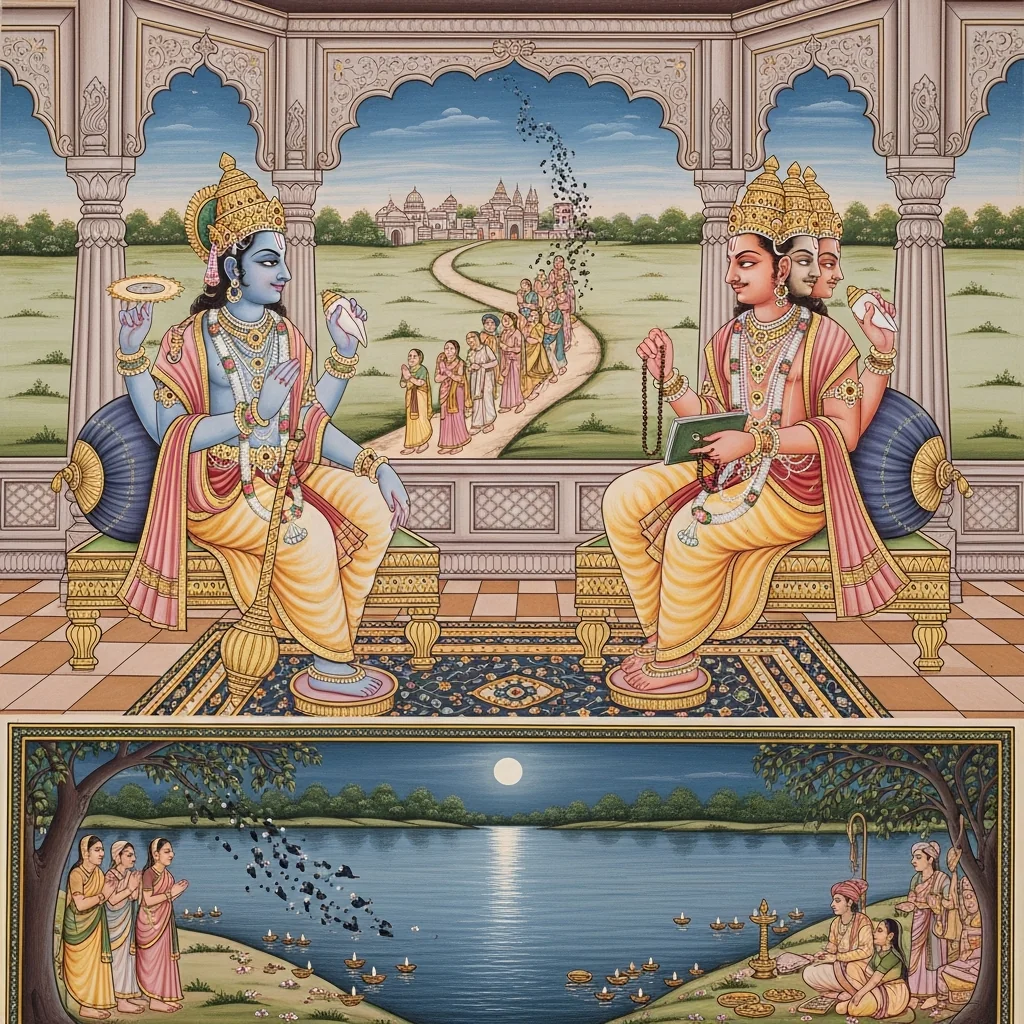
Adhyaya 17
मथुरामाहात्म्यं मार्गशीर्षमासे — Mathurā’s Glory in the Month of Mārgaśīrṣa
This chapter unfolds as a doctrinal dialogue: Brahmā asks why the month of Mārgaśīrṣa is foremost and in which sacred field (kṣetra) its power is most evident. Bhagavān replies that Mathurā (Madhupurī) is the supreme holy geography—beloved to Him and ever auspicious. A layered teaching on purification is given: the tīrtha’s fruit is said to arise “at every step,” and even drawing near to the city makes sins fall away; seeing, hearing, uttering, or remembering Mathurā is likewise purifying. Mathurā’s merit is repeatedly ranked above other famed tīrthas and even long, arduous observances. An ethical warning follows: wrongdoing at tīrthas can become “hardened,” whereas wrongdoing in Mathurā is said to be extinguished there. Residence, death, or even accidental death in Mathurā is portrayed as leading to elevated destinies. For Mārgaśīrṣa, Mathurā is recommended; if unavailable, Puṣkara is prescribed, with special emphasis on Pūrṇimā rites—bathing, dāna, śrāddha, pūjā, feeding Brahmins, and completing the festival—said to yield inexhaustible results when properly performed.
FAQs about Margashirsha Masa Mahatmya
It presents Mārgaśīrṣa as a ritually potent month, prescribing structured morning discipline—purification, mantra remembrance, and devotional marking of the body—to intensify Vaiṣṇava remembrance and ethical conduct.
The practices are framed as purification from demerit (pāpa), stabilization of devotional identity, and participation in tīrtha merit through Gaṅgā’s invoked presence—culminating in auspiciousness and mokṣa-oriented aspiration.
Recurring themes include mantra as a technology of sanctification, the portability of sacred geography via invocation, and the embodiment of devotion through ūrdhva-puṇḍra and Viṣṇu-name meditation.