Bhagavata Mahatmya
Bhagavata Mahatmya
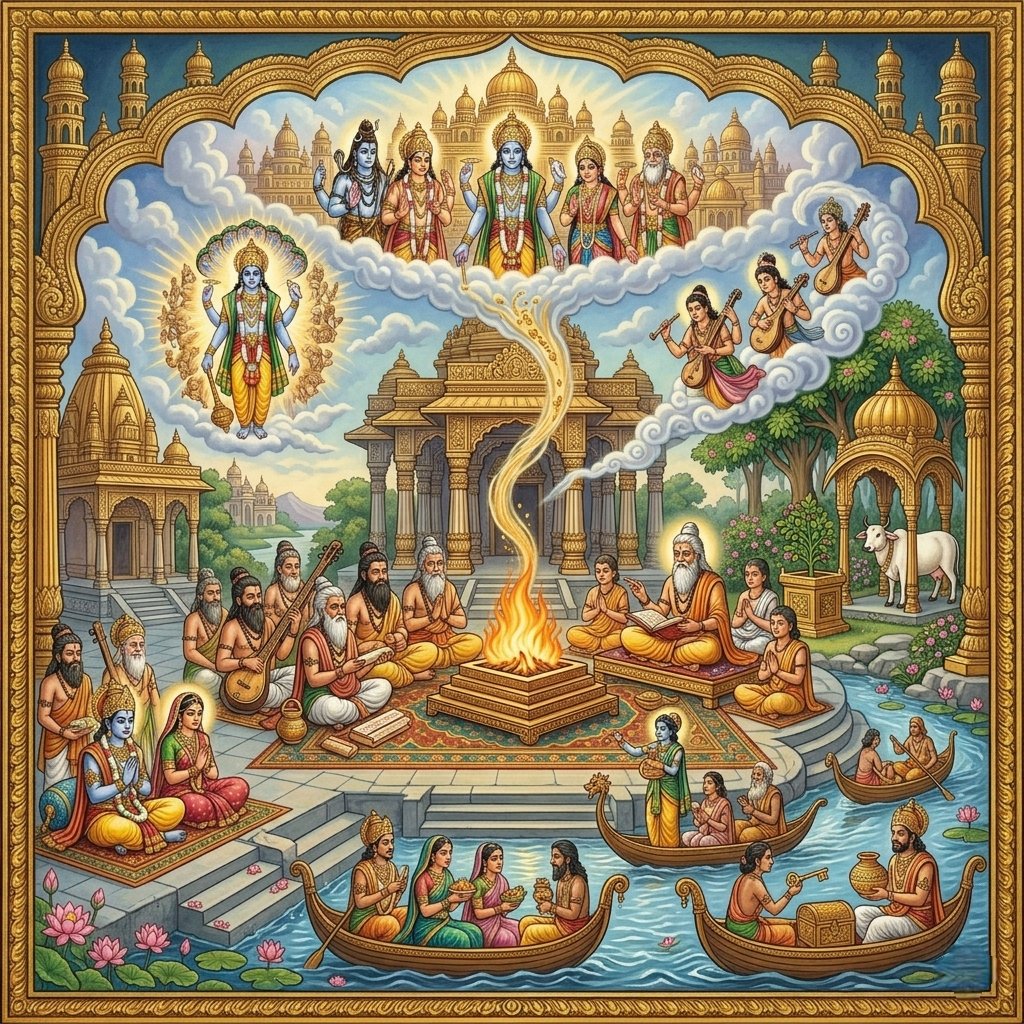
Although presented as a textual “māhātmya” (glorification) of the Bhāgavata-oriented tradition, the narrative is anchored in the Braj–Mathurā region (Mathurāmaṇḍala/Vraja-bhūmi). It references royal movement from Hastināpura to Mathurā, and situates devotional meaning in specific locales such as Govardhana, Mahāvana, Nandagrāma, and related river-mountain-grove micro-geographies (nadī, adri, kuṇḍa, kuñja). The section thus functions as a cartographic theology: it explains why the land appears “empty” at times (adhikāra/eligibility discourse) while simultaneously prescribing settlement and service as modes of sustaining sacred space.
Adhyayas in Bhagavata Mahatmya
4 chapters to explore.
Adhyaya 1
व्रजतत्त्व-निरूपणम् (Vraja-Tattva Exposition and the Re-sacralizing of Mathurā-Vraja)
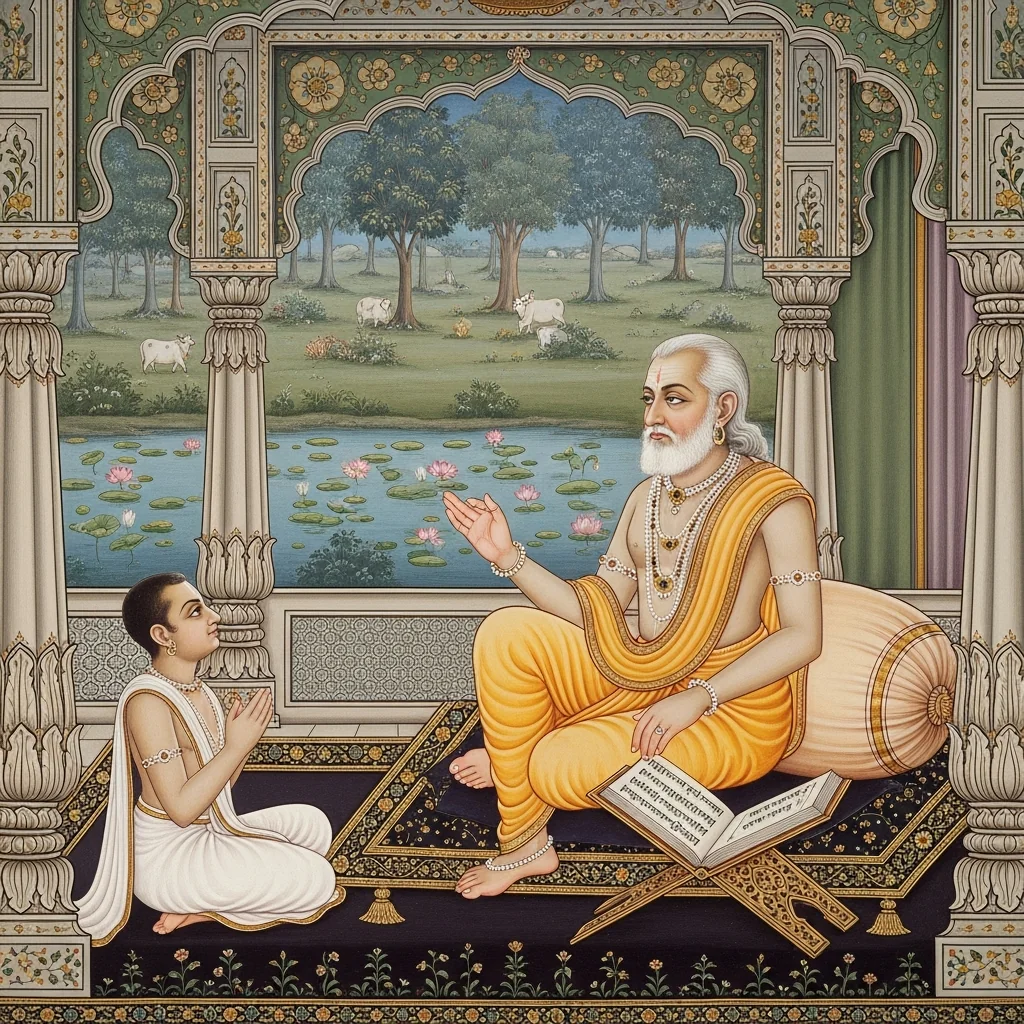
The chapter begins with a benedictory praise of Kṛṣṇa as the very ground of creation, preservation, and dissolution, directing the listener toward the savor of bhakti-rasa. In Naimiṣa, the sages ask Sūta what Parīkṣit and Vajranābha did after the royal abhiṣeka. Sūta relates that Parīkṣit journeys to Mathurā to meet Vajranābha, is welcomed with honor, and counsels him to rule without anxiety—entrusting worries to Parīkṣit while revering maternal elders. Vajranābha replies that though materially secure, he is troubled that Mathurā appears empty: where are the people by whom a kingdom may flourish? Parīkṣit summons Śāṇḍilya, who expounds the doctrine: “Vraja” signifies pervasion (vyāpti), indicating the all-pervading Brahman beyond the three guṇas; Kṛṣṇa is the embodiment of unceasing bliss, known through love. In an esoteric sense Rādhikā is named as his ātmā; Kṛṣṇa is āptakāma (fully fulfilled), and cows, cowherds, and cowherdesses are desired forms within his līlā. Śāṇḍilya distinguishes the “real” (vāstavī) and “pragmatic” (vyāvahārikī) līlā, explaining why the sacred realm may seem concealed and why the land looks uninhabited to the unqualified. He instructs Vajranābha to settle many villages, name them according to Kṛṣṇa’s līlā, and establish governance across key sites—Govardhana, Dīrghapura, Mathurā, Mahāvana, Nandagrāma, and Bṛhatsānu—promising prosperity through service to the holy geography. The chapter ends with Śāṇḍilya departing in remembrance of Kṛṣṇa and with Parīkṣit and Vajranābha rejoicing together.
Adhyaya 2
Uddhava-darśana through Saṅkīrtana at Kusuma-saras (उद्धवदर्शन-कीर्तनमहोत्सवः)
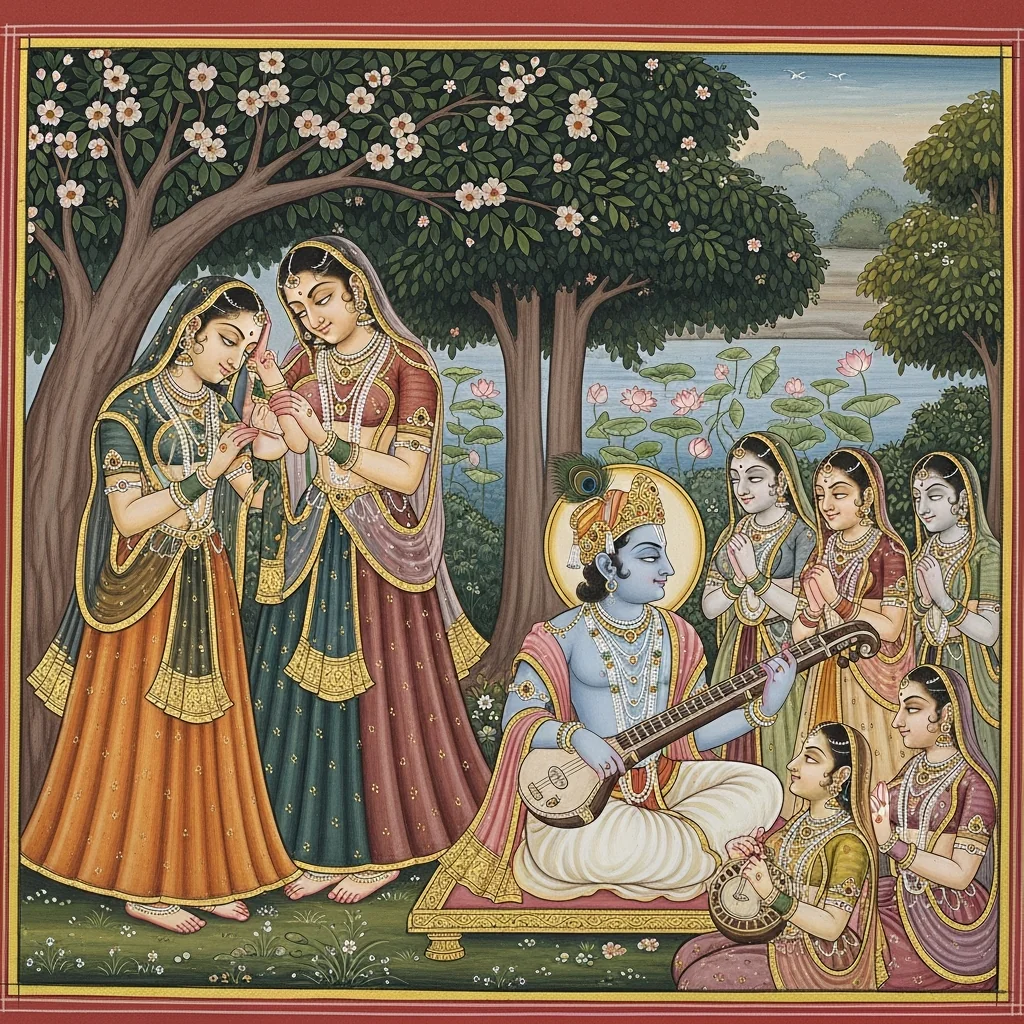
Chapter 2 proceeds in a dialogic, epic manner. The ṛṣis ask Sūta about what followed the instructions connected with Śāṇḍilya, and the narrative turns to the royal ordering of Vraja’s sacred landscape. Viṣṇurāta (Parīkṣit) and Vajra coordinate the settlement and ritual stabilization of Mathurā–Vraja: honoring local brāhmaṇas and elders, identifying the sites of Kṛṣṇa-līlā, founding villages, providing public works such as wells and ponds, and establishing devotional installations—forms of Hari/Govinda and related shrines. The discourse then shifts to an inward bhakti anguish. Kṛṣṇa’s wives, tormented by separation, question Kālindī’s seeming composure. Kālindī offers a theological reply: Rādhikā is the steady axis of Kṛṣṇa’s most intimate presence, while the other heroines are to be understood as expansions within a single devotional ontology. She then gives a practical directive: in Vraja—near Govardhana, at Sakhī-sthala and Kusuma-saras—one should hold a musically rich saṅkīrtana-mahotsava to enable Uddhava’s appearance and recognition. Following this counsel, Parīkṣit arranges the festival in Vṛndāraṇya. In the heightened communal kīrtana, Uddhava emerges from the vegetation in a Kṛṣṇa-like form; the assembly, overwhelmed with devotional emotion, honors him and attains the resolution and solace it sought.
Adhyaya 3
श्रीमद्भागवत-प्रकाशः (The Manifestation of Kṛṣṇa through Śrīmad Bhāgavata)
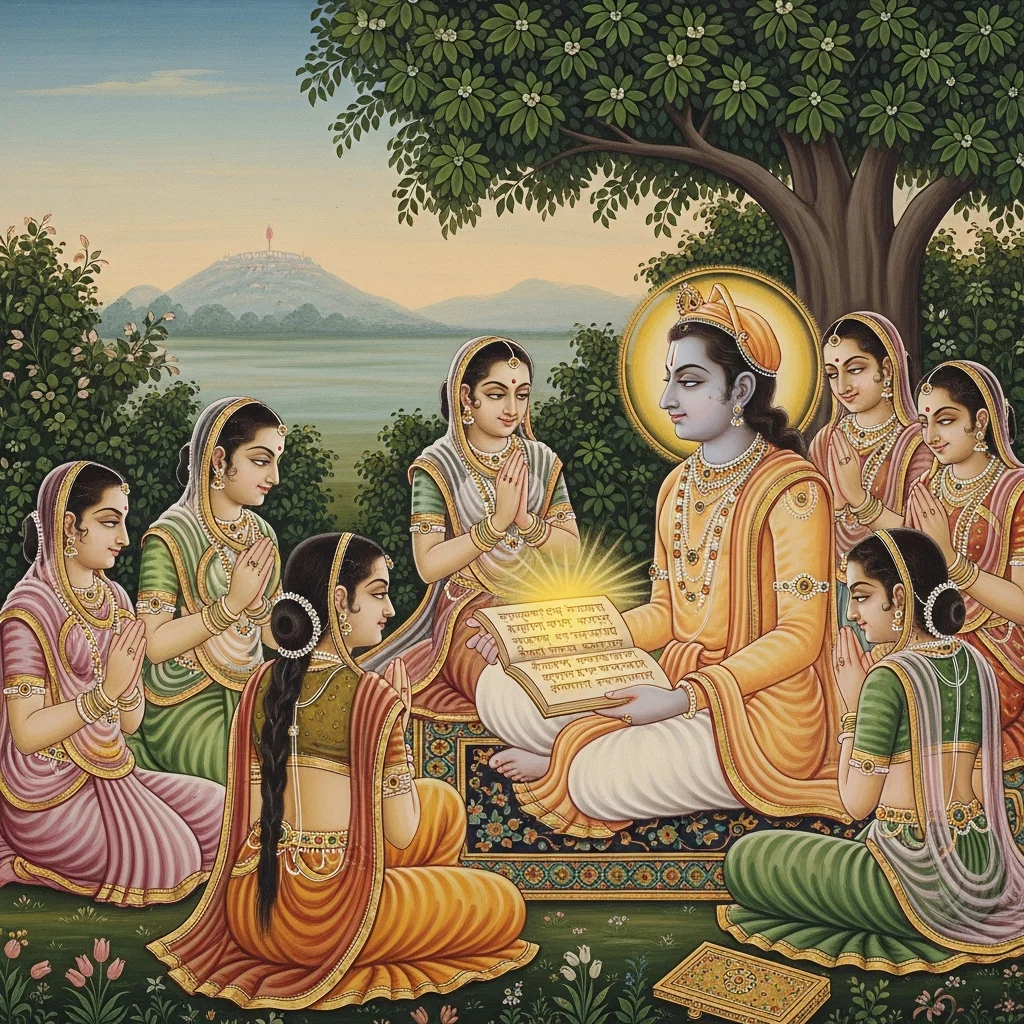
Adhyāya 3 unfolds a layered theological discourse as Uddhava addresses Parīkṣit and the devotees devoted to Kṛṣṇa-kīrtana. It first establishes eligibility for bhakti and exalts Vraja as the privileged realm where Kṛṣṇa’s līlā shines with aesthetic beauty and metaphysical radiance. A doctrinal problem is then posed: through yogamāyā, beings lose self-knowledge and cannot attain true awareness without Kṛṣṇa’s illuminating grace. The chapter declares that while divine self-disclosure may appear only intermittently across cosmic cycles, in the present condition it is made accessible through the Śrīmad Bhāgavata. The scripture’s power is praised in graded claims—so much so that even a half-verse is said to indicate Kṛṣṇa’s presence—and sustained study and recitation are credited with personal and social benefits. A nested origin account is introduced through Bṛhaspati: Kṛṣṇa, as the primordial Puruṣa, assigns cosmic functions to Brahmā, Viṣṇu, and Rudra in accordance with the guṇas. Each seeks competence for their office, and the Bhāgavata is bestowed as the means to fulfill their duties and transcend limitations (notably Rudra’s lack of power in the “ultimate dissolution”). Uddhava concludes by describing his adoption of Vaiṣṇava discipline and his mission to transmit Bhāgavata recitation as a “message” to those suffering separation, urging Parīkṣit to restrain Kali through digvijaya while he spreads Bhāgavata. The closing phalaśruti promises Bhagavat-attainment and the cessation of suffering for all who hear or proclaim this account.
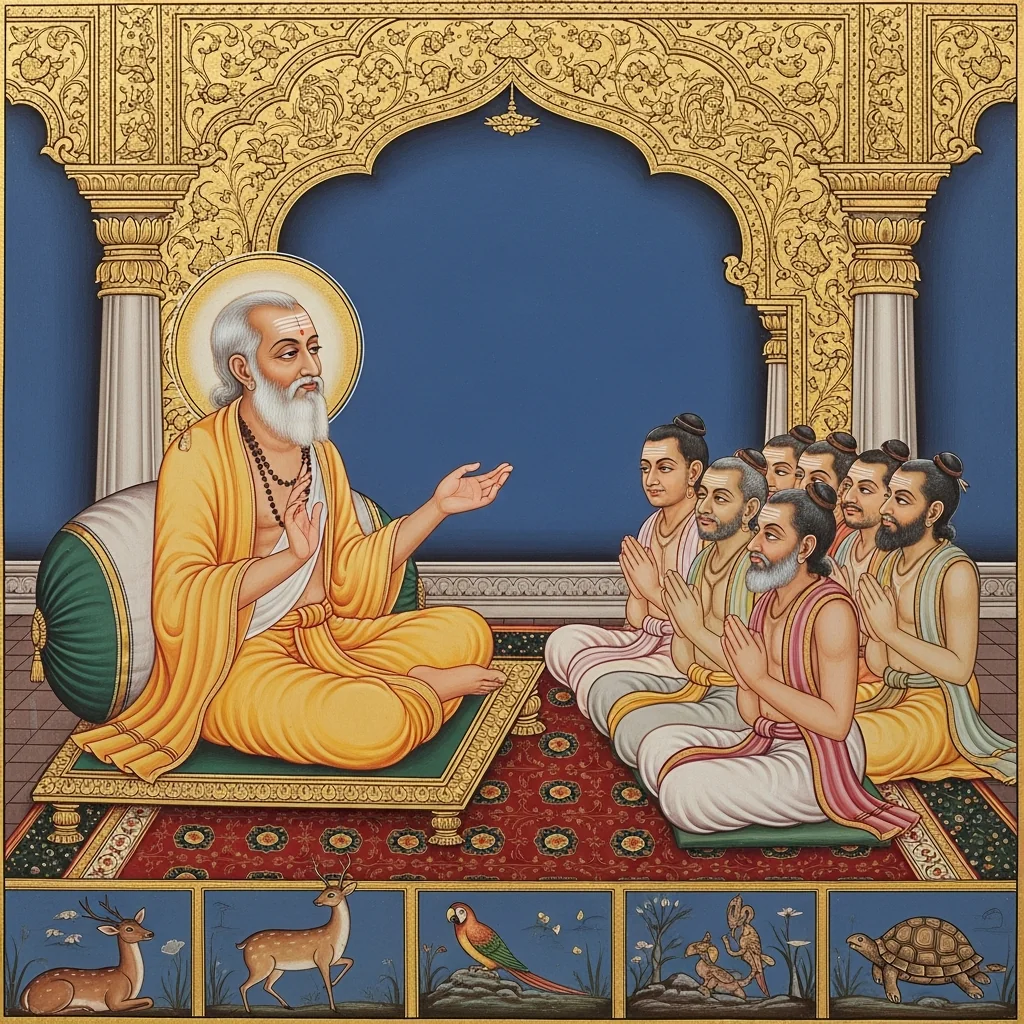
Adhyaya 4
श्रोतृ-वक्तृ-लक्षणम् तथा श्रीभागवत-सेवन-विधिः (Marks of Listener/Teacher and the Method of Bhāgavata-Sevā)
Chapter 4 begins with the Ṛṣis asking Sūta to define the nature (svarūpa), scriptural authority (pramāṇa), and proper method (vidhi) of hearing the Śrīmad-Bhāgavata, along with the qualifications of the speaker and the listener. Sūta describes the Bhāgavata as saccidānanda-lakṣaṇa, a sacred discourse that reveals Kṛṣṇa’s sweetness to devotees, uniting jñāna, vijñāna, and bhakti while subduing māyā. The chapter grounds scriptural authority in the “catuḥślokī” instruction to Brahmā and presents the Parīkṣit–Śuka dialogue (18,000 verses) as a refuge in Kali-yuga. It then offers a detailed typology of listeners—exemplary (cātaka, haṃsa, śuka, mīna) versus deficient (vṛka, bhūruṇḍa, vṛṣa, uṣṭra)—based on how they receive, discern, relish, or distort sacred narration, and lists ideal traits of listener and teacher: humility, attentiveness, purity, compassion, and skill in instruction. Modes of Bhāgavata-sevā are prescribed as rājasa, sāttvika, tāmasa, and nirguṇa, distinguished by duration, effort, and inner orientation, with motivation (kṛṣṇārthin vs. dhanārthin) निर्णायक for the fruit. Finally, a procedural discipline is outlined—bathing, daily rites, honoring guru and text, regulated diet and conduct, concluding kīrtana, vigil, feeding brāhmaṇas, and gifting the teacher—while affirming that for the kṛṣṇārthin, prema-bhakti is the highest vidhi.
FAQs about Bhagavata Mahatmya
The section emphasizes Vraja/Mathurā as a theologically charged landscape where Kṛṣṇa’s līlā is understood through eligibility (adhikāra) and devotion (prema-bhakti), making place-service (sevā) a mode of religious participation.
Rather than listing a single merit formula, the discourse frames merit in terms of devotional alignment: hearing sacred narratives, serving Vraja-sites, and sustaining community life around tīrtha-locations are presented as spiritually efficacious practices.
Key legends include Parīkṣit’s post-abhiṣeka journey, Vajranābha’s concern about depopulated Mathurā/Vraja, and Śāṇḍilya’s esoteric explanation of Vraja as the all-pervasive Brahman-field where Kṛṣṇa’s līlā manifests in layered modes.