Badrikashrama Mahatmya
Badrikashrama Mahatmya
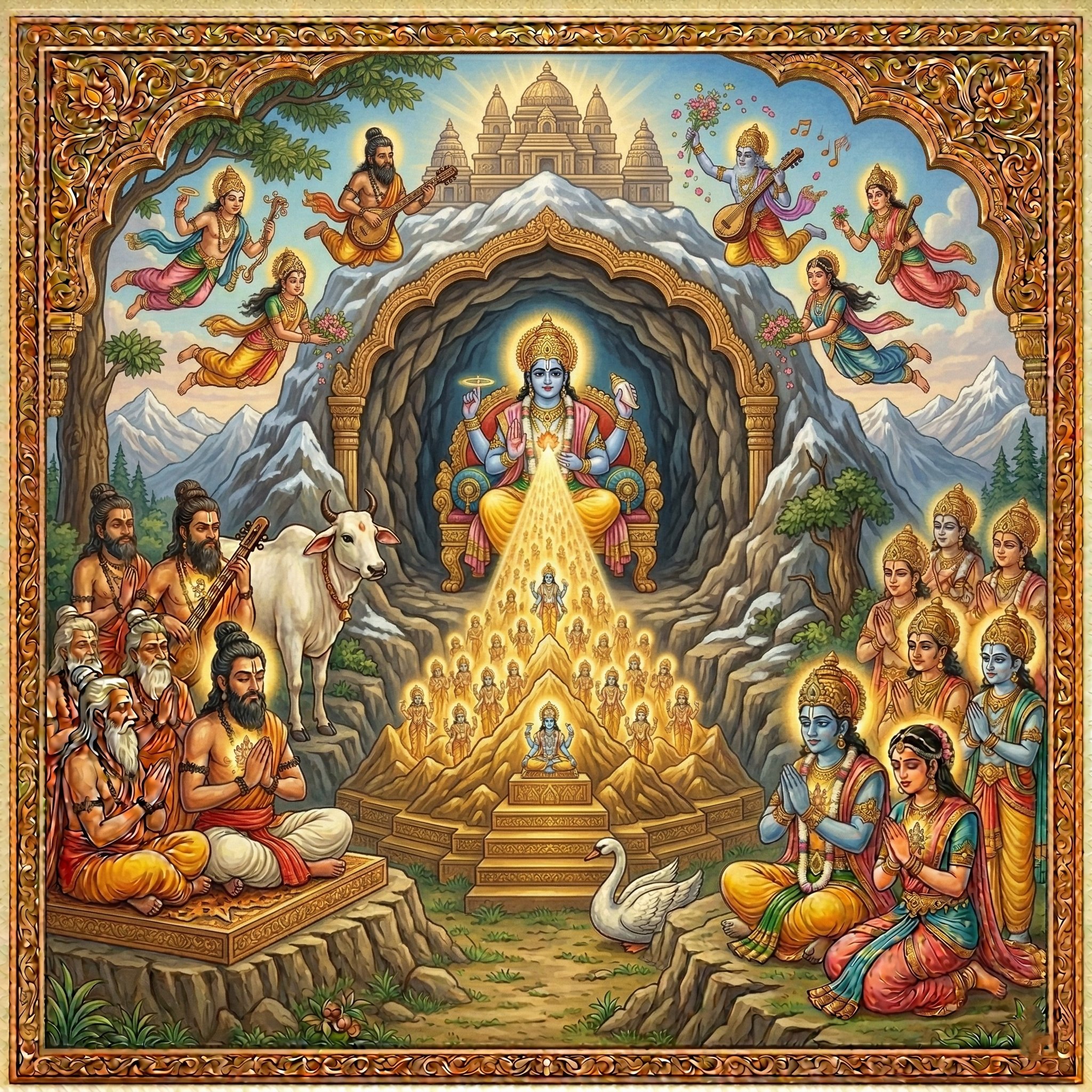
This section is anchored in the Himalayan sacred landscape of Badarikāśrama (Badrinath/Badrī region), traditionally identified as a locus of ṛṣi-assemblies and Viṣṇu’s enduring presence. The discourse treats the site as a paradigmatic tīrtha where austerity, mantra efficacy, and liberation claims converge, and it positions Badarī as especially salient for Kali-yuga seekers seeking “low-effort/high-merit” pathways within regulated devotional and ethical frameworks.
Adhyayas in Badrikashrama Mahatmya
8 chapters to explore.
Adhyaya 1
बदर्याश्रममहिमा — The Glory of Badarikāśrama and the Hierarchy of Tīrthas
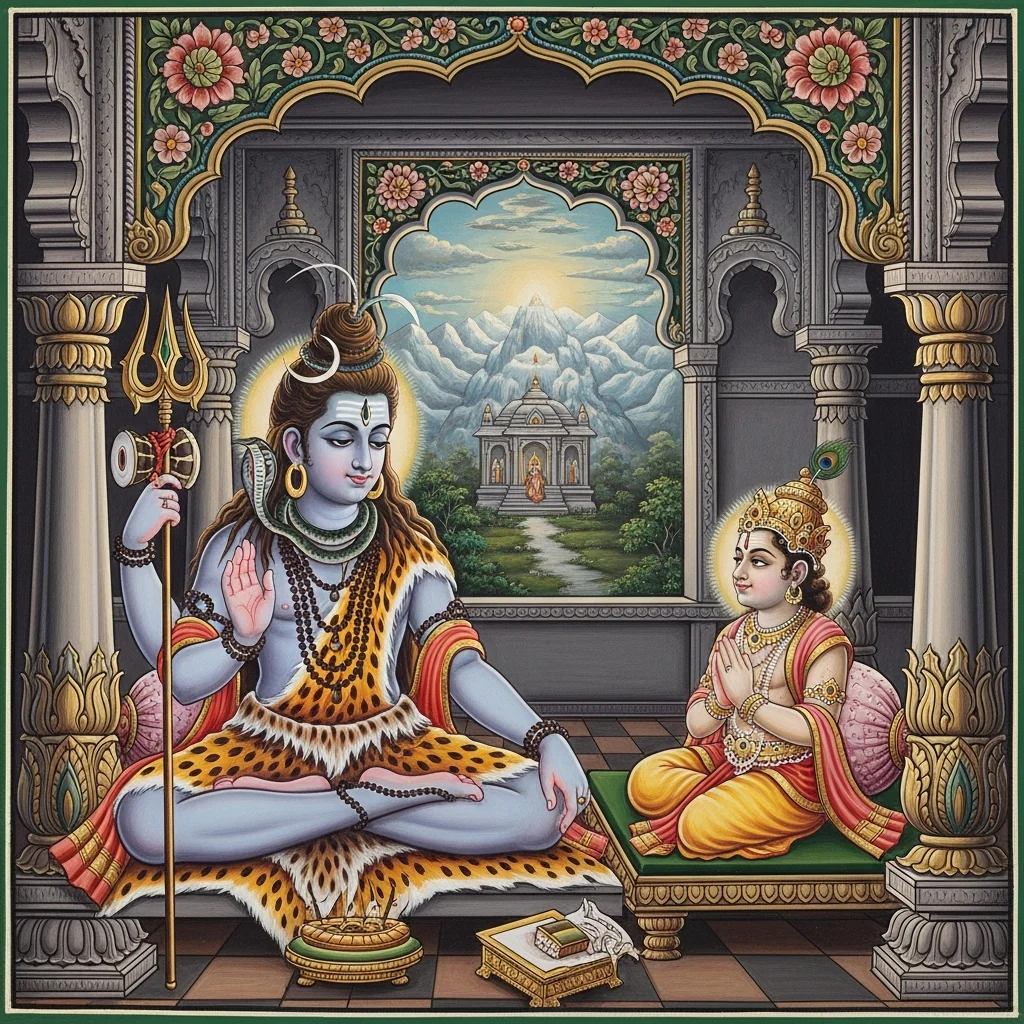
Adhyāya 1 opens with Śaunaka questioning Sūta about spiritual deliverance in the harsh Kali-yuga, where people are short-lived, weakened in tapas and discipline, and largely estranged from Veda-śāstra, pilgrimage, charity, and Hari-bhakti. He asks for the supreme tīrtha, the place where minimal effort yields siddhi in mantra and tapas, where the Lord abides as a compassionate benefactor to devotees, and where ṛṣis assemble. Sūta praises the inquiry as welfare-oriented and cites an earlier precedent: Skanda once posed the same question on Kailāsa before Śiva, in the presence of sages. Śiva replies by naming eminent rivers and renowned kṣetras, explaining their fruits—puṇya, liberation, and the removal of sins—and giving comparative phala statements regarding sacred bathing, darśana, śrāddha, feeding brāhmaṇas, and worship. The discourse then turns to Badarī. Skanda proclaims Badarī as Hari’s rare kṣetra across the three worlds, declaring that mere remembrance brings swift purification and that Badarī surpasses other tīrthas in efficacy, especially as the Kali-yuga seat of liberation-oriented practice. The chapter closes by portraying Badarī/Viśālā as a dwelling of devas and ṛṣis, joining sacred geography with instruction on salvation.
Adhyaya 2
Badarikāśrama: Śiva’s Expiation, Kedāra-Liṅga, and Vaiśvānara’s Refuge in Badarī (बदरिकाश्रम-प्रशंसा तथा वैश्वानर-उपाख्यान)
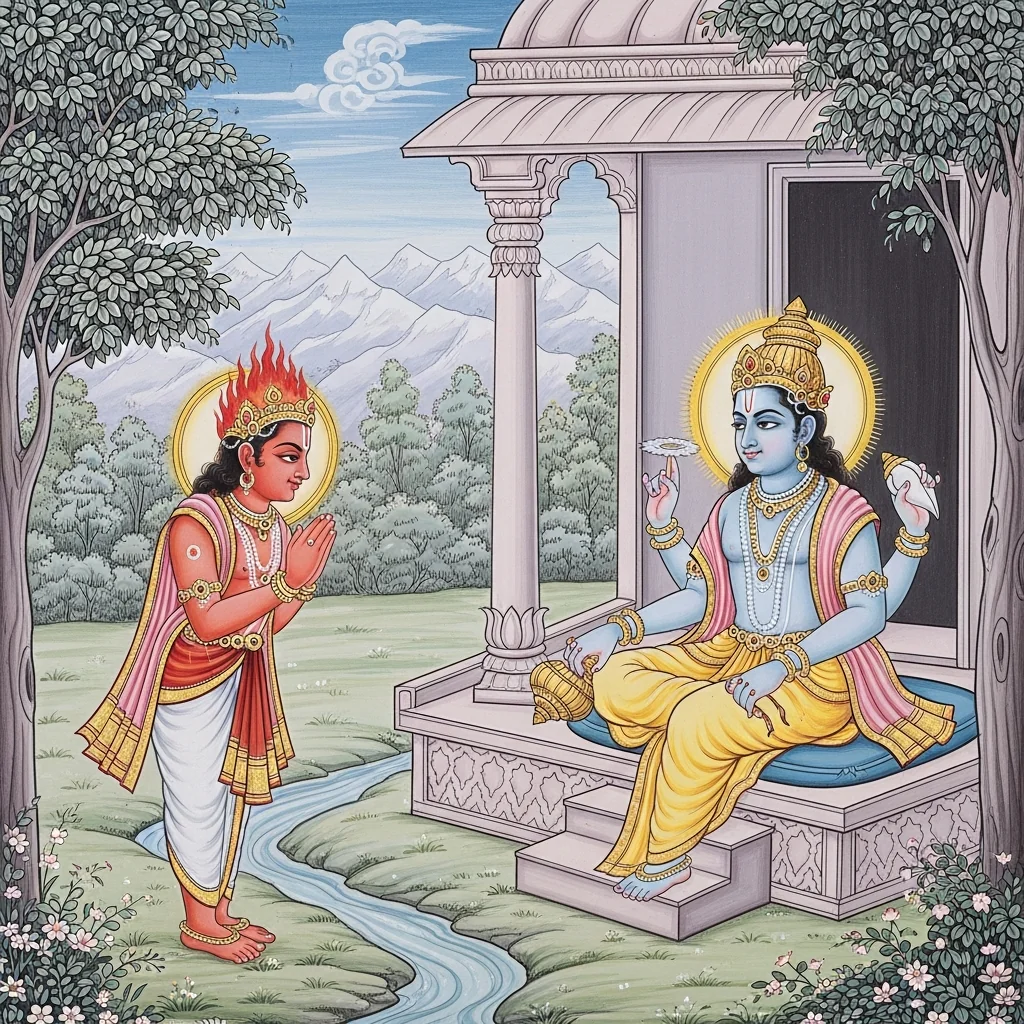
This chapter unfolds as a theological question-and-answer dialogue. Skanda asks about the origin, patrons, and ruling authority of the sacred kṣetra. Śiva replies that it is primordially established, presided over by Hari (Viṣṇu), and regularly visited by Nārada and other sages. Śiva then recounts an expiatory episode: after severing Brahmā’s head (the brahmahatyā frame), he wanders through many realms seeking purification, yet the mark of fault—the skull-sign—does not leave him until he approaches Viṣṇu. By Hari’s instruction he reaches Badarī; the taint dissolves and the skull-sign vanishes, establishing Badarī as a paradigmatic place of purification. The chapter also affirms Śiva’s continuing tapas there for the welfare and satisfaction of the sages, compares the sacrality of places such as Vārāṇasī, Śrīśaila, and Kailāsa, and extols Badarī-darśana as near to liberation. A Kedāra-form liṅga is said to be installed there, and darśana, sparśa, and arcana—seeing, touching, and worship—are declared to consume accumulated pāpa instantly. The narrative then turns to Vaiśvānara (Agni), who seeks release from the “sarvabhakṣa” fault; Vyāsa prescribes Badarī as his refuge. Agni goes north, bathes, praises Nārāyaṇa in hymnic theology, and receives assurance that mere kṣetra-darśana removes fault; the phalaśruti promises that hearing or reciting this account with purity yields merit equal to bathing at Agni-tīrtha.
Adhyaya 3
Agnitīrtha-Māhātmya and the Five Śilās (Nārada–Mārkaṇḍeya Episodes)
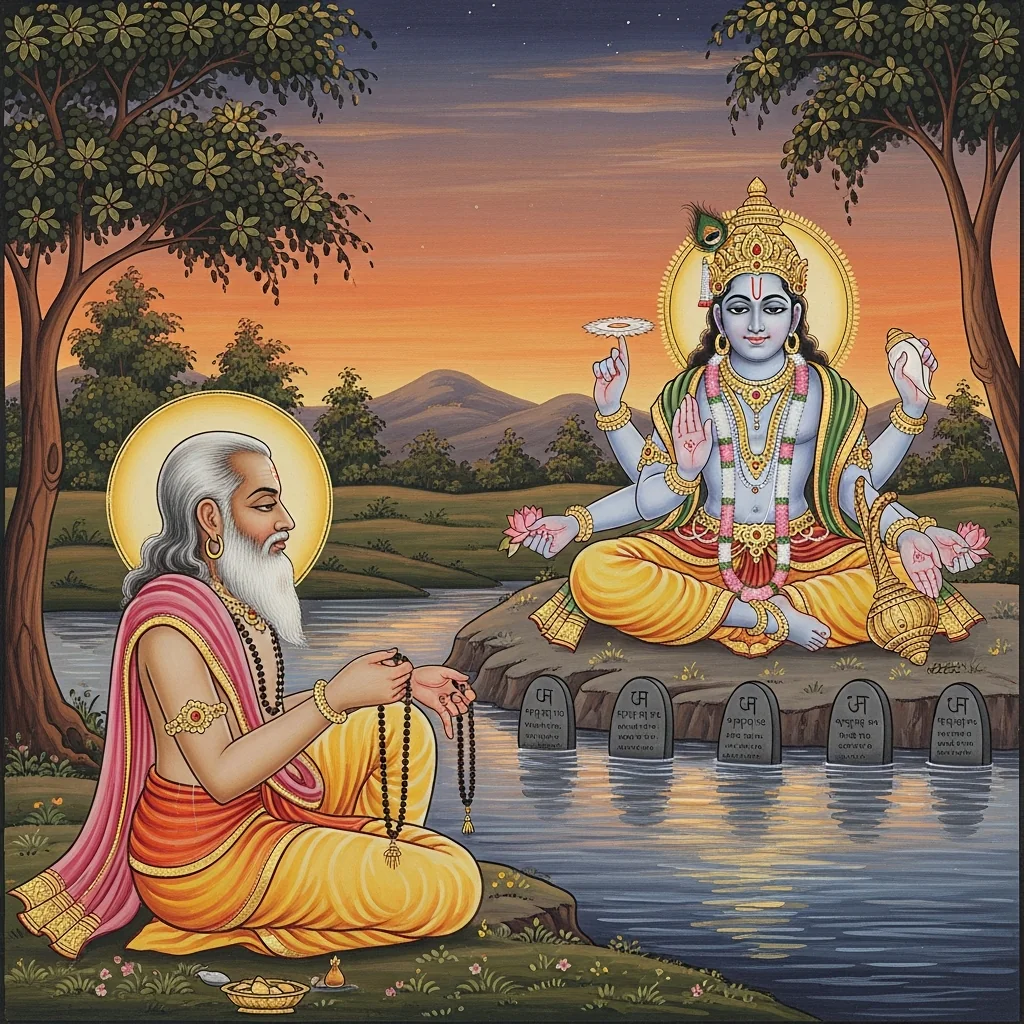
Chapter 3 unfolds as a theological dialogue: at Skanda’s request, Śiva delivers a concise yet forceful account of Agnitīrtha’s holiness. It first teaches purification, declaring that bathing at Agnitīrtha can cleanse even grave moral defilements, surpassing long penances performed elsewhere. It then offers ethical guidance for pilgrims—feed Brahmins according to one’s means, do not commit deliberate wrongdoing at a sacred place—and explains that ordinary religious duties gain heightened merit there: snāna, dāna, japa, homa, sandhyā, and deva-arcana. The narrative turns to sacred topography, stating that Viṣṇu’s perpetual nearness is established among five named śilās—Nāradi, Nārasiṃhī, Vārāhī, Gāruḍī, and Mārkaṇḍeyī—each granting sarvārtha-siddhi (fulfillment of all aims). Two exemplary legends follow: Nārada’s severe tapas brings a theophany of Viṣṇu and the boon of unwavering bhakti and divine residence at the tīrtha; Mārkaṇḍeya’s mantra-based worship culminates in a similar request for steadfast devotion and Viṣṇu’s presence upon the śilā. The chapter closes with a phalaśruti-like assurance that hearing or reciting this account supports purification and spiritual progress toward Govinda.
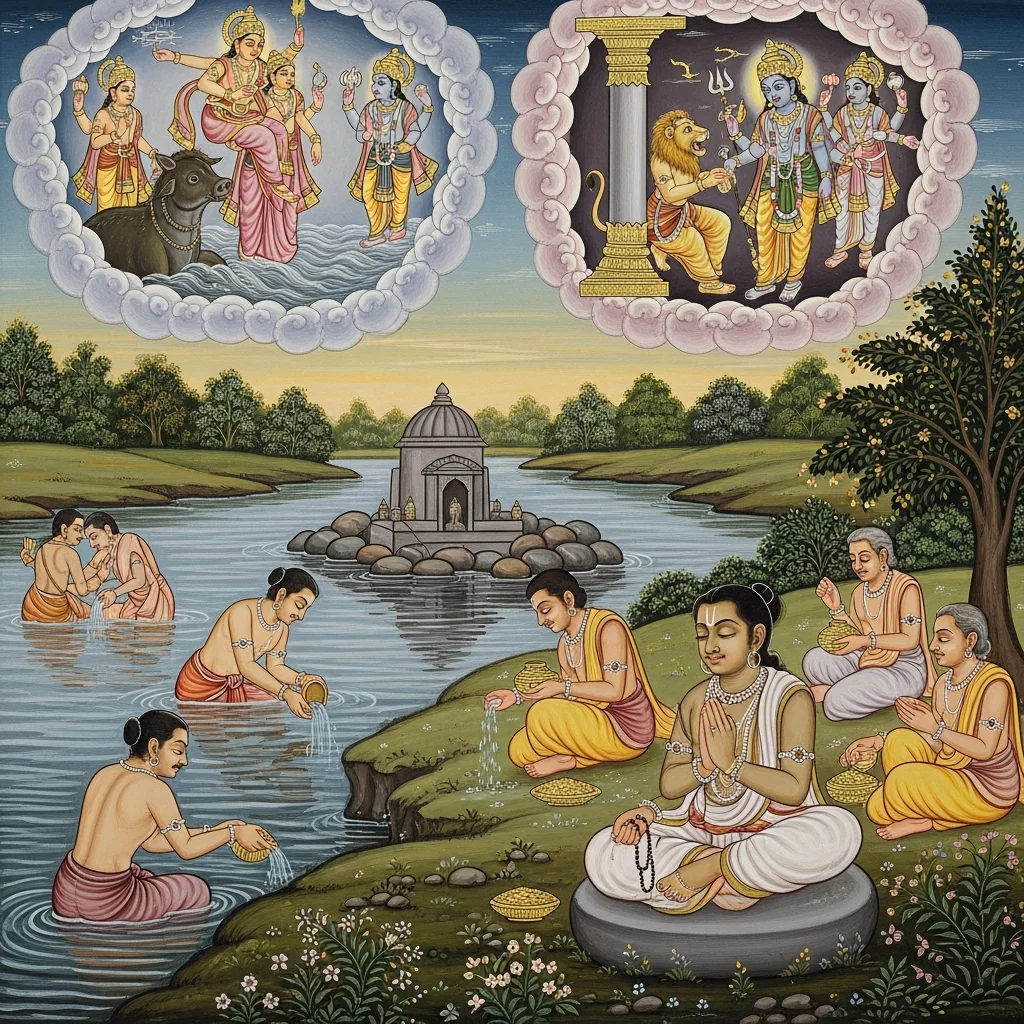
Adhyaya 4
Gāruḍī-, Vārāhī-, and Nārasiṃhī-Śilā Māhātmya (Badarikāśrama Context)
This adhyāya unfolds as a dialogue: Skanda asks, and Śiva explains the māhātmya of several sacred stones (śilās) within the Badarī pilgrimage landscape. First, Garuḍa—born of Vinatā and Kaśyapa, with Aruṇa as his brother—performs prolonged austerities near Badarī, longing to serve as Hari’s vāhana. Viṣṇu grants darśana; Garuḍa offers an extended hymn and invokes Gaṅgā for ritual pādārghya. The Lord confirms Garuḍa’s office and proclaims a śilā renowned by his name, whose remembrance wards off afflictions such as viṣa (poison) and vyādhi (illness); he also prescribes a Badarī observance—go to the Nārada-associated place, bathe at/near Nārada-tīrtha, keep purity, and undertake a three-night fast (upavāsa-traya) to attain darśana. The teaching then turns to the Vārāhī śilā: after Varāha rescues the earth and slays Hiraṇyākṣa, the divine presence is said to become established in Badarī, including as a stone-form manifestation. The practice emphasizes bathing in pure Gaṅgā water, giving dāna according to one’s means, maintaining mental tranquility, and sustained japa with one-pointed attention; the text declares that deva-dṛṣṭi (divine vision) arises and that one’s intended sādhana can succeed even when difficult. Finally, the Nārasiṃhī śilā account recalls the slaying of Hiraṇyakaśipu and the cosmic upheaval caused by the fierce form. Devas and ṛṣis praise and petition for pacification; the form is moderated, and Nṛsiṃha becomes associated with a śilā in the waters of Viśālā and Badarī-related terrain. A three-night fast joined with japa and dhyāna is given as the chief vow to behold Nṛsiṃha directly. The chapter closes with a phalaśruti: hearing or reciting this with faith and purity destroys sins and leads to residence in Vaikuṇṭha.
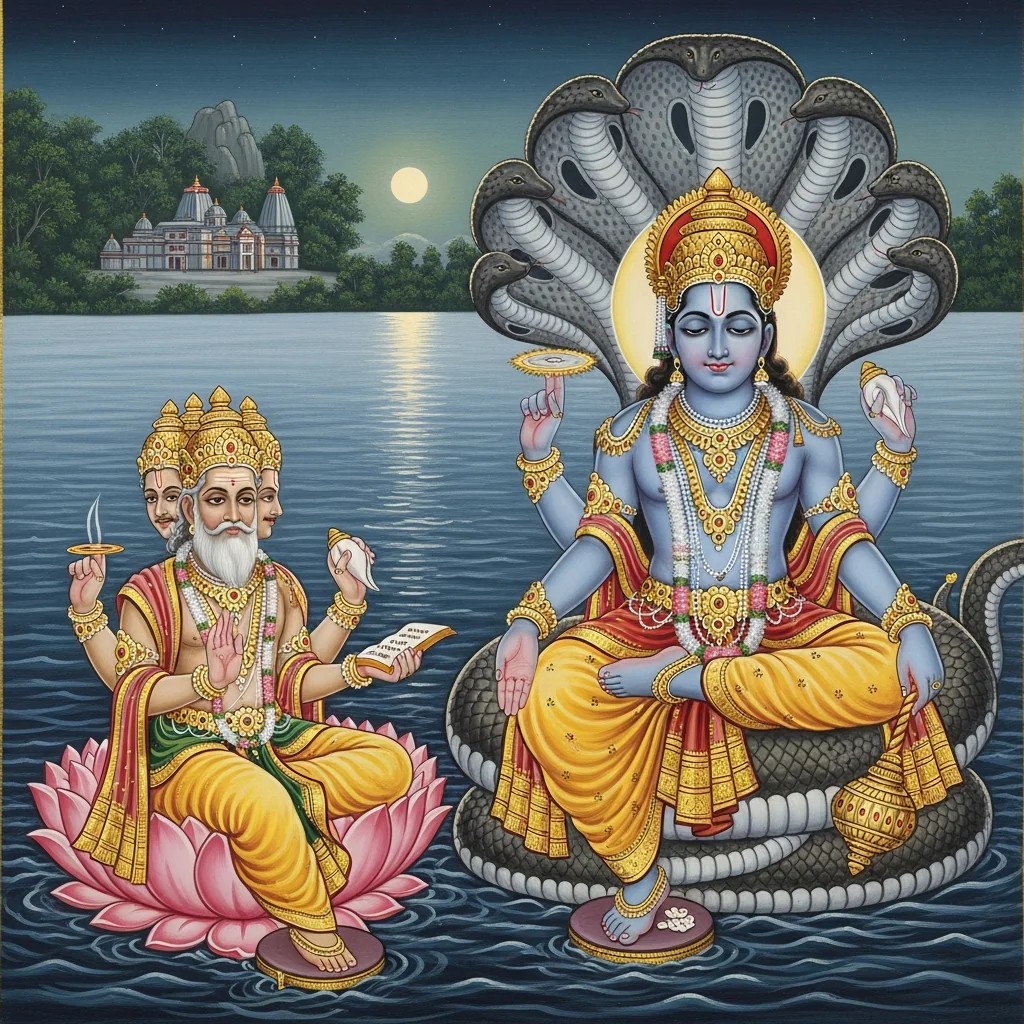
Adhyaya 5
Badarī’s Kali-age Accessibility: Darśana, Pradakṣiṇā, Naivedya, and Pādodaka as Soteriological Instruments
The chapter begins with Skanda asking why the Lord abides in that place and what merits arise from darśana (seeing), touching, pradakṣiṇā (circumambulation), and partaking of consecrated naivedya. Śiva replies with a yuga-by-yuga account: in Kṛta the Lord is openly manifest, practicing tapas-yoga for the welfare of the world; in Tretā sages pursue yoga; by Dvāpara true knowledge wanes and the Lord becomes difficult to behold. Unable to gain access, sages and gods approach Brahmā and then go to the shore of the Kṣīra-samudra, where they hymn Vāsudeva. Hari indicates that Brahmā knows the higher reason for this concealment. The teaching then turns to Badarī as Kali-yuga’s remedy. Śiva declares his intent to establish Hari there for the world’s good and proclaims the fruits of Badarī-darśana: swift dissolution of sins, an easy approach to liberation, and the superiority of Badarī over wandering among scattered tīrthas. A long prescriptive section asserts comparative merits—pradakṣiṇā at Badarī equals great sacrifices and gifts; even a small portion of Viṣṇu’s naivedya purifies like fire refining gold; and Viṣṇu’s pādodaka is praised as an essential prerequisite surpassing many expiations—while warning against disparaging naivedya and against improper reception of pilgrimage fruits. The chapter closes with a phalaśruti: hearing it frees one from sins and grants honor in Viṣṇu’s realm.
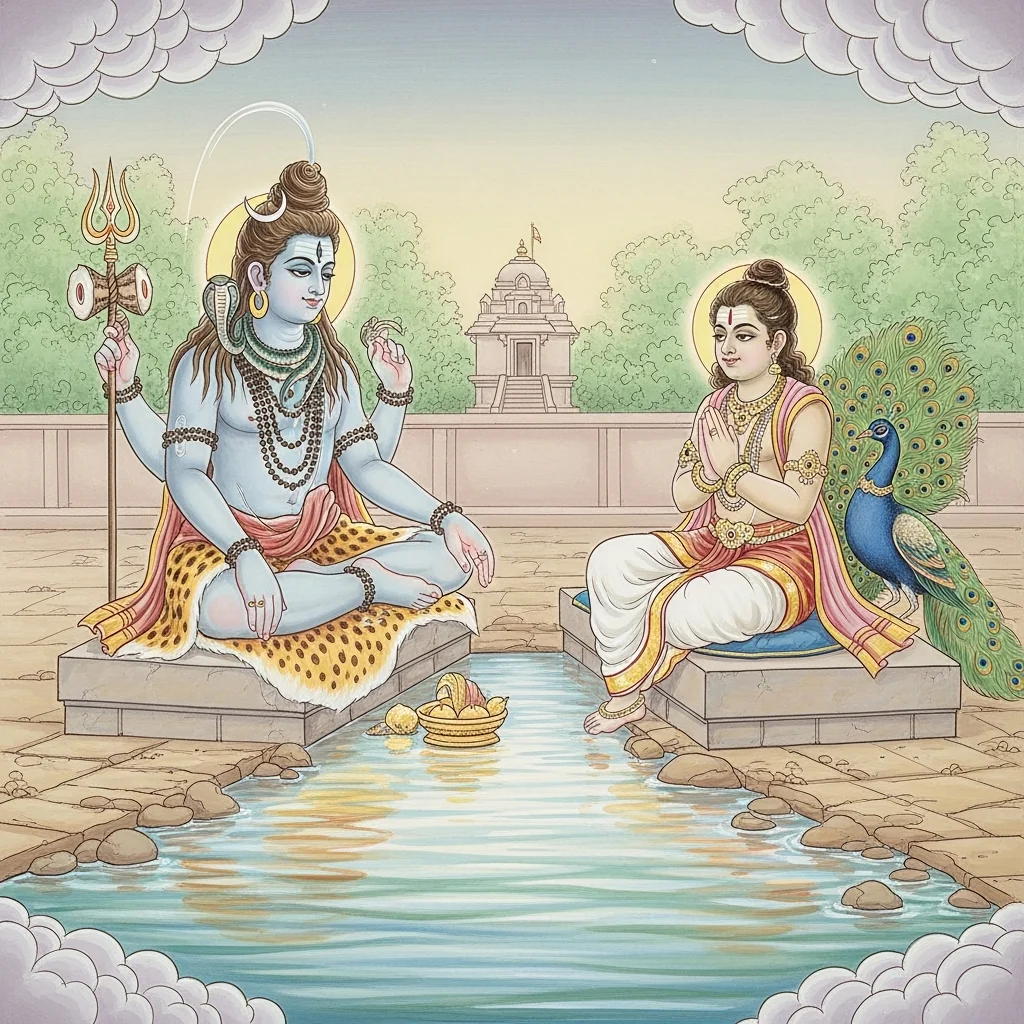
Adhyaya 6
कपालमोचन–ब्रह्मकुण्ड–मानसोद्भेद-माहात्म्य (Kapalamochana, Brahmakunda, and Manasodbheda: Sacred-Merit Discourse)
Chapter 6 unfolds as a structured dialogue in which Skanda asks Śiva about particular tīrthas in Badarikāśrama and their ritual and theological power. It first extols Kapālamocana as a highly secret, greatly revered site where bathing is said to cleanse even grave moral faults, and as especially fit for pitṛ-karman—piṇḍa offerings and tila-tarpaṇa—praised as surpassing even Gayā. The discourse then turns to Brahmatīrtha/Brahmakuṇḍa through a cosmogonic episode: Madhu and Kaiṭabha seize the Vedas; Brahmā, hindered in his creative capacity, performs devotion at Badarikā; Hayagrīva manifests, defeats the foes, and restores the Vedas, after which Brahmakuṇḍa becomes widely renowned. The text describes graded fruits: mere darśana purifies and uplifts, while snāna joined to vrata-observance leads to higher attainments culminating in Viṣṇu-loka. Sarasvatī is introduced as a water-form supporting japa, mental continuity, and mantra-siddhi, and the place of Indra’s austerity (Indrapada/Dravadhārā) is noted with calendrical observances such as śukla-trayodaśī and fasting. Finally, Manasodbheda is presented as a rare liberative tīrtha where the “knots of the heart” and doubts are cut; disciplined, truthful practice is praised, while unethical conduct is said to nullify results. The closing phalaśruti lauds recitation and transmission of this tīrtha account as devotionally meritorious.
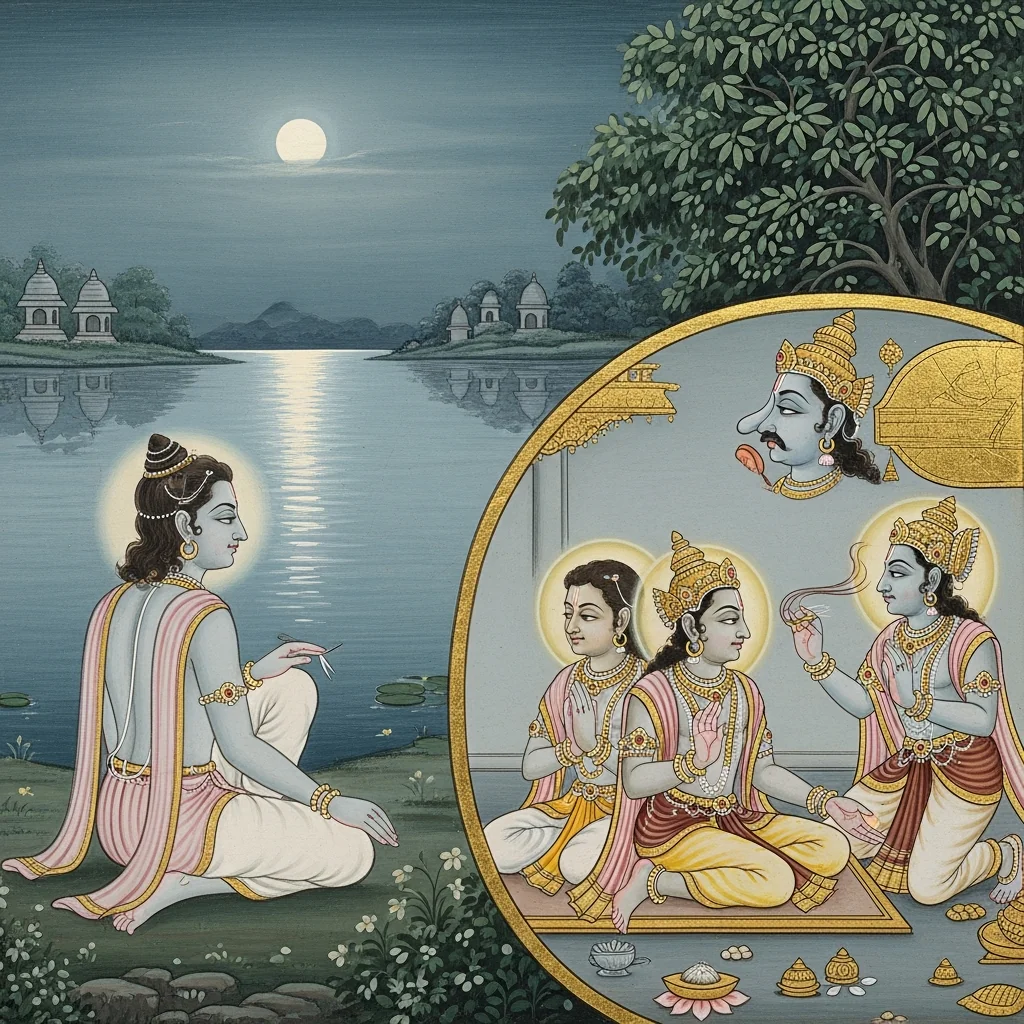
Adhyaya 7
Somakuṇḍa–Dvādśāditya–Satya-pada–Urvaśīkuṇḍa Māhātmya (Chapter 7)
The chapter unfolds as a theological discourse in which Śiva describes a southwesterly cluster of five descending sacred streams (tīrthas) and their power to cleanse sin, urging seekers to turn at once to Hari’s Badarikāśrama as the swift remedy for moral defilement. The narration then turns to Somakuṇḍa: at Skanda’s request Śiva recounts Soma’s longing for celestial sovereignty, Atri’s instruction to worship Govinda through tapas and self-restraint, and Soma’s long austerities at Badarī with aṣṭākṣara-japa and offerings. Viṣṇu appears repeatedly as the giver of boons, until Soma is granted lordship over the grahas, nakṣatras, tārās, oṣadhis, brāhmaṇas, and the night (yāminī), followed by his heavenly consecration and ascent. Ritual observances and fruits are then set forth: darśana and sparśa of Somakuṇḍa remove faults; snāna with pitṛ-tarpaṇa carries one beyond Somaloka to Viṣṇuloka; a three-night fast with Janārdana-pūjā promises non-return and mantra-siddhi. Further tīrthas are indexed—Dvādśāditya (Sūrya-linked purification and healing), Catuḥsrota (four streams embodying the puruṣārthas), Satya-pada (a triangular kunda visited by Hari on Ekādaśī and by devas and ṛṣis), and the waters of Nara-Nārāyaṇa-āśrama. Finally, Urvaśī-tīrtha is explained through Indra’s sending of Kāma to disturb Nara-Nārāyaṇa; Hari’s hospitality leads to Urvaśī’s manifestation and the naming of the tīrtha, whose rewards range from Urvaśīloka to sālokya for those who hear and recite with devotion.
Adhyaya 8
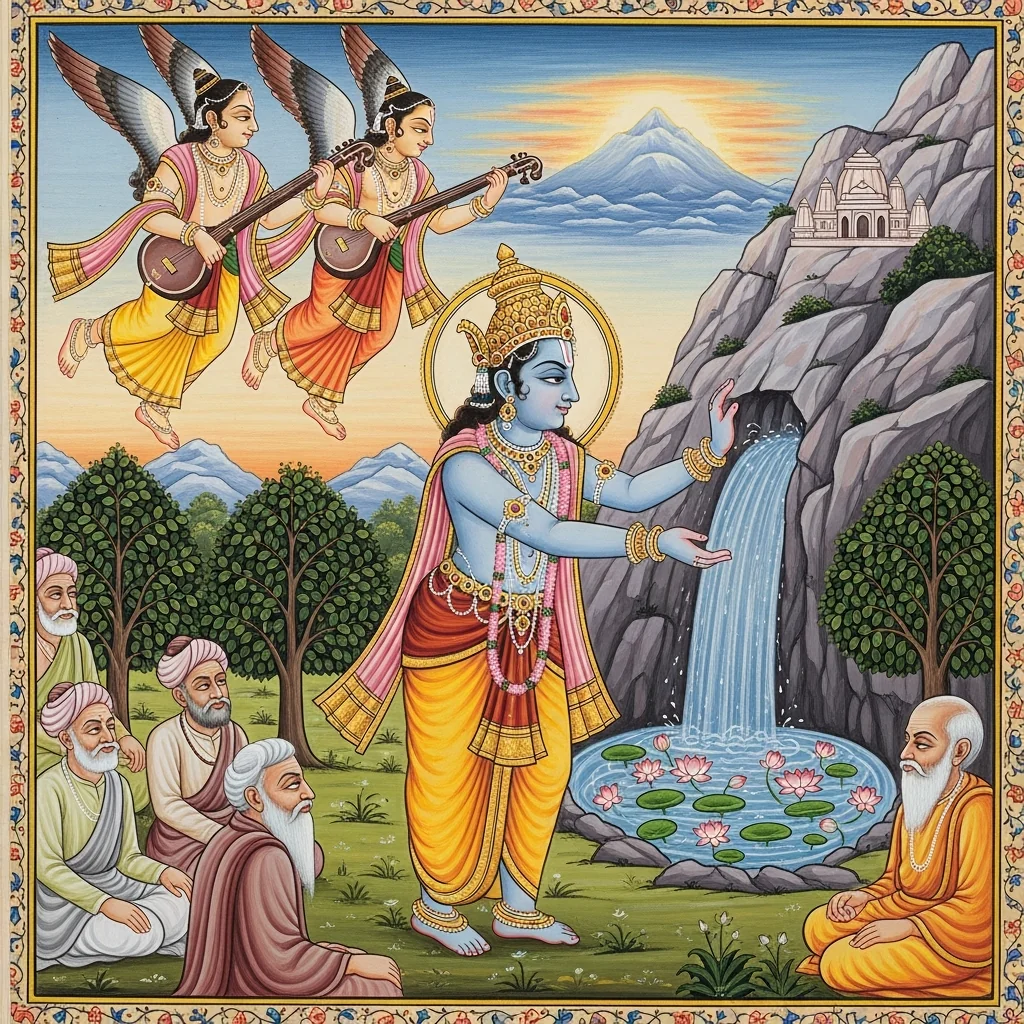
मेरुशृंगस्थापनं, लोकपालप्रतिष्ठा, दण्डपुष्करिणीमाहात्म्यं च (Meru-Peak Installation, Lokapāla Establishment, and the Glory of Daṇḍa-Puṣkariṇī)
The chapter is framed as a dialogue: prompted by Skanda’s question, Mahādeva explains the sacred place-making deeds of Bhagavān (Hari/Nārāyaṇa) in the Badarikāśrama region. Near Brahmakūṇḍa and Narāvāsagiri, gods, ṛṣis, siddhas, and celestial beings leave the heights of Meru to seek Bhagavān’s darśana; in divine play, Bhagavān manifests and installs Meru-peaks nearby. Hymns are sung and boons are sought—that Badarī never be forsaken, that Meru remain, and that those who behold Meru’s peak gain residence there and ultimately dissolve into Bhagavān. The narrative then presents a revered tīrtha where Hari himself establishes the Lokapālas (guardians of the directions), relocating them away from the ascetic-sage domain, and creates a delightful “kṛīḍā-puṣkariṇī” by striking with a staff—the Daṇḍa-Puṣkariṇī—along with descriptions of celestial enjoyment. Bathing rules and fruits are laid down: on Dvādaśī and Paurṇamāsī Bhagavān is said to come to bathe; sages bathing at midday perceive an unattached supreme light in the water; mere sight of the pond equals the merit of bathing in all tīrthas; piṇḍa-dāna yields multiplied results; and rites performed there are declared akṣaya (imperishable). A note of secrecy is added: the tīrtha is deva-guarded and not to be disclosed indiscriminately. Finally, additional Gaṅgā-linked tīrthas are enumerated (a confluence near Mānasodbhava, a southern dharma-kṣetra tied to Nara–Nārāyaṇa, Urvaśī-saṅgama, Kūrmōddhāra, and Brahmāvarta), and the chapter closes with an expansive phalaśruti promising worldly success and protection through hearing or reciting this māhātmya—useful in travel, conflict, and auspicious rites.
FAQs about Badrikashrama Mahatmya
Badarikāśrama is presented as a uniquely potent sacred center where Viṣṇu’s presence is described as enduring, and where association with ṛṣis, sacred bathing, and remembrance of the site are treated as exceptionally transformative.
The section highlights purification from accumulated wrongdoing, accelerated spiritual progress relative to arduous austerities elsewhere, and liberation-oriented outcomes (mokṣa-phala) linked to Badarī-darśana, kīrtana, and tīrtha engagement.
The narrative situates Badarī within a larger comparative catalogue of tīrthas and then elevates it through a dialogue tradition attributed to Skanda and Śiva, framing Badarī’s supremacy and Kali-yuga relevance as the key legendary claim.