Adhyaya 92
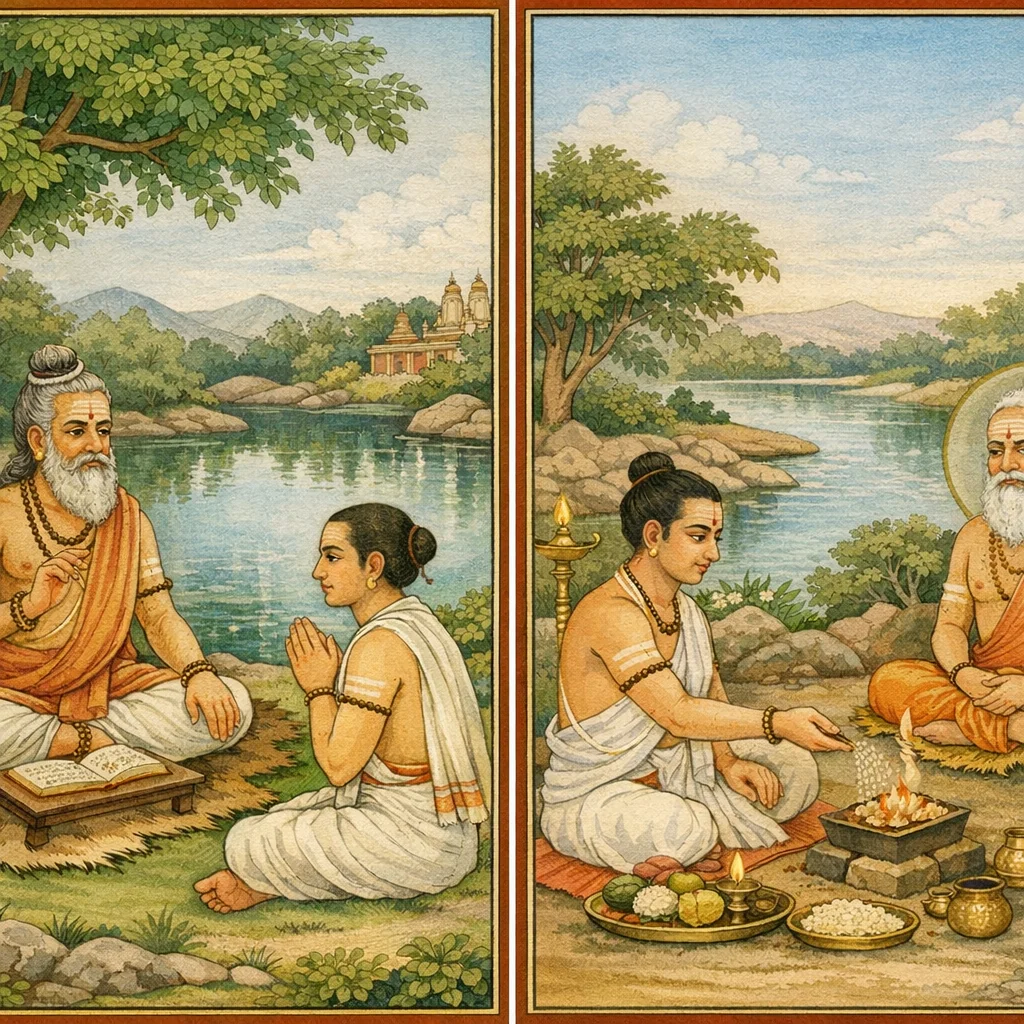
Chapter 92, narrated by Sūta, turns from Agnitīrtha to the origin and merits of Brahmakuṇḍa. It declares that the sage Mārkaṇḍeya established this sacred kuṇḍa by installing Brahmā and creating a reservoir of pure, sanctified water. A calendrical rite is then taught: in Kārttika, when the moon is in Kṛttikā (Kṛttikā-yoga), one should observe the Bhīṣma-vrata/Bhīṣma-pañcaka, bathe in the auspicious waters, worship Brahmā (Padmayoni) first, and then worship Viṣṇu (Janārdana/Puruṣottama). The phalaśruti speaks in terms of rebirth and loka: even a śūdra is said to gain a higher birth, while a brāhmaṇa who performs the observance attains Brahmaloka. To illustrate this, the chapter tells of a cowherd (paśupāla) who hears Mārkaṇḍeya’s instruction, undertakes the vow with faith, dies in due course, and is reborn in a brāhmaṇa family as a jātismara (one who remembers a past life). Still devoted to his former parents, he performs the funeral rites for his former father; when questioned, he explains his previous birth and the ritual cause of his transformation. The chapter ends by noting the kuṇḍa’s renown in the north and reaffirming that repeated bathing there yields repeated high-status births, especially vīpratva for a brāhmaṇa practitioner.
Shlokas
Verse 1
सूत उवाच । अग्नितीर्थस्य माहात्म्यमेतद्वः परिकीर्तितम् । ब्रह्मकुंडसमुत्पत्तिरधुना श्रूयतां द्विजाः
Sūta said: “Thus has the greatness of Agnitīrtha been proclaimed to you. Now, O twice-born ones, listen to the origin of Brahmakuṇḍa.”
Verse 2
यदा संस्थापितो ब्रह्मा मार्कंडेन महात्मना । तदा विनिर्मितं तत्र कुण्डं शुचिजलान्वितम्
When the great-souled Mārkaṇḍa established Brahmā there, at that very spot a sacred pool was formed, filled with pure waters.
Verse 3
प्रोक्तं च कार्तिके मासि कृत्तिकास्थे निशाकरे । सम्यग्भीष्मव्रतं कृत्वा स्नात्वात्र सलिले शुभे
And it is declared that, in the month of Kārtika, when the moon is in Kṛttikā, one should duly perform the Bhīṣma-vrata and bathe here in these auspicious waters.
Verse 4
पूजयिष्यति यो देवं पद्मयोनिं ततः परम् । स शूद्रोऽपि तनुं त्यक्त्वा ब्रह्मयोनौ प्रयास्यति
Whoever thereafter worships the god Brahmā, the Lotus-born—he, even if a Śūdra, upon leaving the body, attains Brahmā’s state (Brahma-yoni).
Verse 5
ब्राह्मणोऽपि यदि स्नानं तत्र कुण्डे करिष्यति । कृत्वा भीष्मव्रतं सम्यग्ब्रह्मलोकं प्रयास्यति
And if even a Brāhmaṇa bathes in that sacred pool, properly performing the Bhīṣma-vrata, he attains Brahma-loka.
Verse 6
एवं प्रवदतस्तस्य मार्कंडेयस्य सन्मुनेः । श्रुतं तत्सकलं वाक्यं पशुपालेन केनचित्
As the noble sage Mārkaṇḍeya spoke in this manner, all of his words were heard by a certain cowherd.
Verse 7
ततः श्रद्धाप्रयुक्तेन तेन तद्भीष्मपंचकम् । यथावद्विहितं सम्यक्कार्तिके मासि संस्थिते
Then, impelled by faith, he duly and correctly undertook the Bhīṣma-pañcaka observance during the month of Kārtika when it had arrived.
Verse 8
ततश्च कृत्तिकायोगे पूर्णिमायां यथाविधि । संपूज्य पद्मजं पश्चात्पूजितः पुरुषोत्तमः
Then, on the full-moon day joined with Kṛttikā, according to the prescribed rule, having duly worshiped Padmaja (Brahmā), thereafter Puruṣottama was worshiped as well.
Verse 9
ततः कालविपाकेन स पंचत्वमुपागतः । ब्राह्मणस्य गृहे जातः पुरेऽत्रैव द्विजोत्तमाः । जातिस्मरः प्रभायुक्तः पितृमातृप्रतुष्टिदः
Then, as time brought its destined result, he met his end. He was reborn in this very city in the house of a brāhmaṇa, O best of twice-born. He remembered his former birth, was endowed with a radiant presence, and became one who brought deep satisfaction to his father and mother.
Verse 10
एवं प्रगच्छतस्तस्य वृद्धिं तत्र पुरोत्तमे । पितृमातृसमुद्भूतो यादृक्स्नेहो व्यवस्थितः
As he thus grew up there in that excellent city, the natural affection that arises from father and mother remained firmly established in him, just as it should.
Verse 11
अन्यदेहोद्भवे वापि तस्य शूद्रेपरिस्थितः । स तस्य धनसंपन्नः सदैव कुरुते द्विजः
And even though one connected to him stood in the condition of a śūdra due to birth in another body, this twice-born man—prosperous in wealth—continually rendered help and support to him.
Verse 12
उपकारप्रदानं च यत्किंचित्तस्य संमतम् । अन्यस्मिन्दिवसे शूद्रः स पिता पूर्वजन्मनः । तस्य पञ्चत्वमापन्नः संप्राप्ते चायुषः क्षये
And he offered whatever assistance was agreeable and beneficial to him. Then, on another day, that śūdra—who had been his father in a former birth—met death when the span of his life came to its end.
Verse 13
अथ तस्य महाशोकं स कृत्वा तदनंतरम् । चकार प्रेतकार्याणि निःशेषाणि प्रभक्तितः
Then, overwhelmed by great grief for him, he immediately performed all the rites due to the departed (preta-kārya)—completely and with devoted reverence.
Verse 14
अथ तस्य समालोक्य तादृशं तद्विचेष्टितम् । पृष्टः स कौतुकाविष्टैः पितृमातृसुतादिभिः
Then, seeing his conduct of that kind, he was questioned by his father, mother, sons, and others, who were filled with curiosity.
Verse 15
कस्मात्त्वमस्य नीचस्य पशुपालस्य सर्वदा । अतिस्नेहसमायुक्तो निःस्पृहस्यापि शंस नः
“Why are you always so exceedingly affectionate toward this lowly cowherd? Though you are yourself free from desire, tell us the reason.”
Verse 16
तस्यापि प्रेतकार्याणि मृतस्यापि करोषि किम् । एतन्नः सर्वमाचक्ष्व न चेद्गुह्यं व्यवस्थितम्
“And why do you perform the rites for the departed for him as well, even after he has died? Tell us all of this, if it is not something meant to remain secret.”
Verse 17
तेषां तद्वचनं श्रुत्वा किंचिल्लज्जासमन्वितः । तानब्रवीच्छृणुध्वं च कथयिष्याम्यसंशयम्
Hearing their words, and feeling a little shame, he said to them: “Listen—I shall explain it to you without doubt.”
Verse 18
अहमस्यान्यदेहत्वे पुत्र आसं सुसंमतः । पशुपालनकर्मज्ञः प्राणेभ्यो वल्लभः सदा
“In his other embodiment, I was his son—dear and highly regarded—skilled in the work of tending cattle, and always beloved to him as life itself.”
Verse 19
कस्यचित्त्वथ कालस्य मार्कंडस्य महामुनेः । श्रुतं प्रवदतो वाक्यं ब्रह्मकुण्डसमुद्भवम्
At a certain time, the words spoken by the great sage Mārkaṇḍa were heard—words that had arisen in connection with Brahmakuṇḍa.
Verse 20
कार्तिक्यां कृत्तिकायोगे भीष्मपञ्चककृन्नरः । सम्यक्छ्रद्धासमुत्पन्नो योऽत्र स्नानं करिष्यति
Whoever, endowed with well-awakened faith, performs bathing here during Kārttikā at the time of the Kṛttikā conjunction, observing Bhīṣma’s five-day vow—
Verse 21
दृष्ट्वा पितामहं देवं पूजयित्वा जनार्दनम् । स भविष्यति शूद्रोऽपि ब्राह्मणश्चान्यजन्मनि
Having beheld the God Pitāmaha (Brahmā) and having worshipped Janārdana (Viṣṇu), even a Śūdra becomes a Brāhmaṇa in another birth.
Verse 22
तन्मया विहितं सम्यक्स्नात्वा तत्र शुभावहे । सुकुण्डे कार्तिके मासि तेन जातोऽस्मि सद्द्विजः
That was duly performed by me: bathing properly there, in that auspicious and beneficent pond, in the month of Kārttika—by that merit I have been born a true twice-born (dvija).
Verse 23
चन्द्रोदयस्य विप्रर्षेरन्वये भुवि विश्रुते । संस्मरन्पूर्विकां जाति तेन स्नेहो मम स्थितः । तस्योपरि महान्नित्यं शूद्रस्यापि निरर्गलः
In the renowned lineage on earth of the brahmin-sage Candrodaya, remembering my former birth, my affection remained firmly established. And toward him that great, constant affection—even for a Śūdra—flowed without restraint.
Verse 24
अतोऽहं कृत्तिकायोगे कार्तिक्यां भक्तिसंयुतः । ज्ञात्वा करोमि भीष्मस्य पंचकं व्रतमुत्तमम्
Therefore, in Kārttikā, at the time of the Kṛttikā conjunction, endowed with devotion and knowing its greatness, I observe the excellent five-day vow of Bhīṣma.
Verse 25
सूत उवाच । एवं तस्य वचः श्रुत्वा ते चान्ये च द्विजोत्तमाः । भीष्मस्य पञ्चकं चक्रुः सम्यक्छ्रद्धासमन्विताः
Sūta said: Hearing his words thus, those eminent brāhmaṇas—and others too—performed Bhīṣma’s five-day observance, fully endowed with proper faith.
Verse 26
ततःप्रभृति तत्कुण्डं विख्यातं धरणीतले । स्थितमुत्तरदिग्भागे ब्रह्मकुण्डमिति स्मृतम्
From that time onward, that pond became renowned upon the earth; situated in the northern quarter, it is remembered as ‘Brahmakuṇḍa.’
Verse 27
यः स्नानं सर्वदा तत्र ब्राह्मणः प्रकरोति वै । स संभवति विप्रेंद्रो जायमानः पुनः पुनः
A brāhmaṇa who continually bathes there indeed becomes a viprendra, the foremost of brāhmaṇas, and is born again and again in an excellent state.
Verse 92
इतिश्रीस्कांदे महापुराण एकाशीतिसाहस्र्यां संहितायां षष्ठे नागरखण्डे हाटकेश्वरक्षेत्रमाहात्म्ये ब्रह्मकुण्डमाहात्म्यवर्णनंनाम द्विनवतितमोध्यायः
Thus ends the ninety-second chapter, entitled “The Description of the Greatness of Brahmakuṇḍa,” in the Hāṭakeśvara-kṣetra Māhātmya of the sixth part, the Nāgara-khaṇḍa, of the Śrī Skanda Mahāpurāṇa, within the compilation of eighty-one thousand verses.