Adhyaya 9
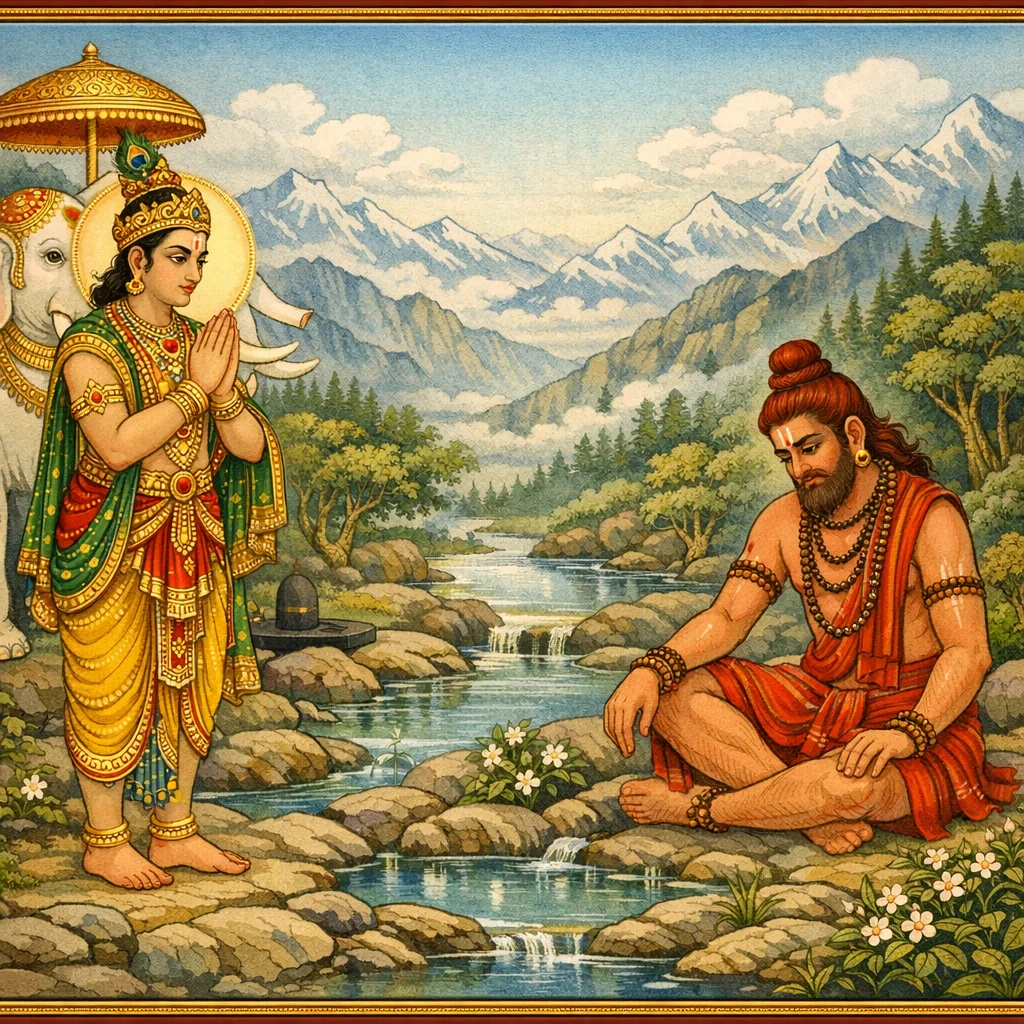
Chapter 9 relates a carefully ordered place-legend of how the perilous subterranean passage (mahān nāga-bila) at Hāṭakeśvaraja-kṣetra is sealed and thereby made sacred. Sūta says Indra commands the Saṃvartaka wind to fill the pit with dust, but Vāyu refuses, recalling an earlier curse incurred by covering a liṅga—after which he became a bearer of mixed odors and feared Śiva (Tripurāri). Indra hesitates until Devejyā (Bṛhaspati) points to Himalayan agency: Himālaya’s three sons—Maināka (hidden in the ocean), Nandivardhana (connected with an incomplete fissure near Vasiṣṭha’s āśrama), and Raktaśṛṅga—of whom Raktaśṛṅga alone can serve as an effective seal. Indra petitions Himālaya; Raktaśṛṅga resists, citing the harshness and moral disorder of the human realm and recalling that Indra had cut off his wings. Indra compels him, promising ecological and ritual renewal: trees, tīrthas, temples, and sages’ āśramas will arise, and even sinners will be purified by Raktaśṛṅga’s presence. Raktaśṛṅga is then installed into the nāga-bila, submerged up to the nose, and adorned with vegetation and birds. Indra grants boons: a future king will build a city upon Raktaśṛṅga’s head for the welfare of the brahmins; Indra will worship Hāṭakeśvara on Kṛṣṇa Caturdaśī in the month of Caitra; and Śiva will dwell there for a day with the gods, ensuring renown across the three worlds. The chapter ends by affirming that tīrthas, shrines, and ascetic settlements indeed come to stand upon the sealed site.
Shlokas
Verse 1
। सूत उवाच । अथ शक्रः समाहूय प्रोचे संवर्तकानिलम् । हाटकेश्वरजेक्षेत्रे महान्नागबिलोऽस्ति वै
Sūta said: Then Śakra (Indra), summoning the Saṃvartaka Wind, spoke: “In the sacred region of Hāṭakeśvara there is indeed a vast Serpent-cavern (Nāga-bila).”
Verse 2
तं पूरय ममादेशाद्द्रुतं गत्वाऽभिपांसुभिः । येन न स्याद्गतिस्तत्र कस्यचिन्मृत्युधर्मिणः
“By my command, go quickly and fill that (cavern) up with sand, so that no mortal—one subject to death—may find passage there.”
Verse 3
वायुरुवाच । तवादेशान्मया पूर्वं पूरितो विवरो यदा । लिंगोद्भवस्तदा शापः प्रदत्तो मे पुरारिणा
Vāyu said: “Earlier, when—on your order—I filled that cleft, at the time of the manifestation of the Liṅga, a curse was then bestowed upon me by the foe of the Tripura-demons (Śiva).”
Verse 4
यस्माल्लिंगं ममैतद्वै त्वया पांसुभिरावृतम् । तस्मात्समानधर्मा त्वं गन्धवाहो भविष्यसि
Because this Liṅga of mine was covered by you with sand, therefore you shall become of like nature—one who carries odors (gandha-vāha).
Verse 5
यद्वत्कर्पूरजं गन्धं समग्रं त्वं हि वक्ष्यसि । अमेध्यसंभवं तद्वन्मम वाक्यादसंशयम्
Just as you fully carry the fragrance born of camphor, so too—by my word, without doubt—you will carry odors arising from impurity.
Verse 6
तस्मात्कुरु प्रसादं मे विदित्वैतत्सुरेश्वर । कृत्येऽस्मिन्स्म र्यतामन्यस्त्रिपुरारेर्बिभेम्यहम्
Therefore, O Lord of the gods, show me favor, knowing this. In this task let another be appointed—because I fear Tripurāri (Śiva).
Verse 7
ततः संचिंतयामास पूरणं त्रिदशाधिपः । तस्य नागबिलस्यैव नैव किंचिदवैक्षत
Then the lord of the thirty gods (Indra) pondered how to fill it; yet he could see no means at all for filling that very Nāga-bila.
Verse 8
ततस्तं प्राह देवेज्यःस्वय मेव शतक्रतुम् । कस्मात्त्वं व्याकुलीभूतः कृत्येऽस्मिंस्त्रिदशाधिप
Then Deveśya (Bṛhaspati), of his own accord, said to Śatakratu (Indra): “Why have you become troubled in this undertaking, O lord of the gods?”
Verse 9
अस्ति पर्वतमुख्योऽत्र नाम्ना ख्यातो हिमालयः । तस्य पुत्रत्रयं जातं तच्च शक्र शृणुष्व मे
Here stands the foremost of mountains, famed by the name Himālaya. To him were born three sons—hear it from me, O Śakra.
Verse 10
मैनाकः प्रथमः प्रोक्तो द्वितीयो नंदिवर्धनः । रक्तशृंगस्तृतीयस्तु पर्वतः परिकीर्तितः
The first is called Maināka; the second, Nandivardhana; and the third mountain is renowned as Raktśṛṅga, the Red-peaked.
Verse 11
स मैनाकः समुद्रांतः प्रविष्टः शक्र ते भयात् । पक्षाभ्यां सहितोऽद्यापि स तत्रैव व्यवस्थितः
Out of fear of you, O Śakra, the mountain Maināka entered the ocean’s depths; and even today, still bearing his wings, he remains established there.
Verse 12
नंदिवर्धन इत्येष द्वितीयः परिकीर्तितः । वसिष्ठाश्रमजो रन्ध्रस्ते न कृत्स्नः प्रपूरितः
The second mountain is celebrated as Nandivardhana. The cleft connected with Vasiṣṭha’s hermitage has still not been completely filled.
Verse 13
हिमाचलसमादेशाद्वसिष्ठस्य च सन्मुनेः । देवभूमिं परित्यज्य स गतस्तत्र सत्वरम्
At the command of Himācala and of the noble sage Vasiṣṭha, he left the land of the gods and swiftly went there.
Verse 14
तृतीयस्तिष्ठतेऽद्यापि रक्तशृंगः स्मृतोऽत्र यः । तमानय सहस्राक्ष बिलं सार्पं प्रपूरय
A third one still stands here even today, remembered as Raktśṛṅga. Bring him, O thousand-eyed Indra, and fill the serpent-cavern (nāga-bila).
Verse 15
नान्यथा पूरितुं शक्यो बिलोऽयं त्रिदशाधिप । तं मुक्त्वा पर्वत श्रेष्ठं सत्यमेतन्मयोदितम्
This cavern cannot be filled in any other way, O lord of the gods. Without releasing that best of mountains, it will not be done—this is the truth I declare.
Verse 16
सूत उवाच । तच्छ्रुत्वा देवपूज्यस्य वचनं त्रिदशाधिपः । जगाम सत्वरं तत्र स यत्रास्ते हिमालयः
Sūta said: Hearing the words of that one revered by the gods, the lord of the gods, Indra, swiftly went to where the Himalaya stands.
Verse 17
ततः प्रोवाच तं गत्वा सामपूर्वमिदं वचः । हिमाचलं गिरिश्रेष्ठं सिद्धचारणसेवितम्
Then, having gone to him, he spoke these words, beginning with conciliation: to Himācala, the best of mountains, served by Siddhas and Cāraṇas.
Verse 18
इन्द्र उवाच । हाटकेश्वरजे क्षेत्रे महान्नागबिलः स्थितः । तेन गत्वा नरा देवं पाताले हाटकेश्वरम्
Indra said: In the sacred region of Hāṭakeśvara there lies a great Nāga-bila, a serpent-cavern. By going there, people come to the God Hāṭakeśvara in Pātāla, the netherworld.
Verse 19
पूजयिष्यंति ये केचिदपि पापपरायणाः । मया सार्धं करिष्यंति ततः स्पर्द्धां नगोत्तम
Even those devoted to sin—whoever they may be—will worship Him there; and thereafter they will vie with me in merit, O best of mountains.
Verse 20
तस्मात्पुत्रमिमं तत्र रक्तशृंगं हिमालय । प्रेषयस्व बिलो येन पूर्यते सोऽहिसंभवः
Therefore, O Himālaya, send this son of yours—Raktaśṛṅga—there; by him that serpent-born cavern, Nāga-bila, shall be filled.
Verse 21
कुरुष्व त्वं ममातिथ्यं गृहप्राप्तस्य पर्वत । आत्मपुत्रप्रदानेन कीर्तिं प्राप्स्यस्यलौकिकीम्
O Mountain, extend hospitality to me who have come to your abode. By offering your own son in service, you will attain extraordinary, world-renowned fame.
Verse 22
बाढमित्येव सोऽप्युक्त्वा पूजयित्वा च देवपम् । ततः प्रोवाच तं पुत्रं रक्तशृंगं हिमालयः
He too said, “So be it,” and duly honoured the Lord of the gods. Then Himālaya addressed his son, Raktaśṛṅga.
Verse 23
तवार्थाय सहस्राक्षः पुत्र प्राप्तो ममांतिकम् । तस्माद्गच्छ द्रुतं तत्र यत्र नागबिलः स्थितः
My son, for your sake Sahasrākṣa has come to me. Therefore go swiftly to the place where Nāga-bila is situated.
Verse 24
पूरयित्वा ममादेशात्तं त्वं शक्रस्य कृत्स्नशः । सुखी भव सहानेन तथान्यैः सुरसत्तमैः
Having fully carried out, by my instruction, that command of Śakra, be happy—together with him and with the other foremost gods.
Verse 25
रक्तशृंग उवाच । नाहं तत्र गमिष्यामि मर्त्य भूमौ कथंचन । यत्र कण्टकिनो वृक्षा रूक्षाः फलविवर्जिताः
Raktaśṛṅga said: I will not go there to the mortal realm at all—where the trees are thorny, harsh and dry, and devoid of fruit.
Verse 26
न सिद्धा न च गंधर्वा न देवा न च किंनराः । न च तीर्थानि रम्याणि न नद्यो विमलोदकाः
There are no Siddhas there, nor Gandharvas, nor gods, nor Kinnaras; nor are there delightful holy fords, nor rivers with pure, clear waters.
Verse 27
तथा पापसमाचारा मनुष्याः शीलवर्जिताः । दुष्टचित्ताः सदा सर्वे तिर्यग्योनिगता अपि
Moreover, the people there are given to sinful conduct, devoid of good character; all are ever wicked-minded—indeed, as though fallen into animal modes of existence.
Verse 28
तथा मम नगश्रेष्ठ पक्षौ द्वावपि कर्तितौ । शक्रेण तेन नो शक्तिर्गंतुमस्ति कथंचन
And further, O best of mountains, my two wings have been cut off by that Śakra; therefore I have no power at all to go.
Verse 29
तस्मात्कंचित्सहस्राक्ष उपायं तत्कृते परम् । चिंतयत्वेव मां मुक्त्वा सत्यमेतन्मयोदितम्
Therefore, O Sahasrākṣa, devise a supreme means for that purpose—release me from this obligation; what I have spoken is truth.
Verse 30
शक्र उवाच । अह त्वां तत्र नेष्यामि स्वहस्तेन विदारितम् । तत्रापि सुशुभा वृक्षा भविष्यंति तवाश्रयाः
Śakra said: I will take you there, even if I must split open the way with my own hand. Even there, splendid trees will arise, becoming your shelter.
Verse 31
तथा पुण्यानि तीर्थानि देवतायतनानि च । समंतात्ते भविष्यंति मुनीनामाश्रमास्तथा
Likewise, sacred tīrthas and shrines of the gods will arise all around you; and in the same way, hermitages of sages will also come into being.
Verse 32
अत्रस्थस्य प्रभावो यस्तव पर्वत नंदन । मद्वाक्यात्तत्र संस्थस्य कोटिसंख्यो भविष्यति
O Nandana, son of the mountain, the spiritual potency that is yours while you abide here—by my very word—will become millionfold for one who remains established in that place.
Verse 33
तथा ये मानवास्तत्र पापात्मानोऽपि भूतले । विपाप्मानो भविष्यंति सहसा तव दर्शनात्
And the people there on earth—even if sinful in nature—will suddenly be freed of sin merely by beholding you.
Verse 34
तस्माद्गच्छ द्रुतं तत्र मया सार्धं नगात्मज । न चेद्वज्रप्रहारेण करिष्यामि सहस्रधा
Therefore go quickly there with me, O mountain-born one; otherwise, with a blow of the Vajra (thunderbolt) I shall shatter you into a thousand pieces.
Verse 35
सूत उवाच । तस्य तद्वचनं श्रुत्वा रक्तशृंगो भयान्वितः । प्रविष्टः सहसागत्य तस्मिन्नागबिले गतः
Sūta said: Hearing those words, Raktaśṛṅga, seized with fear, quickly came and entered, going into that serpent-cavern of the Nāgas.
Verse 36
निमग्नो ब्राह्मणश्रेष्ठा नासाग्रं यावदेव हि । शृंगैर्मनोरमैस्तुं गैः समग्रैः सहितस्तदा । वृक्षगुल्मलताकीर्णै रम्यपक्षिनिषेवितैः
O best of brāhmaṇas, he was submerged only up to the tip of his nose; and then that place, complete in every way, was adorned with lofty, delightful peaks, filled with trees, shrubs, and creepers, and frequented by charming birds.
Verse 37
एवं संस्थाप्य तं शक्रो हिमाचलसुतं नगम् । ततः प्रोवाच सहृष्टो वरो मत्तः प्रगृह्यताम्
Thus Śakra (Indra), having established that mountain born of Himācala, then spoke with delight: “Accept a boon from me.”
Verse 38
रक्तशृंग उवाच । एष एव वरोऽस्माकं यत्त्वं तुष्टः सुरेश्वर । किं वरेण करिष्यामि त्वत्प्रसादादहं सुखी
Raktaśṛṅga said: “This alone is our boon—that you are pleased, O Lord of the gods. What shall I do with any other boon? By your grace, I am already content and at peace.”
Verse 39
इन्द्र उवाच । न वृथा दर्शनं मे स्यादपि स्वप्ने नगात्मज । किं पुनर्दर्शने जाते कृते कृत्ये विशेषतः
Indra said: “My manifestation is not in vain—even in a dream, O mountain-born one. How much more, then, when I am beheld directly, and especially when the appointed deed has been duly accomplished!”
Verse 41
इन्द्र उवाच । भविष्यति महीपालश्चमत्कार इति स्मृतः । तव मूर्धनि विप्रार्थं स पुरं स्थापयिष्यति
Indra said: “A king shall arise, remembered by the name Camatkāra. For the sake of the brāhmaṇas, he will establish a city upon your summit.”
Verse 42
तत्र ब्राह्मणशार्दूला वेदवेदांगपारगाः । विभवं तव निःशेषं भजिष्यंति प्रहर्षिताः
There, eminent brāhmaṇas—fully versed in the Vedas and the Vedāṅgas—will joyfully partake of and celebrate your complete prosperity and glory in every way.
Verse 43
तथाहं चैत्रमासस्य चतुर्दश्यां नगात्मज । कृष्णायां स्वयमागत्य शृंगे मुख्यतमे तव
Likewise, O son of the mountain, on the fourteenth day of the dark fortnight in the month of Caitra, I shall come here in person to your most excellent peak.
Verse 44
पूजयिष्यामि देवेशं हाटकेश्वरसंज्ञितम् । सर्वैर्देवगणैः सार्धं तथा किंनरगुह्यकैः
I shall worship the Lord of the gods, known as Hāṭakeśvara, together with all the hosts of devas, and likewise with the kiṃnaras and the guhyakas.
Verse 45
तमेकं दिवसं चात्र शृंगे तव हरः स्वयम् । अस्माभिः सहितस्तुष्टो निवासं प्रकरिष्यति
And for one day here, upon your peak, Hara himself (Śiva)—pleased and accompanied by us—will take up his abode.
Verse 46
प्रभावस्तेन ते मुख्य स्त्रैलोक्येऽपि भविष्यति । स्वस्ति तेऽस्तु गमिष्यामि सांप्रतं त्रिदिवालयम्
By that, O foremost one, your greatness will become renowned even throughout the three worlds. May auspiciousness be yours; I shall now depart to the heavenly abode.
Verse 47
सूत उवाच । एवमुक्त्वा सहस्राक्षस्ततः प्राप्तस्त्रिविष्टपम् । रक्तशृंगोऽपि तस्थौ च व्याप्य नागबिलं तदा
Sūta said: Having spoken thus, Sahasrākṣa (Indra) then reached Triviṣṭapa (heaven). And Raktaśṛṅga too remained there, at that time pervading and occupying the Nāga-cavern.
Verse 48
तस्योपरि सुमुख्यानि तीर्थान्यायतनानि च । संजातानि मुनीनां च संजाताश्च तथाऽश्रमाः
Upon it, many eminent tīrthas and sacred shrines came into being; and likewise the hermitages (āśramas) of sages also arose there.