Adhyaya 89
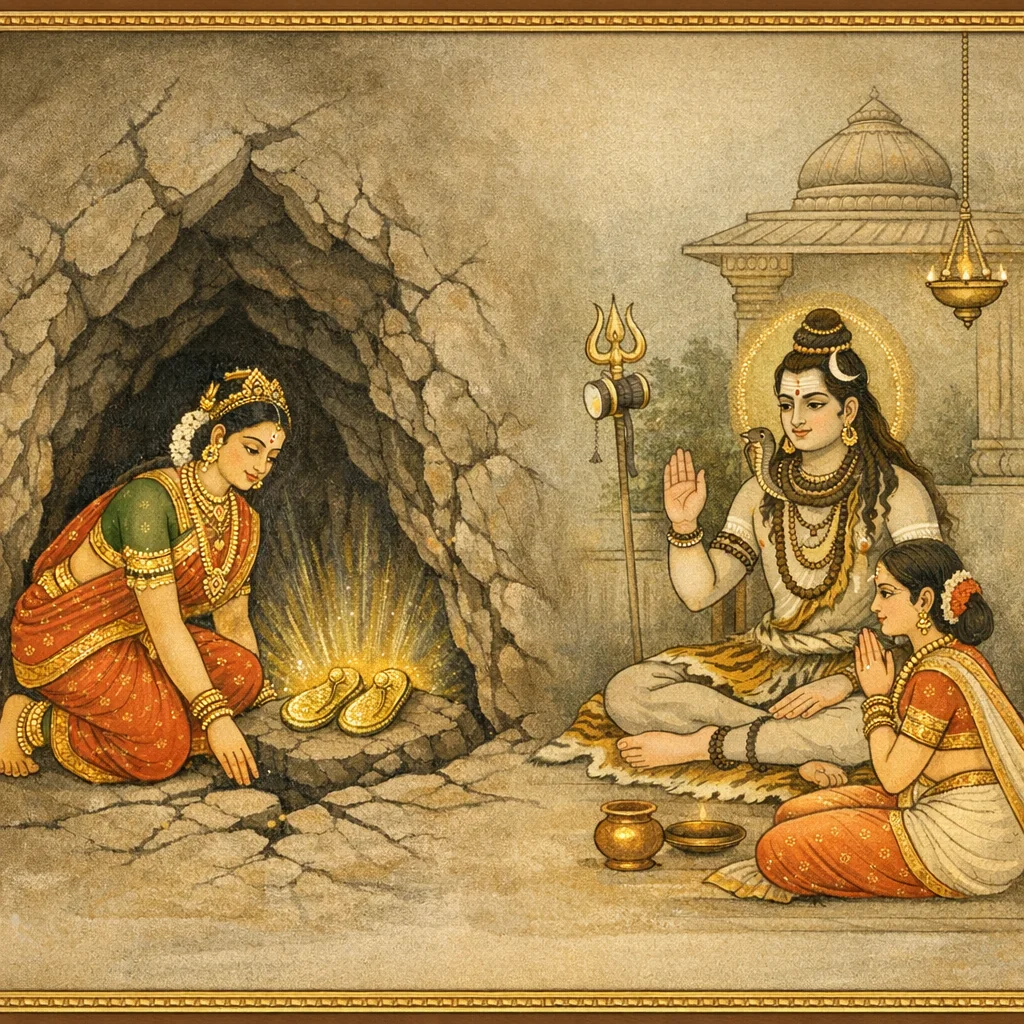
Chapter 89 describes a local crisis in Hāṭakeśvara-kṣetra and its ritual-theological remedy. Sūta relates that in Brahmin households children begin to vanish at night, while divine beings roam in search of the “breach” (chidra) through which such harm occurs. The Brahmins, with reverence, approach Ambā (the Mother Goddess), report the nocturnal abductions, and beg for protection, warning that they will migrate if relief is not granted. Moved by compassion, Ambā strikes the earth, forming a cave (guhā), and establishes her divine pādukās (sacred sandals) within it. She sets a boundary rule: attendant deities must remain inside, and any who transgress out of restlessness will fall from divine status. When the gods ask who will perform worship and provide offerings, Ambā declares that yogins and devotees will worship, and she prescribes an order of offerings—including meat and alcohol—to the pādukās, promising rare siddhi. As this mode of worship spreads, Vedic sacrificial cycles such as the agniṣṭoma decline; the gods, distressed at losing their sacrificial shares, petition Maheśvara. Śiva affirms Ambā’s inviolable greatness and devises a “convenient means”: he emanates a radiant maiden, teaching her mantra and procedure so that worship of the pādukās is sustained through a lineage. The chapter ends with a phalaśruti: worship of the pādukās—especially by a maiden’s hand, and by attentive listening on specific lunar days (notably caturdaśī and aṣṭamī)—bestows worldly happiness, well-being after death, and finally the “supreme state.”
Shlokas
Verse 1
सूत उवाच । एवं तत्र स्थिते नित्यं तस्मिन्मातृगणे द्विजाः । बालकानां क्षयो जज्ञे ब्राह्मणानां गृहेगृहे
Sūta said: When that host of Mothers remained there continually, O twice-born ones, the destruction of children arose in the houses of the brāhmaṇas—house after house.
Verse 2
तरुणानां विशेषेण चमत्कारपुरोत्तरे । छिद्रमन्वेषमाणास्ता भ्रमंत्यखिलदेवताः
Especially among the young, in the foremost city called Camatkāra, all the deities wandered about, searching for an opening—a vulnerable breach.
Verse 3
ततस्ते ब्राह्मणाः सर्वे ज्ञात्वा छिद्रसमुद्भवम् । विघातं बालकानां च देवताभिर्विनिर्मितम्
Then all those brāhmaṇas, realizing that the calamity had arisen from a “breach,” understood that the destruction of the children had been wrought by those deities.
Verse 4
अम्बावृद्धे समासाद्य पूजयित्वा प्रयत्नतः । प्रोचुश्च दुःखसन्तप्ता विनयावनताः स्थिताः
Approaching Ambāvṛddhā and worshipping her with earnest effort, they—burning with grief—stood in humility and spoke.
Verse 6
ह्रियंते बालका रात्रौ छिद्रं प्राप्य सहस्रशः । युष्मदीयाभिरेताभिर्देवताभिः समन्ततः
At night, once an opening is found, children are carried off by the thousands—by these deities who belong to you, surrounding us on every side.
Verse 7
प्रसादः क्रियतां तस्माद्ब्राह्मणानां महात्मनाम् । नो चेत्पुरं परित्यज्य यास्यामोऽन्यत्र भूतले
Therefore, grant your grace to these great-souled brāhmaṇas; otherwise, abandoning the city, we shall go elsewhere upon the earth.
Verse 8
तेषां तद्वचनं श्रुत्वा ततोंऽबा कृपयान्विता । हत्वा पादप्रहारेण भूमिं चक्रे गुहां ततः
Hearing their words, Mother Ambā, moved by compassion, struck the earth with her foot and thereupon brought forth a cave.
Verse 9
रक्षार्थं सर्वविप्राणां चमत्कारेण भूभुजा । भवद्भ्यां निर्मितः श्रेष्ठः प्रासादोऽयं मनोहरः
For the protection of all the brāhmaṇas, by the king’s wondrous deed, this excellent and delightful temple‑palace has been built by you two.
Verse 10
इमे मत्पादुके दिव्ये गुहामध्यगते सदा । सर्वाभिः सेवनीये च न गन्तव्यं बहिः क्वचित्
“These divine sandals of Mine abide forever within the cave’s heart. They are to be revered and served by all; one should not go outside from here to anywhere.”
Verse 11
या काचिल्लौल्यमास्थाय निष्क्रमिष्यति मोहतः । सा दिव्यभावनिर्मुक्ता शृगाली संभविष्यति
“Any woman who, seized by fickleness, leaves in delusion—she, cut off from the divine disposition, will be born as a she‑jackal.”
Verse 12
देवता ऊचुः । अत्र स्थाने महादेवि कोऽस्माकं प्रकरिष्यति । पूजां को वात्र चाहारस्तस्माद्ब्रूहि सुरेश्वरि
The deities said: “O great Goddess, in this place who will perform worship for us? And who here will provide sustenance? Therefore, O sovereign of the gods, tell us.”
Verse 13
अम्बोवाच । अत्रागत्य विनिर्मुक्ता योगिनो ध्यानचिन्तकाः । पूजां सम्यक्करिष्यंति सर्वासां भक्तिसंयुताः
Ambā said: “Those yogins who come here—liberated and intent on meditation—will duly perform worship, endowed with devotion toward all the Mothers.”
Verse 14
पादुके मे प्रपूज्यादौ मांस मद्यादिभिः क्रमात् । अवाप्स्यंति च संसिद्धिं दुर्लभाममरैरपि
“First worshipping My pādukā (sacred sandals), and then, in due order, offering meat, wine, and the like, they will attain complete accomplishment—rare even among the immortals.”
Verse 15
ततस्तथेति ताः प्रोच्य गुहामध्ये व्यवस्थिताः । परिवार्य शुभे तस्याः पादुके मोक्षदायिके
Then, saying “So be it,” they remained stationed within the cave, surrounding her auspicious pādukā—the bestowers of liberation.
Verse 16
ततस्तत्र समागत्य पुरुषा अपि दूरतः । प्रपूज्य पादुके सम्यङ्मातॄस्ताश्च ततः परम् । प्रयांति च परां सिद्धिं जन्म मृत्युविवर्जिताम्
Then men too, coming from afar, duly worship the pādukā and those Mothers; thereafter they attain the supreme accomplishment, free from birth and death.
Verse 17
एतस्मिन्नंतरे नष्टा अग्निष्टोमादिकाः क्रियाः । तीर्थयात्राव्रतान्येव संयमा नियमाश्च ये
In the meantime, rites such as the Agniṣṭoma and the like disappeared; only pilgrimages to tīrthas and the observance of vows remained—along with disciplines and restraints.
Verse 18
ये चापि ब्राह्मणाः शांताः सदा मद्यस्य दूषणम् । प्रकुर्वंति स्वहस्तेन तेऽपि मद्यैः पृथग्विधैः
Even those tranquil brāhmaṇas who ever denounce wine— they too, with their own hands, engage with various kinds of wine.
Verse 19
तर्पयंति तथा मांसैस्त्यक्ताशेषमखक्रियाः । पादुके मातृभिर्जुष्टे तथा धूपानुलेपनैः
Abandoning all sacrificial rites, they likewise offer satisfaction with meats; and they worship the Pādukās—favored by the Mothers—also with incense and unguents.
Verse 20
एतस्मिन्नंतरे भीताः सर्वे देवाः सवासवाः । दृष्ट्वा यज्ञक्रियोच्छेदं क्षुत्पिपासा समाकुलाः
Meanwhile, all the gods—together with Indra—became afraid. Seeing that sacrificial rites had been cut off, they were overwhelmed by hunger and thirst.
Verse 21
प्रोचुर्महेश्वरं गत्वा विनयावनताः स्थिताः । स्तुत्वा पृथग्विधैः सूक्तैर्वेदोक्तैः शतरुद्रियैः
They went to Maheśvara and spoke, standing with humility and bowed down. They praised him with various hymns—Vedic utterances, including the Śatarudrīya.
Verse 22
देवा ऊचुः । हाटकेश्वरजे क्षेत्रे पादुके तत्र संस्थिते । अंबाया मातृभिः सार्धं गुहामध्ये सुगुप्तके
The gods said: “In the sacred region of Hāṭakeśvara, the Pādukās are established there. Ambā, together with the Mothers, dwells within a well-hidden cave.”
Verse 23
ब्राह्मणा अपिदेवेश मद्यमांसेन भक्तितः । ताभ्यां पूजां प्रकुर्वंति प्रयांति परमां गतिम्
O Lord of the gods, even brāhmaṇas, with devotion, worship those Pādukās by offering liquor and meat, and they attain the supreme goal.
Verse 24
नष्टा धर्मक्रिया सर्वा मर्त्यलोकेत्र सांप्रतम् । अस्माकं संक्षयो जातो यज्ञभागं विना प्रभो
Now, in this mortal world, all dharmic rites have perished. Without our share in the sacrifices, O Lord, our decline has begun.
Verse 25
तस्मात्त्वं कुरु देवेश यथा स्यात्पादुकाक्षयः । प्रभवंति मखा भूमावस्माकं स्युः परा मुदः
Therefore, O Lord of the gods, do something so that the “diminution of the Pādukā” may occur, and sacrifices may again flourish on earth—so that we may have supreme joy.
Verse 26
श्रीभगवानुवाच । या सा अंबेति विख्याता शक्तिः सा परमेश्वरी । जगन्माताऽक्षया साक्षान्ममा पि जननी च सा
The Blessed Lord said: “That power known as Ambā is the Supreme Goddess. She is the Mother of the universe, truly imperishable—and she is also my own mother.”
Verse 27
तत्कथं संक्षयस्तस्याः कर्तुं केनापि शक्यते । मनसापि महाभागाः पादुकानां विशेषतः
How, then, could anyone bring about any diminution of her—O fortunate ones—especially with regard to those Pādukās, not even in thought?
Verse 28
परं तत्र करिष्यामि सुखोपायं सुरेश्वराः । युष्मभ्यं पादुकायां च महत्त्वं येन जायते
“Yet, O lords of the gods, there I shall devise an easy means—by which greatness shall arise both for you and for the Pādukā.”
Verse 29
एवमुक्त्वा ततो ध्यानं चक्रे देवो महेश्वरः । व्यावृत्यकमलं हृत्स्थमष्टपत्रं सकर्णिकम्
Having spoken thus, the god Maheśvara entered meditation. He unfolded the lotus within his heart—an eight-petalled lotus with its pericarp.
Verse 30
तस्यांतर्गतमासीनमंगुष्ठाग्रमितं शुभम् । द्वादशार्कप्रभं सूक्ष्मं स्वमात्मानं व्यलोकयत्
Seated within himself, he beheld his own subtle Self—auspicious, no larger than the tip of a thumb, and radiant like the splendor of twelve suns.
Verse 31
तस्यैवं ध्यायमानस्य तृतीयनयनात्ततः । श्वेतांबरधरा शुभ्रा निर्गता कन्यका शुभा
As he thus meditated, from the third eye there then emerged an auspicious maiden—radiant and pure, clad in white garments.
Verse 32
अथ सा प्राह तं देवं प्रणिपत्य महेश्वरम् । किमर्थं देव सृष्टास्मि ममादेशः प्रदीयताम्
Then she spoke to that God, bowing down to Maheśvara: “For what purpose, O Lord, have I been created? Please grant me my command.”
Verse 33
श्रीभगवानुवाच । हाटकेश्वरजे क्षेत्रे पादुके संस्थिते शुभे । श्रीमातुर्जगतां मुख्ये ताभ्यां पूजां त्वमाचर
The Blessed Lord said: “In the sacred kṣetra of Hāṭakeśvara, where the auspicious Pādukās are enshrined, you shall perform worship to those Pādukās—the foremost of Śrī Mātā, the Mother of the worlds.”
Verse 34
कन्यकां संपरित्यज्य तवान्वयविवर्द्धिताम् । यः करिष्यति तत्पूजामाहारः स्यात्स मातृषु
Setting aside any personal claim upon the maiden and regarding her as one who increases your lineage, whoever performs that worship—his sustenance shall be secured among the Mothers (the Mātṛs), under their protection.
Verse 35
कौमारब्रह्मचर्य्येण त्वयापि च सुभक्तितः । ताभ्यां पूजा प्रकर्तव्या नो चेन्नाशमवाप्स्यसि
You too, maintaining maidenly brahmacarya and with pure devotion, must perform worship to those two; otherwise you will meet with ruin.
Verse 36
तव पूजा करिष्यन्ति ये नरा भक्तितत्पराः । मातॄणां संमतास्ते स्युः सर्वदैव सुखान्विताः
Those people who perform your worship with devotion as their sole aim will be approved by the Mothers (the Mātṛs) and will always be endowed with happiness.
Verse 37
एवमुक्त्वा ततस्तस्या मंत्रमार्गं यथोचितम् । पूजामार्गं विशेषेण कथयामास विस्तरात्
Having spoken thus, he then taught her—according to proper rule—the path of mantra, and in particular explained the method of worship in full detail.
Verse 38
ततो विसर्जयामास दत्त्वा छत्रादिभूषणम् । प्रतिपत्तिं महादेवस्तांश्च सर्वान्सुरेश्वरान्
Then Mahādeva dismissed them, bestowing umbrellas and other adornments, and granting due honors and provisions—also to all those lordly gods.
Verse 39
कुमार्युवाच । त्वयेतत्कथितं देव त्वदन्वयसमुद्भवाः । कन्यकाः पूजयिष्यंति पादुके ते सुशोभने
The maiden said: “O Lord, as you have instructed, maidens born in your lineage shall worship your beautifully resplendent Pādukās.”
Verse 40
कौमारब्रह्मचर्य्येण भविष्यत्यन्वयः कथम् । एतन्मे विस्तरात्सर्वं यथावद्वक्तुमर्हसि
“If one maintains brahmacarya from childhood, how can there be any lineage (descendants)? Please explain all this to me fully and correctly.”
Verse 41
श्रीभगवानुवाच । यस्यायस्याः प्रसन्ना त्वं कन्यकाया वदिष्यसि । मंत्रग्राममिमं सम्यक्त्वद्भावा सा भविष्यति
The Blessed Lord said: “Whichever maiden you graciously approve and to whom you impart this complete collection of mantras properly—she will become of your very nature (sharing your spiritual status).”
Verse 42
एवं चान्या महाभागे पारंपर्येण कन्यकाः । तव वंशोद्भवाः सर्वाः प्रभविष्यंति मंत्रतः
“And thus, O greatly fortunate one, other maidens too—through an unbroken succession—will all arise as born of your lineage, by the power of mantra.”
Verse 43
ततः सा तां समासाद्य पादुकासंभवां गुहाम् । पूजां चक्रे यथान्यायं यथोक्तं त्रिपुरारिणा
Then she approached that cave made holy by the manifestation of the sacred Pādukā (divine sandals), and performed worship in the proper manner—exactly as Tripurāri (Śiva) had instructed.
Verse 44
सूत उवाच । तदन्वयसमुत्थायाः कन्यकायाः करेण यः । पादुकाभ्यां नरः पूजां प्रकरोति समाहितः । इह लोके सुखं प्राप्य स स्यात्प्रेत्य सुखान्वितः
Sūta said: “A man who, with a focused mind, worships the two sacred Pādukā by the hand of that maiden born in the spiritual lineage attains happiness in this world and, after death, is endowed with happiness in the next.”
Verse 45
तस्मात्सर्वप्रयत्नेन कन्याहस्तेन पादुके । पूजनीये विशेषेण पूज्या सा चापि कन्यका
Therefore, with every effort, the sacred Pādukā should be worshipped—especially by the hand of a maiden; and that maiden too should be honored with special reverence.
Verse 46
वांछद्भिः शाश्वतं सौख्यमिह लोके परत्र च । मानवैर्भक्तिसंयुक्तैरित्युवाच महेश्वरः
Thus spoke Maheśvara: “Those human beings who are endowed with devotion and who desire lasting happiness—here in this world and also hereafter—should follow this.”
Verse 47
एतद्वः सर्वमाख्यातं माहात्म्यं पादुकोद्भवम् । श्रीमातुरनुषंगेण अंबादेव्या द्विजोत्तमाः
“O best of the twice-born, I have now told you in full the greatness connected with the sacred Pādukā—arising in connection with Śrīmātā, Ambā Devī.”
Verse 48
यश्चैतच्छृणुयाद्भक्त्या चतुर्दश्यां समाहितः । तथाष्टम्यां विशेषेण स प्राप्नोति परं पदम्
Whoever, with devotion and a collected mind, listens to this māhātmya on the fourteenth lunar day—and especially on the eighth—attains the supreme state.
Verse 89
इति श्रीस्कान्दे महापुराण एकाशीतिसाहस्र्यां संहितायां षष्ठे नागरखण्डे हाटकेश्वरक्षेत्रमाहात्म्ये श्रीमातुः पादुकामाहात्मवर्णनंनामैकोननवतितमोऽध्यायः
Thus ends the eighty-ninth chapter, entitled “The Description of the Greatness of Śrīmātā’s Sacred Sandals,” in the Hāṭakeśvara-kṣetra Māhātmya of the sixth, Nāgara Khaṇḍa of the Śrī Skanda Mahāpurāṇa (in the Ekāśīti-sāhasrī Saṃhitā).