Adhyaya 85
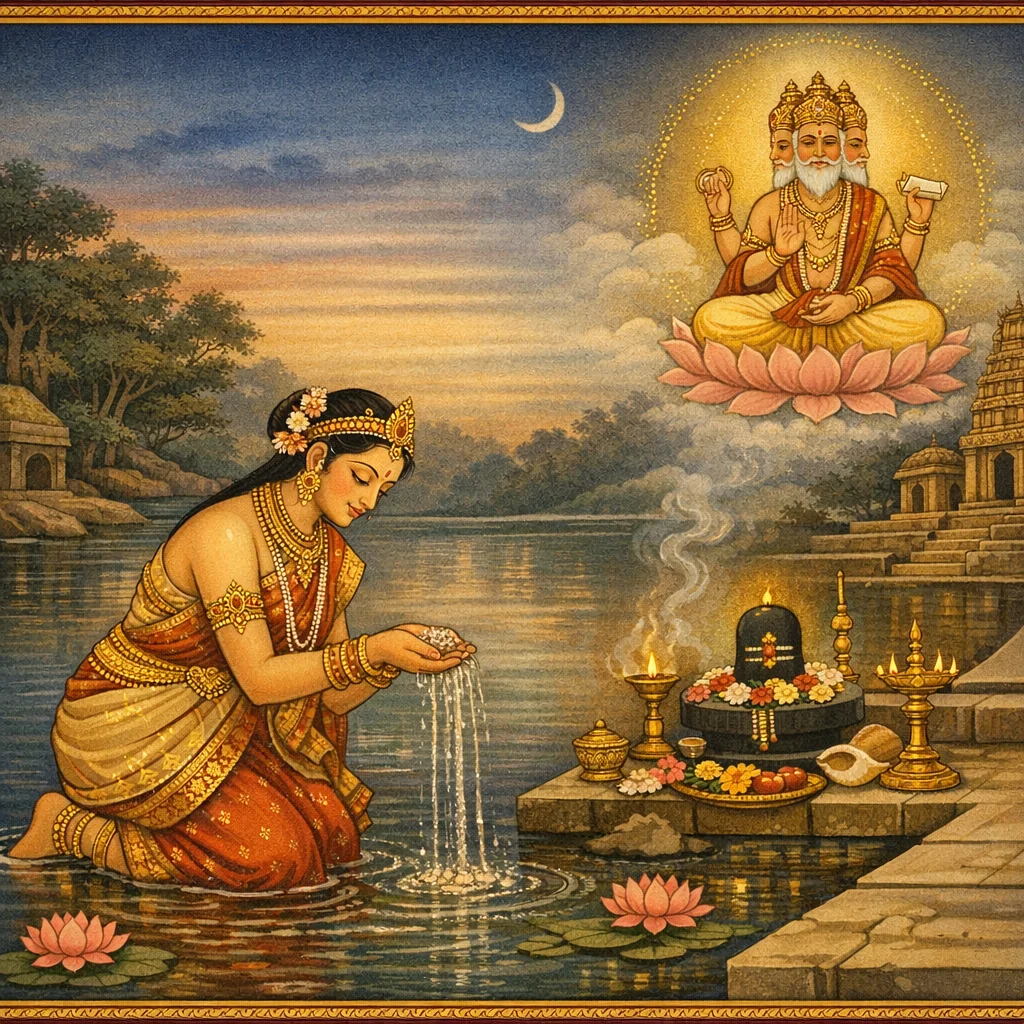
This chapter unfolds as a question-and-answer discourse: the ṛṣis ask Sūta about the outcome of Padmā’s curse upon Mādhavī and, above all, how Kamalā/Lakṣmī—cursed by an enraged brāhmaṇa—assumed a gajavaktra (elephant-faced) form and later regained an auspicious visage. Sūta recounts the curse’s immediate transformation and Hari’s (Viṣṇu’s) injunction that she remain so until the end of the Dvāpara age, when restoration would come by divine power. Lakṣmī then undertakes severe tapas: observing thrice-daily bathing (trikāla-snāna) at the kṣetra and worshiping Brahmā tirelessly day and night. At the year’s end Brahmā, pleased, offers a boon; she asks only for the return of her former auspicious form. Brahmā grants the restoration and also bestows the title “Mahālakṣmī” in connection with this sacred site, establishing her cultic identity there. A phala statement follows: those who worship her in the gajavaktra form gain worldly sovereignty, becoming kingly like a lord of elephants; and those who worship on the second day, invoking “Mahālakṣmī” with the Śrīsūkta, are promised freedom from poverty for seven births. The narrative closes with the Devī returning to Keśava’s abode, affirming Vaiṣṇava alignment while preserving Brahmā’s role as boon-giver and sanctifier of the tīrtha.
Shlokas
Verse 1
ऋषय ऊचुः । माधव्याः पद्मया दत्तो यः शापस्तस्य यत्फलम् । परिणामोद्भवं सर्वं श्रुतमस्माभिरद्य तत्
The sages said: Now we have heard in full the entire outcome and unfolding consequence of the curse that Padmā pronounced upon Mādhavī.
Verse 2
तेन यत्कमला शप्ता ब्राह्मणेन महात्मना । सा कथं गज वक्त्राऽथ पुनर्जाता शुभानना
Since Kamalā was cursed by that great-souled Brāhmaṇa, how did she then become elephant-faced, and afterward take birth again with an auspicious countenance?
Verse 3
सूत उवाच । शापेन तस्य विप्रस्य तत्क्षणादेव सा द्विजाः । गजवक्त्रा समुत्पन्ना महाविस्मयकारिणी
Sūta said: By the curse of that Brāhmaṇa, O twice-born, she instantly became elephant-faced—an occurrence that caused great astonishment.
Verse 4
सा प्रोक्ता हरिणा तिष्ठ किञ्चित्कालांतरे शुभे । अनेनैव तु रूपेण यावत्स्याद्द्वापरक्षयः
Then Hari told her: ‘Remain so for a certain auspicious interval, in this very form, until the end of the Dvāpara age arrives.’
Verse 5
ततोऽहं मेदिनीपृष्ठे ह्यवतीर्य समुद्रजे । तपः शक्त्या करिष्यामि भूयस्त्वां तु शुभाननाम्
‘Thereafter, O sea-born one, I shall descend upon the surface of the earth and, by the power of austerity, make you once again of auspicious face.’
Verse 6
अवज्ञायाथ सा तस्य तद्वाक्यं शार्ङ्गधन्विनः । शुभास्यत्वकृते तेपे तपस्तीव्रं सुहर्षिता
But disregarding that word of the wielder of Śārṅga (Viṣṇu), she—rejoicing—undertook fierce austerities to regain an auspicious countenance.
Verse 7
एतत्क्षेत्रं समासाद्य त्रिकालं स्नानमाचरत् । ब्रह्माणं तोषयामास दिवारात्रिमतंद्रिता
Having reached this sacred kṣetra, she bathed at the three times of day; and, unwearied by day and night, she pleased Brahmā through steadfast devotional observance.
Verse 8
तामुवाच ततो ब्रह्मा वर्षांते तुष्टिमागतः । वरं प्रार्थय तुष्टोऽहं तव केशववल्लभे
At the year’s end, Brahmā, now wholly pleased, spoke to her: “Ask for a boon. I am satisfied with you, O beloved of Keśava (Viṣṇu).”
Verse 9
लक्ष्मीरुवाच । गजास्याहं कृता देव शापं दत्त्वा सुदारुणम् । ब्राह्मणेन सुक्रुद्धेन कस्मिश्चित्कारणांतरे
Lakṣmī said: “O Lord, on some occasion a brahmin, inflamed with anger, laid upon me a most dreadful curse, and thus I was made elephant-faced.”
Verse 10
तस्मात्तद्रूपिणीं भूयो मां कुरुष्व पितामह । यदि मे तुष्टिमापन्नो नान्यत्किंचिद्वृणोम्यहम्
“Therefore, O Grandfather (Brahmā), make me once more into that former form. If you are pleased with me, I ask for nothing else.”
Verse 11
ब्रह्मोवाच । भविष्यति शुभं वक्त्रं मत्प्रसादादसंशयम् । तव भद्रे विशेषेण तस्मात्त्वं स्वगृहं व्रज
Brahmā said: “Without doubt, by my grace your face shall become auspicious again—especially so, O blessed one. Therefore return to your own abode.”
Verse 12
महत्त्वं ते मया दत्तमद्यप्रभृति शोभने । महालक्ष्मीति ते नाम तस्मादत्र भविष्यति
“O radiant one, from this day onward I have granted you greatness. Therefore, here your name shall be ‘Mahālakṣmī.’”
Verse 13
गजवक्त्रां नरो यस्त्वां पूजयिष्यति भक्तितः । स गजाधिपतिर्भूपो भविष्यति च भूतले
“Any man who worships you with devotion in your elephant-faced form shall become on earth a king—lord of elephants.”
Verse 14
द्वितीयादिवसे यस्त्वां महालक्ष्मीरिति ब्रुवन् । श्रीसूक्तेन सुभक्त्याऽथ देवि संपूजयिष्यति
“O Goddess, whoever on the second day (and onward) worships you with deep devotion, invoking you as ‘Mahālakṣmī’ and honoring you with the Śrīsūkta, shall attain the promised fruits.”
Verse 15
सप्तजन्मांतराण्येव न भविष्यति सोऽधनः । एवमुक्त्वा चतुर्वक्त्रो विरराम ततः परम्
“For seven successive births he shall not become poor.” Having spoken thus, the four-faced Brahmā then fell silent.
Verse 16
साऽपि हृष्टा गता देवी यत्र तिष्ठति केशवः
That Goddess too, rejoicing, went to the place where Keśava abides.