Adhyaya 72
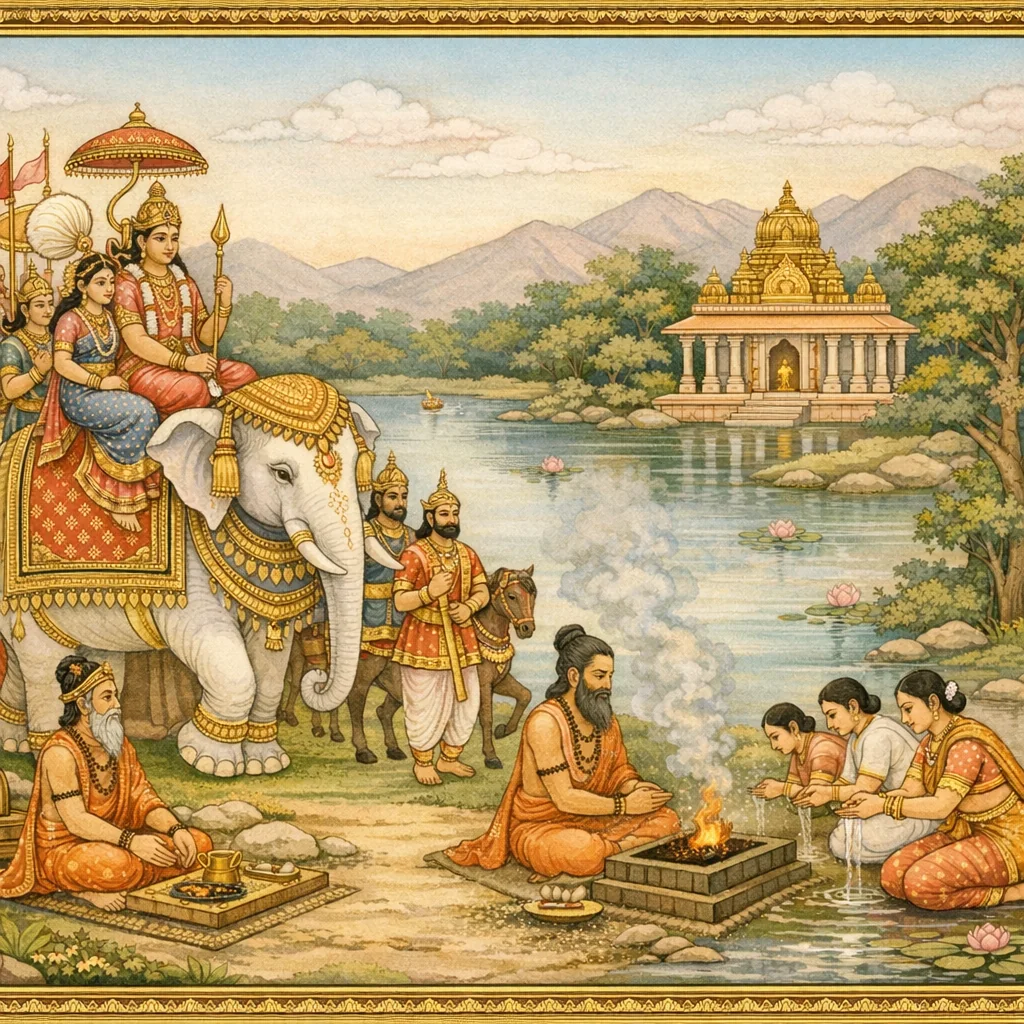
Chapter 72 unfolds as a dialogue in which Sūta answers the ṛṣis’ question about when and how Dhṛtarāṣṭra installed a liṅga at the sacred site. It first sets a dynastic and marital frame: Bānumatī, praised for auspicious marks and virtues, is married into the Dhārtarāṣṭra line, with Yādava involvement and a reference to Viṣṇu. The narrative then turns to a joint pilgrimage: the Kauravas (with Bhīṣma, Droṇa, and others) and the five Pāṇḍavas with their retinues travel toward Dvāravatī, enter the prosperous Ānarta region, and reach a renowned, sin-removing kṣetra associated with Hāṭakeśvara-deva. Bhīṣma proclaims the place’s unique greatness and urges a five-day stay, citing his own release from a grave sin and the chance to behold many tīrthas and āyatanas. Dhṛtarāṣṭra, with many sons and allied leaders (including Karṇa, Śakuni, Kṛpa, and others), restrains the army to avoid disturbance and enters the ascetic-filled zone resounding with Vedic recitation and ritual smoke. The chapter details proper pilgrimage observances—regulated bathing, gifts to the needy and ascetics, śrāddha and tarpaṇa with sesame-mixed water, homa, japa, svādhyāya, and elaborate shrine worship with offerings, banners, cleansing, garlands, and donations (animals, vehicles, cattle, textiles, and gold). The episode ends with the company returning to camp in wonder at the tīrthas, shrines, and disciplined ascetics, while the opening verse frames the installed liṅga as a means of liberation from sins for all who behold it, including Duryodhana.
Shlokas
Verse 1
। सूत उवाच । तत्रैव स्थापितं लिंगं धृतराष्ट्रेण भूभुजा । दुर्योधनेन चालोक्य सर्वपापैः प्रमुच्यते
Sūta said: Right there King Dhṛtarāṣṭra installed a liṅga. By beholding it in reverence—as Duryodhana did—one is freed from all sins.
Verse 2
ऋषय ऊचुः । कस्मिन्काले नरेन्द्रेण धृतराष्ट्रेण भूभुजा । तत्र संस्थापितं लिगं वद त्वं रौमहर्षणे
The sages said: “At what time did King Dhṛtarāṣṭra, ruler of men, install the liṅga there? Tell us, O Romaharṣaṇa.”
Verse 3
सूत उवाच । आसीद्भानुमतीनाम बलभद्रसुता पुरा । सर्वलक्षणसंपन्ना रूपौ दार्यगुणान्विता
Sūta said: Formerly there was a maiden named Bhānumatī, the daughter of Balabhadra—endowed with every auspicious mark, beautiful in form, and possessed of noble virtues.
Verse 4
तां ददावथ पत्न्यर्थे धार्तराष्ट्राय धीमते । दुर्योधनाय संमन्त्र्य विष्णुना सह यादवः
Then the Yādava, after deliberating together with Viṣṇu, gave her in marriage to the wise Dhārtarāṣṭra—Duryodhana.
Verse 5
अथ नागपुरात्सर्वे भीष्म द्रोणादयश्च ये । कौरवाः प्रस्थितास्तूर्णं पुरीं द्वारवतीं प्रति
Then all the Kauravas—Bhīṣma, Droṇa, and the rest—swiftly set out from Nāgapura toward the city of Dvāravatī.
Verse 6
तथा पांडुसुताः पंच परिवारसमन्विताः । सौभ्रात्रं मन्यमानास्ते दुर्योधनसमन्वि ताः । जग्मुर्द्वारवतीं हृष्टाः सैन्येन महतान्विताः
Likewise the five sons of Pāṇḍu, accompanied by their retinue, cherishing brotherly amity and going together with Duryodhana, joyfully set forth to Dvāravatī, attended by a mighty host.
Verse 7
अथ क्रमेण गच्छंतस्ते सर्वे कुरुपाण्डवाः । आनर्तविषयं प्राप्ता धनधान्यसमाकुलम्
Then, journeying onward stage by stage, all those Kurus and Pāṇḍavas reached the land of Ānarta, teeming with wealth and grain.
Verse 8
सर्वपापहरं पुण्यं यत्र तत्क्षेत्रमुत्तमम् । हाटकेश्वरदेवस्य विख्यातं भुवनत्रये
There lies the supreme sacred field—holy and the remover of all sins—renowned throughout the three worlds as the domain of Lord Hāṭakeśvara.
Verse 9
अथ प्राह विशुद्धात्मा वृद्धः कुरुपितामहः । धृतराष्ट्रं महीपालं सपुत्रं प्रहसन्निव
Then the pure-souled, aged grandsire of the Kurus spoke, addressing King Dhṛtarāṣṭra together with his son, as though with a gentle smile.
Verse 10
भीष्म उवाच । एतद्वत्स पुरा दृष्टं मया क्षेत्रमनुत्तमम् । हाटकेश्वरदेवस्य सर्वपातकनाशनम्
Bhīṣma said: My child, I have seen this unsurpassed sacred field before—belonging to Lord Hāṭakeśvara, the destroyer of every sin.
Verse 11
अत्राहं चैव नि र्मुक्तः स्त्रीहत्योद्भवपातकात् । तस्मादत्रैव राजेंद्र तिष्ठामः पंचवासरान्
Here indeed I was freed from the sin that arose from the killing of a woman. Therefore, O best of kings, let us stay right here for five days.
Verse 12
येन सर्वाणि पश्यामस्तीर्थान्यायतनानि च । यान्यत्र संति पुण्यानि मुनीनां भावितात्मनाम्
So that we may behold all the tīrthas and sacred shrines here—those holy places that belong to sages of disciplined and purified souls.
Verse 13
अथ तद्वचनाद्राजा धृतराष्ट्रोंऽबिकासुतः । शतसंख्यैः सुतैः सार्धं कौतूहलसमन्वितः
Then, heeding those words, King Dhṛtarāṣṭra—the son of Ambikā—set out, filled with curiosity, together with his hundred sons.
Verse 14
जगाम सत्वरं तत्र यत्र तत्क्षेत्रमुत्तमम् । तपस्विगणसंकीर्णं युक्तं चैवाश्रमैः शुभैः
He went swiftly to that place where the sacred field was supreme—crowded with companies of ascetics and adorned with auspicious hermitages.
Verse 15
ब्रह्मघोषेण महता नादितं सर्वतोदिशम् । वह्निपूजोत्थधूम्रेण कलुषीकृतपाद पम् । क्रीडामृगैश्च संकीर्णं धावद्भिर्बहुभिस्तथा
In every direction it resounded with the mighty chanting of the Veda. The ground was darkened by the smoke rising from fire-worship, and it was also thronged with playful animals running about in great numbers.
Verse 16
ततो निवार्य सैन्यं स्वमुपद्रवभयान्नृपः । पञ्चभिः पांडवैः सार्धं शतसंख्यैस्तथा सुतैः
Then the king, fearing disturbance, restrained his own army and moved about accompanied by the five Pāṇḍavas and also by his hundred sons.
Verse 17
भीष्मेण सोमदत्तेन बाह्लीकेन समन्वितः । द्रोणाचार्येण वीरेण तत्पुत्रेण कृपेण च
He was accompanied by Bhīṣma, Somadatta, and Bāhlīka, as well as by the heroic teacher Droṇa, his son, and also Kṛpa.
Verse 18
सौबलेन च कर्णेन तथान्यैरपि पार्थिवैः । परिवारपरित्यक्तैस्तस्मिन्क्षेत्रे चचार सः
With Śaubala (Śakuni) and Karṇa, and with other kings as well, he wandered in that sacred region—having set aside their royal retinues.
Verse 19
तेऽपि सर्वे महात्मानः क्षत्रियास्तत्र संस्थिताः । चक्रुर्धर्मक्रियाः सर्वाः श्रद्धापूतेन चेतसा
All those noble Kṣatriyas, staying there, performed every religious observance with minds purified by faith.
Verse 20
स्नानं चक्रुर्विधानेन तीर्थेषु द्विजसत्तमाः । भ्रांत्वाभ्रांत्वा सुपुण्येषु श्रुत्वाश्रुत्वा द्विजन्मनाम्
The best of the twice-born bathed in the tīrthas according to proper rule, roaming again and again among the most meritorious spots, and repeatedly listening to the teachings of the Brahmins.
Verse 21
दानानि च विशिष्टानि ददुरिष्टानि चापरे । दीनेभ्यः कृपणेभ्यश्च तपस्विभ्यो विशेषतः
They bestowed gifts of rare excellence, and others offered offerings dear to the recipients—especially to the poor, the destitute, and above all to the ascetics.
Verse 22
चक्रुः श्राद्धक्रियाश्चान्ये पितॄनुद्दिश्य भक्तितः । पितॄणां तर्पणं चान्ये तिलमिश्र जलेन च
Some, in devotion, performed the Śrāddha rites, dedicating them to the ancestors; others too offered tarpaṇa to the Pitṛs with water mingled with sesame.
Verse 23
अन्ये होमक्रिया भूपा जपमन्ये निरर्गलम् । स्वाध्यायमपरे शान्ताः सम्यक्छ्रद्धासमन्विताः
Some kings performed the homa rites, the fire-offering; others engaged in unceasing japa. Still others, serene and self-controlled, devoted themselves to svādhyāya—sacred recitation and study—fully endowed with right faith.
Verse 24
देवतायतनान्यन्ये माहात्म्यसहितानि च । श्रुत्वा पूर्वनृपाणां च पूजयंति विशेषतः
Others, having heard the sacred greatness (māhātmya) connected with the temples of the deities and the accounts of former kings, worshipped those shrines with special devotion.
Verse 25
बलिदानैः सुवस्त्रैश्च गन्धपुष्पोपलेपनैः । मार्जनैध्वजदानैश्च तथा प्रेक्षणकैः शुभैः
With bali-offerings and gifts, with fine garments, with fragrant unguents and flowers; with rites of cleansing, with the donation of banners, and with auspicious ceremonies of public viewing and celebration—
Verse 26
मंडनैः पुष्पमालाभिः समंताद्द्विजसत्तमाः । हस्त्यश्वरथदानैश्च गोर्भिर्वस्त्रैश्च कांचनैः । कृतार्था ब्राह्मणाः सर्वे कृतास्तै स्तत्र भक्तितः
O best of the twice-born, on every side they honored them with ornaments and garlands of flowers. With gifts of elephants, horses, and chariots, and with cows, garments, and gold, all the brāhmaṇas were fully satisfied—thus were they gratified there through devotion.
Verse 27
एवं स्नात्वा तथाऽभ्यर्च्य देवान्विप्रान्नृपोत्तमाः । धृतराष्ट्रसमायुक्ता जग्मुः स्वशिबिरं ततः
Having thus bathed and duly worshipped the gods and honored the brāhmaṇas, the excellent kings—together with Dhṛtarāṣṭra—then departed for their own camp.
Verse 28
शंसन्तो विस्मया विष्टास्तीर्थान्यायतनानि च । तस्मिन्क्षेत्रे द्विजांश्चैव तापसान्संशितव्रतान्
Filled with wonder, they spoke in praise of the sacred fords and the holy shrines; and in that very kṣetra they also lauded the brāhmaṇas and the ascetics of well-restrained vows.