Adhyaya 69
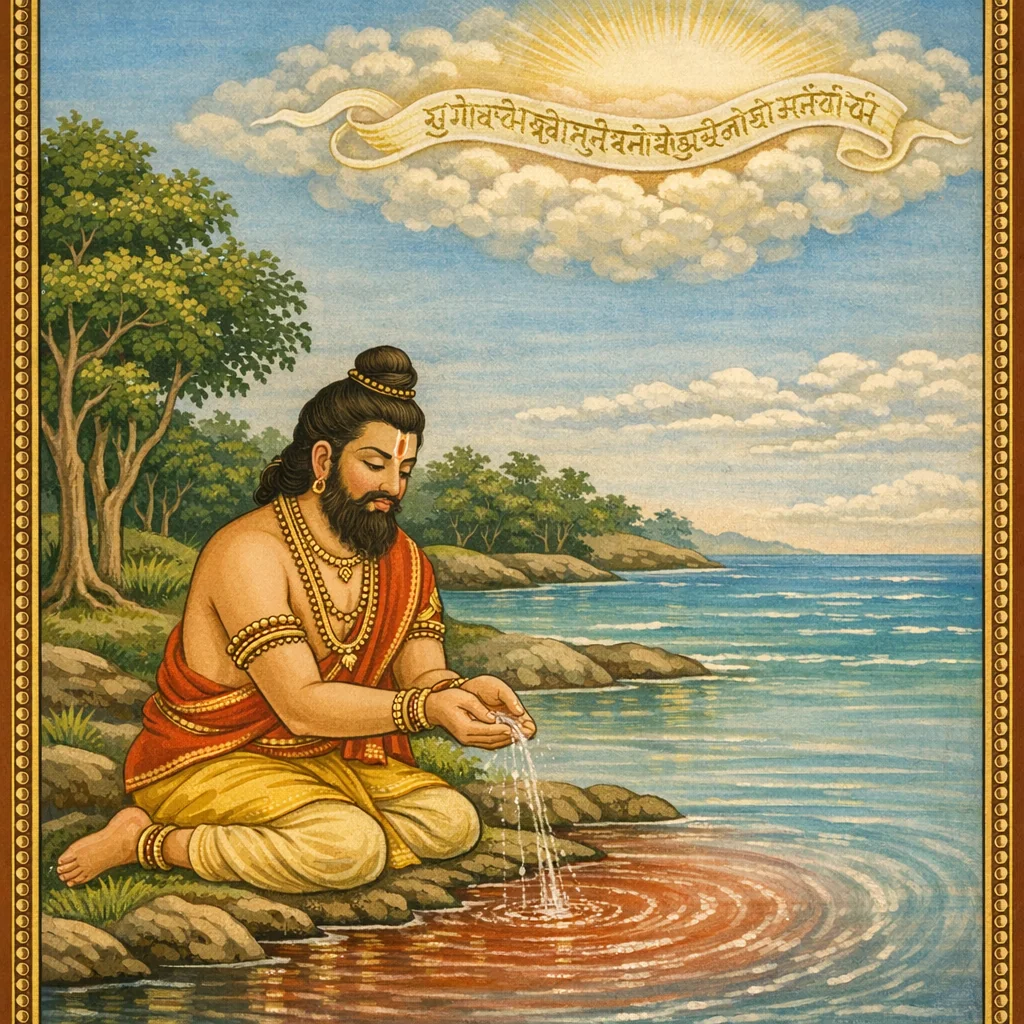
Sūta recounts a socio-ritual crisis when a kṣatriya-less condition arises. To rebuild warrior lineages, kṣatriya women bear sons by brāhmaṇas as kṣetraja progeny; these new rulers grow powerful and sideline the brāhmaṇas. Distressed, the brāhmaṇas approach Bhārgava Rāma (Paraśurāma), seeking the return of lands once granted in an aśvamedha setting and relief from oppressive kṣatriyas. Rāma, inflamed with wrath, marches with allied groups such as the Śabaras, Pulindas, and Medas and destroys the kṣatriyas, making the earth bereft of them “three times sevenfold.” He gathers copious blood to fill a pit and performs pitṛ-tarpaṇa, satisfying the Pitṛs; he then restores land to the brāhmaṇas and departs toward the ocean. At the twenty-first tarpaṇa an incorporeal ancestral voice commands him to stop the censured act, affirms their satisfaction, and offers a boon. Rāma asks that the tīrtha be famed by his name, freed from the “blood-doṣa,” and frequented by ascetics. The Pitṛs declare the tarpaṇa-pit will be renowned across the three worlds as Rāmahrada; those who perform pitṛ-tarpaṇa there gain aśvamedha-like merit and a higher destiny. The chapter adds calendrical instruction: on Kṛṣṇapakṣa Caturdaśī in Bhādrapada, devoted śrāddha for those slain by weapons uplifts even beings in preta-state or hell. It closes with a broad phalaśruti: śrāddha here for untimely deaths (snake, fire, poison, bondage) is liberative, and recitation or hearing yields fruits likened to Gayā-śrāddha, Pitṛmedha, and Sautrāmaṇī.
Shlokas
Verse 2
। सूत उवाच । ततो निःक्षत्रिये लोके क्षत्त्रिण्यो वंशकारणात् । क्षेत्रजान्ब्राह्मणेभ्यश्च सुषुवुस्तनया न्वरान् । ते वृद्धिं च समासाद्य क्षेत्रजाः क्षत्रियोपमाः । जगृहुर्मेदिनीं वीर्यात्संनिरस्य द्विजोत्तमान्
Sūta said: Then, when the world was without kṣatriyas, the kṣatriya women—seeking to preserve their line—bore excellent sons through brāhmaṇas as ‘kṣetraja’ offspring. When these sons grew up, kṣetraja yet resembling kṣatriyas, they seized the earth by their prowess, driving away the foremost brāhmaṇas.
Verse 3
ततस्ते ब्राह्मणाः सर्वे परिभूतिपदं गताः । प्रोचुर्भार्गवमभ्येत्य दुःखेन महतान्विताः
Then all those brāhmaṇas, having fallen into a state of humiliation, approached Bhārgava and spoke—overwhelmed with great sorrow.
Verse 5
रामराम महाबाहो या त्वया वसुधा च नः । वाजिमेधे मखे दत्ता क्षत्रियैः सा हता बलात् । तस्मान्नो देहि तां भूयो हत्वा तान्क्षत्रियाधमान् । कुरु श्रेयोऽभिवृद्धिं तां यद्यस्ति तव पौरुषम्
Rāma, Rāma, mighty-armed one! The earth that you granted to us in the Aśvamedha sacrifice has been forcibly taken away by kṣatriyas. Therefore, give it back to us again—after slaying those base kṣatriyas. Secure our welfare and its restoration, if your valor truly stands.
Verse 6
ततो रामः क्रुधाविष्टो भूयस्तैः शवरैः सह । पुलिन्दैर्मेदकैश्चैव क्षत्रियांताय निर्ययौ
Then Rāma, seized by wrath, set out again—together with those Śabaras, and also with Pulindas and Medakas—for the destruction of the kṣatriyas.
Verse 7
तत्रैव क्षत्रियान्हत्वा रक्तमादाय तद्बहु । तां गर्तां पूरयामास चकार पितृतर्पणम्
There itself, after slaying the kṣatriyas and taking much of their blood, he filled that pit and performed offerings of satisfaction to the ancestors (pitṛ-tarpaṇa).
Verse 8
प्रददौ ब्राह्मणेभ्यश्च वाजिमेधे धरां पुनः । तैश्च निर्वासितस्तत्र जगामोदधिसंनिधौ
And he again granted the land to the brāhmaṇas in the Aśvamedha context; but by them he was then banished from there, and he went to the vicinity of the ocean.
Verse 9
एवं तेन कृता पृथ्वी सर्वक्षत्त्रविवर्जिता । त्रिःसप्तवारं विप्रेंद्रा द्विजेभ्यश्च निवेदिता
Thus, by his deed, the earth was made bereft of all kṣatriyas; and, O best of brāhmaṇas, it was bestowed upon the twice-born again and again—twenty-one times.
Verse 10
तर्पिताः पितरश्चैव रुधिरेण महात्मना । प्रतिज्ञा पालिता तस्माद्विकोपश्च बभूव सः
And the Pitṛs, indeed, were satisfied by that great-souled one through blood; thus his vow was upheld, and thereafter his fierce wrath subsided.
Verse 11
एकविंशतिमे प्राप्ते ततश्च पितृतर्पणे । अशरीराऽभवद्वाणी खस्था पितृसमुद्भवा
When the twenty-first time arrived and he was engaged in offering tarpaṇa to the Pitṛs, a disembodied voice arose from the sky—born of the ancestral spirits.
Verse 12
रामराम महाभाग त्यजैतत्कर्म गर्हितम् । वयं ते तुष्टिमापन्नाः स्ववाक्यपरिपाल नात्
“Rāma, Rāma, O greatly fortunate one—abandon this blameworthy act. We are satisfied with you, for you have upheld your own word.”
Verse 13
यत्त्वया विहितं कर्म नैतदन्यः करिष्यति । न कृतं केनचित्पूर्वं पितृवैरसमुद्भवम्
“The deed you have undertaken—no one else would do it. Indeed, in former times no one has performed such an act, arising from hostility toward the Pitṛs.”
Verse 14
तस्मात्तुष्टा वयं वत्स दास्यामश्चित्त वांछितम् । प्रार्थयस्व द्रुतं तस्माद्दुर्लभं त्रिदशैरपि
Therefore, dear child, we are pleased and shall grant what your heart desires. Ask quickly, for it is difficult to obtain even for the gods.
Verse 15
राम उवाच । पितरो यदि तुष्टा मे यच्छंति यदि वांछितम् । तस्मात्तीर्थमिदं पुण्यं मन्नाम्ना लोकविश्रुतम् । रक्तदोषविनिर्मुक्तं सेवितं वरतापसैः
Rāma said: “If my Pitṛs, my ancestors, are pleased and will grant what I desire, then let this sacred tīrtha become renowned in the world by my name—free from the fault of blood-guilt, and frequented by excellent ascetics, steadfast in their vows.”
Verse 16
पितर ऊचुः । पितृतर्पणजा गर्ता त्वया येयं विनिर्मिता । रामह्रद इति ख्यातिं प्रयास्यति जगत्त्रये
The Pitṛs said: “This hollow, formed from the act of Pitṛ-tarpaṇa that you have made, shall attain renown in the three worlds as ‘Rāmahrada’.”
Verse 17
यत्र भक्तियुता लोकास्तर्पयिष्यंति वै पितॄन् । तेऽश्वमेधफलं प्राप्य प्रयास्यंति परां गतिम्
In that place, people devoted in faith will indeed satisfy the Pitṛs; obtaining the fruit of an Aśvamedha sacrifice, they will go to the supreme state.
Verse 18
कृष्णपक्षे चतुर्दश्यां मासि भाद्रपदे नरः । करिष्यति च यः श्राद्धं भक्त्या शस्त्रहतस्य च
On the fourteenth lunar day of the dark fortnight in the month of Bhādrapada, whoever performs śrāddha with devotion—even for one slain by weapons—
Verse 19
अपि प्रेतत्वमापन्नं नरके वा समाश्रितम् । उद्धरिष्यति स प्रेतमपि पापसमन्वितम्
Even if the departed has fallen into the state of a preta, or has taken refuge in hell, he will uplift that spirit—even if it is burdened with sin.
Verse 20
सूत उवाच । एवमुक्त्वा तु रामं ते विरेमुस्तदनंतरम् । रामोऽपि च तपस्तेपे तत्रैव क्रोधवर्जितः
Sūta said: “Having spoken thus to Rāma, they ceased and departed thereafter. Rāma too performed austerities right there, free from anger.”
Verse 21
तस्मात्सर्वप्रयत्नेन तत्र शस्त्रहतस्य च । तस्मिन्दिने प्रकर्तव्यं श्राद्धं श्रद्धासमन्वितैः
Therefore, with every possible effort, the śrāddha should be performed there—also for one slain by weapons—on that very day, by people endowed with faith.
Verse 22
उपसर्ग मृतानां च सर्पाग्निविषबन्धनैः । तत्र मुक्तिप्रदं श्राद्धं दिने तस्मिन्नुदाहृतम्
And for those who died through calamities—by snakes, fire, poison, or bondage—śrāddha performed there on that day is declared to bestow liberation.
Verse 23
यः पितॄंस्तर्पयेत्तत्र प्रेतपक्षे जलैरपि । स तेषामनृणो भूत्वा पितृलोके महीयते
Whoever, during the fortnight of the departed (Pitṛ/Preta-pakṣa), satisfies the ancestors there even with mere water-offerings—becomes free of debt to them and is honored in the world of the Pitṛs.
Verse 24
एतद्वः सर्वमाख्यातं रामह्रदसमुद्भवम् । माहात्म्यं ब्राह्मणश्रेष्ठाः सर्वपातकनाशनम्
Thus, O best of brāhmaṇas, I have fully declared the māhātmya connected with Rāmahrada, the destroyer of all sins.
Verse 25
श्राद्धकाले नरो भक्त्या यश्चैतत्पठति स्वयम् । स गयाश्राद्धजं कृत्स्नं फलमाप्नोत्यसंशयम्
At the time of śrāddha, a man who devoutly recites this himself unquestionably gains the entire merit that arises from performing śrāddha at Gayā.
Verse 26
पर्वकाले ऽथवा प्राप्ते पठेद्ब्राह्मणसंनिधौ । पितृमेधस्य यज्ञस्य स फलं लभते ऽखिलम्
Or, when a festival or auspicious occasion arrives, if one recites it in the presence of brāhmaṇas, one gains the complete fruit of the Pitṛmedha sacrifice.
Verse 27
शृणुयाद्वापि यो भक्त्या कीर्त्यमानमिदं नरः । सौत्रामणौ कृते कृत्स्नं फलमाप्नोत्यसंशयम्
And even a man who, with devotion, merely listens to this being recited unquestionably attains the full merit as though the Sautrāmaṇī rite had been performed.