Adhyaya 60
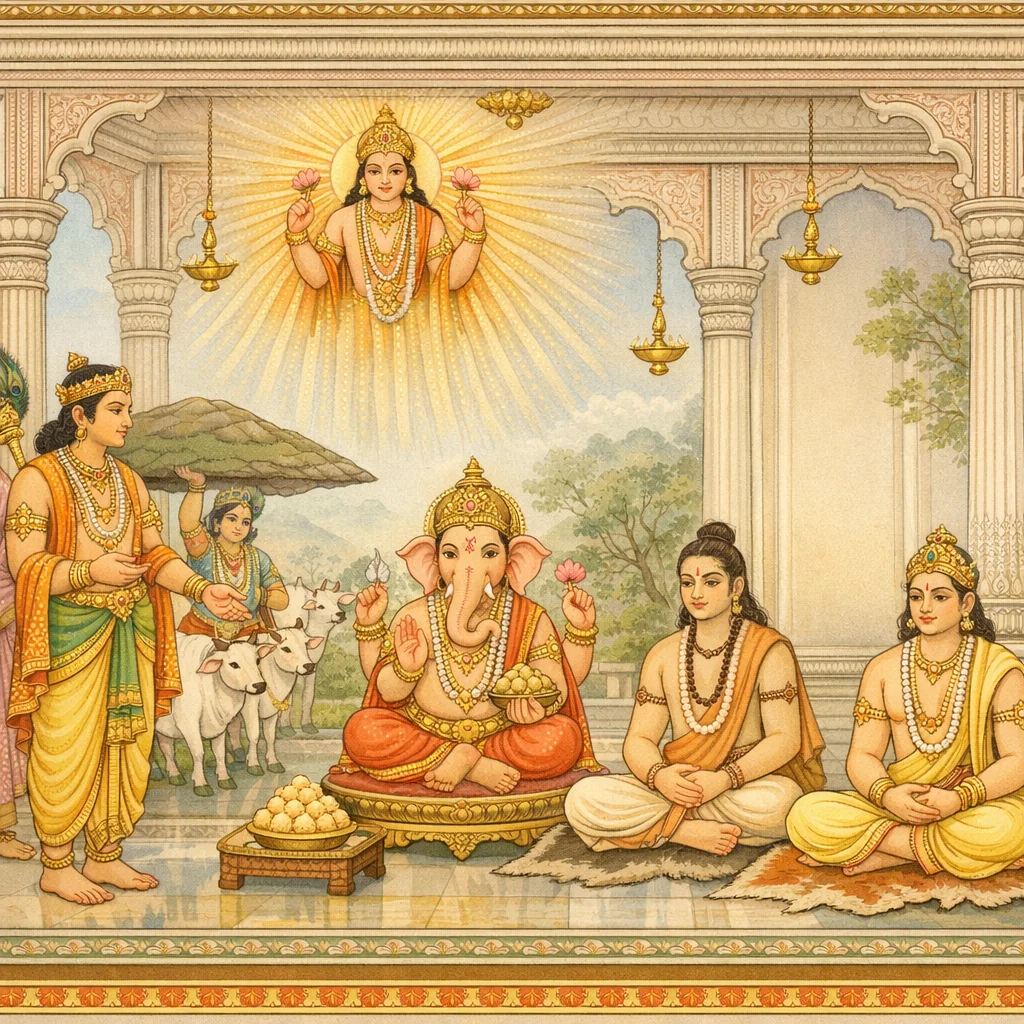
Chapter 60 proceeds in a question-and-answer frame: the sages ask about the origin and founding of “Mahitthā/Mahittha.” Sūta recounts a tradition in which the śoṣaṇī vidyā, a withering/drying power linked to Agastya and the Atharvaṇa mantra authority, is invoked; within this setting Mahitthā arises as a boon-bestowing deity connected with a kṣetra called “Camatkārapura.” The chapter then offers a practical tīrtha-map, listing installed deities and their fruits: Sūrya as Narāditya (relief from disease and protection), Janārdana as Govardhanadhara (prosperity and the welfare of cattle), Narasiṃha, Vināyaka (remover of obstacles), and Nara–Nārāyaṇa. Ritual timing is stressed—darśana and worship on specific tithis, especially Dvādaśī and Caturthī, and during the bright fortnight of Kārtika, are declared especially efficacious. A key exemplum is Arjuna’s tīrtha-journey to a field associated with Hāṭakeśvara, where he installs Sūrya and other deities in a pleasing temple, donates wealth to local brāhmaṇas, and entrusts them with ongoing remembrance and worship. The chapter closes by praising the merit of hearing this māhātmya as sin-diminishing, and by stating that prescribed offerings—such as modaka on Caturthī—grant desired results and freedom from impediments.
Shlokas
Verse 1
। ऋषय ऊचुः । माहित्थेयं त्वयाख्याता या पुरा सूतनन्दन । केन संस्थापिता तत्र वद सर्वमशेषतः
The sages said: “O son of Sūta, you have earlier described this Māhitthī. By whom was it established there? Tell us everything in full, without remainder.”
Verse 2
सूत उवाच । शोषणीनाम या विद्या पुरागस्त्येन साधिता । आथर्वणेन मन्त्रेण स्वयं च परमेश्वरी
Sūta said: “The vidyā called ‘Śoṣaṇī’, formerly mastered by Agastya—together with an Atharvanic mantra—and the Supreme Goddess herself (were involved).”
Verse 3
ततः संशोषितस्तेन स समुद्रो महात्मना । मित्रावरुणपुत्रेण सा प्रोक्ता पुरतः स्थिता
Then, by that great-souled son of Mitra and Varuṇa, the ocean itself was dried up; and that (Śoṣaṇī-vidyā), having been invoked, stood manifest before him.
Verse 4
माहित्थं साधितं यस्मात्त्वया मे सकलं शुभम् । माहित्थानाम तस्मात्त्वं देवता संभविष्यसि
“Since by you this Māhittha has been accomplished—bringing me wholly auspicious benefit—therefore you shall become a deity known by the name ‘Māhittha’.”
Verse 5
चमत्कारपुरक्षेत्रे पूजां प्राप्स्यस्यनुत्तमाम् । यस्त्वामाथर्वणैर्मन्त्रैस्तत्रस्थां भक्तिसंयुतः
In the sacred kṣetra of Camatkārapura you shall receive worship unsurpassed; and whoever, abiding there with devotion, worships you with Atharvanic mantras…
Verse 6
पूजयिष्यति वृद्धिं च सर्वकालमवाप्स्यति । तस्मात्तत्र द्रुतं गच्छ मया सार्द्धं पुरोत्तमे
…will worship you and will attain prosperity at all times. Therefore, go quickly there with me, O most excellent city.
Verse 7
द्विजानां रक्षणार्थाय नित्यं संनिहिता भव । एवं सा तत्र संभूता माहित्था वरदेवता
For the protection of the twice-born, remain ever present here. Thus, in that place, the boon-giving goddess Mahiṭṭhā manifested and took her abiding presence.
Verse 9
ययाऽयं चलितः शैलः स्वशक्त्या निश्चलीकृतः । स्कन्देनेह द्विजश्रेष्ठाः शक्त्या विद्धस्तदग्रतः । नरादित्यस्ततश्चान्यो यो नरेण प्रतिष्ठितः । षष्ठ्यां तं सूर्यवारेण दृष्ट्वा पापात्प्रमुच्यते
By her power this mountain—once shaken—was made firm and unmoving. Here, O best of the twice-born, Skanda struck it with his spear before it. Thereafter there is a Sun-image called Narāditya, installed by a man; by beholding it on the sixth lunar day when it falls on a Sunday, one is released from sin.
Verse 10
न शत्रूणां पराभूतिं प्रयास्यति यथार्जुनः । रोगी विमुच्यते रोगाद्दरिद्रो धनमाप्नुयात्
He will not fall into defeat at the hands of enemies, as Arjuna did not. The sick person is freed from disease, and the poor person may attain wealth.
Verse 11
तथा गोवर्धनधरं तत्र देवं जनार्दनम् । यः पश्येत्कार्तिके शुक्ले संप्राप्ते प्रथमे दिने । तस्य गावः प्रभूताः स्युर्नीरोगा द्विसत्तमाः
Likewise, whoever beholds there Janārdana, the Lord who lifted Govardhana, on the first day of the bright fortnight of Kārttika—his cows become abundant and free from disease, O best of the twice-born.
Verse 12
नरसिंहवपुः साक्षात्तथा देवो हरिः स्वयम् । तथा विनायकस्तत्र सर्वकामप्रदायकः । सर्वविघ्नहरश्चैव स्थापितश्चार्जुनेन हि
There too is Hari himself, manifest in the very form of Narasiṁha. And there is Vināyaka, the giver of all desired aims, remover of every obstacle—indeed installed by Arjuna.
Verse 14
यस्तमाथर्वणैर्मंत्रैः पूजयेद्द्वादशीदिने । कार्तिकस्य सिते पक्षे स याति परमां गतिम्
Whoever worships him with Atharvan mantras on the Dvādaśī day in the bright fortnight of Kārttika attains the supreme destination.
Verse 15
तथा तत्र द्विजश्रेष्ठा नरनारायणावुभौ । देवौ परमतेजस्वी यस्तौ पश्यति भक्तितः
Also there, O best of the twice-born, are the two radiant gods Nara and Nārāyaṇa. Whoever beholds them with devotion…
Verse 16
पूजयेच्च द्विजश्रेष्ठा द्वादश्या दिवसे स्वयम् । स याति परमं स्थानं जरामरणवर्जितम्
And if he himself performs worship on the Dvādaśī day, O best of the twice-born, he attains the supreme abode—free from old age and death.
Verse 17
तीर्थयात्राकृतारंभः कुन्तीपुत्रो धनंजयः । हाटकेश्वरजे क्षेत्रे समायातो द्विजोत्तमाः
Having begun his pilgrimage to the sacred tīrthas, Kuntī’s son Dhanaṁjaya (Arjuna) arrived at the holy region of Hāṭakeśvara, O best of the twice-born.
Verse 18
दृष्ट्वा तत्पावनं क्षेत्रं तीर्थपूगप्रपूरितम् । आदित्यं स्थापयामास प्रासादे सुमनोहरे
Seeing that purifying holy region, filled with multitudes of sacred tīrthas, he installed Āditya (the Sun) in a most delightful temple.
Verse 19
नरनारायणौ देवौ तस्याग्रे स्थापितौ ततः । तथा गोवर्धनधरस्तत्र देवः प्रतिष्ठितः
Then, in front of that shrine, the two deities Nara and Nārāyaṇa were installed; likewise, the Lord Govardhanadhara (Kṛṣṇa, the lifter of Govardhana) was also duly consecrated there.
Verse 20
नरसिंहं तथैवान्यं श्रद्धया परया युतः । एवं संस्थाप्य कौंतेयो देवगृहसुपंचकम्
And he also installed Narasiṃha and another deity, endowed with supreme faith. Thus did the son of Kuntī establish an excellent set of five shrines.
Verse 21
ततो विप्रान्समाहूय सर्वांस्तान्पुरसंभवान् । प्रोवाच प्रणतो भक्त्या धनं दत्त्वा सुपुष्कलम्
Then, summoning all the brāhmaṇas who belonged to that city, he addressed them—bowing in devotion—and bestowed abundant wealth as a gift.
Verse 22
मया संस्थापितः सूर्यः सर्वरोगक्षयावहः । तथार्पितश्च युष्माकं चिंतनीयं सदैव तु
By me the Sun-deity, Sūrya, has been installed, the destroyer of all diseases. This sacred service is also entrusted to you; therefore remember it and uphold it always.
Verse 23
विप्रा ऊचुः । गच्छ त्वं पांडवश्रेष्ठ सुविश्रब्धः स्वमालयम् । वयं सर्वे करिष्यामस्तवश्रेयोऽभिवर्धनम्
The brāhmaṇas said: “O best of the Pāṇḍavas, go to your own home in peace, free from anxiety. We all shall act to increase your welfare and your auspicious renown.”
Verse 24
ततोऽर्जुनः प्रहृष्टात्मा तेभ्यो दत्त्वा धनं बहु । तानामंत्र्य नमस्कृत्य जगाम स्वपुरं प्रति
Then Arjuna, joyful at heart, bestowed upon them much wealth; and after taking leave of them and bowing in reverence, he departed toward his own city.
Verse 25
सूत उवाच । एतद्वः सर्वमाख्यातं नरादित्यस्य संभवम् । माहात्म्यं ब्राह्मणश्रेष्ठाः शृण्वतां पापनाशनम्
Sūta said: “Thus have I fully narrated to you the origin of Narāditya. O best of brāhmaṇas, this greatness—when listened to—destroys sins.”
Verse 413
यस्तं पूजयते भक्त्या चतुर्थ्यां मोदकाशनैः । स सर्वविघ्ननिर्मुक्तो लभते वांछितं फलम् । तत्र स्थितो द्विजेंद्राणां हिताय द्विजसत्तमाः
Whoever worships him with devotion on the fourth lunar day (Caturthī), offering modakas as sacred food, is freed from all obstacles and attains the desired fruit. There he abides for the welfare of the best among the twice-born, O foremost brāhmaṇas.