Adhyaya 57
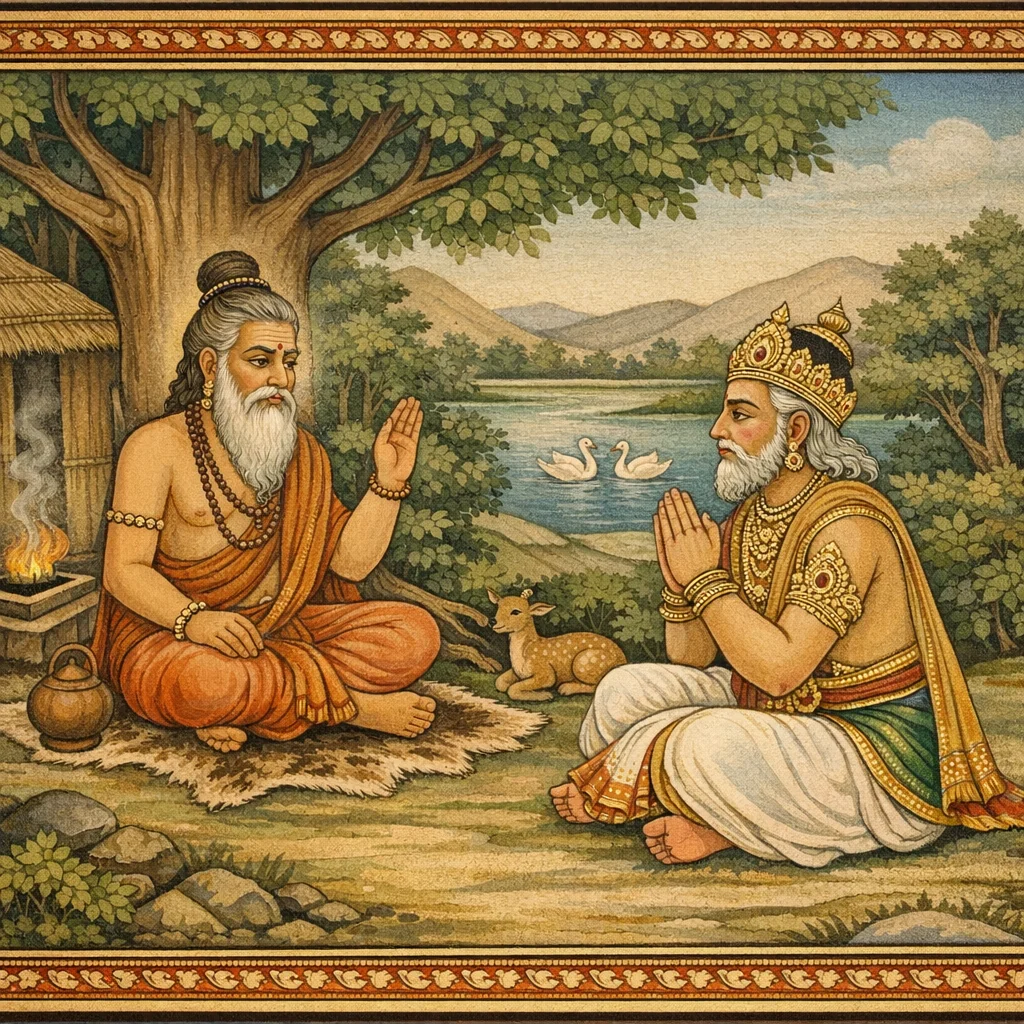
Sūta relates that in this kṣetra Bhīṣma, with the consent of brāhmaṇas, installed an image of Āditya. The chapter recalls Bhīṣma’s earlier conflict with Paraśurāma and Ambā’s vow, stirring Bhīṣma’s anxiety over the moral consequences of his deeds and words. He asks the sage Mārkaṇḍeya whether a death brought about through verbal provocation incurs sin; the sage replies that culpability arises when one’s actions or instigations lead another—women and brāhmaṇas included—to abandon life, and he urges restraint so as not to anger such persons. The discourse then declares strī-vadha (the killing of a woman) to be as weighty as the gravest paradigms of brahmin-harm, and teaches that ordinary remedies—gifts, austerities, and vows—are inadequate compared to tīrtha-sevā, devoted service to sacred fords. Bhīṣma journeys through pilgrimage lands to Gayaśiras and attempts to perform śrāddha, but a celestial voice proclaims him ineligible due to association with strī-hatyā and directs him to the nearby Śarmiṣṭhā-tīrtha in Varuṇa’s direction. A specific bath on Kṛṣṇāṅgāraka-ṣaṣṭhī (the sixth lunar day falling on a Tuesday) is prescribed, promising release from that sin. After bathing and performing śrāddha with faith, Bhīṣma is declared purified by the voice, revealed as Śantanu, who instructs him to return to his worldly duties. Bhīṣma then founds a cluster of shrines—Āditya, a Viṣṇu-related image, a Śiva-liṅga, and Durgā—entrusting brāhmaṇas with ongoing worship and instituting festival observances (solar seventh-day rites, Śiva’s eighth day, Viṣṇu’s sleep and waking markers, and Durgā’s ninth day), with devotional music and celebration, promising exalted fruits to steadfast participants.
Shlokas
Verse 1
। सूत उवाच । तस्मिन्क्षेत्रे तथादित्यः स्थापितो द्विजसत्तमाः । भीष्मेण ब्राह्मणेंद्राणां संमतेन तथात्मना
Sūta said: In that sacred region, O best of the twice-born, the Sun-god was duly installed by Bhīṣma himself, with the approval of the foremost Brāhmaṇas and with full inner resolve.
Verse 2
शंतनोर्दयितः पुत्रो गांगेय इति विश्रुतः । आसीत्पुरा वरो नृणामूर्ध्वरेताः सुविश्रुतः
Śaṁtanu’s beloved son—famed as Gāṅgeya—once lived, renowned as the best among men, celebrated for his mastery of celibate energy (brahmacarya).
Verse 3
तस्यासीत्तुमुलं युद्धं भार्गवेण समं महत् । त्रयोविंशद्दिनान्येव देवासुररणोपमम् । अंबाकृते शितैः शस्त्रैरस्त्रैश्च तदनंतरम्
He fought a great and tumultuous battle with the Bhārgava, lasting twenty-three days, like the warfare of gods and demons. Thereafter, for Ambā’s sake, he engaged with sharp weapons and celestial missiles.
Verse 4
ततो ब्रह्मादयो देवाः स्वयमेव व्यवस्थिताः । ताभ्यां निवारणार्थाय शांत्यर्थं सर्वदेहिनान् । गताश्च ते समुत्थाप्य पुनरेव त्रिविष्टपम्
Then Brahmā and the other gods themselves intervened. To restrain the two and to bring peace for all embodied beings, they approached, roused them from the conflict, and then returned again to heaven.
Verse 5
अंबापि प्राप्य परमं गांगेयोत्थं पराभवम् । प्रविष्टा कोपरक्ताक्षी सुसमिद्धे हुताशने
Ambā too, having met with utter defeat caused by Gāṅgeya, entered the well-kindled fire, her eyes reddened with wrath.
Verse 6
भर्त्सयित्वा नदीपुत्रं बाष्पव्याकुललोचना । ततःप्रोवाच मध्यस्था वह्नेः कुरुपितामहम्
Having rebuked the son of the river, her eyes troubled with tears, she then—standing within the fire—addressed the grandsire of the Kurus.
Verse 7
यस्माद्भीष्म त्वया त्यक्ता कामार्ताहं सुदुर्मते । तस्मात्तव वधायाशु भविष्यामि पुनः क्षितौ
Since I, afflicted by desire, was cast aside by you, O Bhīṣma—foolish one—therefore, for your slaying I shall swiftly be born again upon the earth.
Verse 8
स्त्रीहत्यया समायुक्तस्त्वं च नूनं भविष्यसि । प्रमाणं यदि धर्मोऽत्र स्मृतिशास्त्रसमुद्भवः
You too shall surely become tainted with the sin of killing a woman—if, in this matter, dharma is to be measured by the authority arising from the Smṛti-śāstras.
Verse 9
ततः स घृणयाऽविष्टो भीष्मः कुरुपितामहः । मार्कंडेयं मुनिश्रेष्ठं पप्रच्छ विनयान्वितः
Then Bhīṣma, grandsire of the Kurus, overcome with remorse and compassion, respectfully questioned Mārkaṇḍeya, the best of sages, with due humility.
Verse 10
भगवन्काशिराजस्य सुतया मे प्रजल्पितम् । मम मृत्युकरं पापं सकलं ते भविष्यति
Bhīṣma said: “O Blessed Sage, the words spoken to me by the daughter of the King of Kāśī—will that entire sin, bringing about my death, truly come upon me?”
Verse 11
तत्किं स्याद्वाक्यमात्रेण नो वा ब्राह्मणसत्तम । अत्र मे संशयस्तत्त्वं यथावद्वक्तुमर्हसि
“Does it take effect by words alone, or not, O best of brāhmaṇas? Here I am in doubt—please explain the truth correctly.”
Verse 12
श्रीमार्कंडेय उवाच । आक्षिप्तस्ताडितो वापि यमुद्दिश्य त्यजेदसून् । स्त्रीजनो वा द्विजो वापि तस्य पापं तु तद्भवेत्
Śrī Mārkaṇḍeya said: “Even if one is insulted or struck, if a person—whether a woman or a brāhmaṇa—gives up life with that aggressor in mind, then the sin of that death falls upon the one who caused it.”
Verse 13
स्त्रियं वा ब्राह्मणं वापि तस्मान्नैव प्रकोपयेत् । निघ्नंतं वा शपंतं वा यदीच्छेच्छुभमात्मनः
“Therefore one should never provoke a woman or a brāhmaṇa. Even if they strike or curse—if one desires one’s own welfare—one should not inflame them.”
Verse 15
भीष्म उवाच । तदर्थं वद मे ब्रह्मन्प्रायश्चित्तं विशुद्धये । तपो वा यदि वा दानं व्रतं नियममेव वा
Bhīṣma said: “Tell me, O Brahman, the expiation for that, for my purification—whether it be austerity, charity, a vow, or some discipline.”
Verse 16
मार्कंडेय उवाच । दशानां ब्राह्मणेंद्राणां यद्वधे पातकं स्मृतम् । तत्पापं स्त्रीवधे कृत्स्नं जायते भरतर्षभ
Mārkaṇḍeya said: “O bull among the Bharatas, the guilt remembered for slaying ten foremost brāhmaṇas—such sin in full arises from the killing of a woman.”
Verse 17
तदत्र विषये दानं न तपो न व्रतादिकम् । तीर्थसेवां परित्यज्य तस्मात्त्वं तां समाचर
“In this matter, charity does not suffice; neither austerity nor vows and the like. Therefore, without neglecting service to sacred tīrthas, you should undertake that tīrtha-sevā.”
Verse 19
ततः क्रमात्समायातो भ्रममाणो महीतले । चमत्कारपुरे क्षेत्रे नानातीर्थसमाकुले
Then, in due course, while wandering over the earth, he arrived at the sacred region of Camatkārapura, a kṣetra crowded with many holy fords (tīrthas).
Verse 20
अथापश्यन्महात्मा स सुपुण्यं तद्गयाशिरः । स्नात्वा श्राद्धं च विधिवद्यावच्छ्रद्धासम न्वितः
Thereupon that great-souled one beheld the exceedingly meritorious Gayāśiras. Having bathed, he performed the śrāddha duly, with full faith.
Verse 21
चक्रे तावन्नभोवाणी वाक्यमेतदुवाच ह । भीष्मभीष्म महाबाहो नार्हस्त्वं श्राद्धजं विधिम्
Just then a voice from the sky spoke these words: “Bhīṣma, Bhīṣma, mighty-armed one—you are not fit to undertake the śrāddha-rite.”
Verse 22
कर्तुं स्त्रीहत्ययायुक्तस्तस्माच्छृणु वचो मम । शर्मिष्ठातीर्थमित्येव ख्यातं पातकनाशनम्
For you are stained by the sin of slaying a woman and therefore should not perform it. So hear my words: there is a holy ford called Śarmiṣṭhā-tīrtha, famed as a destroyer of sins.
Verse 23
अस्मात्स्थानात्समीपस्थं वारुण्यां दिशि पुण्यकृत् । कृष्णांगारकषष्ठ्यां यो नरः स्नानं समाचरेत्
Near this very place, in the western direction (Varuṇa’s quarter), lies a spot that bestows merit. Whoever performs a ritual bath there on the sixth lunar day (ṣaṣṭhī) that falls on a Tuesday in the dark fortnight…
Verse 24
स स्त्रीहत्याकृतात्पापान्मुच्यते नात्र संशयः । तस्मादद्य दिने पुत्र भौमवारसमन्विता
…he is freed from the sins arising from woman-slaying—of this there is no doubt. Therefore, my son, since today is joined with Tuesday (Bhauma’s day)…
Verse 25
सैव षष्ठी तिथिः पुण्या तस्मात्तत्र द्रुतं व्रज । अहं तव पिता पुत्र शंतनुः पृथिवीपतिः
That very Ṣaṣṭhī tithi is holy; therefore go there quickly. I am your father, my son—Śaṃtanu, lord of the earth.
Verse 26
स्त्रीहत्ययान्वितं ज्ञात्वा ततस्तूर्णमिहागतः । ततो भीष्मो द्रुतं गत्वा तत्र स्थाने समाहितः
Knowing him to be burdened with the sin of woman-slaying, Śaṃtanu swiftly came there. Then Bhīṣma went quickly, and at that place he became composed and intent.
Verse 27
स्नानं कृत्वा ततः श्राद्धं चक्रे श्रद्धासमन्वितः । ततो भूयः समागत्य स तं प्रोवाच शतनुः
Having bathed, he then performed the śrāddha with faith. Thereafter, returning once more, Śaṃtanu spoke to him.
Verse 28
विपाप्मा त्वं कुरुश्रेष्ठ संजातोऽसि न संशयः । तस्मान्निजं गृहं गच्छ राज्यचिंतां समाचर
“You have become free from sin, O best of the Kurus—there is no doubt. Therefore go to your own home and attend to the duties and governance of the kingdom.”
Verse 29
ततः स विस्मयाविष्टो ज्ञात्वा तीर्थमनुत्तमम् । वासुदेवात्मिकामर्चां तथान्यां कुरुसत्तमः
Then the best of the Kurus, filled with wonder upon recognizing that unsurpassed tīrtha, installed an image embodying Vāsudeva—and also set up another divine icon there.
Verse 30
पारिजातमयीं मूर्तिं रवेर्लक्षणलक्षिताम् । सुप्रमाणां सुरूपां च श्रद्धापूतेन चेतसा
With a mind purified by faith, he fashioned and set up a pārijāta-like divine form, marked with the characteristic signs of Ravi (the Sun), well-proportioned and beautiful in appearance.
Verse 31
तथान्यत्स्थापयामास लिंगं देवस्य शूलिनः । दुर्गां च भक्तिसंयुक्तो विधिदृष्टेन कर्मणा
Likewise, in due ritual order and with devotion, he installed another sacred emblem—the liṅga of the Trident-bearing Lord (Śiva)—and also established Durgā, performing the prescribed rites.
Verse 32
ततः सर्वान्समाहूय स विप्रान्पुरसंभवान् । प्रोवाच कौरवो भीष्मो विनयावनतः स्थितः
Then he summoned all the brāhmaṇas of the town; and Kaurava Bhīṣma, standing with humble courtesy and bowed in reverence, addressed them.
Verse 33
मया विनिर्मितं विप्रा देवागारचतुष्टयम् । एतत्क्षेत्रे च युष्माकं दयां कृत्वा ममोपरि
“O brāhmaṇas, I have caused four shrines—temple-houses of the gods—to be built. In this sacred field, please show compassion toward me and accept responsibility for them.”
Verse 34
पालयध्वं प्रयास्यामि स्वगृहं प्रति सत्वरम् । प्रेरितः पितृभिर्दिव्यैः स्वर्गमार्गसमाश्रितैः
“Protect and maintain them; I shall depart quickly for my own home, urged on by my divine ancestors who abide upon the path to heaven.”
Verse 35
ब्राह्मणा ऊचुः । गच्छगच्छ कुरुश्रेष्ठ सुविश्रब्धः स्वमायया । वयं सर्वे करिष्यामो युष्मच्छ्रेयोऽभिवर्धनम्
The brāhmaṇas said: “Go, go, O best of the Kurus—be fully at ease by your own wise arrangement. We all shall perform everything that increases your welfare and spiritual merit.”
Verse 36
देवश्रेणिरियं राजन्या त्वयात्र विनिर्मिता । अस्याः पूजादिकं सर्वं करिष्यामः सदा वयम्
“O ruler, this array of deities has been established here by you. We shall always carry out all its worship and related duties.”
Verse 37
तवापि विनयं दृष्ट्वा परितुष्टा वयं नृप । सर्वान्प्रार्थय तस्मात्त्वं वरं स्वं मनसि स्थितम्
O king, seeing your humility, we are all well pleased. Therefore, ask of us all the boon that abides within your heart.
Verse 38
भीष्म उवाच । एष एव वरोऽस्माकं यत्संतुष्टा द्विजोत्तमाः । तथाप्याशु वचः कार्यं युष्मदीयं मयाधुना
Bhīṣma said: “This itself is my boon—that the best of brāhmaṇas are satisfied. Even so, your instruction must be carried out by me at once.”
Verse 39
एतानि देवसद्मानि मदीयानि नरो भुवि । यो यं काममभिध्याय पूजयेच्छ्रद्धयाऽन्वितः । प्रसादादेव युष्माकं तस्य तत्स्यादसंशयम्
“These divine shrines upon the earth are mine. Whatever desire a person contemplates and, endowed with faith, worships here for that end—by your very grace that result will surely come to him, without doubt.”
Verse 40
ब्राह्मणा ऊचुः । आदित्यस्य करिष्यामो यात्रां भाद्रपदे वयम् । सप्तम्यां सूर्यवारेण सर्वदैव समाहिताः
The Brāhmaṇas said: “In the month of Bhādrapada we shall undertake the yātrā for Āditya. On the seventh lunar day, when it falls on a Sunday, we shall do so—ever composed and devoted.”
Verse 41
तथा शिवस्य चाष्टम्यां चैत्रशुक्ले विशेषतः । चतुर्दश्यां महाभाग तव स्नेहान्न संशयः
“Likewise, for Śiva—especially on the Aṣṭamī of the bright fortnight in Caitra. And on the fourteenth lunar day (Caturdaśī), O noble one, without doubt we act out of affection for you.”
Verse 42
शयने बोधने विष्णोः संप्राप्ते द्वादशीदिने । विष्णोरपि च दुर्गायाः संप्राप्ते नवमीदिने
At the time of Viṣṇu’s “sleeping” and “awakening,” when the Dvādaśī day arrives; and likewise when the Navamī day arrives—sacred observances are performed for Viṣṇu and for Goddess Durgā as well.
Verse 43
आश्विने शुक्लपक्षे च गीतवादित्रनिस्वनैः । महोत्सवं तथा चित्रैर्हास्यलास्यैः पृथग्विधैः
And in Āśvina’s bright fortnight, amid the ringing of songs and instruments, a great festival should be held—adorned with varied entertainments, laughter, and diverse dances.
Verse 44
यस्तत्र मानवो नित्यं श्रद्धया परया युतः । करिष्यति च गीतादि स यास्यति परां गतिम्
Whoever there, day by day, endowed with supreme faith, performs singing and the like as devotional offering—he will attain the highest state.
Verse 45
वयं तस्य भविष्यामः सदैव प्रीतमानसाः । प्रदास्यामस्तथा कामान्मनसा वांछितान्नृप
O king, we shall ever remain pleased at heart toward him, and we shall grant him the desires he seeks within his mind.
Verse 46
एवमुक्त्वाथ ते विप्राः स्वानि स्थानानि भेजिरे । भीष्मोऽपि हर्षसंयुक्तः स्वगृहं प्रस्थितस्ततः
Having spoken thus, those brāhmaṇas returned to their own places. And Bhīṣma too, filled with joy, then set out for his home.