Adhyaya 55
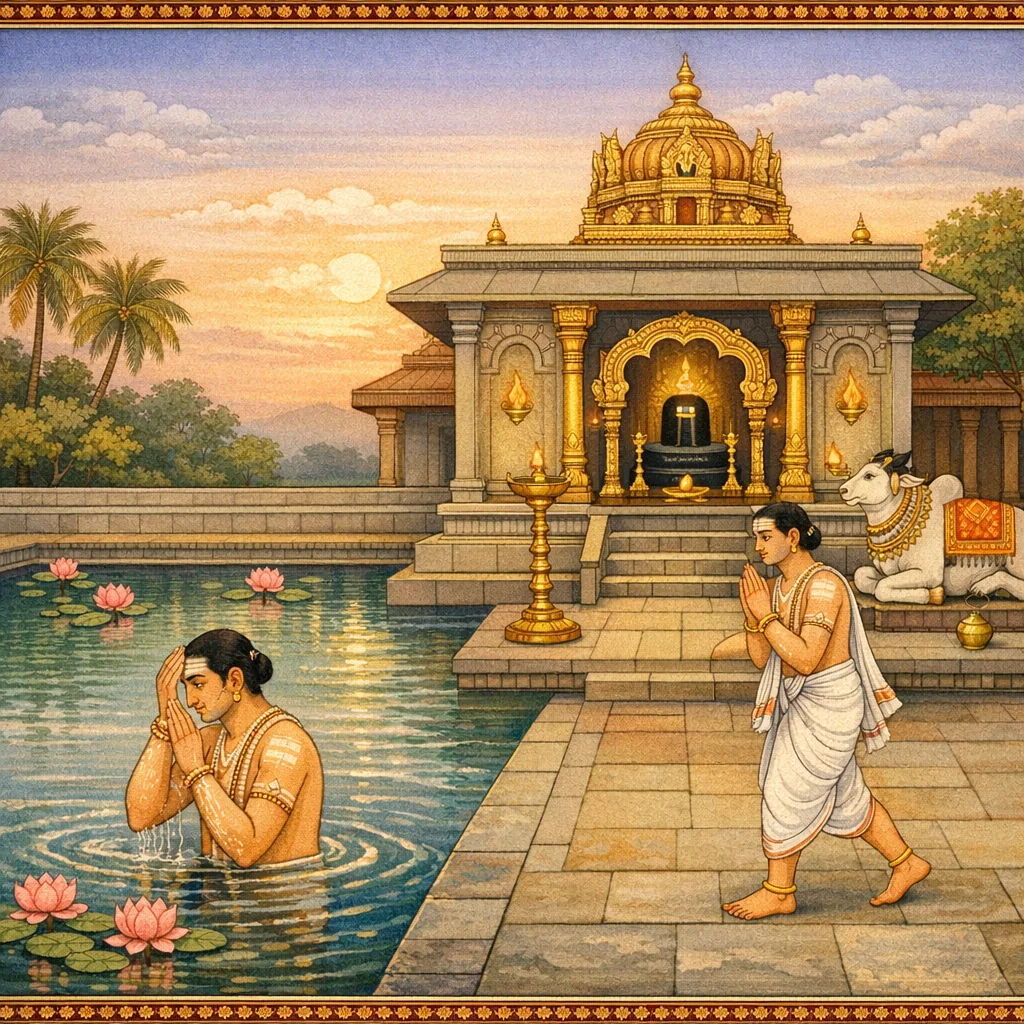
Chapter 55 recounts the māhātmya of Naleśvara, a manifestation of Śiva established by King Nala. Sūta speaks of the deity’s near presence and declares that devoted darśana destroys sin and is connected with attainments oriented toward liberation. The text lists ailments—especially skin diseases and related afflictions—said to be relieved by beholding the Lord and by ritual bathing in a clear-water kuṇḍa before the shrine, adorned with aquatic life and lotuses. A dialogue then unfolds: Śiva, pleased at being installed, offers Nala a boon; Nala asks for Śiva’s perpetual presence for the welfare of all and for the removal of diseases. Śiva grants a time-bound mode of accessibility, especially on Somavāra (Monday) at pratyūṣa (dawn), and prescribes the rite: bathe with śraddhā and then take darśana; at the end of Monday night apply the kuṇḍa’s clay to the body; and perform niṣkāma pūjā with flowers, incense, and unguents. The chapter ends with Śiva’s disappearance, Nala’s return to his kingdom, the brāhmaṇas’ vow to continue worship through generations, and the injunction that seekers of lasting welfare should prioritize darśana, particularly on Mondays.
Shlokas
Verse 1
सूत उवाच । तस्या एव समीपस्थं देवदेवं नलेश्वरम् । दृष्ट्वा विमुच्युते पापात्स्थापितं नलभूभुजा
Sūta said: Near that very tīrtha stands Naleśvara, the God of gods, established by King Nala. By merely beholding Him, one is released from sin.
Verse 2
यस्तं पश्येन्नरो भक्त्या माघे षष्ठ्यां सिते द्विजाः । सर्व रोगविनिर्मुक्तः प्राप्नोति परमं पदम्
O twice-born ones, whoever beholds Him with devotion on the bright sixth day of the month of Māgha is freed from all diseases and attains the supreme state.
Verse 3
कण्डूः पामाथ दद्रूणि मंडलानि विचर्चिका । दर्शनात्तस्य नश्यन्ति जन्तूनां भावितात्मनाम्
Itching, scabies, ringworm, circular eruptions, and eczema—by merely beholding that sacred presence, these afflictions are destroyed for beings whose minds are purified and disciplined.
Verse 4
अस्ति तस्याग्रतः कुण्डं स्वच्छोदकसुपूरितम् । मत्स्यकूर्मसमाकीर्णं पद्मिनीखंडमंडितम्
In front of Him there is a pond (kuṇḍa) filled with clear, pure water—teeming with fish and turtles, and beautified with clusters of lotuses.
Verse 5
यस्तत्र कुरुते स्नानं प्रत्यूषे सोमवासरे । अपि कुष्ठामयमस्तः स भूयः स्यात्पुनर्नवः
Whoever bathes there at dawn on a Monday—even if afflicted with leprosy—becomes renewed again, as though made fresh once more.
Verse 6
यदा संस्थापितः शंभुर्नलेन पृथिवीभुजा । तदा तुष्टेन स प्रोक्तो ब्रूहि किं ते करोम्यहम्
When Śambhu was installed by Nala, the ruler of the earth, the Lord—pleased—said to him: “Speak; what shall I do for you?”
Verse 7
नल उवाच । अत्र स्थेयं त्वया देव सदा सन्निहितेन च । सर्वलोकहितार्थाय रोगनाशाय शंकर
Nala said: “O God, O Śaṅkara—remain here, ever present, for the welfare of all worlds and for the destruction of diseases.”
Verse 8
शंकर उवाच । अहं त्वद्वचनाद्राजन्संप्राप्ते सोमवासरे । प्रत्यूषे च निवत्स्यामि प्रासादे नात्र संशयः
Śaṅkara said: “O King, in accordance with your word, when Monday arrives, I shall dwell here at dawn in this temple—of this there is no doubt.”
Verse 9
प्राणिनां रोगनाशाय शुक्लपक्षे विशेषतः
For the destruction of diseases of living beings—especially during the bright fortnight (Śukla-pakṣa).
Verse 10
यो मामत्र स्थितं तत्र दिवसे वीक्षयिष्यति । स्नात्वा सुविमले कुंडे सम्यक्छ्रद्धासमन्वितः । तस्य नाशं प्रयास्यंति व्याधयो गात्रसंभवाः
Whoever, with proper faith, bathes in the very pure pond and then beholds Me present there in the daytime—bodily diseases arising in the limbs will depart and come to destruction for him.
Verse 11
योऽस्य कुंडस्य संभूतां मृत्तिकामपि मानवः । संधास्यति निजे देहे सोमवारे निशाक्षये । सोऽपि रोगैर्विनिर्मुक्तः संभविष्यति पुष्टिमान्
Even one who applies to his own body the clay that has arisen from this pond—on a Monday, at the end of the night—will be freed from diseases and will become strong and well-nourished.
Verse 12
निष्कामस्तु पुनर्यो मां तस्मिन्काले नृपोत्तम । पूजयिष्यति सद्भक्त्या पुष्पधूपानुलेपनैः । सर्वपापविनिर्मुक्तो मम लोकं स यास्यति
But whoever worships Me at that time, O best of kings, free of selfish desire—offering true devotion with flowers, incense, and unguents—will be released from all sins and will go to My world.
Verse 13
सूत उवाच । एवमुक्त्वा स भगवांस्त्रैलोक्यदीपको हरः । अन्तर्धानं गतो विप्रा यथा दीपोऽत्र तत्क्षणात्
Sūta said: Having spoken thus, the Blessed Hara—lamp of the three worlds—vanished from sight, O brāhmaṇas, in that very instant, like a lamp here suddenly extinguished.
Verse 15
एष संस्थापितः शंभुर्मया युष्मत्पुरोंतिके । येन दृष्टेन रोगाणां सर्वेषां जायते क्षयः
This Śambhu has been installed by me near your city; by merely beholding Him, the destruction of all diseases arises.
Verse 16
अधुनाहं गमिष्यामि स्वराज्याय कृते द्विजाः । निषधां च पुरीमेष सर्वैः पूज्यः समाहितैः
Now I shall depart, O twice-born, for the sake of my own kingdom. This Lord here in the city of Niṣadhā should be worshipped by all with a collected mind.
Verse 17
ब्राह्मणा ऊचुः । एवं पार्थिवशार्दूल करिष्यामः समाहिताः । तव देवकृते यत्नं यात्राद्यासु क्रियासु च
The brāhmaṇas said: “So shall we do, O tiger among kings, steadfast and attentive. For your sake, and for the deity’s cause, we will strive in pilgrimages and in other sacred observances as well.”
Verse 18
तथा पूजां करिष्यामः श्रद्धया परया युताः । अस्माकं पुत्रपौत्रा ये भविष्यंति तथा परे । वंशजास्ते करिष्यंति पूजामस्य सुभक्तितः
And we shall perform His worship, endowed with supreme faith. Our sons and grandsons yet to come, and all other descendants of our lineage, will likewise worship this Lord with auspicious devotion.”
Verse 19
सूत उवाच । एवमुक्तः स भूपालस्तैर्विप्रैस्तुष्टिसंयुतः । प्रतस्थे तान्प्रणम्योच्चैः सर्वैस्तैश्चाभिनंदितः
Sūta said: Thus addressed by those brāhmaṇas, the king, filled with satisfaction, set out after bowing to them with due reverence, and he was acclaimed by them all.
Verse 20
एवं स भगवाञ्छंभुस्तस्मिन्स्थाने व्यवस्थितः । हिताय सर्वलोकानां सर्वरोगक्षयावहः
Thus the Blessed Śambhu remained established in that place, for the welfare of all worlds, bringing about the cessation of every disease.
Verse 21
तस्मात्सर्वप्रयत्नेन वीक्षणीयः सदा हि सः । विशेषात्सोमवारेण शाश्वतं श्रेय इच्छता
Therefore, with every effort, one should always seek His darśana—especially on Mondays—if one desires everlasting good.
Verse 55
इति श्रीस्कांदे महापुराण एकाशीतिसाहस्र्यां संहितायां षष्ठे नागरखण्डे हाटकेश्वर क्षेत्रमाहात्म्ये नलेश्वरमाहात्म्यवर्णनंनाम पञ्चपञ्चाशत्तमोऽध्यायः
Thus, in the Śrī Skanda Mahāpurāṇa, in the Ekāśīti-sāhasrī Saṁhitā, in the sixth book—the Nāgara Khaṇḍa—within the Māhātmya of the sacred region of Hāṭakeśvara, ends the fifty-fifth chapter entitled “The Description of the Greatness of Naleśvara.”