Adhyaya 44
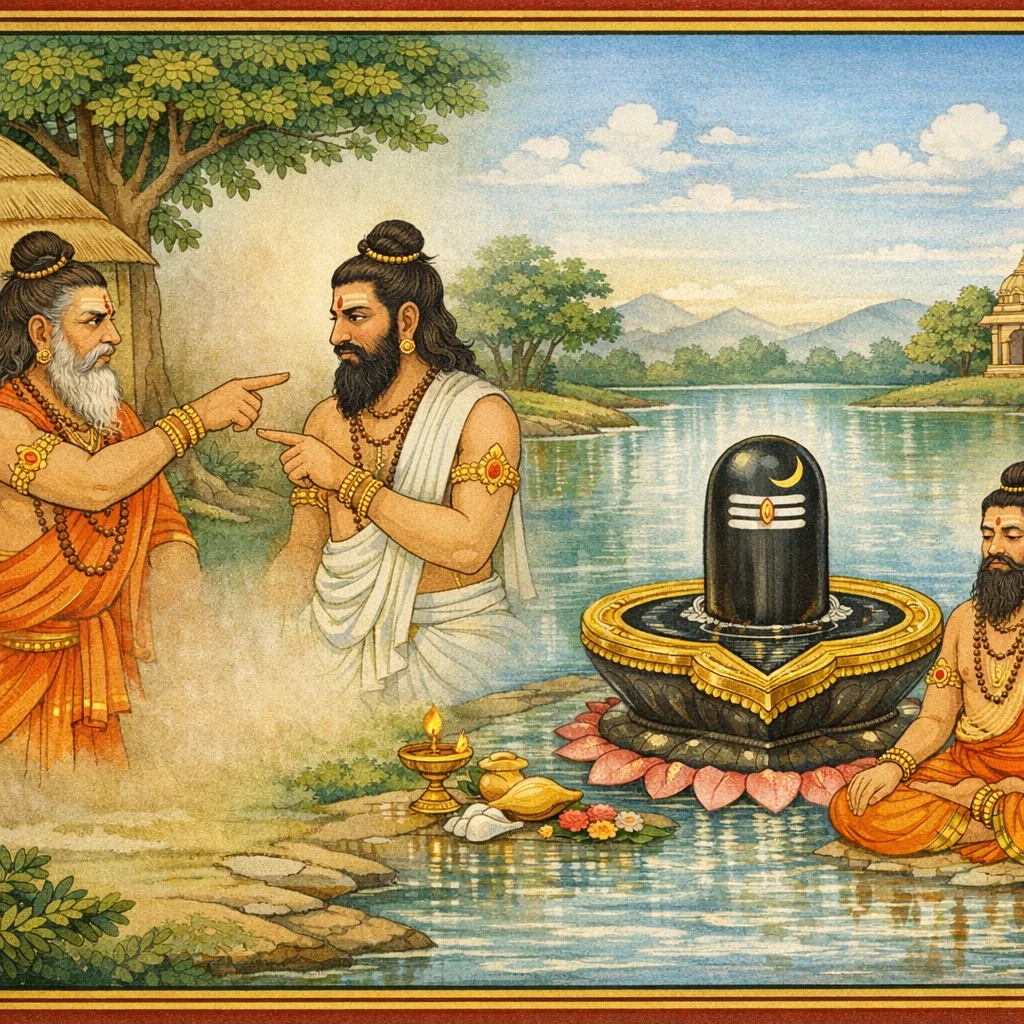
Chapter 44, narrated by Sūta as a framed theological discourse, begins with Menakā challenging Viśvāmitra. Viśvāmitra then delivers a stern ethical warning against attachment and the perils of sensual entanglement, especially for vow-observing ascetics (vratins). The story intensifies into an exchange of curses: Menakā curses Viśvāmitra with premature signs of aging, and Viśvāmitra answers with a similar curse. The decisive turning point is the tīrtha itself—when both bathe in the kunda’s waters, they are purified and restored to their former appearance, revealing the site’s extraordinary cleansing and restorative power. Recognizing the tīrtha’s māhātmya, Viśvāmitra installs a Śiva-liṅga named Viśvāmitreśvara and undertakes austerities. The text declares the fruits of worship here: snāna and liṅga-pūjā grant access to Śiva’s abode, attainment of devaloka, and enjoyment with one’s ancestors. The chapter closes by proclaiming the tīrtha’s fame across the worlds and its power to destroy sins.
Shlokas
Verse 1
। मेनकोवाच । नूनं हि कामधर्मे त्वं न प्रवीणो महाद्युते । तेन मामीदृशैर्वाक्यैर्निवारयसि रागिणीम्
Menakā said: Surely you are not skilled in the dharma of love, O greatly radiant one; therefore you restrain me—filled with passion (rāga)—with words such as these.
Verse 2
सूत उवाच । एवमुक्तस्ततो भूयो विश्वामित्रोऽब्रवीदिदम् । कोपेन महता युक्तो निःस्पृहस्तत्परिग्रहे
Sūta said: When she had spoken thus, Viśvāmitra replied again—filled with great wrath, and indifferent to accepting her.
Verse 3
विश्वामित्र उवाच । त्वं जीव गच्छ वा मृत्युं नाहं कर्तास्मि ते वचः । व्रतनाशात्तु यत्पापमधिकं स्त्रीवधाद्भवेत्
Viśvāmitra said: “Live and depart—or go to death; I will not do as you say. For the sin born of destroying a sacred vow (vrata) is said to be greater than that arising from killing a woman.”
Verse 4
प्रायश्चित्तं बुधैरुक्तं व्रतिनां स्त्रीवधे कृते । न संगात्तु पुनस्तासां तस्मात्त्वं गन्तुमर्हसि
The wise have prescribed expiation (prāyaścitta) for those who keep vows even if the killing of a woman has occurred; but for renewed association with them there is no remedy—therefore you should depart.
Verse 5
न केवलं व्रतोपेताः स्त्रीसंगात्पापमाप्नुयुः । व्रतबाह्या अपि नराः सक्ताः स्त्रीषु पतंत्यधः
Not only those bound by vows incur sin through association with women; even men outside vows, if attached to women, fall downward.
Verse 6
संसारभ्रमणं नारी प्रथमेपि समागमे । वह्निप्रदक्षिणा व्याजन्यायेनैव प्रदर्शयेत्
Even at the very first meeting, a woman can set the wheel of worldly wandering in motion—just as one is made to go around fire on the pretext of pradakṣiṇā (ritual circumambulation).
Verse 7
तस्मात्स्त्रीभिः समं प्राज्ञः संभाषामपि वर्जयेत् । आस्तां तावत्समासंगं य इच्छेच्छ्रेय आत्मनः
Therefore, a wise person should avoid even conversation with women; still more so prolonged association—if one seeks one’s own highest good.
Verse 8
अंगार सदृशा नारी घृतकुंभसमः पुमान् । अस्पर्शाद्दृढतामेति तत्संपर्काद्विलीयते
A woman is like a live ember; a man is like a jar of ghee. By not touching, he becomes firm; by contact, he melts away.
Verse 9
स्त्रियो मूलमनर्थानां सर्वेषां प्राणिनां भुवि । तस्मात्त्याज्या सुदूरेण ताः स्वर्गस्य निरोधकाः
Women are said to be the root of calamities for all beings upon the earth; therefore one should keep far away from them, for they are described as obstructors of heaven.
Verse 10
कुलीना वित्तवत्यश्च नाथवत्योऽपि योषितः । एकस्मिन्नंतरे रागं कुर्वंत्येताः सुचञ्चलाः
Even women of noble family, possessing wealth, and even those protected by a husband—being very fickle—quickly form attachment elsewhere in a moment.
Verse 12
न स्त्रीभ्यः किंचिदन्यद्धि पापाय विद्यते भुवि । यासां संगसमासाद्य संसारे भ्रमते जनः । नीचोऽपि कुरुते सेवां यस्तासां विजनेष्वथ । विरूपं वापि नीचं वा तं सेवन्ते हि ताः स्त्रियः
On earth, nothing else is declared to lead to sin as association with women; having come into their company, a person wanders in saṃsāra. Even a base man renders them service in secret places; and women, indeed, consort with such a one—whether ugly or low.
Verse 13
अनर्थत्वान्मनुष्याणां भयात्परिजनस्य च । मर्यादायाममर्यादाः स्त्रियस्तिष्ठन्ति भर्तृषु
Because of the harmful consequences for men, and out of fear of their families, even women without restraint remain, with their husbands, within the bounds of propriety.
Verse 14
सूत उवाच । एवं संभर्त्सिता तेन मेनका कोपसंयुता । शशाप तं मुनिश्रेष्ठं स्फुरमाणोष्ठसंपुटा
Sūta said: Thus rebuked by him, Menakā—filled with anger, her lips trembling—cursed that foremost of sages.
Verse 15
यस्मात्त्वया परित्यक्ता सकामाहं सुदुर्मते । त्यजता कामजं धर्मं तस्माच्छापं गृहाण मे
“Since you have abandoned me—still filled with desire—O wicked-minded one, who has cast aside the dharma born of desire; therefore, receive my curse!”
Verse 16
अद्यैव भव दुबुर्द्धे वलीपलितसंयुतः । जराजर्ज्जरितांगश्च तुच्छदृष्टिर्विरंगितः
“This very day, O foolish one, become wrinkled and grey-haired; let your limbs be shattered by old age—your vision diminished and your complexion drained.”
Verse 17
सूत उवाच । उक्तमात्रे तु वचने तत्क्षणान्मुनिसत्तमः । बभूव तादृशः सद्यस्तया यादृक्प्रकीर्तितः
Sūta said: No sooner were the words spoken than, in that very instant, the excellent sage became exactly as she had declared.
Verse 18
ततः कोपपरीतात्मा सोऽपि तां शप्तुमुद्यतः । कमण्डलोर्जलं गृह्य संतापाद्रक्तलोचनः
Then, his mind overwhelmed by anger, he too prepared to curse her; taking water from his kamaṇḍalu, his eyes reddened with burning distress.
Verse 19
निर्दोषोऽपि त्वया यस्माच्छप्तोऽहं गणिकाधमे । तस्माद्भव त्वमप्याशु जराजर्जरितांगिका
Though blameless, since I have been cursed by you, O lowest of courtesans, therefore you too—quickly—become one whose body is broken down by old age.
Verse 20
सापि तद्वचनात्सद्यस्तादृग्रूपा व्यजायत । यादृशोऽसौ मुनिश्रेष्ठो वलीपलितगात्रभृत्
At his very words, she instantly assumed that very form—becoming like that best of sages himself, whose body bore wrinkles and grey hair.
Verse 21
अथ तादृक्स्वरूपेण स्नाता तत्र जला शये । भूयोऽपि तादृशी जाता यादृशी संस्थिता पुरा
Then, bathing there in that very altered form in the waters of the lake, she became once again as she had been before, restored to her former state.
Verse 22
तद्दृष्ट्वा परमाश्चर्यमतीव त्वरयान्वितः । सोऽपि तत्राकरोत्स्नानं संजातश्च यथा पुरा
Seeing that supremely wondrous event, he too—filled with great haste—bathed there; and he likewise became as he had been before.
Verse 23
ततस्तौ तीर्थमाहात्म्याद्रूपौदार्यगुणान्वितौ । मिथ आमंत्र्य संहृष्टौ गतौ देशं यथेप्सितम्
Thereafter, by the greatness of that tīrtha, the two were endowed with beauty, nobility, and virtue; and, joyfully taking leave of one another, they went to whatever place they desired.
Verse 24
एवं तीर्थस्य माहात्म्यं विज्ञाय भगवानृषिः । लिंगं संस्थापयामास देवदेवस्य शूलिनः
Thus, having understood the greatness of the tīrtha, the revered sage established a liṅga of Śūlin—the Lord of lords, Śiva.
Verse 25
तपश्चकार सुमहत्तस्मिंस्तीर्थवरे तदा । कुशस्तम्बेन कृतवांस्तत्सरो विपुलं विभुः
Then, at that excellent tīrtha, he performed very great austerities; and that mighty one created a vast lake there by means of a clump of kuśa grass.
Verse 26
तत्र स्नात्वा नरो यस्तु पूजयेल्लिंगमुत्तमम् । विश्वामित्रेश्वरं ख्यातं स गच्छेच्छिवमंदिरम्
Whoever bathes there and worships that supreme liṅga—famed as Viśvāmitreśvara—attains the abode of Śiva.
Verse 27
अद्यापि दृश्यते तत्र गंगोदकसमं जलम् । सर्वपापहरं पुण्यं सर्वकामप्रदायकम्
Even today, water equal to the waters of the Gaṅgā is seen there—holy, removing all sins, and granting every worthy desire.
Verse 28
यस्तत्र कुरुते स्नानं श्रद्धापूतेन चेतसा । स देवलोकमासाद्य पितृभिः सह मोदते
Whoever bathes there with a mind purified by faith attains the world of the gods and rejoices together with the ancestors (pitṛ).
Verse 29
ततःप्रभृति तत्तीर्थं ख्यातिं प्राप्तं महीतले । पाताले स्वर्गलोके च रूपौदार्यप्रदं नृणाम्
From that time onward, that tīrtha attained renown upon the earth—and in the netherworld (Pātāla) and the heavenly realm (Svarga) as well—bestowing beauty and nobility upon people.
Verse 30
एतद्वः सर्वमाख्यातं यत्पृष्टोऽस्मि द्विजोत्तमाः । विश्वामित्रेश माहात्म्यं सर्वपातकनाशनम्
O best of the twice-born, I have now fully related to you all that you asked—this greatness of Viśvāmitreśa, which destroys every sin.
Verse 44
इति श्रीस्कांदे महापुराण एकाशीतिसाहस्र्यां संहितायां षष्ठे नागरखंडे श्रीहाटकेवरक्षेत्रमाहात्म्ये विश्वामित्रकुण्डोत्पत्ति विश्वामित्रेश्वरमाहात्म्यवर्णनंनाम चतुश्चत्वारिंशत्तमोऽध्यायः
Thus, in the holy Skanda Mahāpurāṇa, in the eighty-one-thousand-verse compendium, in the sixth book—Nāgara Khaṇḍa—within the Māhātmya of the sacred Śrīhāṭakevara region, ends the forty-fourth chapter, entitled “The Origin of Viśvāmitra’s Pond and the Description of the Greatness of Viśvāmitreśvara.”