Adhyaya 40
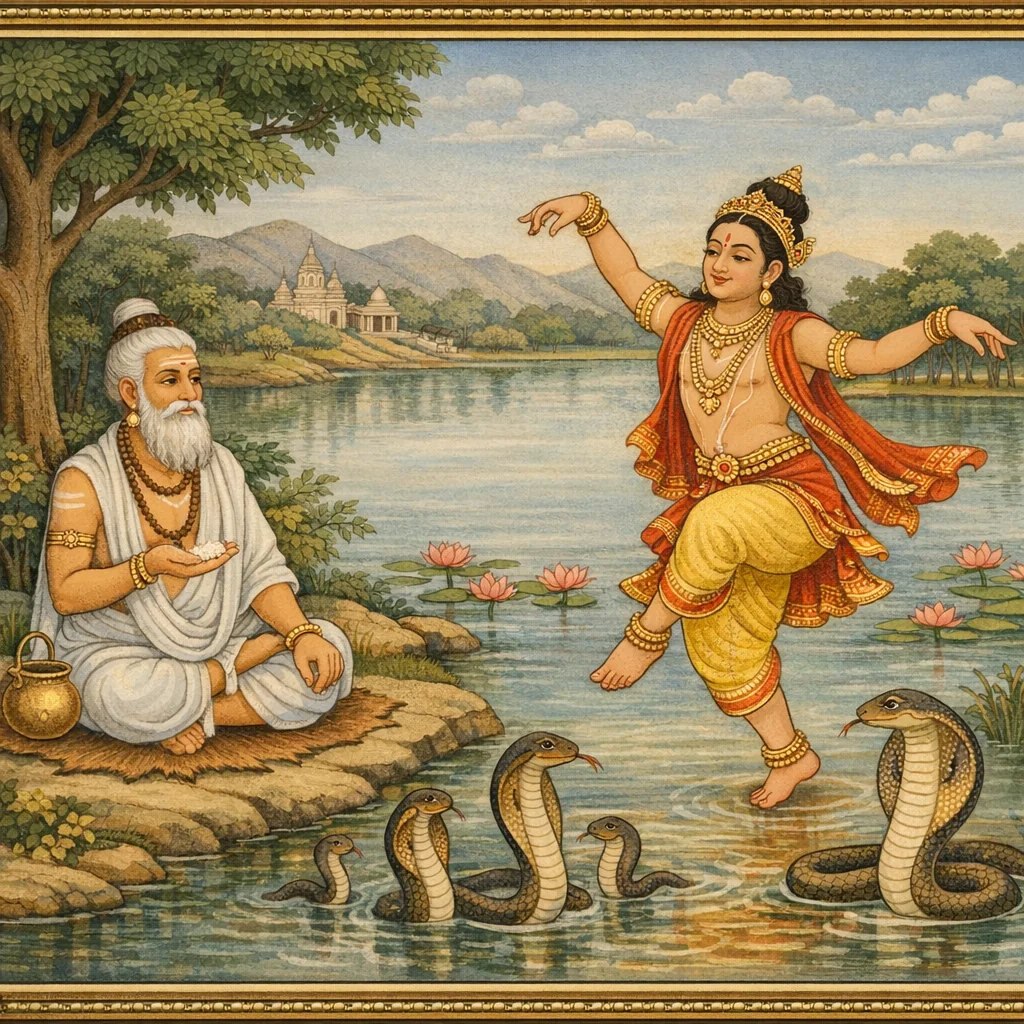
The ṛṣis ask about the great Brahmī stone, praised as liberating and sin-destroying—how it was set in place and what power it holds. Sūta explains that Brahmā, reflecting that heaven lacks ritual jurisdiction and that on earth the tri-sandhyā observances are required, cast a vast stone down to the mortal realm; it fell at Cāmatkārapura in an auspicious sacred tract. Since rites require water, Brahmā summoned Sarasvatī. Fearing human touch, she refused to move openly upon the earth, so Brahmā created an inaccessible great lake (mahāhrada) for her abode and appointed nāgas to prevent contact. The sage Maṅkaṇaka arrived; though bound by serpents, he nullified their venom through knowledge, bathed, and performed offerings to the ancestors. Later, when his hand was injured and plant-sap flowed, he mistook it for a sign of siddhi and danced in ecstasy, disturbing the world. Śiva came in the guise of a brahmin, displayed a higher sign (ash arising), urged him to cease the dance as harmful to tapas, and granted abiding presence there, becoming known as Ānandeśvara; the place was named Ānanda. The chapter accounts for the origin of non-venomous water-serpents, proclaims the salvific merit of bathing in the Sarasvata lake and touching the citraśilā, and adds a later correction: Indra filled the lake with dust after Yama warned that people were ascending to heaven too easily. It closes by reaffirming ongoing siddhi through tapas at the site and the great merit of worship—especially on Māgha śukla caturdaśī—at the liṅga established by Maṅkaṇaka.
Shlokas
Verse 1
। ऋषय ऊचुः । यदेषा भवता प्रोक्ता ब्राह्मी तत्र महाशिला । मोक्षदा सर्वजंतूनां तथा पातकनाशिनी
The sages said: “That great stone there, called ‘Brāhmī’ as you have described—how does it grant liberation to all beings, and how does it destroy sins?”
Verse 2
सा कथं स्थापिता तत्र किंप्रभावा च सूतज । एतन्नो ब्रूहि निःशेषं न हि तृप्यामहे वयम्
O son of Sūta, how was it established there, and what is its power? Tell us everything without remainder, for we are not yet satisfied.
Verse 3
सूत उवाच । ब्रह्मलोकनिविष्टस्य ब्रह्मणोऽ व्यक्तजन्मनः । पुराऽभून्महती चिन्ता तीर्थयात्रासमुद्भवा
Sūta said: Long ago, Brahmā—dwelling in Brahmaloka, of unmanifest origin—was seized by a great concern arising from the matter of pilgrimage to the sacred tīrthas.
Verse 4
सर्वेषामेव देवानां संति तीर्थानि भूतले । मुक्त्वा मां तन्मया कार्यं तीर्थमेकं धरातले
(He reflected:) “Indeed, all the gods have their sacred tīrthas upon the earth; only I am without one. Therefore, let a single tīrtha be established on earth, devoted to me.”
Verse 5
यत्र त्रिकालमासाद्य कर्म संध्यासमुद्भवम् । मर्त्यलोकं समासाद्य करोमि तदनंतरम्
“There, at the three junctions of time, I shall come to that place and perform the rites born of the Sandhyā; thereafter I shall enter the world of mortals and act as is fitting.”
Verse 6
तथान्यदपि यत्किञ्चित्कर्म धर्म्यं हितावहम् । तत्करोमि यथान्येऽपि चक्रुर्देवाः शिवादयः
“So too, whatever other deed there is that is dharmic, righteous, and beneficial—I shall perform that as well, just as the gods, led by Śiva, have done.”
Verse 7
न स्वर्गेऽस्ति हि कृत्यानामधिकारोऽत्र कश्चन । शुभानां कर्मणामेव केवलं भुज्यते फलम्
“For in heaven there is no scope at all for performing deeds; there one only experiences the fruit of auspicious actions already done.”
Verse 8
तस्माद्यत्र धरापृष्ठे शिलेयं निपतिष्यति । त्रिसंध्यं तत्र गन्तव्यमनुष्ठानार्थमेव हि
“Therefore, wherever upon the earth this stone shall fall, to that very place one should go at the three sandhyās, solely for the sake of religious observance.”
Verse 9
एवमुक्त्वा सुविस्तीर्णां शिलां तामा सनोद्भवाम् । प्रचिक्षेप धरापृष्ठं समुद्दिश्य पितामहः
Thus having spoken, Pitāmaha (Brahmā) hurled that broad, well-spread stone—born of Sanā—toward the earth’s surface, aiming it at its destined place.
Verse 10
अथ सा पतिता भूमौ सर्वरत्नमयी शिला । चमत्कारपुरे क्षेत्रे सर्वक्षेत्रमहोदये
Then that stone—made of all jewels—fell upon the earth, in the sacred field of Camatkārapura, the great upsurging splendour among all holy fields.
Verse 11
तत आगत्य लोकेशः स्वयमेव धरातलम् । तत्क्षेत्रं वीक्षयामास व्याप्तं तीर्थैः समन्ततः
Then Lokeśa himself came down to the earth and beheld that sacred field, pervaded on every side with tīrthas.
Verse 12
ततः पुण्यतमे देशे दृष्ट्वा तां समुपस्थिताम् । शिलामानंदमापन्नः प्रोवाच तदनन्तरम्
Then, in that most meritorious region, seeing the stone present there, he was filled with joy and spoke immediately thereafter.
Verse 14
सलिलेन विना यस्मान्न क्रिया संप्रवर्तते । तस्मादत्र मया कार्यः शुचितोयो महाह्रदः
Since without water no religious act can proceed, therefore here I must create a great lake filled with pure water.
Verse 15
ततः संचिंतयामास स्वसुतां च सरस्वतीम् । जन संस्पर्शभीत्या च पातालतलवाहिनीम्
Then he contemplated his own daughter, Sarasvatī—who, fearing contact with people, flows along the levels of Pātāla, the netherworld.
Verse 16
अथ भूमितलं भित्त्वा प्रादुर्भूता महानदी । तां शिलाममलैस्तोयैः क्षालयन्ती समंततः
Then, splitting the earth’s surface, the great river manifested, washing that rock on all sides with spotless waters.
Verse 18
ब्रह्मोवाच । त्वयात्रैव सदा स्थेयं शिलायां मम संनिधौ । संध्यात्रयेऽपि त्वत्तोयैर्येन कृत्यं करोम्यहम्
Brahmā said: “You must dwell here always, upon this rock, in my very presence; for even at the three sandhyās I perform my prescribed rites with your waters.”
Verse 19
तथा ये मानवाः स्नानं करिष्यंति जले तव । ते यास्यंति परां सिद्धिं दुर्लभां देवा मानुषैः
“Likewise, those people who will bathe in your waters shall attain the supreme fulfillment—rare indeed for both gods and humans.”
Verse 20
सरस्वत्युवाच । अहं कन्या सुरश्रेष्ठ पातालतलवाहिनी । जनस्पर्शभयाद्भीता नागच्छामि महीतले
Sarasvatī said: “O best of the gods, I am a maiden and I flow through the regions of Pātāla. Fearing contact with people, I do not come upon the earth’s surface.”
Verse 21
तवादेशोऽन्यथा नैव मया कार्यः कथंचन । एवं मत्वा सुरश्रेष्ठ यद्युक्तं तत्समाचर
“Your command must never be carried out by me otherwise, in any way. Knowing this, O best among the gods, do whatever is fitting.”
Verse 22
ब्रह्मोवाच । तवार्थे कल्पयिष्यामि स्थानेऽत्रैव महाह्रदम् । अगम्यं सर्वमर्त्यानां तत्र त्वं स्थातुमर्हसि
Brahmā said: “For your sake, I shall fashion a great lake right here in this very place—unapproachable to all mortals. There you should dwell.”
Verse 23
एवमुक्त्वा स देवेशश्चखान च महाह्रदम् । ततः सरस्वती तत्र स्वस्थानमकरो दथ
Having spoken thus, the Lord of the gods dug out that great lake; then Sarasvatī made that place her own abode there.
Verse 24
ततो दृष्टिविषान्सर्पानादिदेश पितामहः । युष्माभिः सर्वदा स्थेयं ह्रदेस्मिञ्छासनान्मम
Then the Grandsire commanded the gaze-poisonous serpents: “By my order, you must always remain in this lake.”
Verse 25
यथा सरस्वतीं मर्त्या न स्पृशंति कथंचन । भवद्भिः सर्वथा कार्यं तथा पन्नगसत्तमाः
“So that mortals may not touch Sarasvatī in any manner—see to it in every way, O best of serpents.”
Verse 26
सूत उवाच । एवं ब्रह्मा व्यवस्थाप्य तत्र क्षेत्रे सरस्वतीम् । तां च चित्रशिलां मध्ये ब्रह्मलोकं जगाम ह
Sūta said: “Thus Brahmā, having duly established Sarasvatī in that sacred field—and placing her in the midst of Citraśilā—departed to the world of Brahmā.”
Verse 27
अथ मंकणकोनाम महर्षिः संशितव्रतः । क्षेत्रे तत्र समायातो विषविद्याविचक्षणः
Then a great sage named Maṃkaṇaka—firm in his vows and skilled in the lore of poisons—arrived at that sacred place.
Verse 28
सक्रमाद्भ्रममाणस्तु तस्मिन्सर्पाभिरक्षिते । तं मुनिं वेष्टयामासुर्बबन्धुश्चैव पाशकैः
But as he stepped in and began to move about within that place guarded by serpents, those snakes coiled around the sage and bound him fast, as though with nooses.
Verse 29
सोऽपि विद्याबलात्सर्पान्निर्विषांस्तांश्चकारह । तत्र स्नात्वा शुचिर्भूत्वा कृत्वा च पितृतर्पणम् । निष्क्रांतः सलिलात्तस्मात्कृतकृत्यो मुदान्वितः
He too, by the power of his sacred knowledge, rendered those serpents harmless and free of venom. Then, bathing there and becoming purified, and having offered libations (tarpaṇa) to the ancestors, he came out of that water—his duty fulfilled and his heart filled with joy.
Verse 30
ततश्चक्रे मुनिर्यावत्सम्यक्कुशपरिग्रहम् । दर्भाग्रेणास्य हस्ताग्रं पाटितं तावदेव हि
Then the sage proceeded to take up the kuśa-grass properly; but at that very moment, the tip of his hand was cut by the sharp end of a darbha blade.
Verse 31
अथ तस्मात्क्षताज्जातस्तस्य शाकरसो महान् । तं दृष्ट्वा स विशेषेण हर्षितो विस्मयान्वितः
Then, from that wound there arose a great flow of sugar-sweet sap. Seeing it, he was especially delighted, filled with wonder.
Verse 32
सिद्धोऽहमिति विज्ञाय नृत्यं चक्रे ततः परम् । ब्राह्मीं शिलां समारुह्य आनंदाश्रुपरिप्लुतः
Knowing, “I have attained success,” he then began to dance. Mounting a sacred stone associated with Brahmā, he was drenched in tears of bliss.
Verse 33
अथैवं नृत्यमानस्य मुनेस्तस्य महात्मनः । लास्यं चक्रे ततः सर्वं जगत्स्थावरजंगमम्
As that great-souled sage thus danced, the whole world—both the unmoving and the moving—took up the dance along with him.
Verse 34
चमत्कारपुरं कृत्स्नं भग्नं नष्टा द्विजोत्तमाः । प्रासादैर्ध्वंसितैस्तत्र हाहाकारो महानभूत्
All of Camatkārapura was shattered; the foremost of the twice-born perished. As palaces collapsed there, a great cry of lamentation arose.
Verse 35
ततो देवगणाः सर्वे तद्दृष्ट्वा तस्य चेष्टितम् । लास्यस्य वारणार्थाय प्रोचुर्वृषभवाहनम्
Then all the hosts of gods, seeing his behavior, addressed the Bull-bannered Lord, Vṛṣabhavāhana, urging him to stop that dancing.
Verse 36
अनेन नृत्यमानेन जगत्स्थावरजंगमम् । नृत्यं करोति देवेश तस्माद्गत्वा निवारय
Because this one is dancing, the entire world—moving and unmoving—has begun to dance. Therefore, O Lord of the gods, go and restrain it.
Verse 37
नान्यः शक्तः सुरश्रेष्ठ मुनिमेनं कथंचन । निषेधयितुमीशान ततः कुरु जगद्धितम्
No one else is able in any way to restrain this sage, O best of the gods. Therefore, O Īśāna, act for the welfare of the world.
Verse 38
अथ तेषां वचः श्रुत्वा भगवान्वृषभध्वजः । कृत्वा रूपं द्विजेंद्रस्य तत्सकाशमुपाद्रवत्
Hearing their words, the Lord—he whose banner bears the Bull—assumed the form of a foremost brāhmaṇa and at once hurried to that place.
Verse 39
अब्रवीच्च मुने कस्मात्त्वयैतन्नृत्यतेऽधुना । तस्मात्कार्यं वदाशु त्वं परं कौतूहलं हि नः
And he said: “O sage, why are you dancing like this now? Tell quickly the reason—indeed, we are filled with great curiosity.”
Verse 40
एवमुक्तः स विप्रेंद्रः शंकरेण द्विजोत्तमाः । हस्तं संदर्शयामास तस्य शाकरसान्वितम्
Thus addressed by Śaṅkara, that foremost brāhmaṇa showed his hand—endowed with the wondrous ‘śākarasa’.
Verse 41
किं नपश्यसि मे ब्रह्मन्कराच्छाकरसो महान् । संजातः क्षतवक्त्रेण तस्मात्सिद्धिरुपस्थिता
O brāhmaṇa, do you not see? From my hand a great śākarasa has arisen—brought forth by a wound upon the mouth; therefore a siddhi, an extraordinary attainment, has come to me.
Verse 42
एतस्मात्कारणाद्विप्र नृत्यमेतत्करोम्यहम् । आनंदं परमं प्राप्य सिद्धिजं सिद्धसत्तम
For this reason, O brāhmaṇa, I perform this dance: having attained the supreme bliss born of siddhi, O best among the accomplished.
Verse 43
एवं तु वदतस्तस्य भगवान्वृषभध्वजः । अंगुष्ठं ताडयामास स्वांगुल्यग्रेण तत्क्षणात्
As he spoke thus, at that very moment the Blessed Lord, the Bull-bannered One (Vṛṣabhadhvaja), tapped his own thumb with the tip of his finger.
Verse 44
निश्चक्राम ततो भस्म हिमस्फटिकसंनिभम् । क्षताग्रात्सहसा तस्य महाविस्मयकारकम्
Then, from the tip of that mark/wound, ash suddenly came forth—white like icy crystal—causing him great astonishment.
Verse 45
ततः प्रोवाच तं विप्रं स देवो द्विजसत्तमाः । यस्यांगुष्ठाग्रतो मह्यं निष्क्रांतं भस्म पांडुरम्
Then the God spoke to that brāhmaṇa: “O best among the twice-born, from the tip of my thumb there has come forth pale, white ash.”
Verse 46
तथाप्यहं मुनिश्रेष्ठ न नृत्यं कर्तुमुत्सहे । त्वं पुनर्नृत्यसे कस्मादपि शाकरसेक्षणात्
Even so, O best of sages, I do not feel inclined to dance. Why, then, do you dance merely upon seeing the śākarasa?
Verse 47
विरामं कुरु तस्मात्त्वं नृत्यादस्माद्विगर्हितात् । तपः क्षरति विप्रेन्द्र नृत्यगीताद्द्विजन्मनः
Therefore stop this censured dancing. O best of brāhmaṇas, the austerity (tapas) of a twice-born person diminishes through dancing and singing.
Verse 49
अब्रवीत्त्वामहं मन्ये नान्यं देवान्महेश्वरात् । तस्मात्कुरु प्रसादं मे यथा न स्यात्तपःक्षतिः
He said: “I hold that there is no other god higher than Maheśvara. Therefore, show me your grace, so that my austerity may not be diminished or harmed.”
Verse 50
श्रीभगवानुवाच । तपस्ते मत्प्रसादेन वृद्धिं शस्यति नित्यशः । स्थानेऽत्र भवता सार्धमहं स्थास्यामि सर्वदा
The Blessed Lord said: “By My grace, your austerity will ever attain increase and fruition. And here, in this very place, I shall abide always together with you.”
Verse 51
आनन्दितेन भवता प्रार्थितोऽहं यतो मुने । आनन्देश्वरसंज्ञस्तु ख्यातिं यास्यामि भूतले । एतत्पुरं च मे नाम्ना आनन्दाख्यं भविष्यति
O sage, since you entreated Me in a state of spiritual joy, I shall become renowned on earth by the name “Ānandeśvara”. And this city too shall, by My name, become known as “Ānandā”.
Verse 52
एवमुक्त्वा महादेवो गतश्चादर्शनं ततः । सोऽपि मंकणकस्तत्र तपस्तेपे मुनीश्वरः
Having spoken thus, Mahādeva then vanished from sight. There, the sage-lord Maṅkaṇaka continued to practice austerity (tapas).
Verse 54
तस्मात्कुरु प्रसादं नो यथा स्याद्दारुणं विषम् । नो चेद्वयं गमिष्यामः सर्वलोक पराभवम्
Therefore grant us your favor, so that dreadful poison may not arise. Otherwise, we shall go to ruin before all the worlds.
Verse 55
मंकणक उवाच । अनृतं न मया प्रोक्तं स्वैरेणापि कदाचन । तस्मादेवंविधाः सर्वे जलसर्पा भविष्यथ
Maṅkaṇaka said: “Never—even in freedom or carelessness—have I spoken untruth. Therefore, all of you shall become water-serpents of this very kind.”
Verse 56
सूत उवाच । ततःप्रभृति संजाता जलसर्पा महीतले । तद्वद्रूपा द्विजिह्वाश्च केवलं विषवर्जिताः
Sūta said: “From that time onward, water-serpents arose upon the earth—having that same form, fork-tongued, yet entirely devoid of poison.”
Verse 57
अथ तस्मिन्ह्रदे मर्त्याः स्नात्वा सारस्वते शुभे । स्पृष्ट्वा चित्रशिलां तां च प्रयांति परमां गतिम्
Then, in that lake, mortals—having bathed in the auspicious Sārasvata waters and having touched that Citraśilā stone—attain the supreme state.
Verse 58
अथ भीतः सहस्राक्षो गत्वा देवं पितामहम् । यमेन सहितस्तूर्णं प्रोवाचेदं वचस्तदा
Then, frightened, Sahasrākṣa (Indra) hastened to the god Pitāmaha (Brahmā), and together with Yama he spoke these words.
Verse 59
त्वत्प्रसादात्समुद्वीक्ष्य गच्छंति मनुजा दिवम् । पितामह महातीर्थं यत्त्वया विहितं क्षितौ । सारस्वतं नरास्तत्र स्नात्वा यांति त्रिविष्टपम्
“By your grace, men—upon beholding it—go to heaven. O Pitāmaha, that great tīrtha established by you upon the earth, the Sārasvata: those who bathe there attain Triviṣṭapa (the heavenly realm).”
Verse 60
अपि पापसमाचाराः सर्वधर्मबहिष्कृताः । तत्र स्नात्वा शिलां स्पृष्ट्वा तदैवायांति सद्गतिम्
Even those who live by sinful conduct and are cast out from all religious duties—by bathing there and touching that sacred stone—at once attain a blessed destination.
Verse 61
यम उवाच । अप्रमाणं विभो कर्म संप्रयातं ममोचितम् । शुभाशुभपरिज्ञानं सर्वेषामेव देहिनाम्
Yama said: “O Lord, my ordained function has become measureless and unsettled; for I must discern the good and the evil deeds of all embodied beings.”
Verse 62
तस्मात्त्यज त्वं मां देव यद्वा तत्तीर्थमुत्तमम् । यत्प्रभावाज्जनैर्हीनाः संजाता नरका मम
“Therefore, O God, abandon me—or else remove that supreme tīrtha; for by its power my hells have become bereft of people.”
Verse 63
तस्य तद्वचनं श्रुत्वा यमस्य प्रपितामहः । प्राह पार्श्वस्थितं शक्रं तत्तीर्थं नय संक्षयम्
Hearing those words of Yama, his grandsire spoke to Śakra standing nearby: “Bring that tīrtha to utter destruction.”
Verse 64
ततः शक्रो ह्रदं गत्वा पूरयामास पांसुभिः । ह्रदं सारस्वतं तं च तां च चित्रशिलां द्विजाः
Then Śakra went to the lake and filled it with dust—both that Sārasvata lake and that wondrous Citraśilā, O brāhmaṇas.
Verse 65
अद्यापि मनुजः सम्यक्त स्मिन्स्थाने व्यवस्थितः । यः करोति तपश्चर्यां स शीघं सिद्धिमाप्नुयात्
Even today, one who abides properly in that place and performs tapas there quickly attains siddhi—spiritual accomplishment.
Verse 66
सोऽपि मंकणकस्तत्र सार्द्धं देवेन शंभुना । तिष्ठत्यद्यापि विप्रेंद्र पूरितं चैव पांसुभिः
That Maṃkaṇaka too remains there even today, together with the god Śambhu (Śiva); and the place stands filled with dust, O best of brāhmaṇas.
Verse 67
लिंगं मंकणकन्यस्तं तत्रास्ति सुमहोदयम् । तत्स्पृष्ट्वा मानवाः पापैर्मुच्यंते द्विजसत्तमाः
There is a liṅga established by Maṃkaṇaka, of exceedingly great glory. By touching it, people are freed from sins, O best of brāhmaṇas.
Verse 68
माघ शुक्लचतुर्दश्यां यस्तं पूजयते नरः । स पापैरपि संयुक्तः शिवलोके महीयते
On the bright fourteenth day of Māgha, the man who worships that liṅga is honored in Śiva’s world—even if he is still tainted with sins.
Verse 93
अथ ते पन्नगाः प्रोचुः प्रणिपत्य मुनीश्वरम् । भगवन्निर्विषाः सर्वे वयं हि भवता कृताः
Then those serpents spoke, bowing to the lordly sage: “O Blessed One, you have made us all free from poison.”