Adhyaya 279
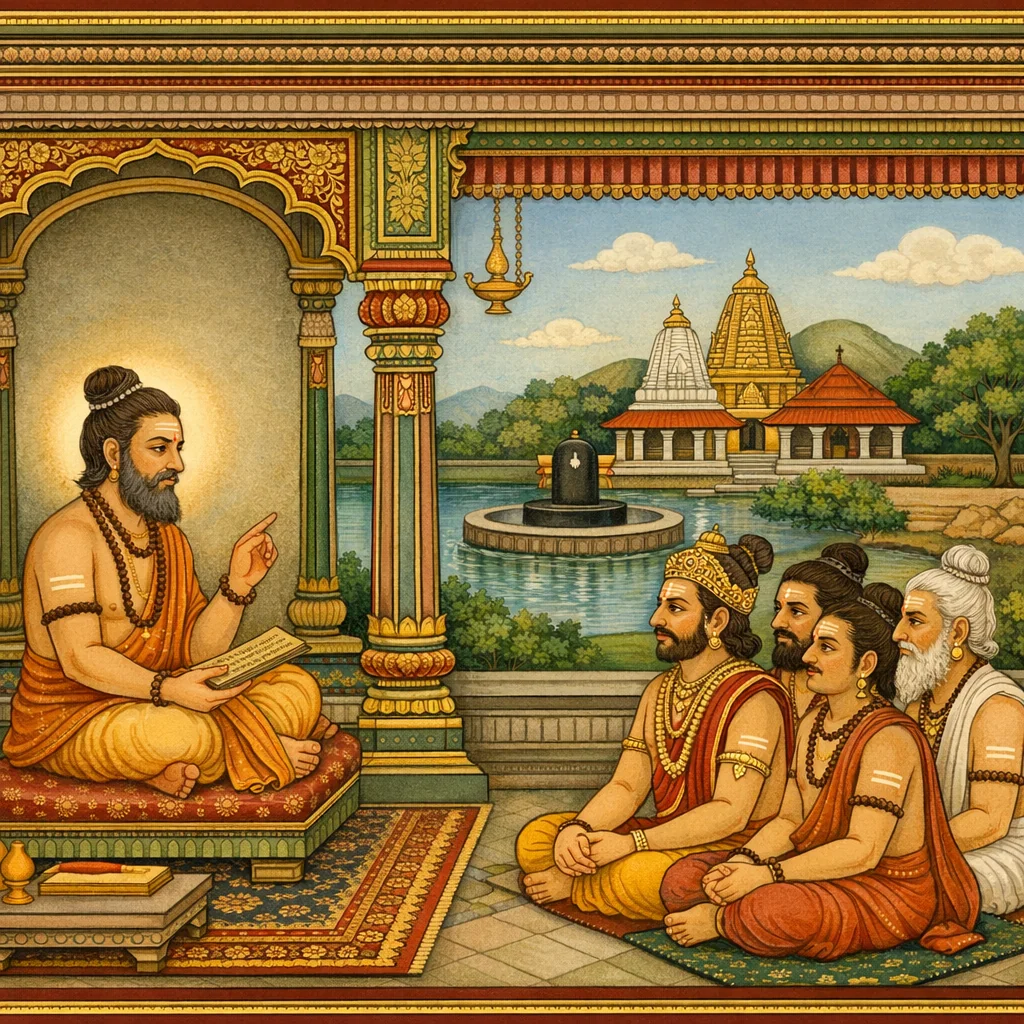
Adhyāya 279 is framed as Sūta’s theological discourse establishing the Skanda Purāṇa’s authority through a lineage of transmission (paramparā): Skanda teaches the Purāṇa to Bhṛgu (identified as Brahmā’s son), and it then proceeds through Angiras, Cyavana, and Ṛcīka as a model of received tradition. The chapter then turns to phalaśruti, declaring that hearing the Skanda Purāṇa in the assembly of the virtuous removes accumulated moral impurity, promotes longevity, and brings well-being to people in every station. The māhātmya of Hāṭakeśvara-kṣetra is praised as immeasurable in merit, and gifting this dharma-māhātmya to a brāhmaṇa is said to yield extended heavenly reward. A list of practical boons follows—sons, wealth, marriage prospects, reunion with relatives, and royal victory—culminating in the ethical teaching that honoring the expounder or teacher is tantamount to honoring Brahmā, Viṣṇu, and Rudra. The discourse closes by stressing that even minimal instruction is beyond material repayment; therefore teachers should be supported with customary gifts and hospitality, and listening itself is portrayed as granting the fruit of all tīrthas and quieting demerit from many births.
Shlokas
Verse 1
सूत उवाच । एतत्पुराणमखिलं पुरा स्कन्देनभाषितम् । भृगवे ब्रह्मपुत्राय तस्माल्लेभे तथांगिराः
Sūta said: “Long ago, Skanda proclaimed this entire Purāṇa to Bhṛgu, the son of Brahmā; and from him, Aṅgirā too received it.”
Verse 2
ततश्च च्यवनः प्राप स ऋचीकस्ततो मुनिः । एवं परंपराप्राप्तं सर्वेषु भुवनेष्वपि
Then Cyavana received it; thereafter the sage Ṛcīka. Thus, through the lineage of transmission, it has come down in all the worlds as well.
Verse 3
स्कांदं पुराणमेतच्च कुमारेण पुरोद्धृतम् । यः शृणोति सतां मध्ये नरः पापात्प्रमुच्यते
This Skanda Purāṇa was first brought forth by the Divine Youth (Kumāra). Whoever hears it in the assembly of the virtuous is released from sin.
Verse 4
इदं पुराणमायुष्यं वर्णानां च सुखावहम् । निर्मितं षण्मुखेनेह नियतं सुमहात्मना
This Purāṇa bestows longevity and brings well-being to all the social orders. Here it was composed and established by the great-souled Six-Faced Lord (Ṣaṇmukha).
Verse 5
एवमेतत्पुरा ख्यातमाख्यानं भद्रमस्तु वः
Thus is this anciently renowned sacred account; may it bring auspiciousness to you all.
Verse 6
हाटकेश्वरक्षेत्रस्य माहात्म्यं शृणुते नरः । न तस्य पुण्यसंख्यानं कर्तुं शक्येत केनचित्
If a person hears the greatness of the Hāṭakeśvara sacred region, no one is able to compute the measure of the merit he gains.
Verse 7
य इदं धर्ममाहात्म्यं ब्राह्मणाय प्रयच्छति । स्वर्गलोके वसेत्तावद्यावदक्षरसंख्यया
Whoever gives this dharmic māhātmya to a Brāhmaṇa will dwell in heaven for as long as the number of its syllables.
Verse 8
यथा हि वर्षतो धारा यथा वा दिवि तारकाः । गंगायां सिकता यद्वत्तद्वत्संख्या न विद्यते
Just as the streams of rain, the stars in the sky, and the grains of sand in the Gaṅgā cannot be counted—so too its measure is not known.
Verse 9
यो नरः शृणुयाद्भक्त्या दिनानि च कियंति वै । सर्वार्थसिद्धो भवति य इमां पठते कथाम्
Whoever listens with devotion—no matter for how many days—and whoever recites this narrative becomes successful in all aims.
Verse 10
पुत्रार्थी लभते पुत्रान्धनार्थी लभते धनम् । लभते पतिकामा या पतिं कन्या मनोरमम्
One who desires a son obtains sons; one who desires wealth obtains wealth. A maiden who longs for a husband obtains a delightful husband.
Verse 11
समागमं लभंते च वांधवाश्च प्रवासिभिः । स्कांदं पुराणं श्रुत्वा तु पुमाना प्नोति वांछितम्
And relatives are reunited with those who had gone abroad. Indeed, having heard the Skanda Purāṇa, a person attains what he desires.
Verse 12
शृण्वतः पठतश्चैव सर्वकामप्रदं नृणाम् । महीं विजयते राजा शत्रूंश्चाप्यधितिष्ठति
For those who hear and recite, it grants all desired aims. A king conquers the earth and also overpowers his enemies.
Verse 13
पुण्यं श्रुत्वा पुराणं वै दीर्घमा युश्च विंदति । वेदविच्च भवेद्विप्रः क्षत्रियो राज्यमाप्नुयात्
Having heard this meritorious Purāṇa, one attains long life. A Brāhmaṇa becomes a knower of the Vedas, and a Kṣatriya attains kingship.
Verse 14
धनं धान्यं तथा वैश्यः शूद्रः सुखमवाप्नुयात् । यः श्लोकपादं शृणुयाद्विष्णुलोकं स गच्छति
Likewise, a Vaiśya obtains wealth and grain, and a Śūdra attains happiness. Whoever hears even a quarter-verse goes to the world of Viṣṇu.
Verse 15
श्रुत्वा पुराणमेतद्धि वाचकं यस्तु पूजयेत् । तेन ब्रह्मा च विष्णुश्च रुद्रश्चैव प्रपूजितः
After hearing this Purāṇa, whoever honors the reciter thereby truly honors Brahmā, Viṣṇu, and Rudra as well.
Verse 16
एकमप्यक्षरं यस्तु गुरुः शिष्ये निवेदयेत् । पृथिव्या नास्ति तद्द्रव्यं यद्दत्त्वा ह्यनृणी भवेत्
Even if a guru imparts to a disciple but a single syllable, there is nothing on earth that—once given—can make one free of that debt.
Verse 17
अतः संपूजनीयस्तु व्यासः शास्त्रोपदेशकः । गोभूहिरण्यवस्त्राद्यैर्भोजनैः सार्व कामिकैः
Therefore Vyāsa—the instructor in the scriptures—should be duly honored with gifts such as cows, land, gold, garments, and with nourishing foods that fulfill all needs.
Verse 18
य एवं भक्तियुक्तस्तु श्रुत्वा शास्त्रमनुतमम् । पूजयेदुपदेष्टारं स शैवं पदमाप्नुयात्
Thus, one who is endowed with devotion, having heard this unsurpassed teaching and worshiped the instructing guru, attains the supreme Śaiva state.
Verse 19
पुराणश्रवणादेव अनेकभवसंचितम् । पापं प्रशममायाति सर्वतीर्थफलं लभेत्
By the very act of hearing the Purāṇa, sin accumulated through many lives is pacified, and one gains the fruits of all tīrthas.
Verse 279
इति श्रीस्कांदे महापुराण एकाशीतिसाहस्र्यां संहितायां षष्ठे नागरखण्डे श्रीहाटकेश्वरक्षेत्रमाहात्म्ये पुराणश्रवणमाहात्म्यवर्णनंनामैकोनाशीत्युत्तरद्विशततमोऽध्यायः
Thus ends, in the Śrī Skanda Mahāpurāṇa—within the collection of eighty-one thousand verses, in the sixth book, Nāgarakhaṇḍa, in the Māhātmya of the holy field of Śrīhāṭakeśvara—the chapter entitled “Description of the Greatness of Hearing the Purāṇa,” being Chapter 279.